
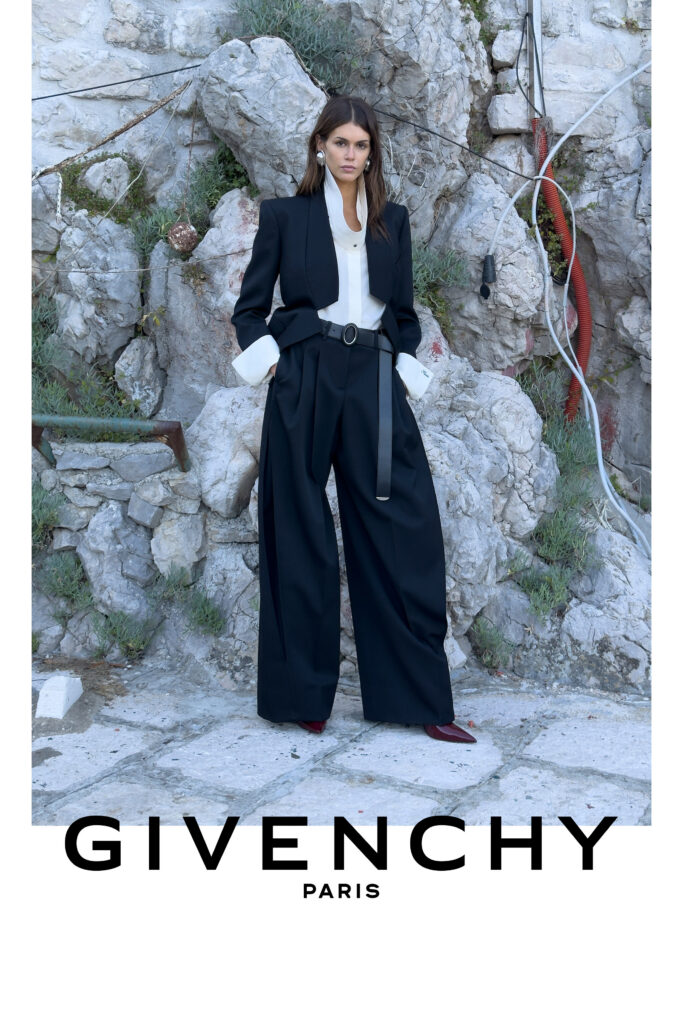
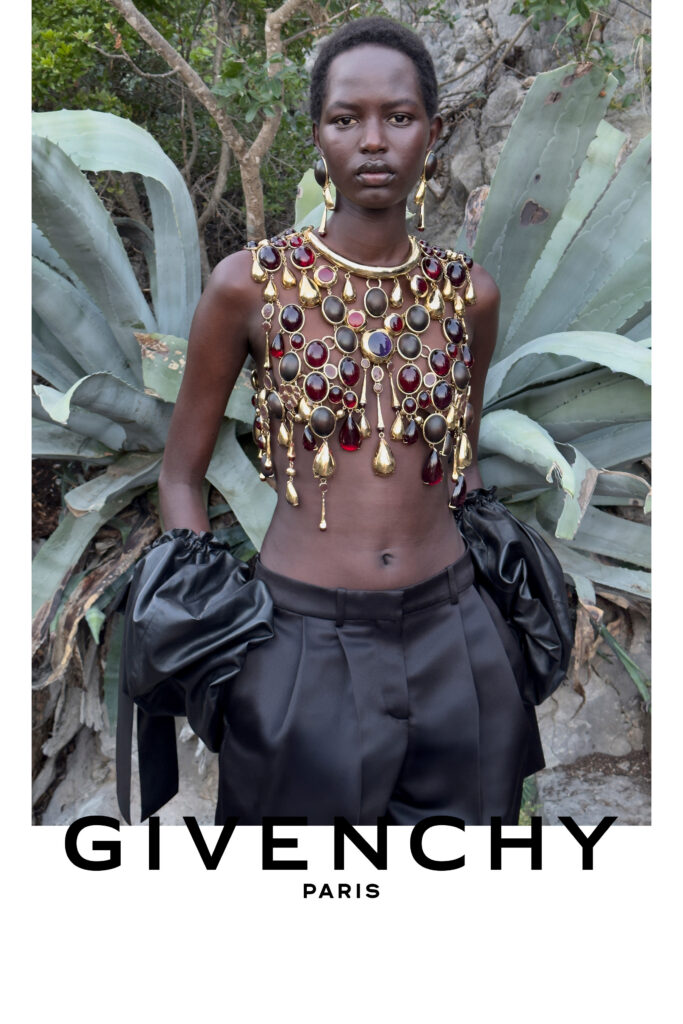
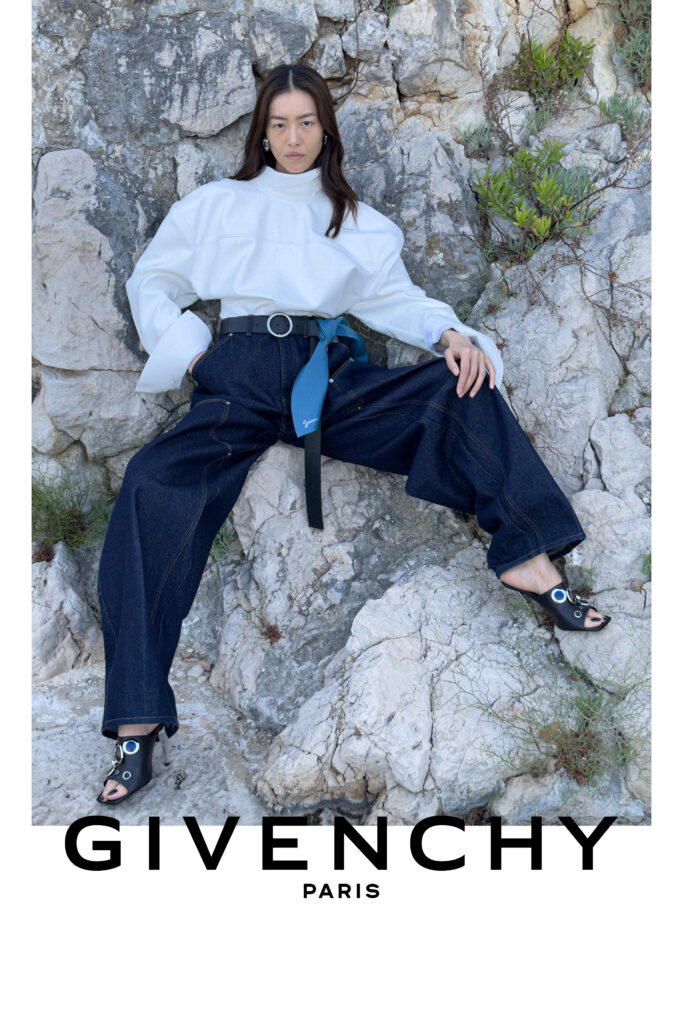
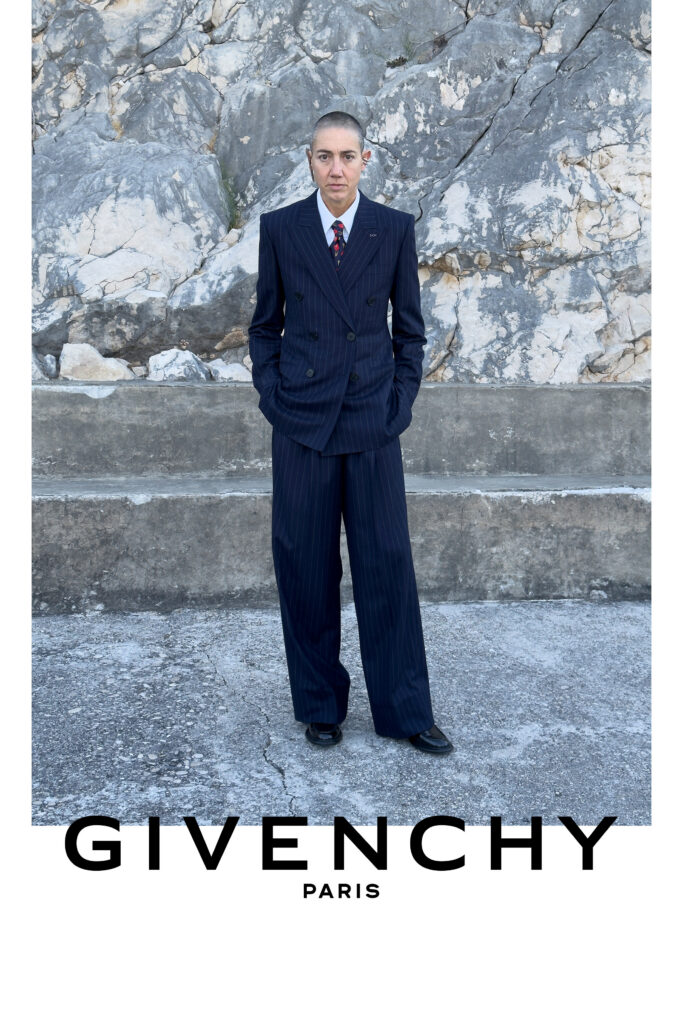
FOR Givenchy’s Autumn/ Winter 2026 campaign, the granite steps and weathered walls of Croatia create a stark backdrop for Juergen Teller’s lens. Shot across the rugged landscape brings Sarah Burton’s latest collection into an environment that feels elemental and uncompromising.
Givenchy AW26 Campaign
Rather than presenting a fixed idea of femininity, the campaign focuses on women with distinct identities, personalities and strengths, placing their individuality at the heart of the Givenchy world. Here, Eva Herzigova appears alongside Kaia Gerber, Liu Wen, Nyaduola Gabriel and French writer and former lawyer Constance Debré. They come from different generations and creative worlds, yet the images give each woman space to retain her own identity. There is no attempt to make them conform to a single vision of the Givenchy woman.
That sense of individuality is central to Burton’s approach. Since taking the creative helm of the house, she has placed women and their lived reality at the heart of her work. For Winter 2026 this becomes particularly visible. The campaign feels direct and assured, with Teller’s photography allowing personality to sit alongside the clothes rather than disappear beneath them.
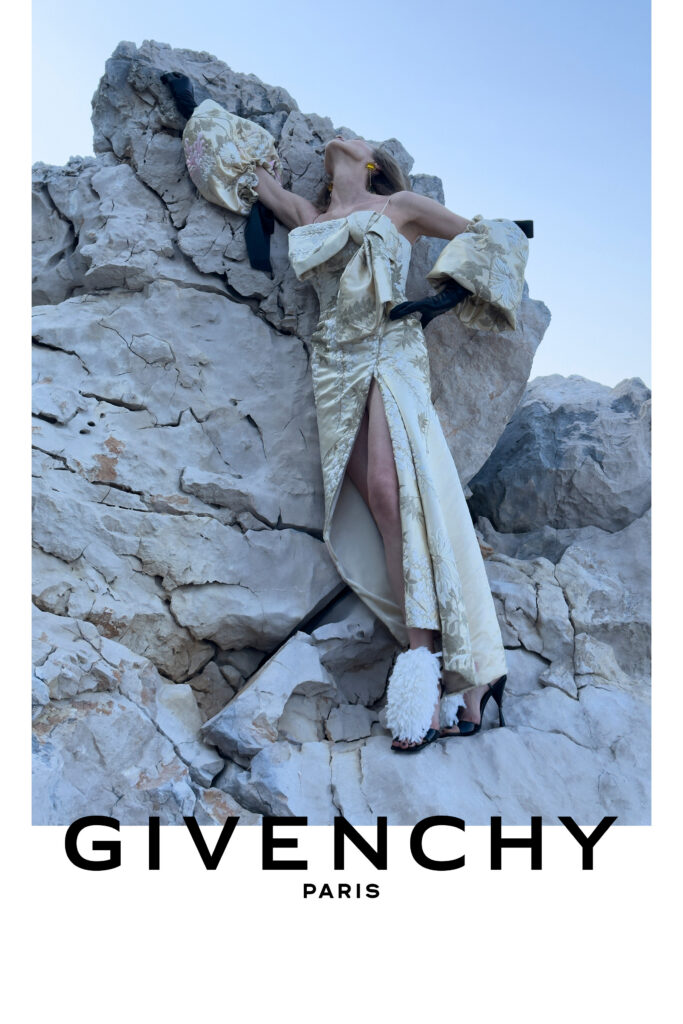
Givenchy AW26 Campaign
The connection between the cast and the collection runs deeper than the finished images. The women formed part of the wider community around Burton’s studio and contributed to the atmosphere surrounding the Winter 2026 runway show. They are not simply faces chosen to represent a collection but part of the world Burton is building at Givenchy.
The clothes themselves reinforce this balance of precision and expression. Tailoring is sharply cut and defined while the white shirt is reimagined in leather. Draped and textured evening dresses bring movement and sensuality. Accessories push the collection towards something more playful and extravagant.
Together these elements create a portrait of Givenchy that feels confident without being prescriptive. In a fashion landscape increasingly shaped by conversations around identity, age and representation, Burton’s vision feels timely. Her women are not asked to become someone else for the camera. They arrive fully formed, and the clothes become another way of expressing who they are already.
by Ellis Dowle