
VENICE, ITALY — Venice has long been in thrall to classical artistry, its heritage reflecting imaginatively on the notion of form while drawing from its own history across centuries. At the 2026 edition of the Venice Dance Biennale, performances unfolded through emotive gestures, audacious virtuosity, claustrophobic fear, and stirring displays of poise and soul-laden fragmentation, broadening the scope of the Festival’s storytelling.
This year’s interpretations were chiefly rooted in the delicate calibration between time and its natural flow, as well as between narrative and reflection—two elements that reinforced the continued relevance of dance and its meaning in the contemporary world. Yet there was more to the story. Before arriving at moments of quiet intensity that gradually gathered into a singular emotional arc as Sir Wayne McGregor’s offerings unfolded throughout the week, some performances felt less richly detailed in their staging and composition. Still, the dancers’ bodies often seemed to alternate between acts of sorrow and consolation. Lyricism soared and swooned.
Other works, beautifully realised, served as reminders that the performing arts’ preoccupations are never isolated; rather, they remain deeply connected to the harsh realities of our time that can no longer be ignored. As the Festival celebrates its twentieth anniversary, it continues to evolve – absorbing lessons from the past while cultivating a more inclusive and expansive repertoire.
I cannot help but wonder: what kinds of value judgments and viewing habits do we bring to the theatre when scrutinising a new work of dance, particularly in periods of unrest? It is a question raised by generations of choreographers and aficionados alike, and one that resonated among the artists and insiders who contributed to this season’s programme under McGregor’s creative direction.
McGregor, whose tenure as Artistic Director of the Dance Department has been confirmed for the next two-year period by the Board of Directors of La Biennale, chaired by Pietrangelo Buttafuoco, reflects on this year’s programme: “The artists of Biennale Danza 2026 are like our past dance time travellers who, in their timelines, perspectives and realities through their work…”
“Instead of presenting time as linear, dance-making allows past and present to intertwine, offering audiences multiple interpretations of experience and changing how narratives are absorbed and understood,” he continues, adding that, “This interconnectivity, evidenced in much of the work in our Festival, encourages a deeper exploration of how individual and collective histories shape artistic expression and our fundamental understanding of reality.”
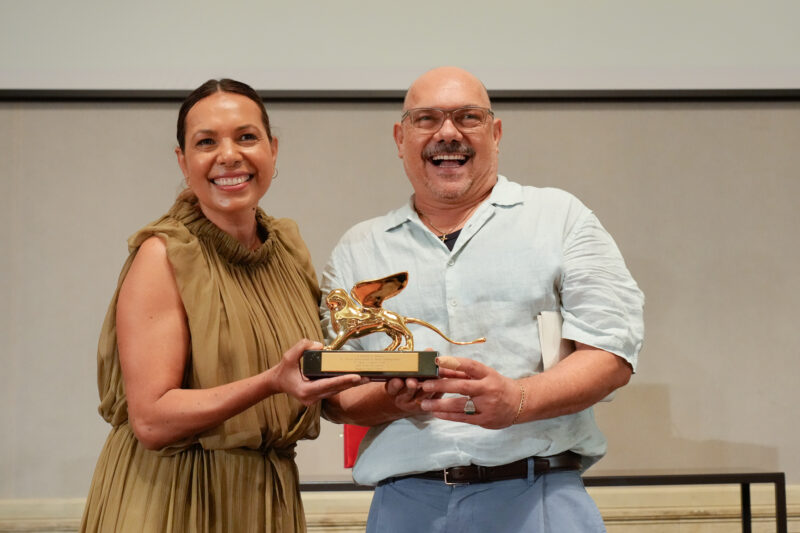
Frances Rings and Stephen Page Bangarra Dance Theatre. Photograph: Andrea Avezzù, Courtesy La Biennale di Venezia
The coveted Golden Lion celebrated Bangarra Dance Theatre’s extraordinary contribution to bringing Aboriginal and Torres Strait Islander cultures, stories, and traditions to audiences across the global stage. Through a distinctive fusion of contemporary movement and ancient cultural knowledge, Bangarra has redefined the language of dance theatre, creating works that are as visually arresting as they are deeply rooted in Country.
At the heart of every Bangarra production lies the company’s unique Creative Cultural Lifecycle—a process unlike any other in contemporary performance. Spanning four years, each work begins on Country through consultation with Aboriginal and Torres Strait Islander Elders, who generously share their languages, stories, songs, and dances. This cultural knowledge forms the foundation of the creative journey, evolving through development and touring before ultimately returning to Country, where the work is performed for Community as an act of gratitude, reciprocity, and acknowledgement of the enduring relationship between Story and Country.
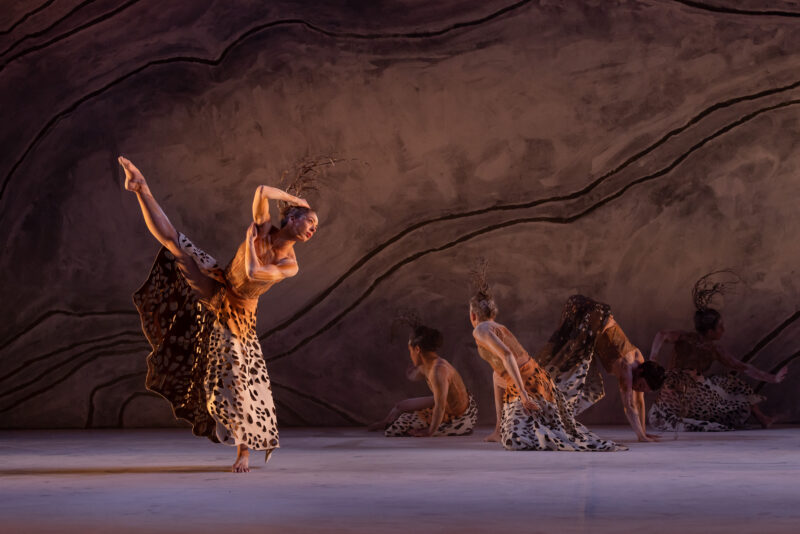
Terrain at Sydney Opera House. Photograph: Daniel Boud
This year’s Festival presents Terrain, Bangarra’s acclaimed and award-winning production inspired by the timeless beauty and vast expanse of Kati Thanda: Lake Eyre, Australia’s largest salt lake. More than a portrait of an extraordinary landscape, Terrain is a profound meditation on the enduring connection between Aboriginal and Torres Strait Islander peoples and Country – a living cultural continuum extending across generations. Structured as a breathtaking nine-part performance, the work evokes the elemental rhythms of water and earth, revealing the powerful fusion of body, land, and spirit.
As the waters rise and recede, Terrain invites audiences to experience the resilience of Country and the enduring custodianship of the people who have cared for it since time immemorial. The production is further elevated by an exceptional creative team, featuring an original score by Munaldjali and Nunukul composer David Page, evocative set design by Jacob Nash, costumes by Jennifer Irwin, and lighting design by Karen Norris. Integral to its creation was consultant and Arabana Elder Reginald Dodd, whose knowledge and stewardship of the region’s lands, waters, and cultural heritage informed the work with authenticity, sensitivity, and profound respect.
Since its founding in 1989, Bangarra Dance Theatre has become one of Australia’s most celebrated performing arts companies, earning international acclaim for works that honour and share the stories of First Nations peoples. For more than three decades, the company was led by Stephen Page, a Nunukul and Ngugi man of the Quandamooka Peoples and a Munaldjali man of the Yugambeh Nation in South-East Queensland, whose visionary artistic leadership transformed Bangarra into a globally recognised cultural force.
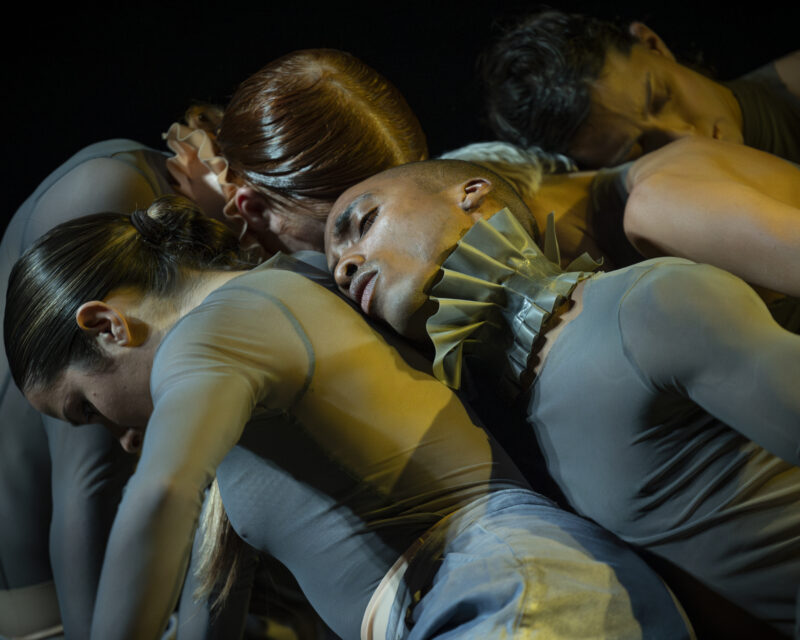
DDT Drip Tekhne by Jubal Battisti
The commitment to reshaping dance’s narratives was further embodied by Australian choreographer Adam Linder, one of the most incisive voices of his generation, whose practice exists at the porous intersection of dance, contemporary art, and theatre. For this year’s Biennale, Linder presented Drip Tekhne, a work that explores how humanity navigates and expresses itself within the digital age conceived in close collaboration with the ten performer based at Copenhagen’s Dansk Danseteater.
“I work between the fields of contemporary dance and contemporary art, and I also exhibit within gallery contexts,” Linder tells GLASS ahead of his performance. “I had a pretty broad background in dance, spanning from the Royal Ballet, where I met Wayne McGregor, and then, for the last decade, I’ve been making my own work and presenting it internationally.”
Linder’s practice is driven by an ongoing inquiry into what dance represents and how it can reflect both the body and society at large. This curiosity informs his engagement with diverse genres and the many facets that shape form, a dancer’s technique, and context. “My approach follows that of an abstract narrative, in the sense that we encounter these bodies that move from being amorphous and fleshy specimens into a dance collective,” he explains. “The question for me in this year’s Biennale piece is what the biological root of becoming a technical dancer actually is, through our socialisation and codified techniques.”
Rather than pursuing specific avenues of research, Linder instead remains in a constant state of collecting, gathering fragments that resonate with him, whether from film, fashion, or theoretical ideas. “There are classical elements, street elements, hip-hop elements, and improvisational ones, too,” he shares. “It’s the sort of polyglot nature of my work.”
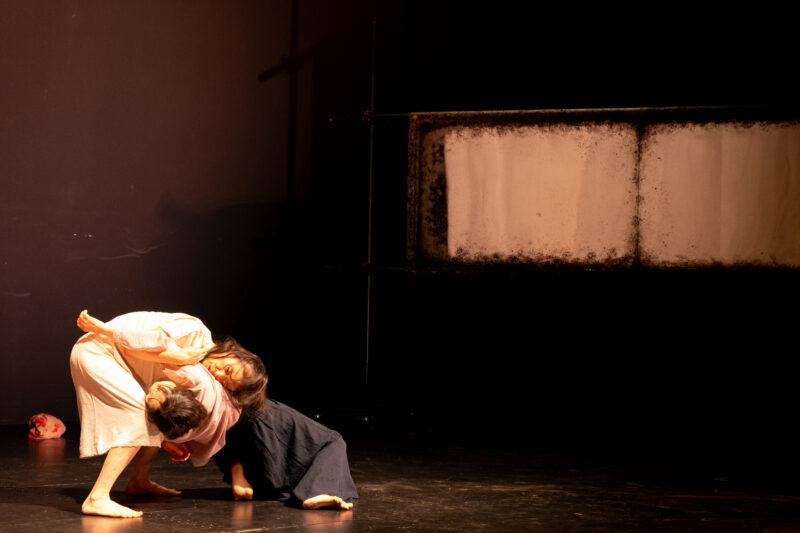
WHAT IS WAR Wen Hui and Eiko Otakeat Nomoy. Photograph: Jason Williams
Continuing the Biennale’s exploration of contemporary storytelling, the work of Eiko Otake and Wen Hui transformed dance into an act of political reflection. The two globally acclaimed artists from Japan and China presented What Is War: A Personal Performance, a multidisciplinary work that considers memory, trauma, and the lingering consequences of historical violence.
Drawing from extensive research into the so-called “comfort women” – women who were victims of human trafficking and systematic sexual violence by the Japanese military during the Second World War – Wen Hui and Eiko Otake approach dance, video, and spoken word as intertwined forms of remembrance. Amid new wars and global crises, the duo offer a poignant reminder of the fragility and preciousness of every human life.
But references: can one ever have enough? Not in the case of the acclaimed Biennale College collective, whose performance delivered moments in which nothing felt entirely fixed. Identity, perception, presence: everything remained unstable, shifting through pulsating patterns of repetition. As a theatre and dance enthusiast, I found myself deeply drawn to Residue, a work that imagines a place where time ceases to exist. Objective reality is replaced by memory, revealing a landscape in which continuity becomes a construct rather than a certainty, and where identity itself is called into question. Within the piece, chaos and control coexist alongside a subtly untamed tension that courses throughout, making it both compelling and absorbing.
A similar sense of enduring exploration extends to the legendary work of John Neumeier. Few choreographers have shaped the language of contemporary ballet as profoundly as Neumeier has. For more than five decades, the American-born, Hamburg-based artist has redefined narrative ballet through profound dramaturgy, musical eloquence, and an unwavering belief in dance as a vehicle for human exploration. As Artistic Director and Chief Choreographer of Hamburg Ballet from 1973 to 2024, Neumeier created a body of work that seamlessly blends classical lyricism with contemporary sensibility, producing riveting interpretations of literary, historical, and emotional subjects that have become central to the global dance repertoire.
His choreographic practice is distinguished by its soulful depth, cinematic qualities, and extraordinary richness, reaching the very core of the dancer. Rather than treating movement as a mere outline, Neumeier creates works in which every line becomes a form of evolving expression, allowing bodies and ideas to unfold through subtle echoes of gesture, rhythm, and theatrical depth.
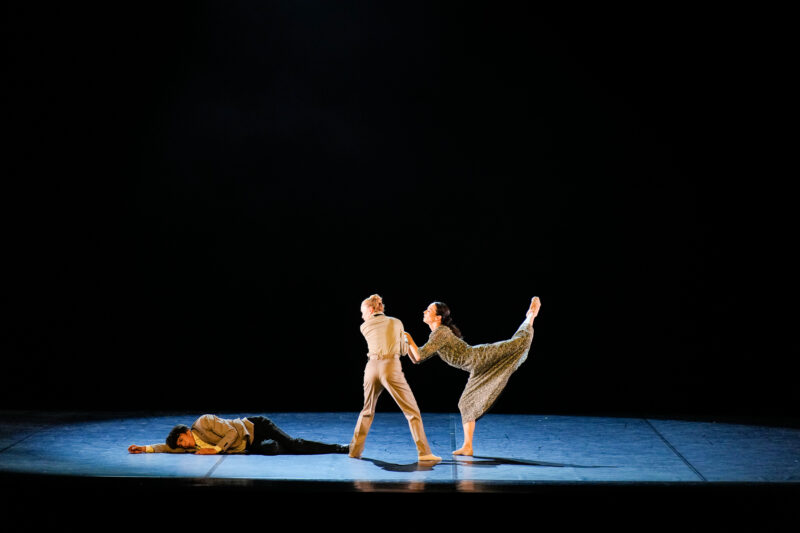
WINNDance COMPANY – SCIROCCO
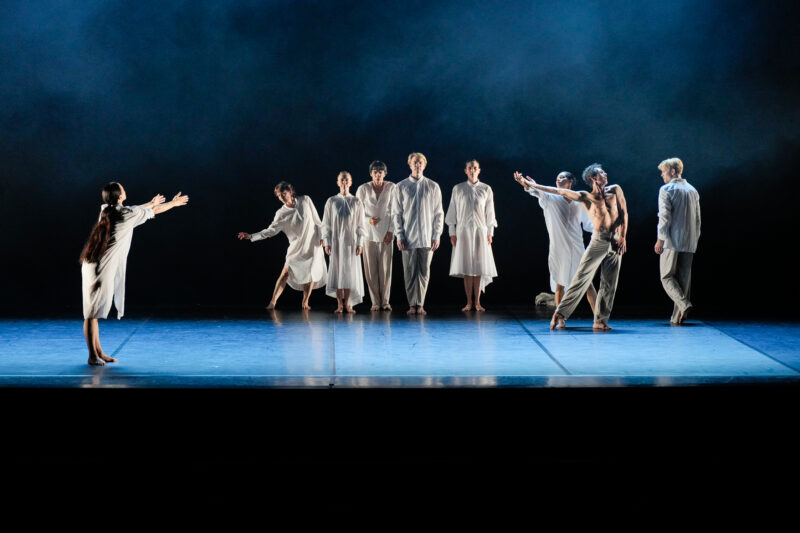
WINNDance COMPANY – SCIROCCO
This lifelong commitment to artistic evolution finds a compelling new context through his collaboration with WINNDance Company (an acronym for When if Not Now). Founded on the belief that artistic maturity is an asset rather than a limitation, WINN brings together globally celebrated dancers over the age of forty, creating new possibilities rooted in experience, longevity, and reinvention. Within this framework, Neumeier contributes Bridge of Sighs, a newly devised work presented in Scirocco, extending his lifelong exploration of memory, love, and the human condition while embracing a collective whose mission challenges conventional perceptions of age within dance.
The partnership represents a natural convergence of artistic philosophies: Neumeier’s enduring belief in the expressive life of the performer aligns with WINN’s vision of sustaining world-class dance careers beyond traditional boundaries. Together, they affirm that virtuosity is measured not only through technical mastery, but also through the depth of experience and emotional knowledge that movement can embody.
“I always thought that ballet was not just for teenagers, and I really believe that there is a way to dance for other people,” Neumeier told reporters at a press conference.
“Dance is this representation of generation and the combination of generation. I’d say this piece is not a narrative work, in the sense that you will come out and be able to explain what happened; but it certainly has certain dramatic situations within it. Looking at these seven truly wonderful dancers, all with completely different experiences and heritage, is wonderful. I think that, within this kind of mosaic of people, we have a kind of emotional landscape of those connotations,” he says.
“What I like is to work with extremely individual dancers: they are comedians, and I remember when we were rehearsing for Alessandra Ferri’s last performance!” he exclaims. “I screamed because she was absolutely gorgeous, but it’s individual. Some people have that capacity, and not every dancer can do that. It is something installed in the DNA of a particular person. I love dancers with personality who have the capacity to change and become.”
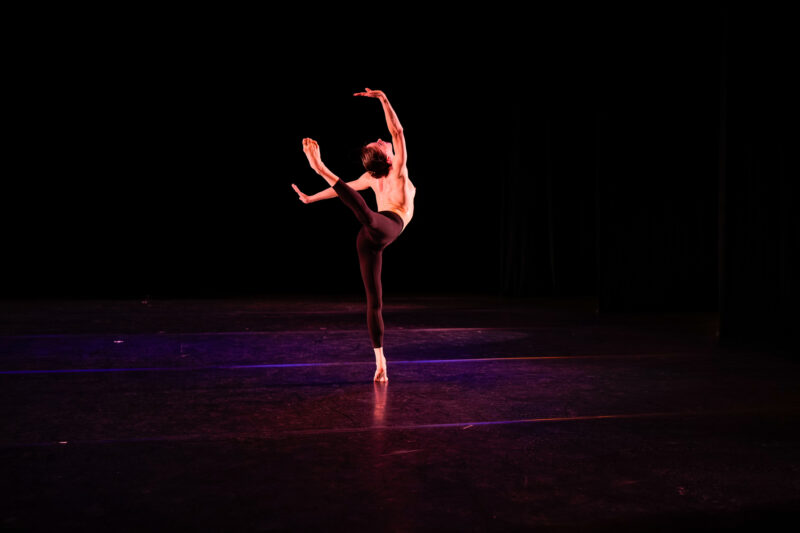
Molissa Fenley in State of Darkness
Further gestures of beauty were presented by American dancer and choreographer Molissa Fenley – a pioneering figure of postmodern dance renowned for her influential solo works – and Cassandra Trenary, former Principal Dancer with American Ballet Theatre and, since last year, a Principal Artist with Vienna State Ballet, who performed at the Arsenale Theatre. A solitary dancer in dialogue with the driving force of Igor Stravinsky’s Le Sacre du printemps, State of Darkness is the landmark solo Fenley created in 1988: a work that has become both a touchstone of postmodern dance and an extraordinary test of technical precision and physical endurance.
Trenary, who performed the role under Fenley’s direction during her years with American Ballet Theatre and has continued to revisit it throughout her career, brought the work to Venice with remarkable authority. In performance, graphic lines, unabashed theatricality, and classical technique collided with the fiery momentum of Stravinsky’s score, creating moments of climatic intensity that moved between serenity and disorder. The body was left in a state of abandon, while simultaneously revealing an awakening of the senses and a quasi-biblical undertone within Fenley’s choreography.
As Fenley explains, State of Darkness is a direct exchange between score and movement. At the final climax, this modern woman emerges into the light: whole, powerful, and alive.
“I made it in 1988, and it took me about six months to complete it,” Fenley told GLASS. “It was the first time that there had ever been a solo made to the Rite of Spring, and at the time I made lists of parts and movement phrases. So there are things that ancestors do, things from the spirit world, and others from the exotic animal world, bringing forth a wide array of ideas.”
Fenley wanted the choreography to situate itself around the music: to exist alongside it while anticipating where its accents would emerge. “For the spatial design, I made a little map: there’s a star upstage, and that’s the place of reincarnation and beginnings. Downstage, where she ends, is the place of power. Downstage right is the place of the ancestors, while upstage left is a place of perception. Across the middle is a place of metamorphosis, like the animal world.”
The Joyce Theatre brought this project together in 2020, at a moment when the world was navigating the pandemic and beginning the process of recovery. The intention was not only to involve a large number of dancers, but also to create a work that responded to the realities of COVID-19 while looking towards renewal.
“Linda Shelton, who’s the Executive Director and a trustee of The Joyce Theatre Foundation, has always loved State of Darkness, and I danced it there in 1990,” Fenley says. She extended an invitation to six or seven dancers. “So we had a dancer from New York City Ballet, one from ABT (which was Cassie), one from the Martha Graham Company, an ex-Paul Taylor dancer, a Ronald K. Brown/EVIDENCE performer, a dancer from Batsheva, and finally a dancer from Juilliard,” she recalls. “Men and women who learned State of Darkness on Zoom.”
“It was a feat!” she exclaims. “I would be on The Joyce stage with the big camera and monitor, and everyone would be in their respective homes. Looking back on it, it’s amazing that it even happened.”
Fenley chose that music after seeing the Rite of Spring reconstruction by Millicent Hodson, based on Nijinsky’s original choreography. “I wasn’t really a big aficionado of the production, but seeing that, I just thought, that’s just so amazing,” she says.
Fenley’s career has moved through several transformations, from leading a dance company to working as a soloist. “I had a dance company up until about 1987 and later stopped, deciding to work as a soloist for a while. So this was one of my first major works that I created as a soloist, and I found a really, really great piece of music called the McPhee Arrangement for eighty musicians,” she says.
Its density is extreme: the timpani sits prominently forward, and the tempo carries a persistent pulse. “It has a percussive progression to it that’s just so inviting to me,” she concludes. “And as a choreographer, I just saw all these different things that could possibly be done.”
by Chidozie Obasi