
When viewed from the Tate Modern Restaurant, people crossing the Millennium Bridge look fragile. They resemble matchstick figures. Their vulnerability is something Frida Kahlo would have recognised. She would have made it her own as part of her transformative, empowering work.
Frida: The Making of an Icon, Tate Modern’s exhibition, explores how she has become a symbol of resilience and resistance while firmly placing her achievement within the frames of Chicana/o art, surrealism, and feminism. The relentless and global commodification of her persona – Fridamania– is not shied away from in Tate’s bold exhibition that exalts in how her influence breaks with notions of elite and popular art. Kahlo has become a phenomenon, ‘a template for a character that anyone can become’ in the words of the Mexican artist Mónica Mayer.
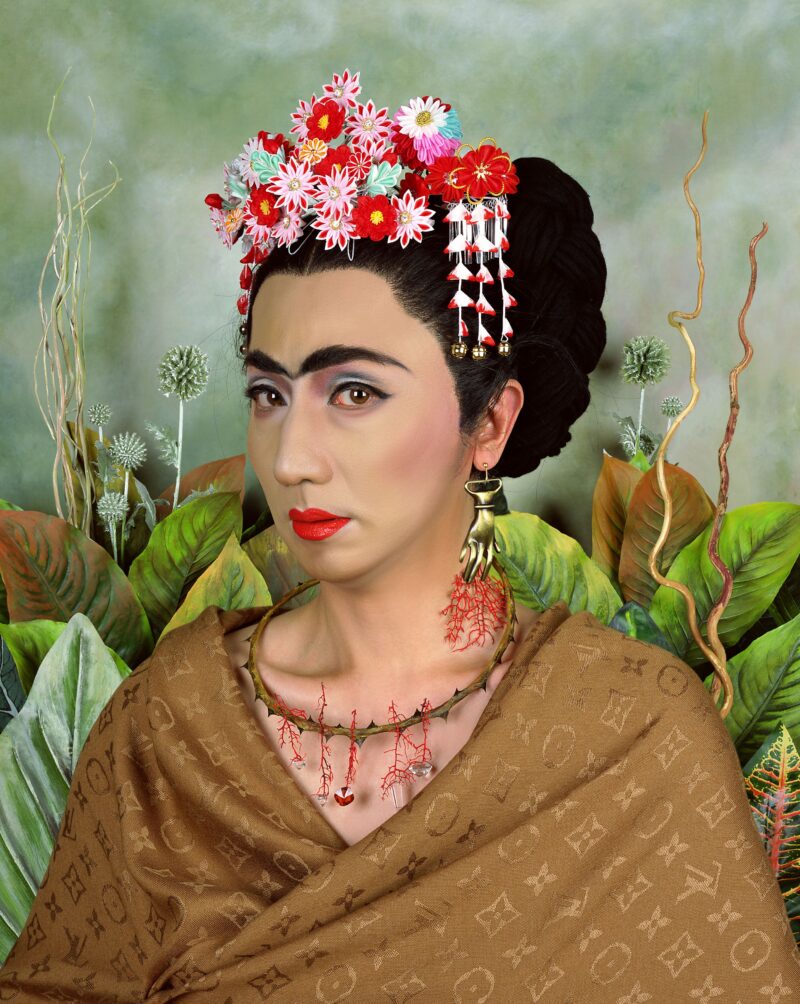
An Inner Dialogue with Frida Kahlo (Hand Shaped Earring),2001© Yasumasa Morimura; Courtesy of the artist, Luhring Augustine, New York and Yoshiko Isshiki Office, Tokyo
The exhibition, not a retrospective, probes and presents what fuels this astonishing achievement. It makes the catalogue particularly useful by showing many of Kahlo’s paintings not in the exhibition. The catalogue includes a valuable set of essays. These essays explore the multi-faceted appeal of a woman who started as an obscure local artist. Today, she is known worldwide, nearly as much by her first name as by her surname.
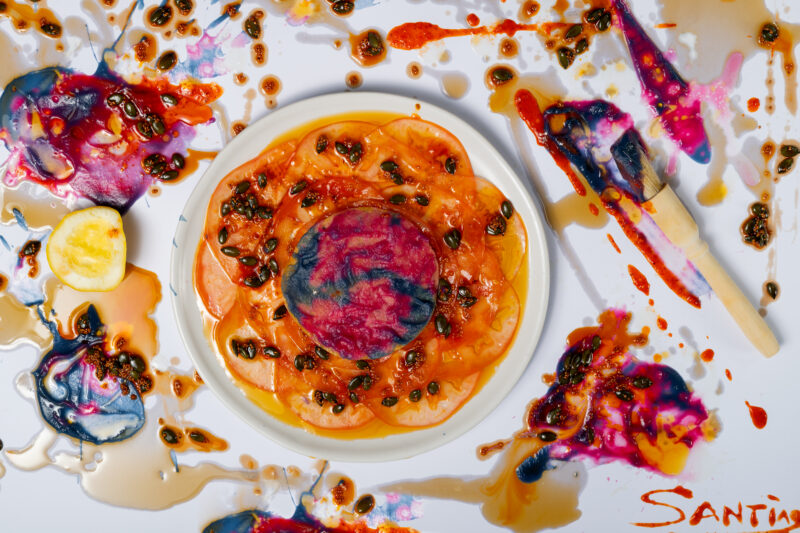
Getting artistic at Tate Modern Restaurant
In harmony with Frida: The Making of an Icon and the artist’s legacy, Tate Modern Restaurant presents a limited-time menu. Chef Santiago Lastra, founder of Michelin-starred KOL, created it. The dishes honour Frida’s life and Mexican heritage. The opening course presents a delightfully playful conception. It draws inspiration from Kahlo’s family home in Mexico City, now a museum dedicated to her life.
At your table you apply a blue salsa to tostadas. It turns pink when you squeeze citrus onto it. A braised short rib pairing, or mushrooms, comes next with a mole poblano. In homage to Kahlo’s Viva la Vida, the final course features crisp buñuelos. It is served with watermelon sorbet and yoghurt ice cream. The Mexican coffee at the restaurant is, fittingly, sourced from a collective of female coffee growers.
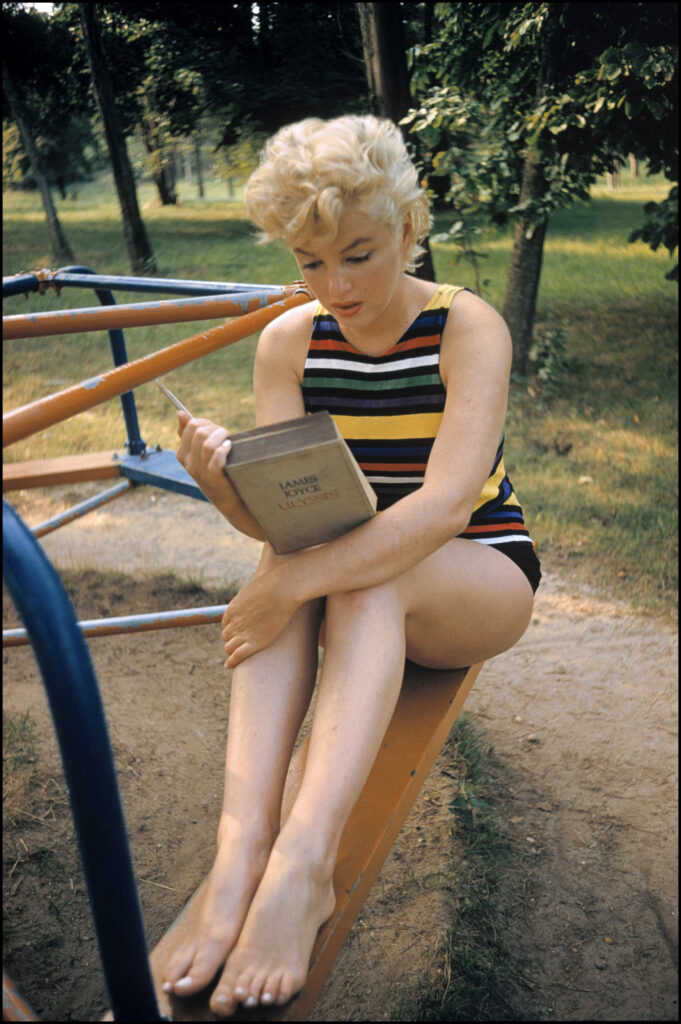
Marilyn Monroe, Mount Sinai, Long Island, 1955, by Eve Arnold. Copyright Eve Arnold Estate Estate
“I paint my self-portrait because I am so often alone, because I am the person I know best” Frida Kahlo’s words find a haunting echo in Marilyn Monroe’s ebullient willingness to be photographed. Both women embraced being portrayed, as if seeking their self-worth in images of themselves, although for Monroe much of the photography is related to her career as a film actor and the demands of the cinema industry.
This comes across strongly in the Marilyn Monroe: A Portrait exhibition at the National Portrait Gallery where the work of a multitude of era-defining photographers and painters offer pictures that, taken as a whole, produce a deeply effective study of the woman born one hundred years ago as Norma Jeane Mortenson. In 1946, André de Dienes produced photographs that are especially moving. They were taken on a deserted beach near Malibu, California. They provide glimpses of a Marilyn Monroe, wrapped in an army blanket, expressing not just joy but also introspection and melancholy. At only twenty, she embodies facets of a self. Destined for public consumption, she will be shaped by publicity, studio lights and film sets.
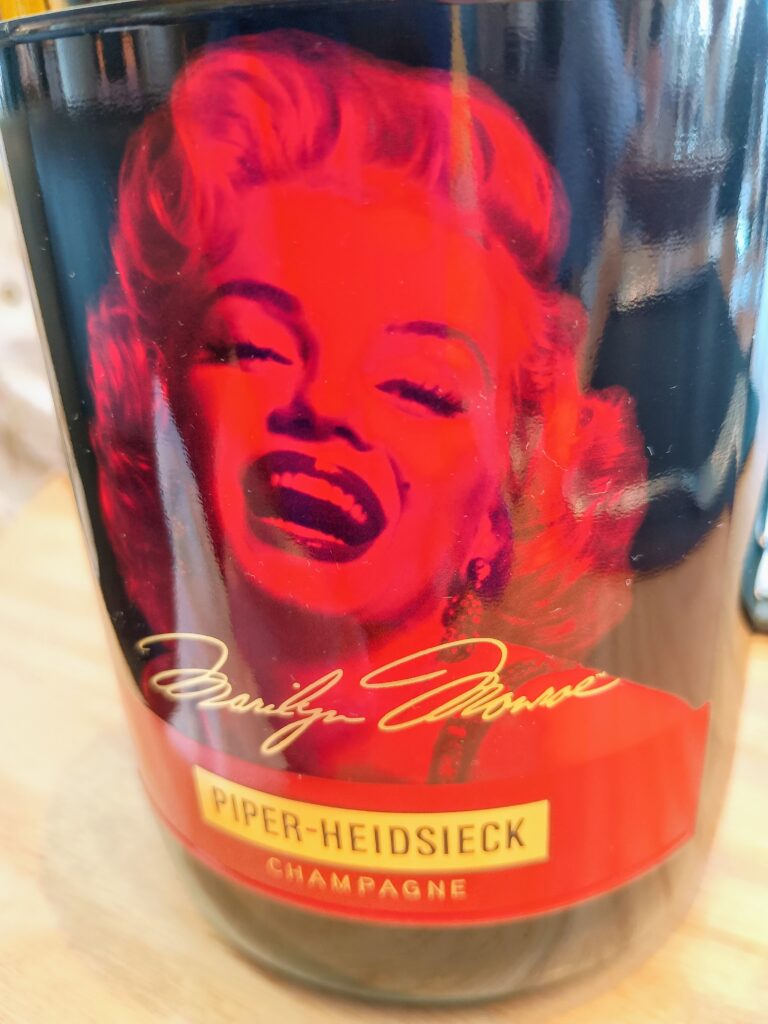
Popping off to a celebratory meal at The Portrait by Richard Corrigan with Piper-Heidsieck, Marilyn Monroe Edition
The accompanying Monroe-themed menu at The Portrait by Richard Corrigan, on the fourth floor of the National Portrait Gallery, pops off to a celebratory start with a glass of Piper-Heidsieck Champagne. As a result, it was her favourite bubbly, and the limited-edition bottles show the film star’s red image. Monroe was definitely not a vegetarian – she loved fired chicken — but it is easy to have the caviar omitted from the potato terrine that rounds off a meal that includes a superb beetroot tartare with champagne jelly. Its colourful blend of simplicity and glamour reflects nicely the character of the Hollywood star who never succumbed to the film industry’s demand for an unvarying ‘dumb blond’.
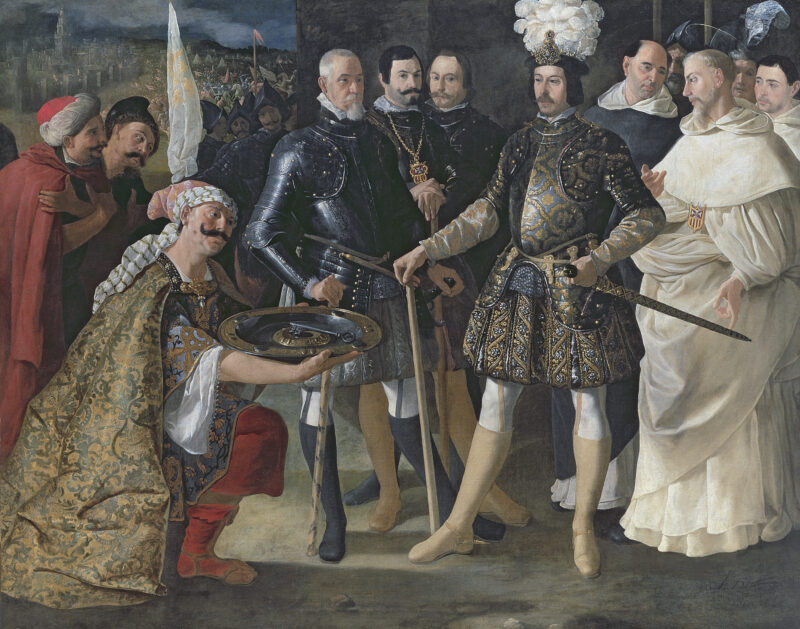
The Surrender of Seville, Francisco de Zurbarán 1629. copyright Private Collectiuon / Bridgeman Images
From the restaurant there is a uniquely close view of the dome atop the National Gallery where, under its cupola, there is a rare opportunity to see over forty paintings by an artist who also demands to be appreciated. Francisco de Zurbarán may lack the global fame of Kahlo and Monroe but he shares with them artists’ dedication to develop their talent in ways that command respect.
A leading 17th-century Spanish painter, Zurbarán’s canvases are chiefly devoted to biblical subject matters – he worked primarily for religious orders – but he brought to his work a secular professionalism that transcends the religious themes he was commissioned to represent. Anyone with an interest in fashion will be entranced by the attention he devotes to arrangements of fabrics and the precise quality of their textures. His father was a haberdasher and the exposure to textiles may have influenced the young man who came to fine-tune depictions of embroidery, leather and woollen garments, even loincloths, and the way these materials fold around and enhance the body.
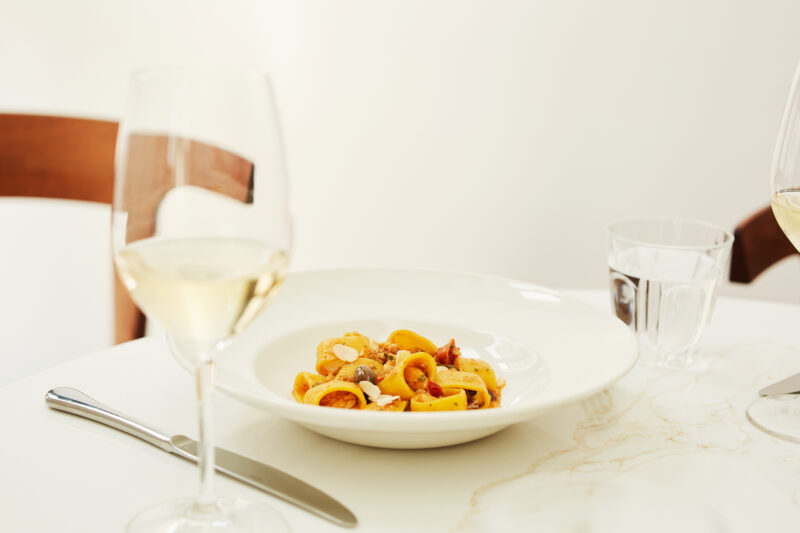
Simply subtle Italian fare at Locatelli in the National Gallery
The aestheticism that defines Zurbarán’s art finds natural concord, without reaching for a themed menu, with the Italian fare at the National Gallery’s Osteria Locatelli. From start to finish – from a passionata, expressive of Italian cocktail culture at its finest, to a heavenly tiramisu so light and airy it hardly needs a plate to rest on – eating here puts to shame most of the Italian eateries in the streets that converge on Trafalgar Square.
The menu, never indulging in novelty for the sake of it, takes pride in staples of Italian cuisine that require no fanfares: Nocellara olives from Sicily, ham from Parma, pasta recipes from Campania. Come here for lunch or, outside weekends, an early dinner for the enjoyment of seemingly simple but subtle plates of delicious food
I had taken the stairs up to the mezzanine for the horseshoe bar and a table with a view of the Fourth Plinth and only on leaving the restaurant did the ten-metre-wide mural on the far wall come into view. Crivelli’s Garden was painted over thirty years ago by Paula Rego, the Gallery’s first associate painter, and as a marvellous homage to art it justly takes its place in Osteria Locatelli. The painting is also a triumphant celebration of female experience, and accordingly takes its place alongside the work of Frida Kahlo and Marilyn Monroe.
by Sean Sheehan