
COPENHAGEN, DENMARK — At a time when women are shopping less, the issues of comfort and wearability are on everyone’s lips. If something isn’t comfortable or you can’t wear it on multiple occasions, is it worth squeezing into your closet? Probably not.
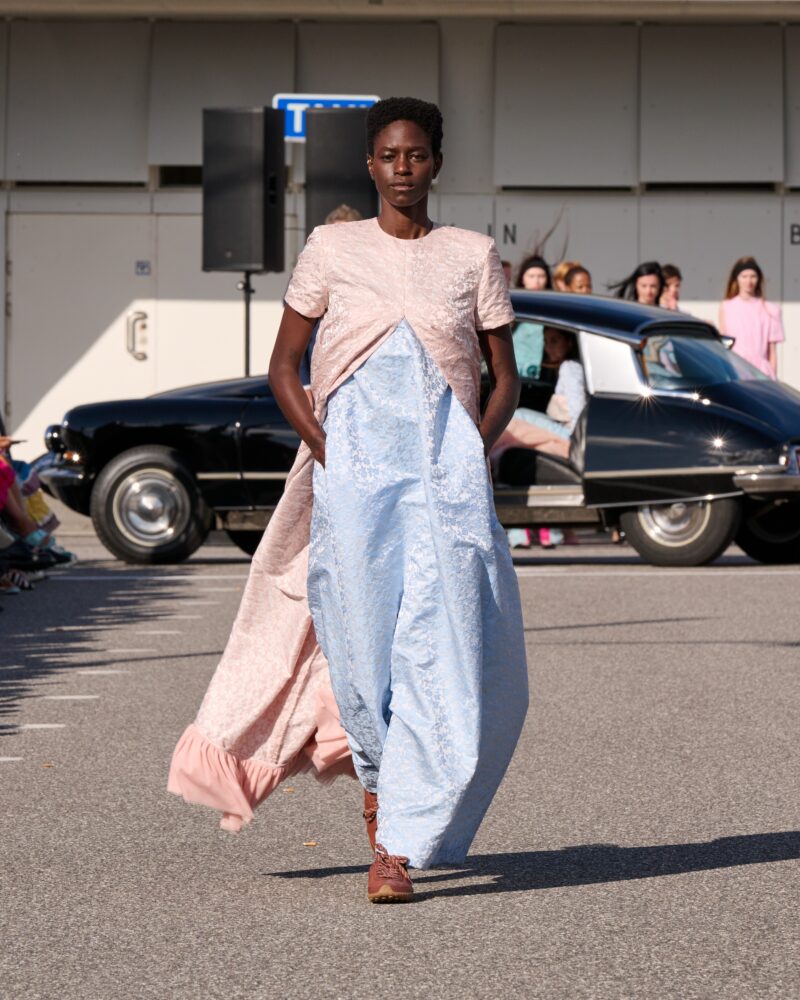
As such, a lot of designers have been prioritising ease and versatility over fuss and flamboyant means of form in their collections, but few dresses will work as hard as Nicklas Skovgaard’s drapey, bourgeois offerings, which can be worn straight or flowy: the billowing and sculpted silhouettes, high-trimmed finishes, ruffles and plethora of cinched waistlines aren’t new to the young brand. In fact, Skovgaard is well aware of his retro-laden signature and sticks to it.


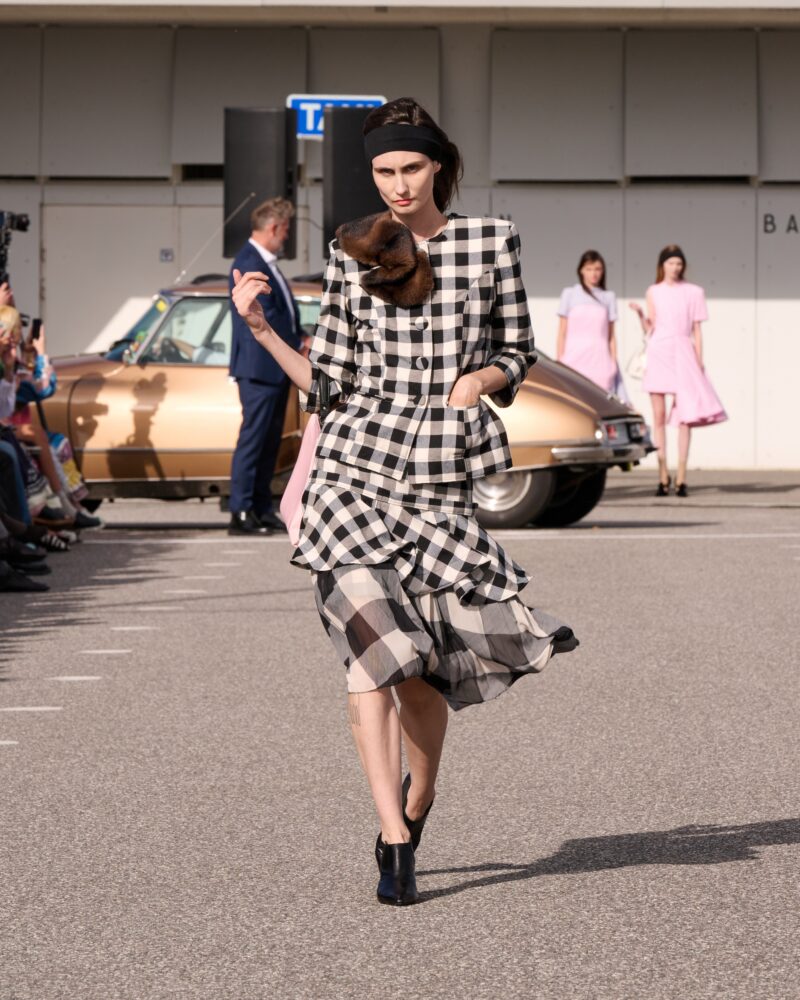
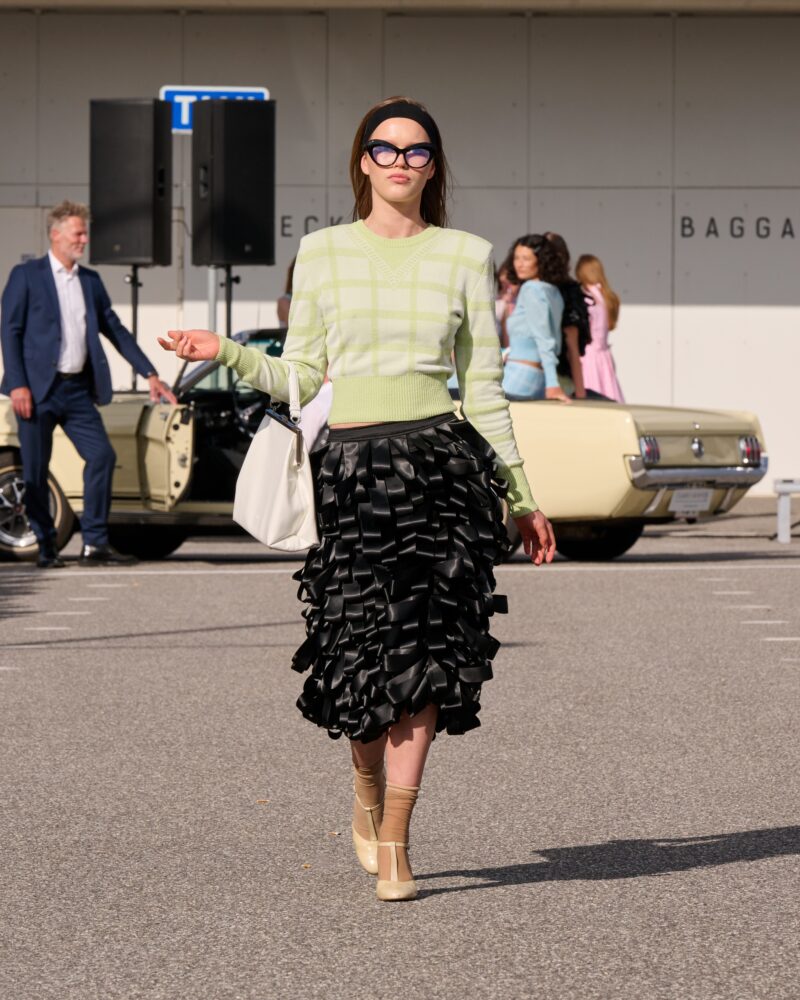


“Collection 13 (referring to Spring/ Summer 2027) began with the idea of a fictional girl group, The Skovgaardettes,” Skovgaard told GLASS in a preview, detailing his creative intentions and process. “I was interested in the relationship between individuality and belonging – how clothing can create a sense of unity without erasing personality,” he adds, expanding on the cultural touchpoints he leaned on.
“That tension feels particularly relevant today, not only socially but also within fashion, where there is often pressure to constantly reinvent rather than refine. Each collection is another chapter in the same ongoing conversation, where textiles, silhouette and unexpected material combinations become a way of telling stories and creating emotional resonance,” he says.
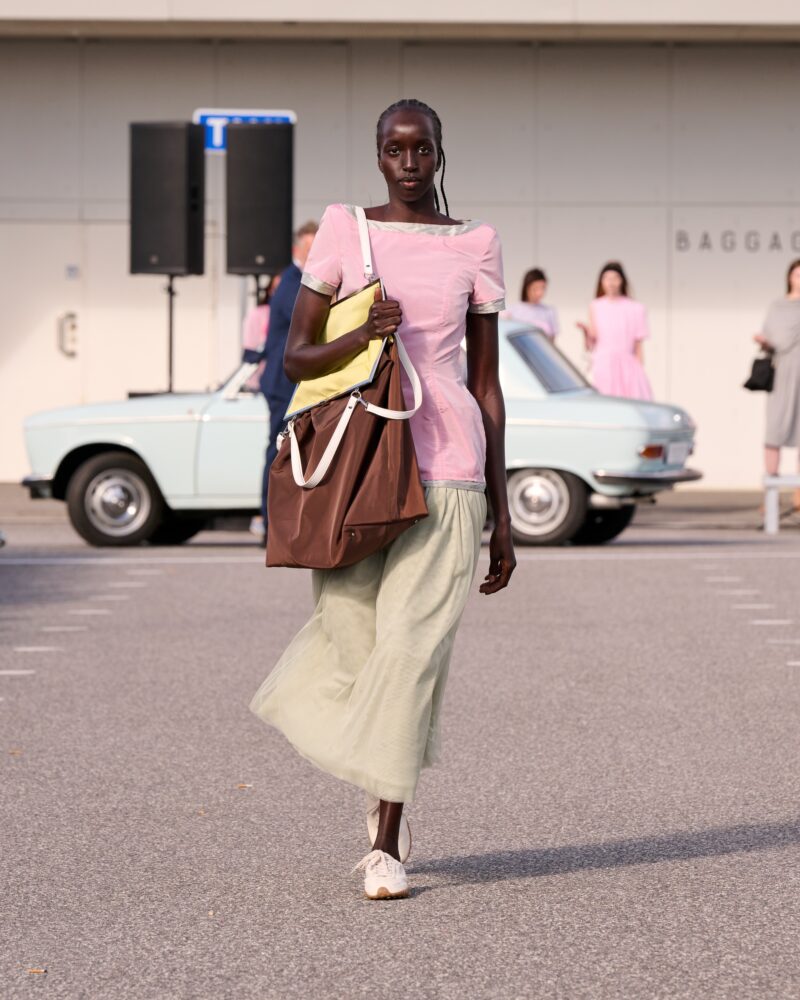
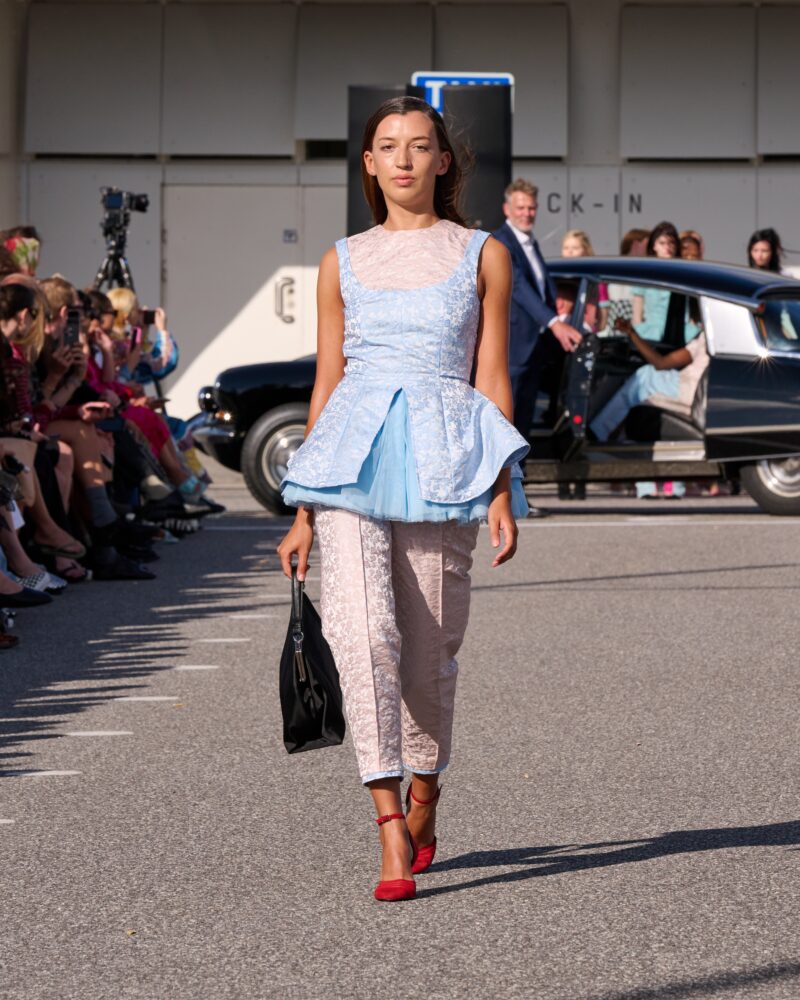
On the importance of keeping the brand afloat in the future, he speaks with unguarded honesty. “As the brand continues to grow, my ambition is to expand our international presence while staying intentional about how we do it – building lasting relationships with our retail partners and strengthening the dialogue with our community through our own platform,” he reflects. “I have big ambitions for the future of the brand, and I believe meaningful growth comes from developing a distinct creative language that people genuinely want to be part of.”
by Chidozie Obasi