
LIGHT and shadow defined Balenciaga’s Autumn/ Winter 2026 women’s and men’s collection, where creative director Pierpaolo Piccioli explored the Renaissance technique of clair-obscur to shape form and emotion through contrast. Presented in Paris, the collection examined the tension between darkness and illumination through sculptural silhouettes, reflective materials and controlled bursts of colour.
The show environment was developed in collaboration with filmmaker Sam Levinson, creator of the HBO series Euphoria. Set within a darkened space along the Champs-Élysées, video installations surrounded the runway, combining landscapes and portrait-like close-ups with fragments from the show’s forthcoming third season. The result was an immersive backdrop that echoed the collection’s exploration of light emerging from shadow.
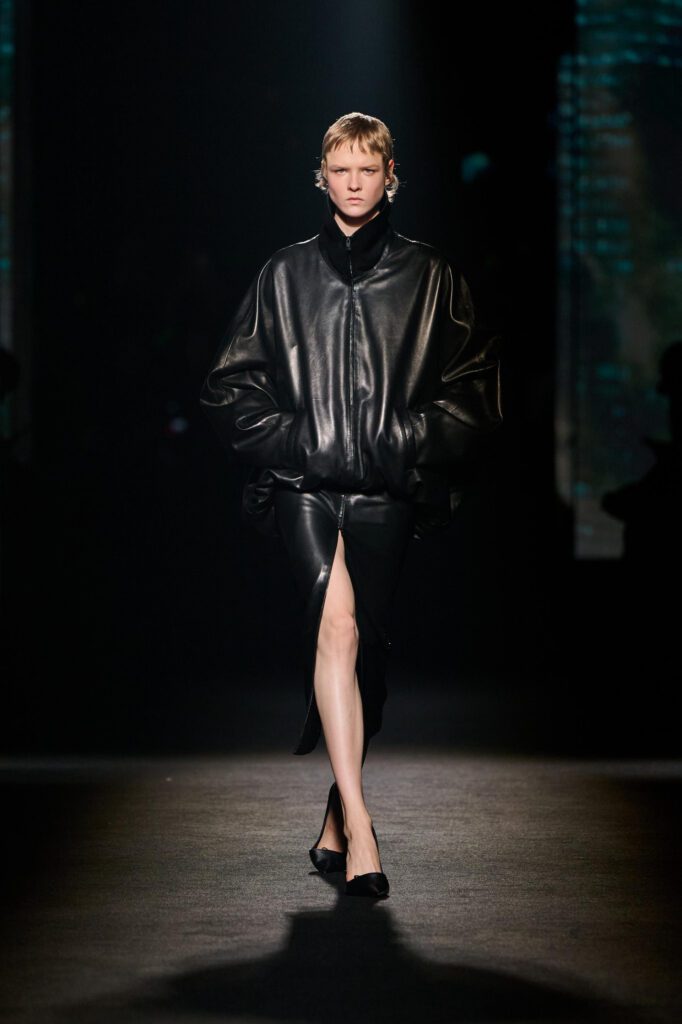
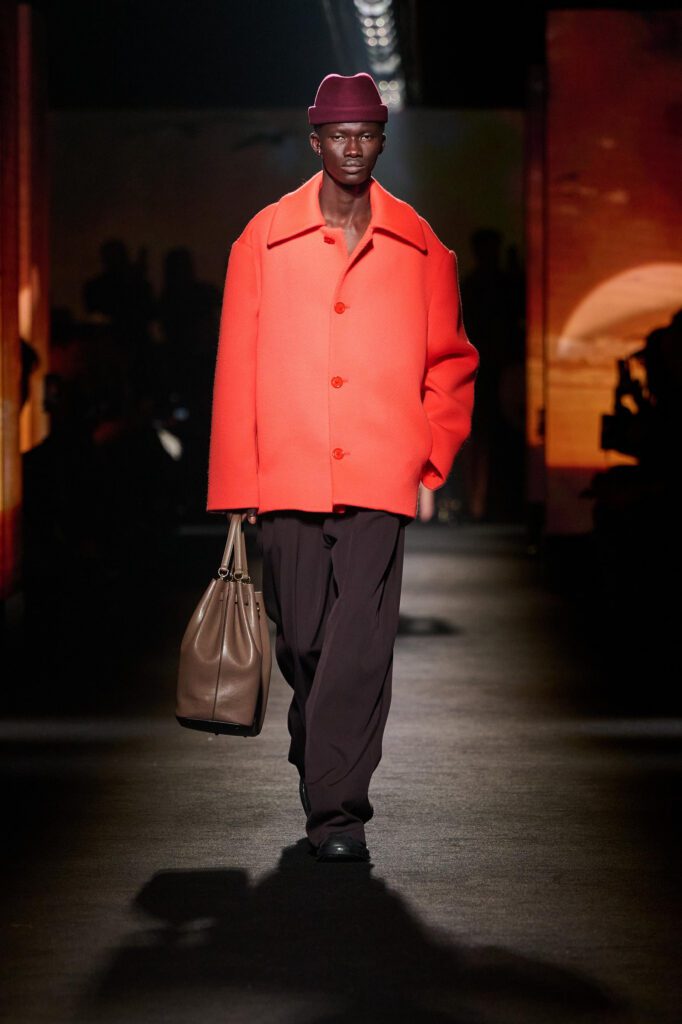
On the runway, silhouettes centred on the body as the structural core of each garment, expanding upon the architectural legacy of Cristóbal Balenciaga. Outerwear anchored the collection, featuring rounded leather bombers, imposing officer coats, and cocoon-backed shapes that lifted the fabric away from the body. Collars, hoods and funnel necklines repeatedly framed the face, evoking the composition of painted portraits.
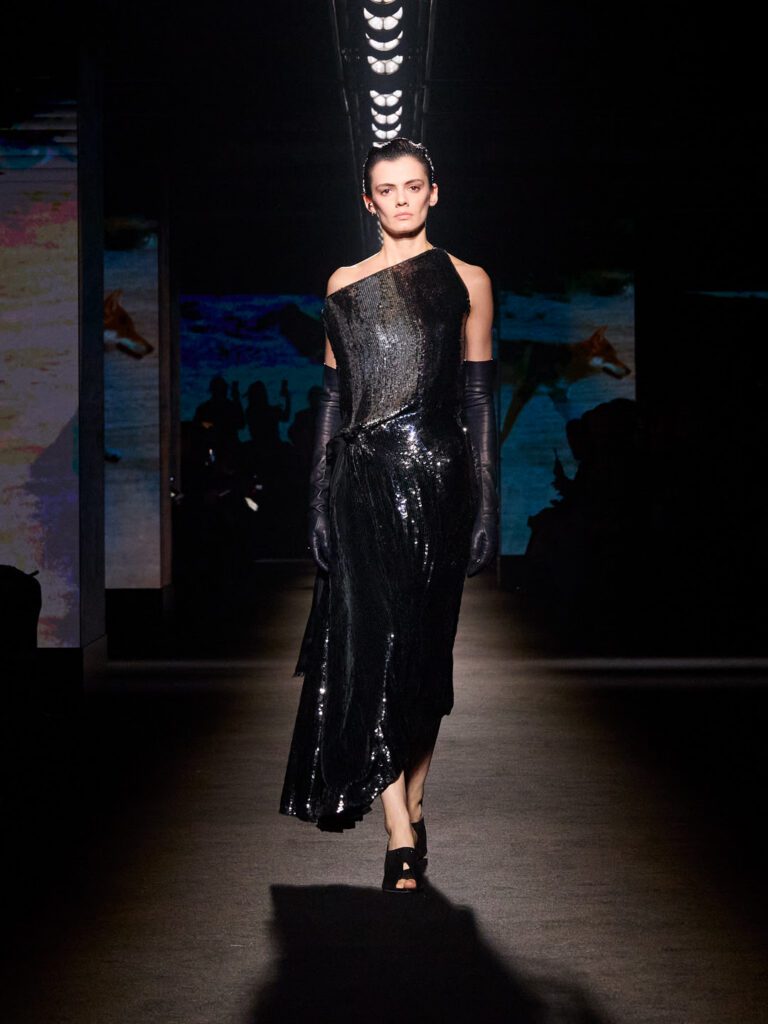
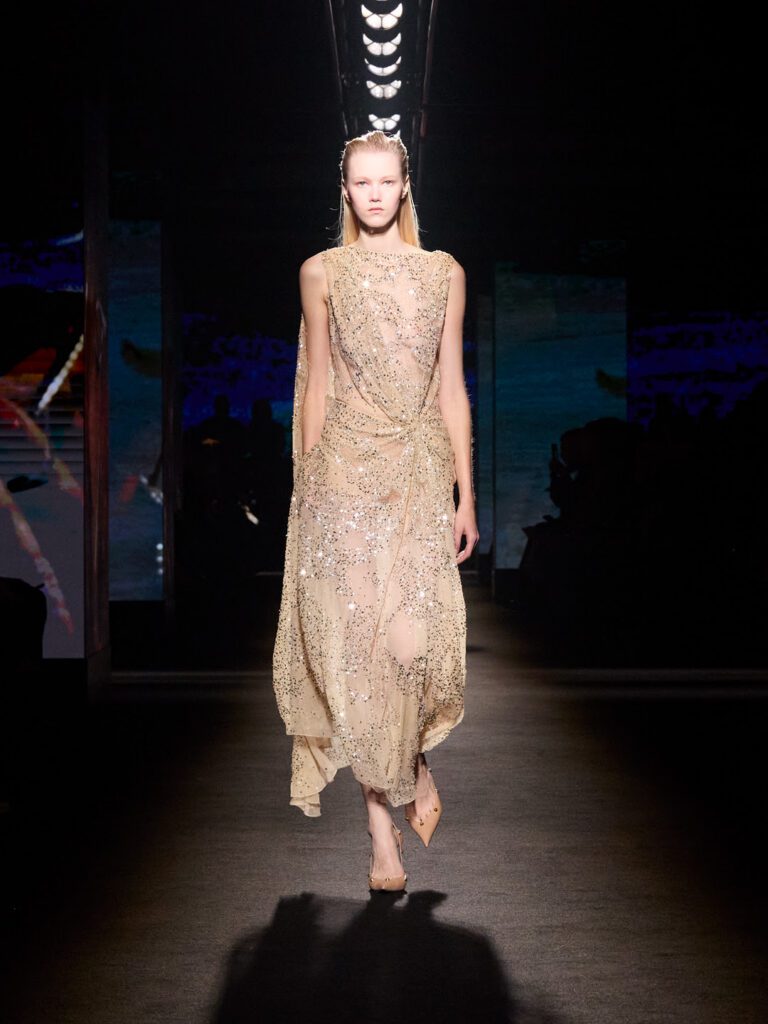
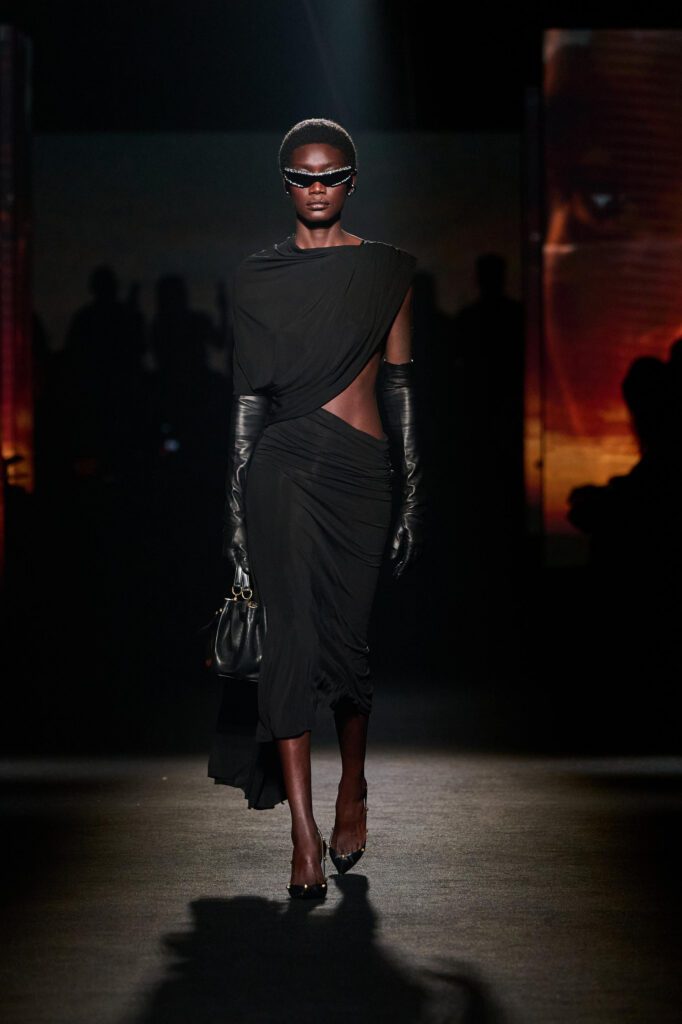
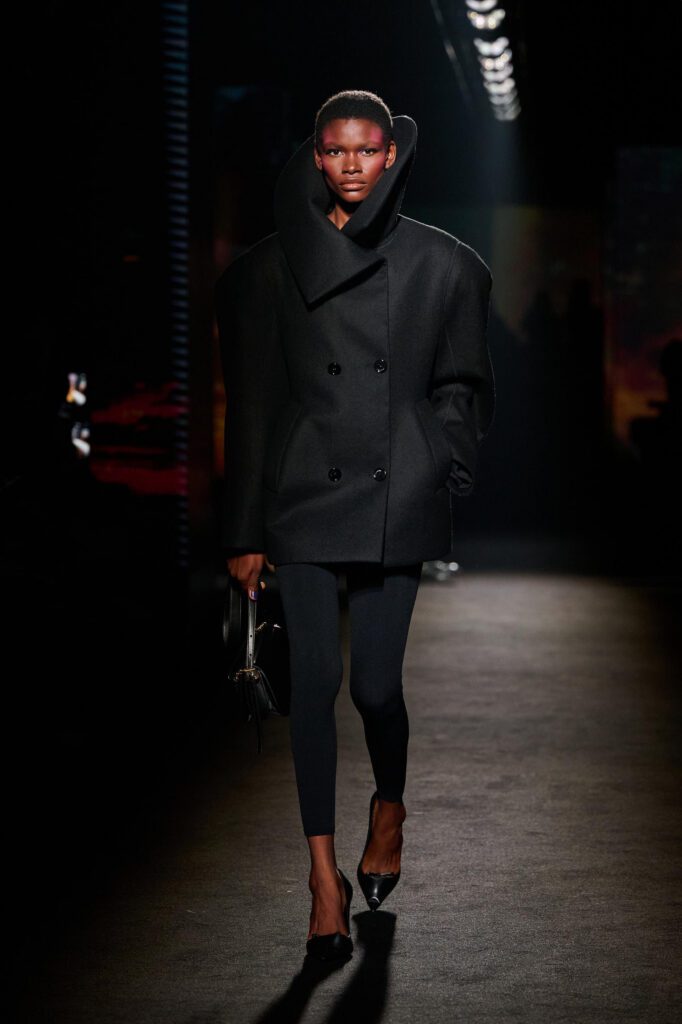
Elsewhere, draped jersey dresses introduced softer movement through minimal seams, while streamlined tailoring and high-waisted denim grounded the collection in contemporary wardrobe staples. The interplay between controlled structure and fluid drapery reinforced Piccioli’s interest in clothing as both architecture and a form of gesture.
Material choices heightened the chiaroscuro effect. Supple leather, dense cashmere and silk absorbed and reflected light in varying intensities, while sequin embroidery and ombré finishes created flashes of luminosity across garments and accessories. Bags such as the Midnight City and George styles emphasised sculptural form, while footwear developed with J.M. Weston twisted and folded around the foot.
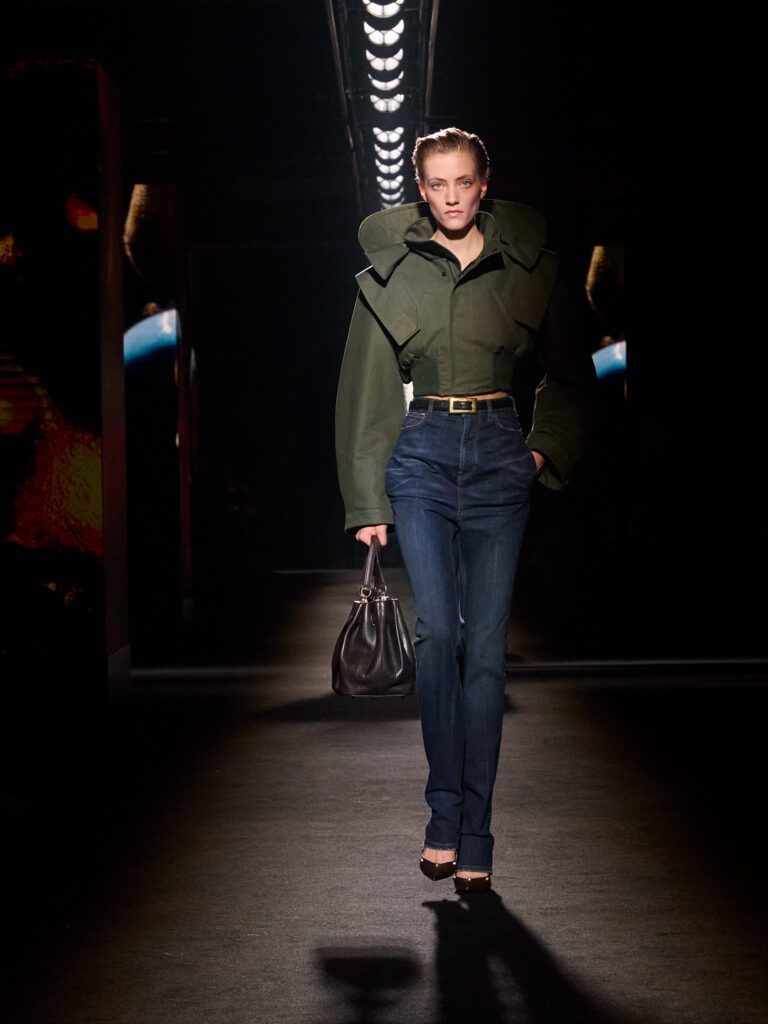
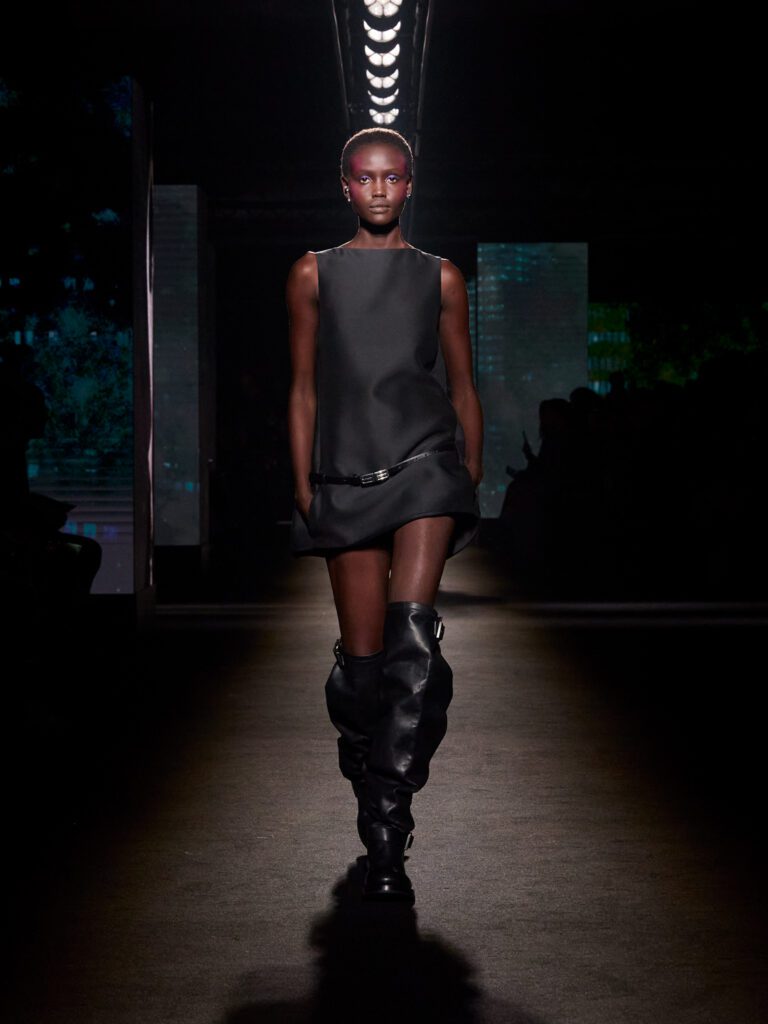
With AW26, Balenciaga positioned contrast as a defining principle. Under Piccioli’s direction, the collection balanced darkness and light, restraint and expression, presenting clothing as a means of capturing fleeting moments of humanity within sculpted form.
by Catherine Rowe-Kosary