
FOR Dior’s Fall/ Winter Couture 2026 collection, the house embraces shape and the physical in-between of womanhood, enhancing curves, waves, and the beauty of everything in motion rather than in fixed form. The silhouettes celebrate fullness and fluidity, treating the body as a landscape to be traced rather than corrected.
For those unfamiliar, Lynda Benglis is a renowned sculptor. Born in 1941, she became known for countercultural works that embraced free ecstatic forms, breaking away from the rigid structures of the male-dominated minimalist movement that defined much of the 1970s.
Her organically abstract sculptures, often poured in latex and other unconventional materials, rejected strict geometry and instead foregrounded gesture, flow and spontaneity. One of her latex-driven works would go on to appear on the cover of Life magazine, cementing her status as a radical force in contemporary art.


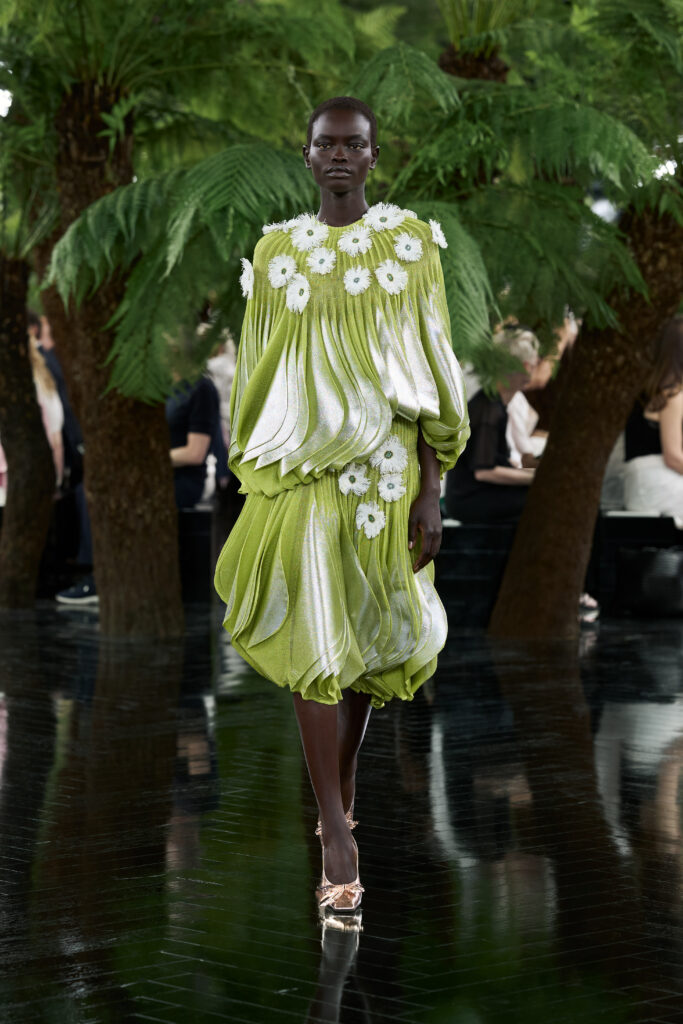

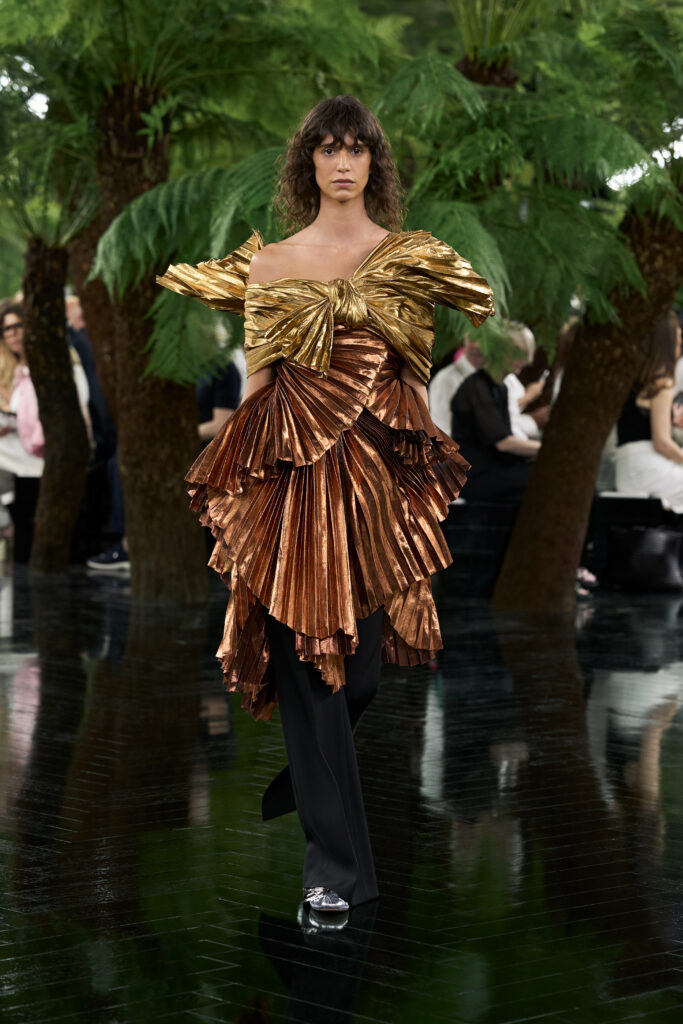

Following these key ideas of transforming originally two-dimensional materials, fabrics in the collection are gathered and bunched so that the textiles shimmer and unfold into ripples of liquid. This treatment gives surfaces a sense of depth and movement, turning flat patterns into sculptural forms that respond to light and the body with every step.
Creative Director Jonathan Anderson found much of his inspiration for the collection in India, particularly in the ornate craftsmanship of chintz. Chintz refers to the eighteenth-century production of detailed floral embellishments that turned soft cotton into a light-conducting, shimmering material.
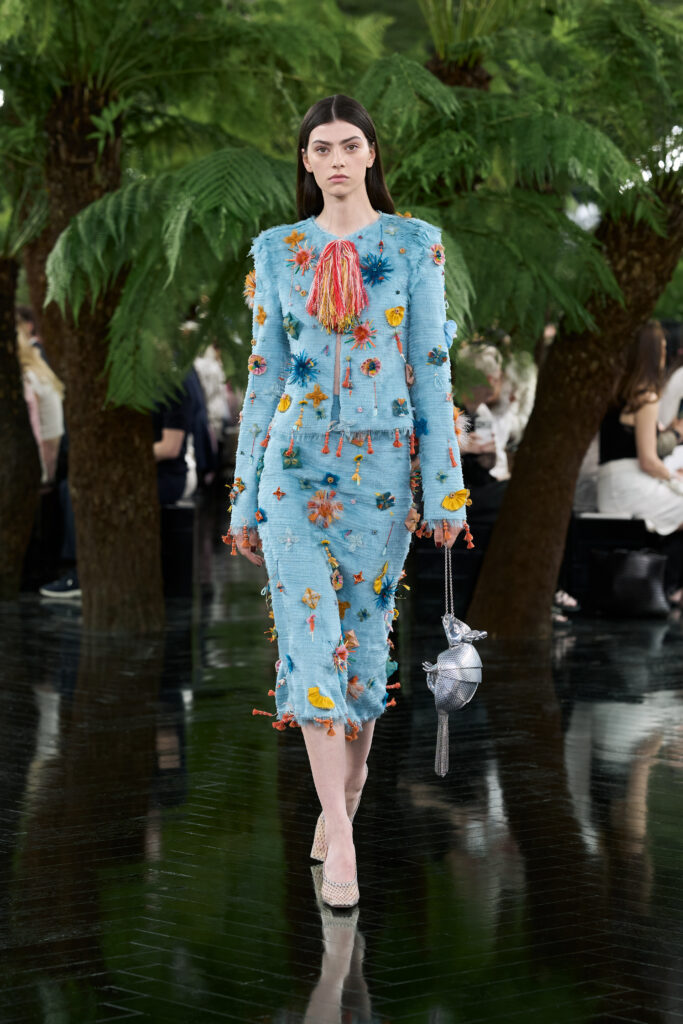
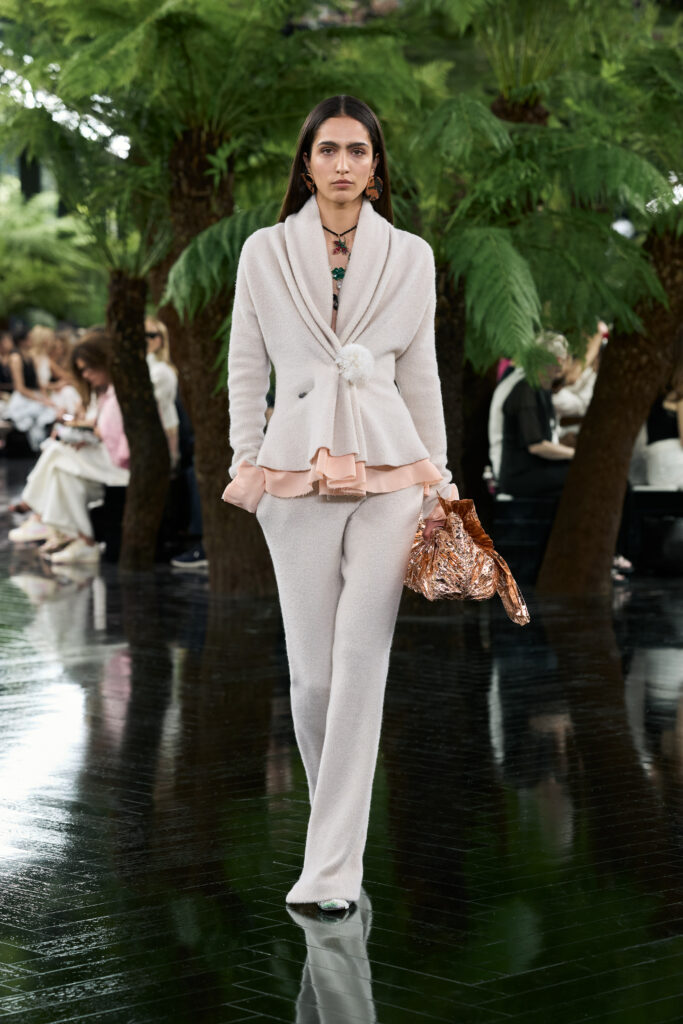

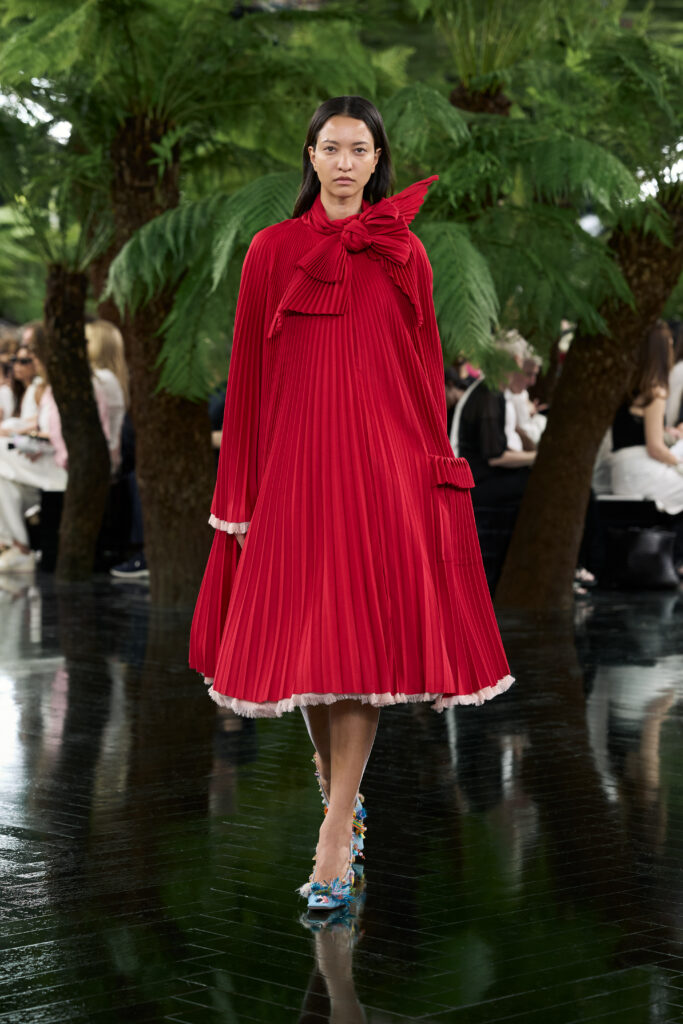
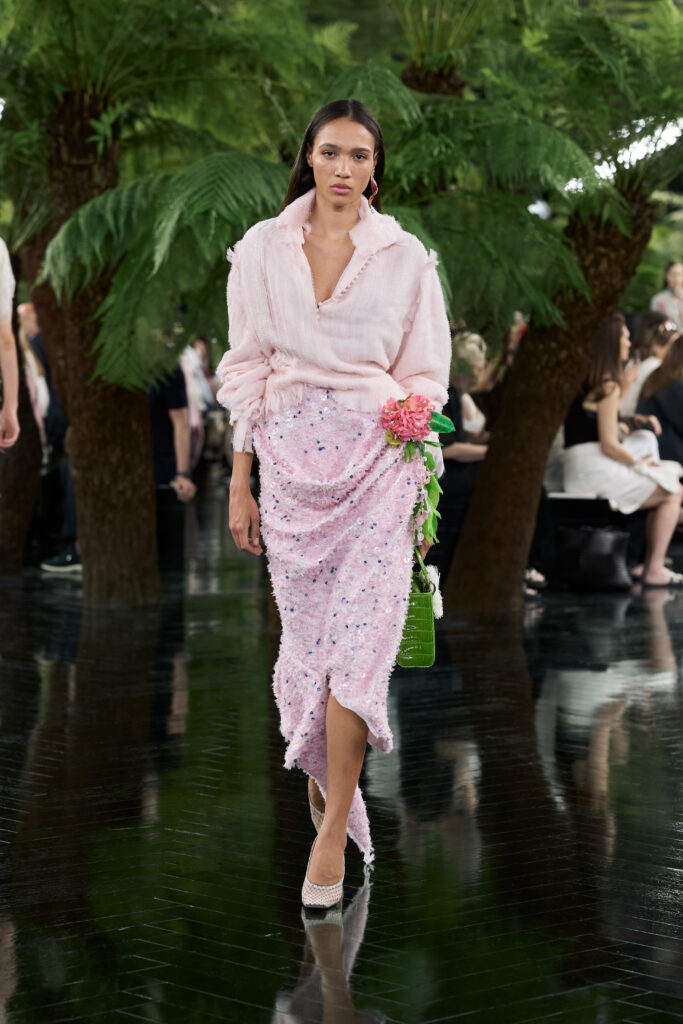

Hand-printed and richly patterned, these textiles captured the hearts of eighteenth-century homeowners and soon appeared everywhere in domestic interiors. Now, fragments of original chintz, sourced through specialist antiques dealers, adorn Petit Dîner and mini Lady Dior bags. The historic prints find new life on contemporary accessories, bridging centuries of textile history and reframing the fabric within a couture context.
A favourite standout is the footwear. Bold leaves and petals seem to pour out from the black tiled runway, fanning their pinks outwards against grey and metallic dresses. The shoes extend the botanical language of the clothes, rooting the looks in a dreamlike garden that appears to grow up from the ground and wrap itself around the models.
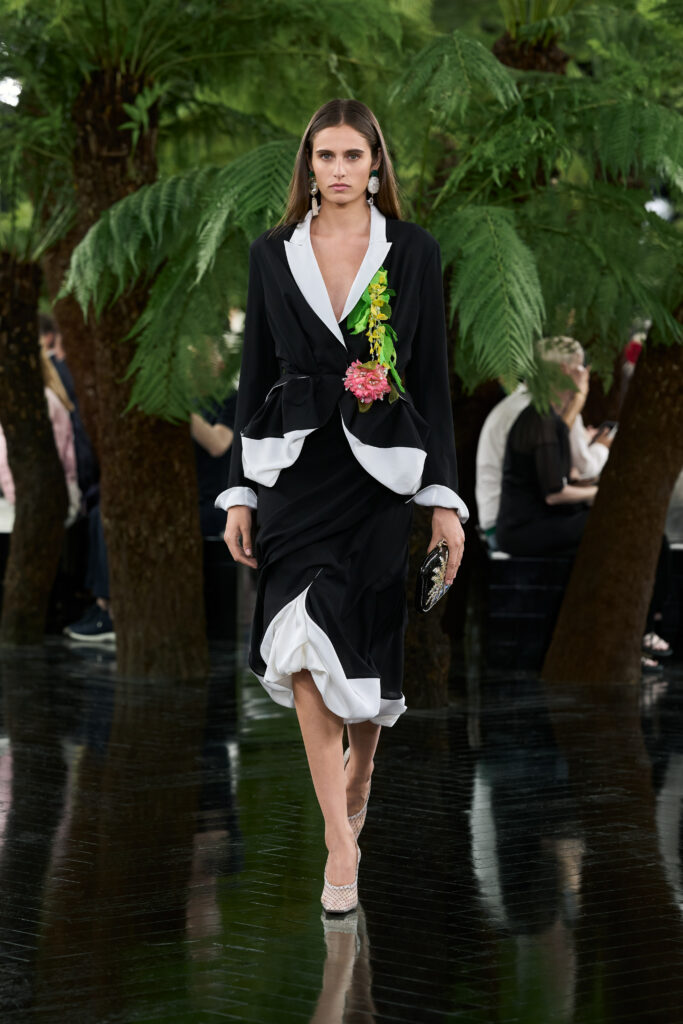


From 7–12 July, Grammar of Forms will be presented at the Musée Rodin show space, an exhibition bringing together pieces from the new haute couture collection, creations from the Dior archive and artworks by Lynda Benglis, some of which will be exhibited in France for the first time. This union invites viewers to explore the relationship and merging of art, design and fashion, highlighting how sculptural practice, textile tradition and couture technique intersect within a single visual narrative.
by Ellis Dowle