
MILAN, ITALY — Nowadays, ‘art’ means nothing. Or does it mean everything? It touches every margin of creativity, entangled at the very core of all that is covetable and all that is undesirable.
‘Good’ art is mercurial, magnetic, magnanimous. It pushes boundaries, draws from influences far and wide, yet feels pleasingly relatable, like that friend you haven’t seen for a while, but with whom familiarity returns from the moment your eyes meet. And that’s what Domenico Di Cristo, Teatro alla Scala’s Soloist, offers: something fresh but familiar, bold yet comforting. A story of expression, liberation and movement that happened quite by chance.
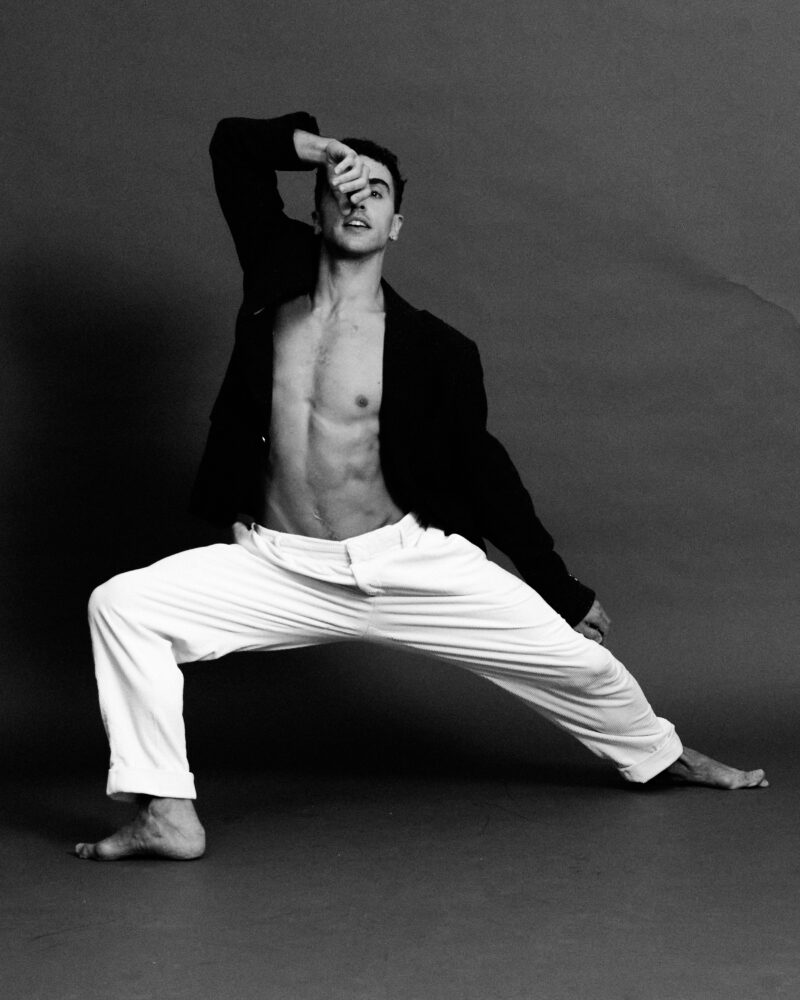
Domenico Di Cristo. Photographer: Antonio Crotti
“Rather than being a choice I made, it stemmed from my parents’ longing: I was a child full of energy, always on the go, and I often got into mischief,” Di Cristo explains as we begin to settle into our conversation. “I’d have liked to play volleyball, but there wasn’t a boys’ team in my town; therefore, aged six, I started a hip-hop class, following in my sister’s footsteps,” he says. It was only meant to be a one-month trial, but he ended up staying for three years. “From there, they suggested I take a ballet class if I really wanted to dance, but I felt too young to make important decisions back then.”
At the time, Di Cristo felt someone had already glimpsed a determination he wasn’t able to identify himself. “I was a very flamboyant child, but a stereo and a CD certainly knew how to capture my full attention,” he recalls. “When I danced, I discovered a degree of focus I never knew I had,” he says, adding that “he began studying ballet and, two years later, auditioned for La Scala Ballet Academy.”
Di Cristo didn’t consider ballet a passion at the age of ten, even though he enjoyed dancing. “I studied hard and gave it my all, but at the same time I was daunted by the rigour and discipline that the school demanded,” he shares. “It was precisely those years at the Academy, with their daily challenges, that made me realise just how much that journey was becoming part of my identity.”
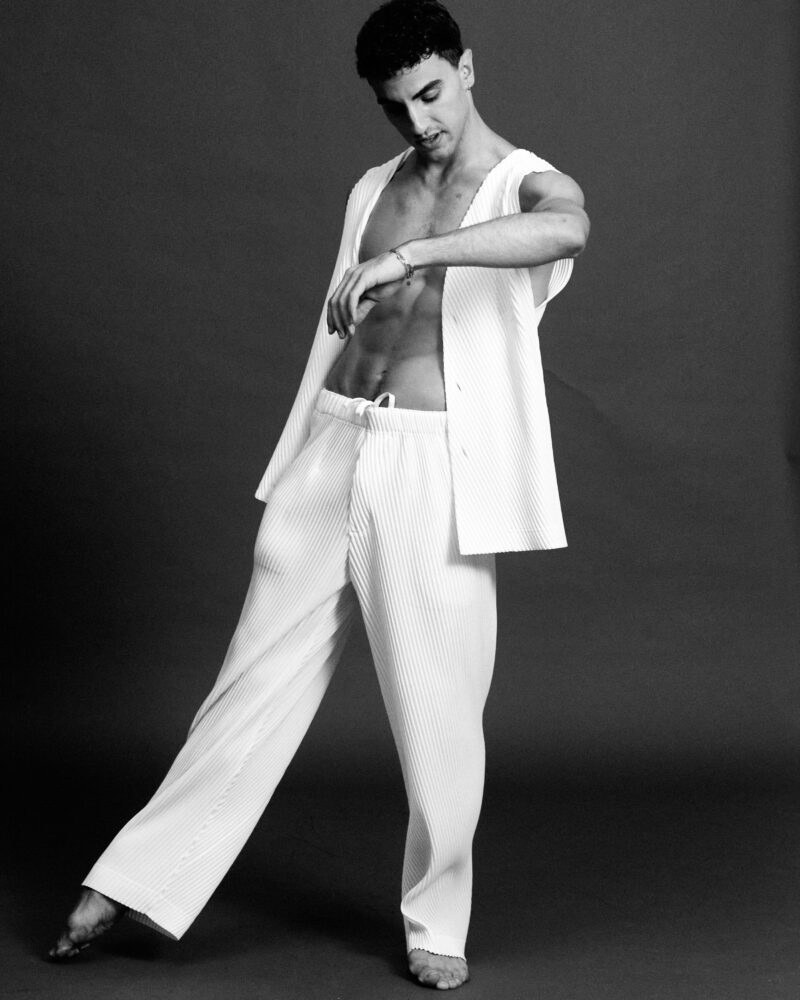
Domenico Di Cristo. Photographer: Antonio Crotti
The determination that his peers had noticed from a young age slowly came to fruition. “Years went by, the pace of work increased – as did the fatigue – but a certainty grew within me: dance became my life.”
After graduating from the Milanese Academy, Di Cristo left Italy to join the Czech National Ballet, where he stayed for four years. “I felt the need to grow abroad and experience a different way of living while putting myself to the test,” he says. “And to learn English!” he exclaims.
Yet, even from afar, he kept looking back to Milan. “La Scala has always remained a constant in my thoughts, a dream that has never ceased to accompany me,” he shares. “As a child, I only knew Milan through the car window that took me from home to the Academy and back every day; I often wondered what it would be like to truly experience that city, to be part of it.”
In 2019, he returned to La Scala’s ballet company, crowning the moment when the dream of a little boy became “the reality he’d been chasing for so many years.” Cheers to that.
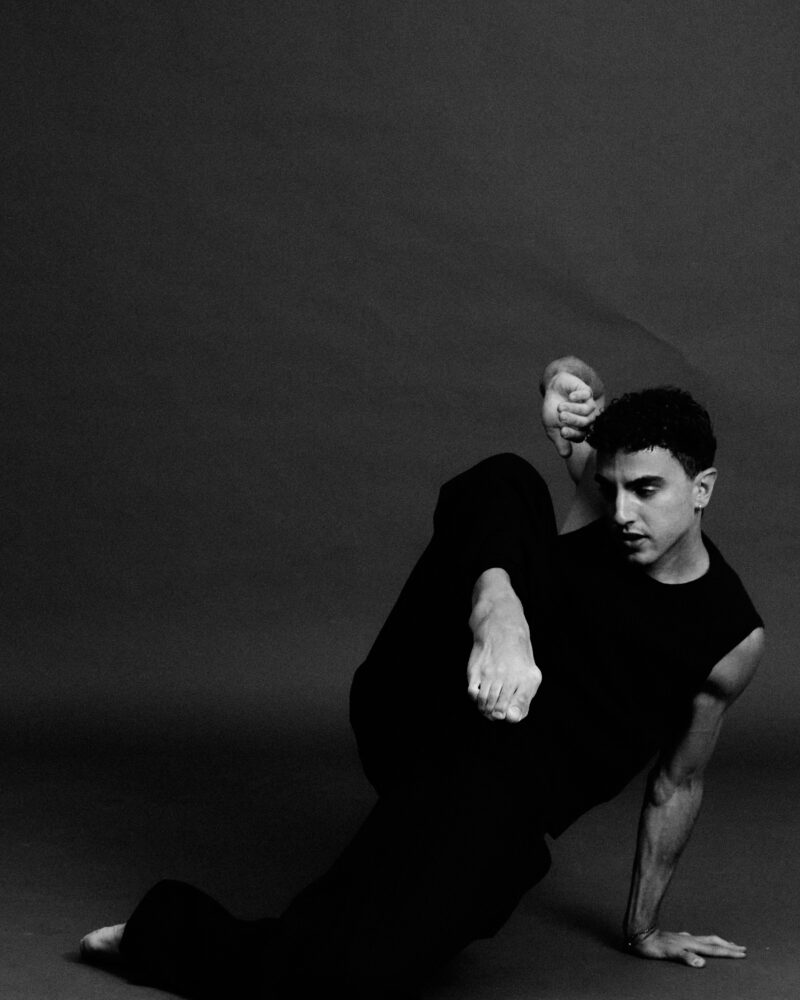
Domenico Di Cristo. Photographer: Antonio Crotti
On Dance as a Form of Expression
“At 29, perhaps I’m able to see a more complete and simple picture of this art form. I’m drawn to use the word ‘simple’ because, in all its complexity, dance requires you to be yourself. And being yourself should never be difficult. You have to learn to feel connected to your own body and carry with you all the vulnerability that the world sometimes seeks to stifle. In this way, it becomes a wonderful escape and, therefore, a means of expression from everyday life: a life in which we often cannot access our true selves.”
On the Joys and Thrills of Dance
“Alongside the pleasure of being on stage, there is a technical aspect that dancers work on to deliver a high-calibre performance. We dedicate ourselves – sometimes rigorously – to our craft every day in order to refine our performance and make it more confident and stable. It’s important to step onto the stage feeling ready and confident, so that we can devote ourselves to the beautiful part of this ‘job’, namely the artistry. And this artistry lies within us: in what we want to convey, in the emotions that emerge in that moment, and in the anxiety that accompanies our performance (laughs).
“We often find ourselves focusing solely on the performance itself, only to forget the beauty we bring out in the audience and in ourselves through dance. We must learn to accept that within the mistakes we make lies a great deal of freedom.”
On the Hardships and Complexities of Dance
“I have always approached my work with a great sense of responsibility, especially when holding a position at one of the world’s most famous theatres. And it is equally important that this responsibility does not lead to extreme perfectionism or a loss of work-life balance. I believe it is very important to recognise that life is all-encompassing and to allow ourselves to look beyond our art, making the most of our free time and personal lives to free our minds from the box we often lock ourselves into.”
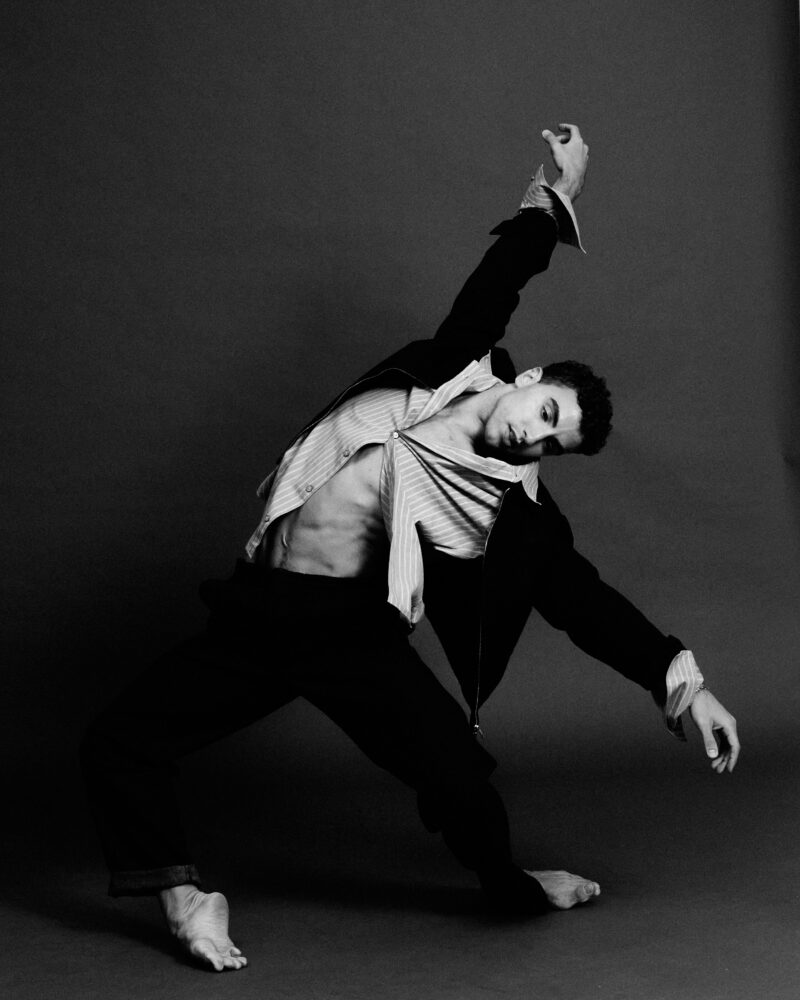
Domenico Di Cristo. Photographer: Antonio Crotti
On Mental Health
“Mental health stems from much earlier in life. From the age of ten, we find ourselves standing in front of a mirror, focusing all our energy on correcting only what is wrong with our bodies. And very often, we fall into the trap of carrying this mindset over into our lives outside the theatre. Working with our bodies and minds is never easy.
“We go through so many stages in life that we need to learn to embrace them all—to accept that we may be tired, that we’re not always in top form, that we need to take a break now and then, and that we don’t always manage to give 100 per cent. And I believe this is important to avoid slipping into chronic dissatisfaction or becoming dependent on success or the approval of others.”
On Future Hopes and Expectations
“Personally, when it comes to dreams, I’d love to dance one day at the Verona Arena. That audience must really give you something truly special. And then perhaps I’d like all the points we’ve touched on above to be effective, first and foremost, for me too. I’m a dancer myself, and I often fall into negative patterns of behaviour towards myself. Learning to love oneself is a wish I make for myself and for everyone.
“And if we’re to cast our gaze outwards to the wider world, I hope that more dancers will be able to make a living from this demanding but unique art form.”
by Chidozie Obasi
Photographer: Antonio Crotti @mira_geler
Stylist: Chidozie Obasi @chido.obasi
Makeup: Diana Djurdjevski @dianadee_makeupartist via @studiorepossi
Hair: Fujiwara Takahashi @fujiwara_takahashi
Producer: Jessica Lovato @jessicalovato_
Contributing Stylist: Edward Pusca @edwardpusca
Fashion Coordinators: Alberto Michisanti @albe.michi
Set designer: Damiano Di Benedetto @damiano_di_benedetto
Styling assistants: Simona Vernazza @simona_vernazza + Daiana Edosa @byosaremen + Salma Jabry @selma.jabry + Zeynep Pehlivanoglu @zeynvpada
Talent: Domenico Di Cristo @domenicodi_cristo
Clothing Credits:
Look 1: BRUNELLO CUCINELLI
Look 2: HOMME PLISSE by Issey Miyake
Look 3: EMPORIO ARMANI
Look 4: Jacket DIOR | Shirt LOUIS VUITTON | Trousers TOD’S