
AT THE heart of Lavin Karakoc’s Spring/ Summer 2027 collection is the desire to bring together different cultures through the shared art of getting dressed.
Beginning with the centuries-old Turkish ritual of reading coffee grounds, Lavin’s collection is a practice rooted in intuition and reflection as a quiet metaphor for identity and possibility. The ritual becomes embedded within the clothing rather than appearing as a literal reference. Each garment carries a sense of looking inward while imagining what comes next, translating these ideas through fabric, texture and form.
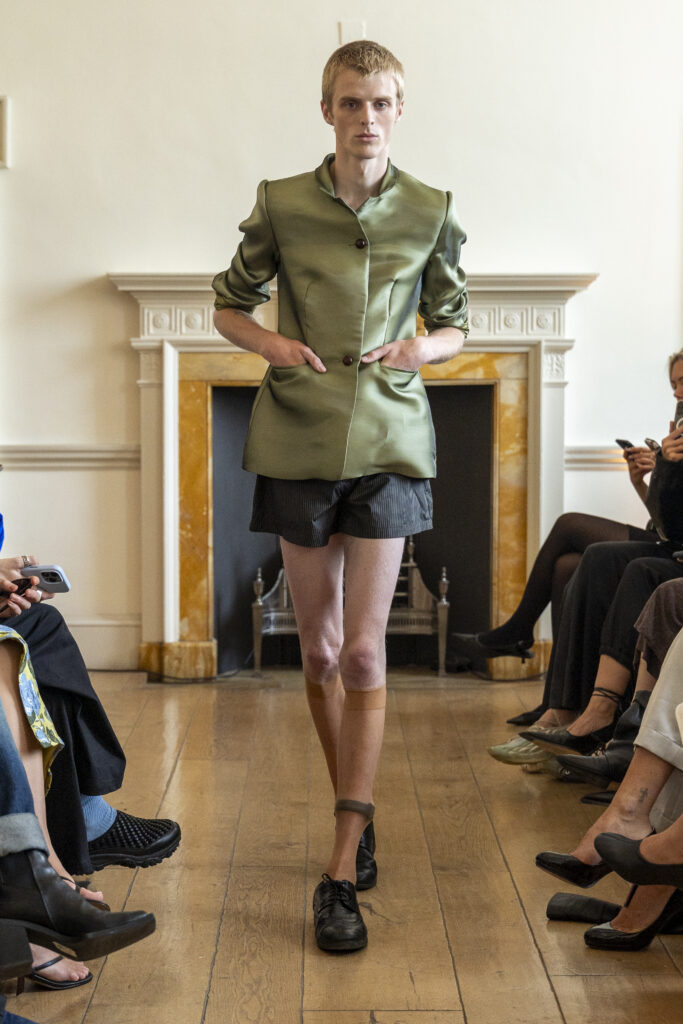
Vibrant tailoring gives the collection its sharpest lines while softer materials introduce movement around the body. Taffeta catches and reflects the light, bringing a sense of fluidity to structured silhouettes. Blacks, whites and vivid greens create a graphic palette that allows the that shimmer as they catch the light. The result is clothing that feels sleek yet expressive, balancing precision with movement and restraint with visual impact.
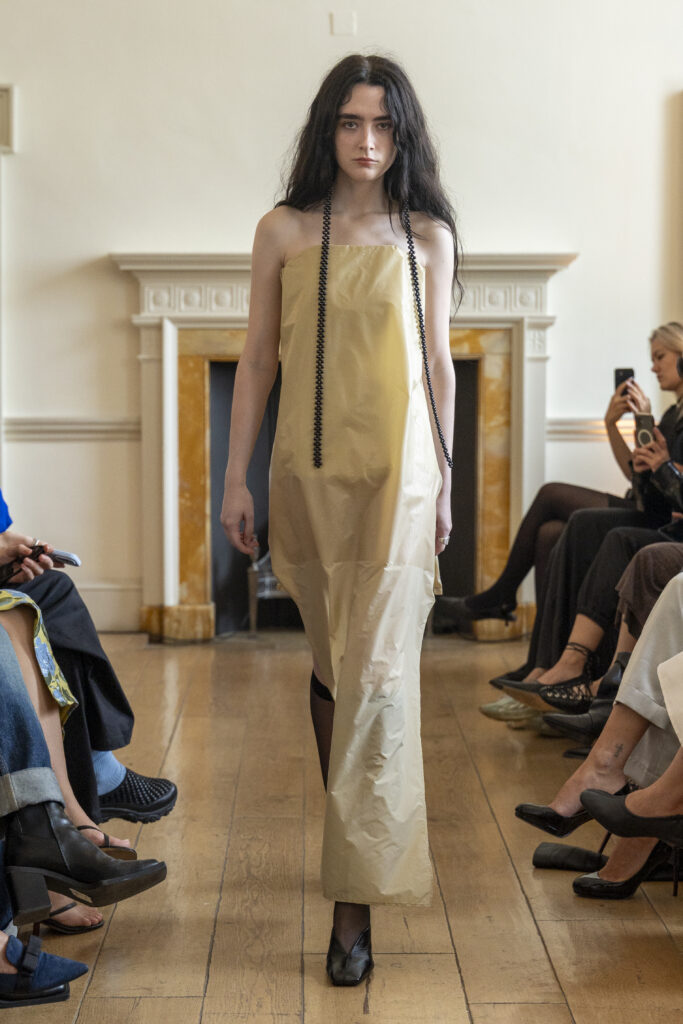
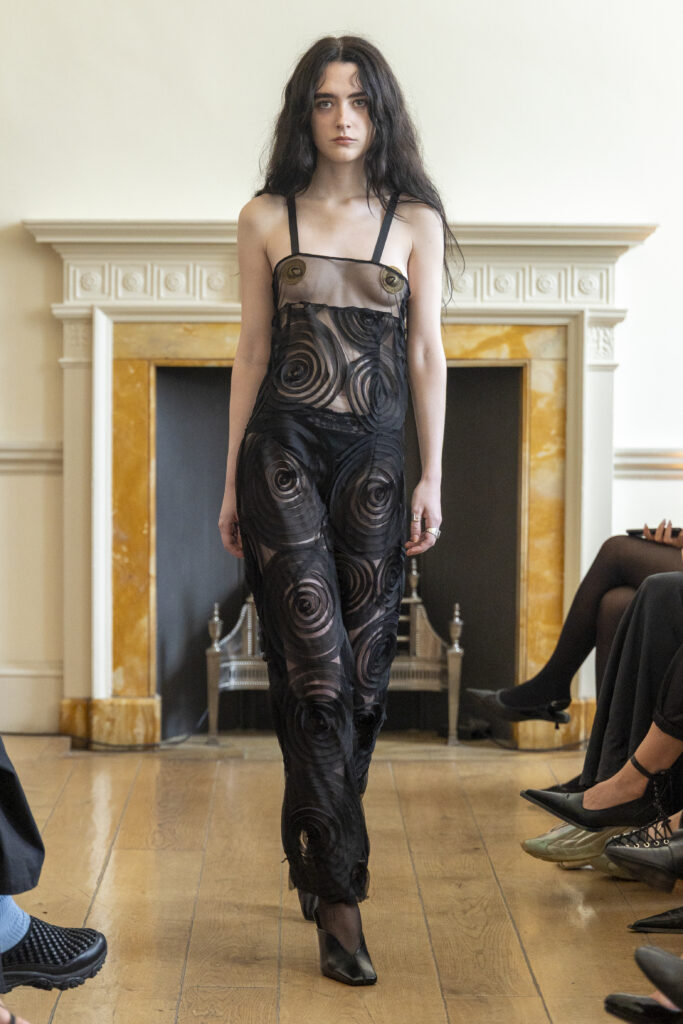
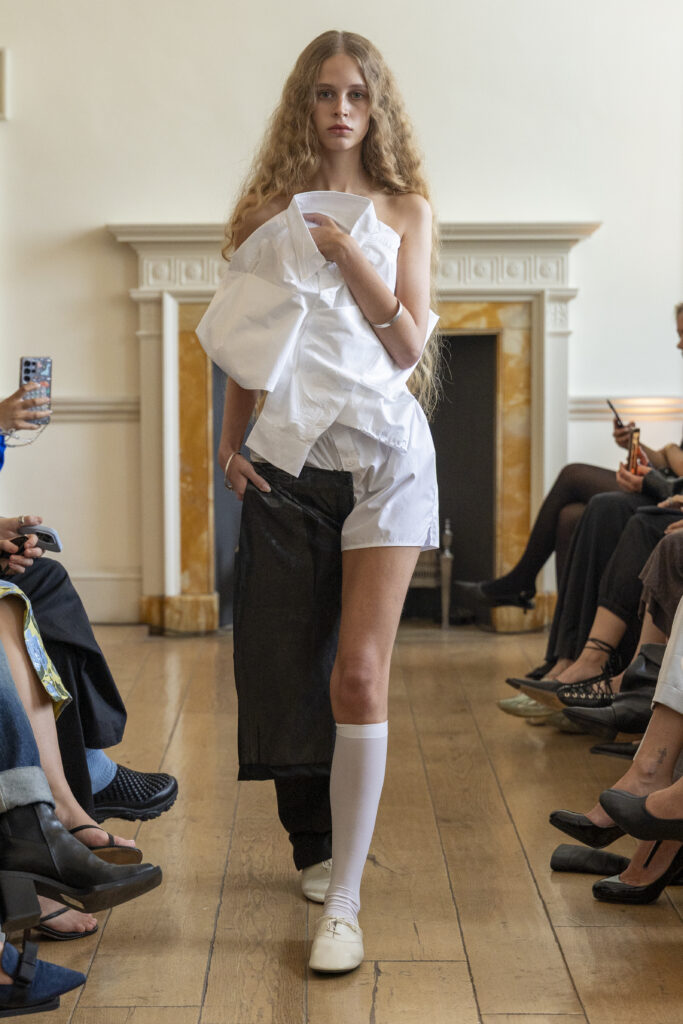
The most striking textile treatment comes through Lavin’s use of foiled screen prints. Applied directly to the fabric, the technique creates surfaces that appear almost metallic, shifting as the wearer moves. Yet the process is not hidden. Traces of the printing remain visible, allowing marks and irregularities to become part of the finished garment. Instead of treating construction as something to conceal, Lavin makes transformation visible. Textile becomes structure while structure becomes surface.
Tension is created by stylist Morena Salas. Layered underwear emerges beneath tailored pieces, exposing elements normally kept hidden and creating a deliberate dialogue between intimacy and outerwear. Softness meets sharp tailoring while opaque fabrics sit against reflective surfaces. The clothes are simple in silhouette but complex in texture, with each layer contributing to a sense of movement across the body.
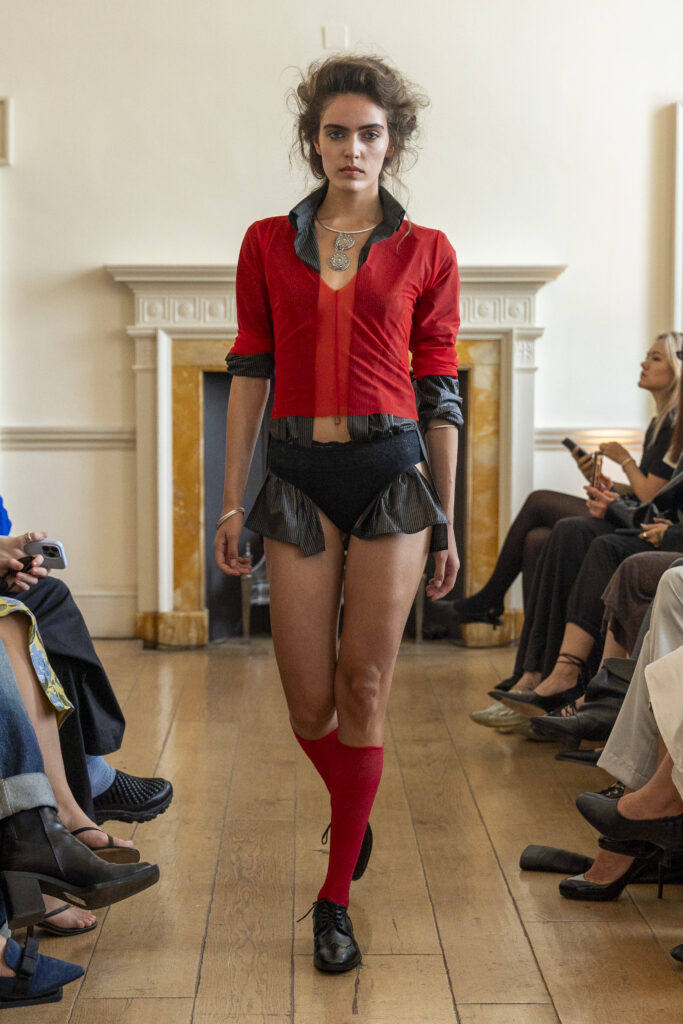
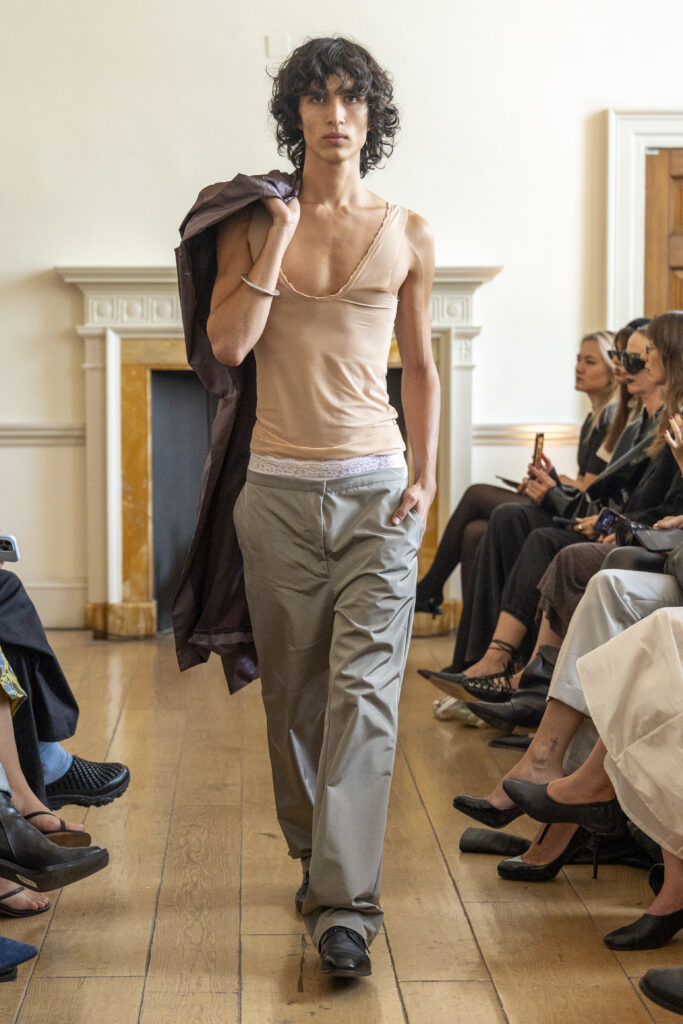
Turkish heritage runs through the collection as material memory rather than costume. Jewellery sourced from Istanbul’s Grand Bazaar is paired with contemporary tailoring, bringing the richness of Turkish craftsmanship into a modern wardrobe. Slim silver bands sit below the elbows, and pull out a futurism in the details. The relationship feels considered rather than nostalgic.
Against the historic interior of Somerset House, the sleek silhouettes and luminous textiles took on a new character. Foiled surfaces caught the light while black, white and green garments stood against the warmth of aged materials. The contrast between contemporary clothing and historic architecture reinforced the collection’s central idea: that memory does not need to remain in the past.
by Ellis Dowle