
THE University of Westminster’s BA Fashion show arrived with the particular energy of a cohort that has something to prove. Largely, they do.
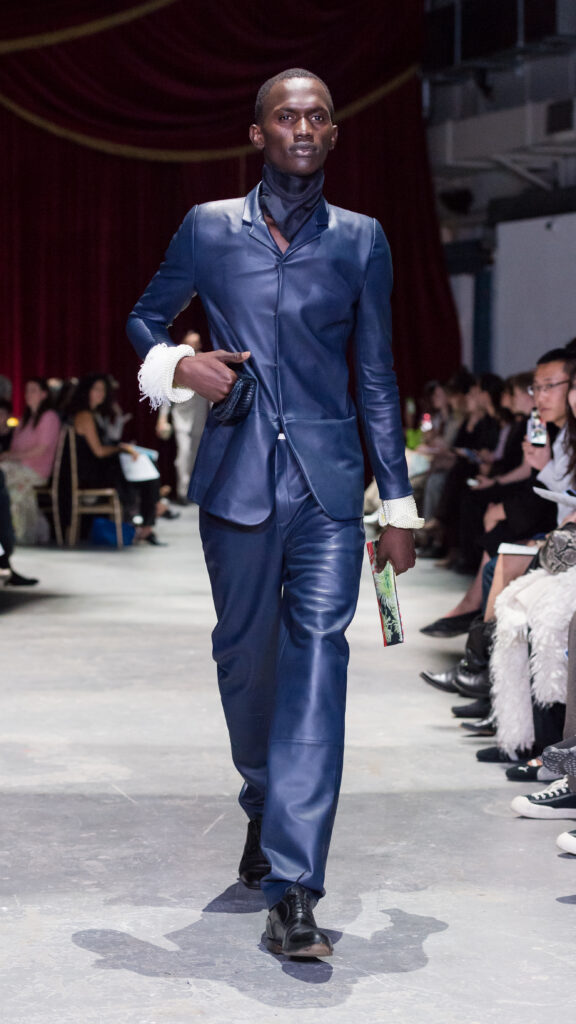
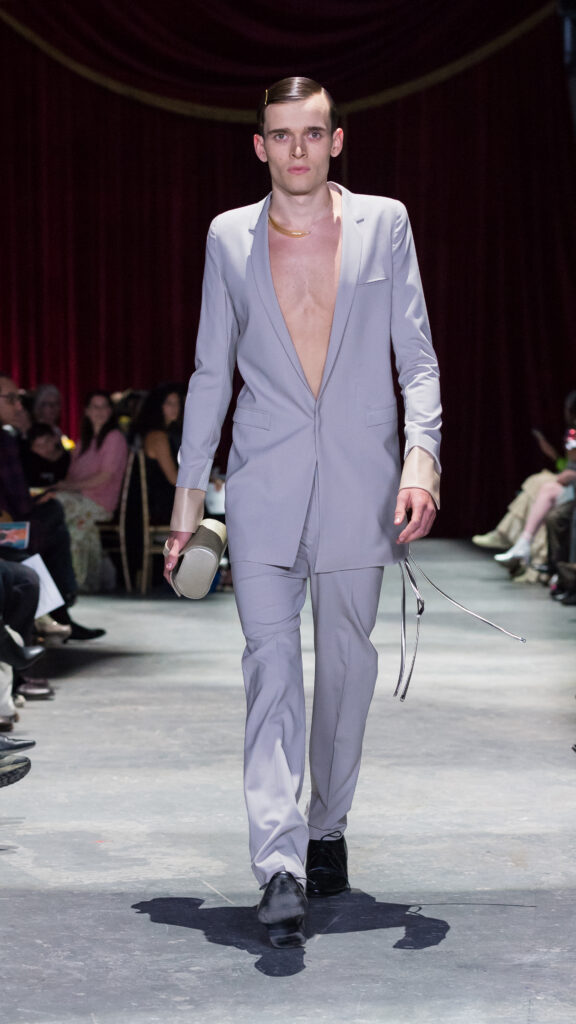
Qihui Ye
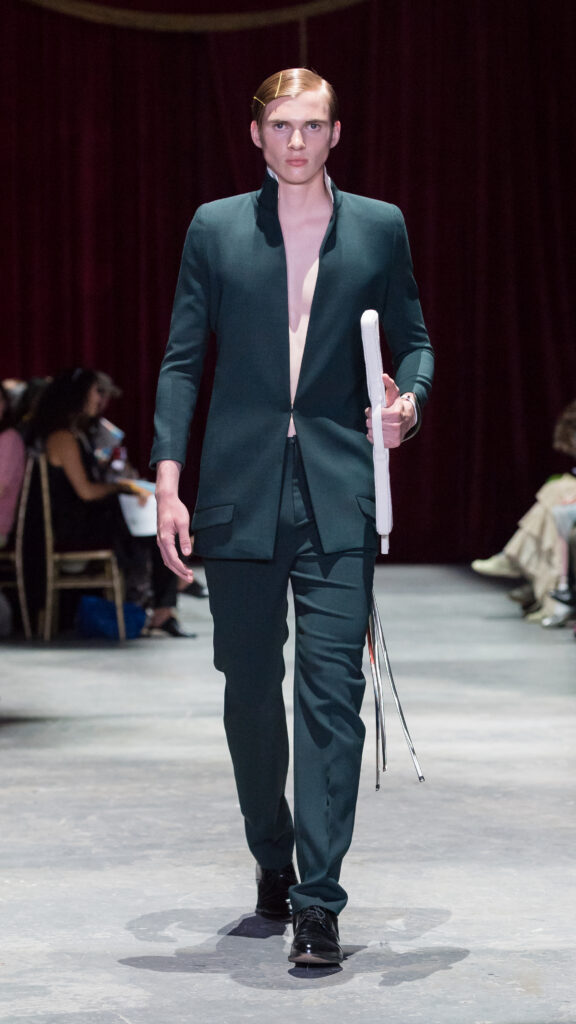
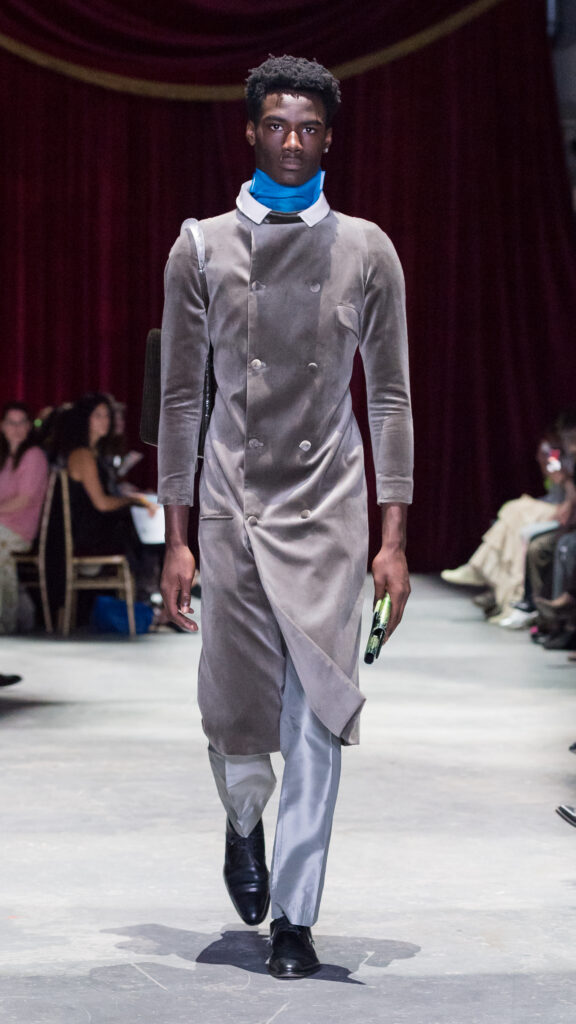
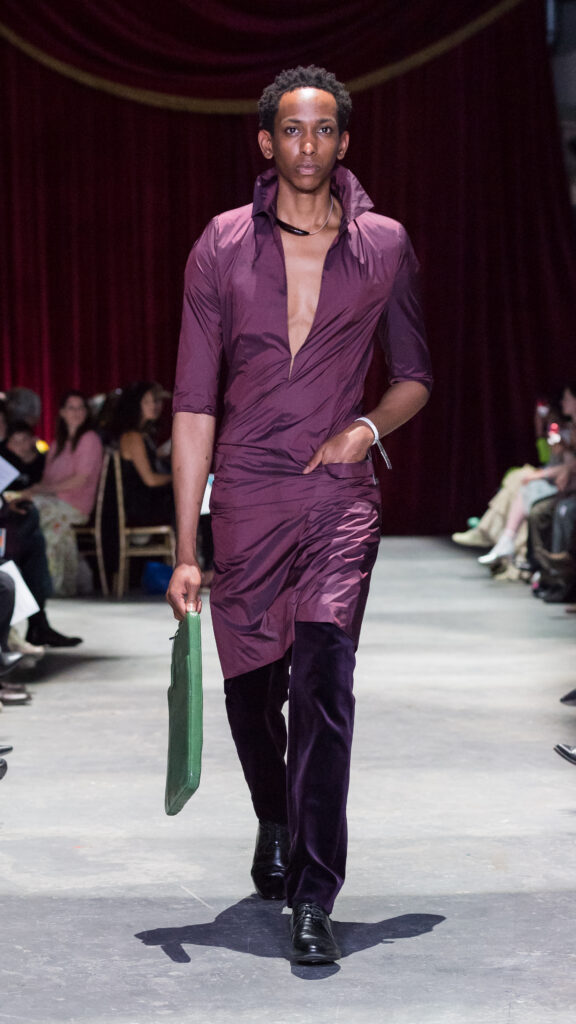
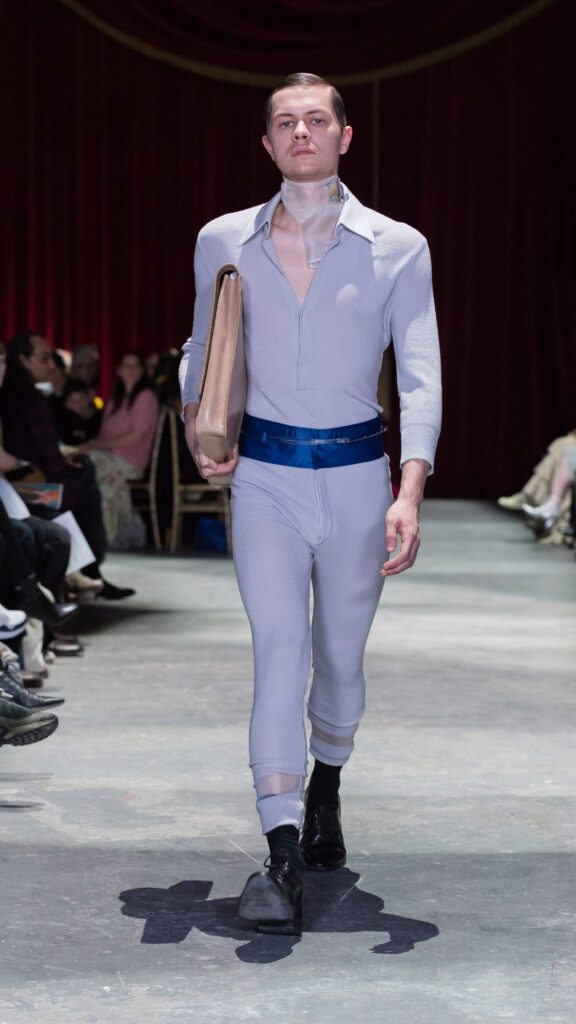
Subversion arrived quietly. Drawing on the elegance of Grace Kelly and Jackie Kennedy, Ye challenged conventional masculine identity through a restrained and precise visual language, leather and technical fabrics contrasted with handwoven cuffs and floral prints layered over metal chains and glass bangles. The bags, reinterpreting the proportions of the laptop case into gender-neutral accessories, were among the most covetable things in the show.
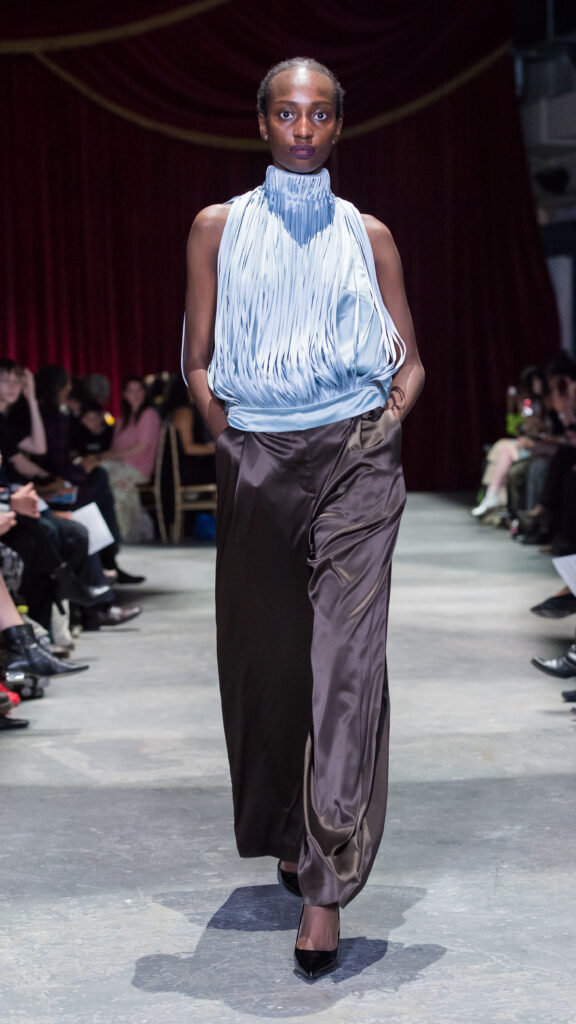
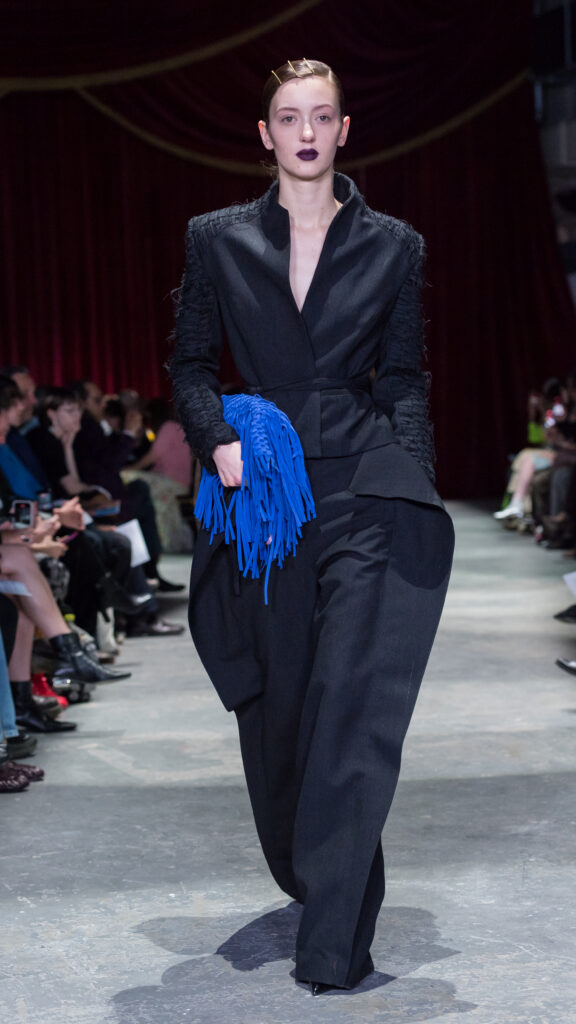
Aliyah Dankwah
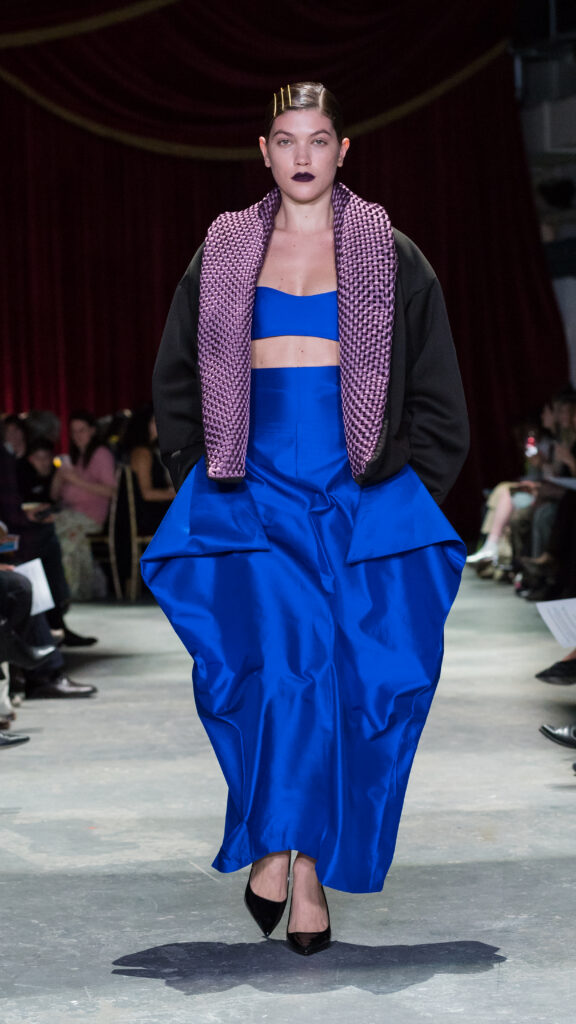
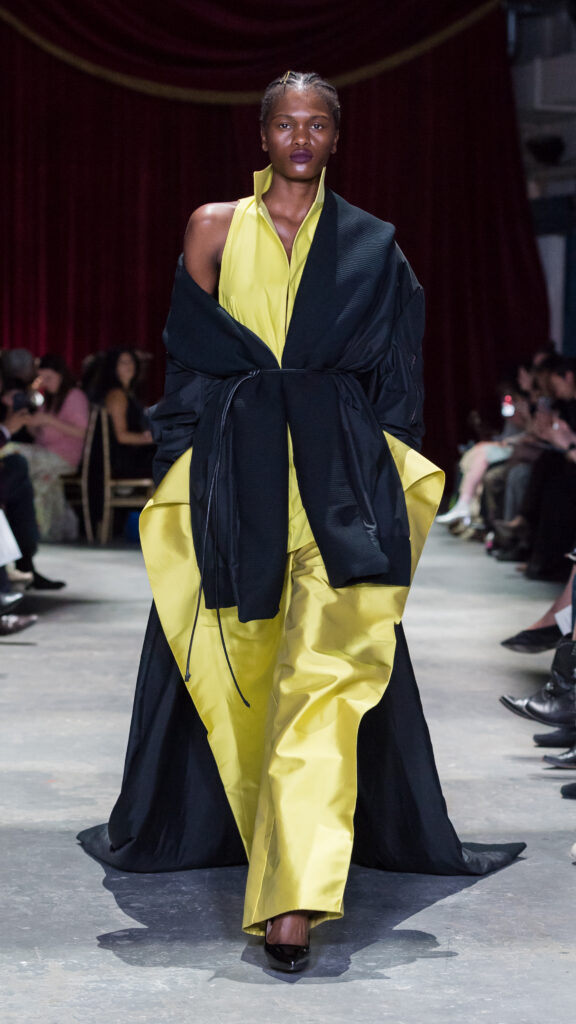
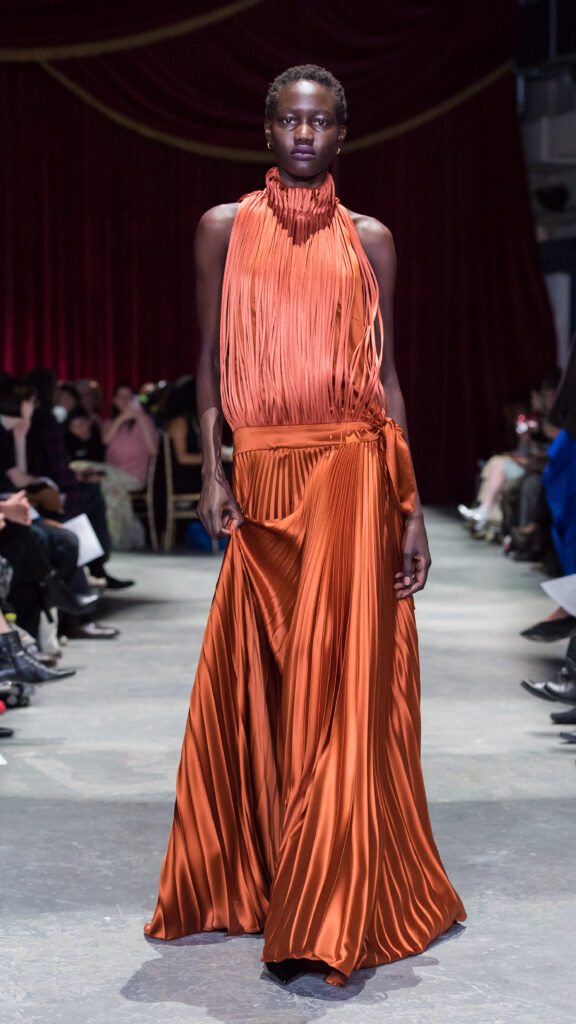
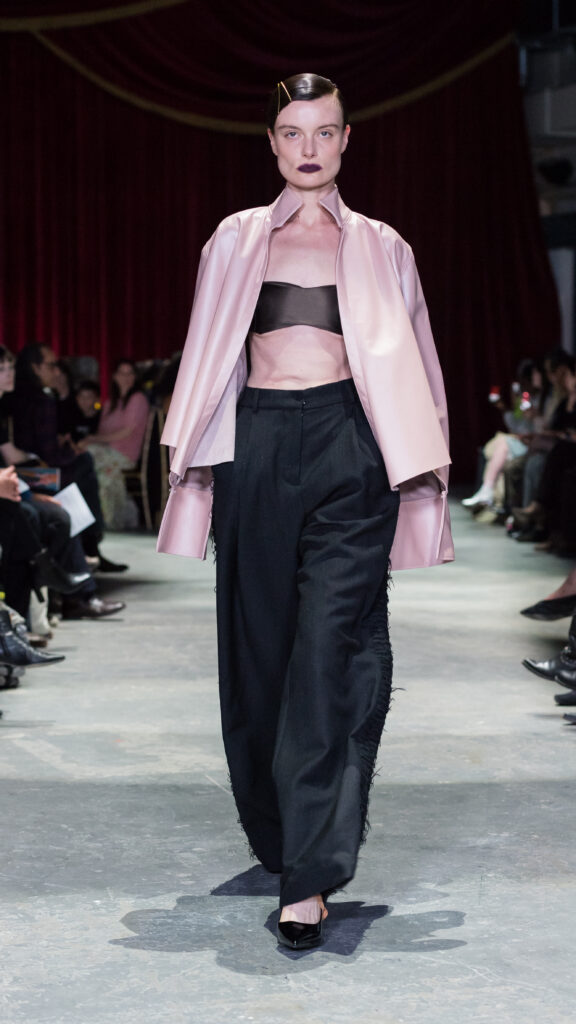
The title said it all. Rooted in Ghanaian heritage and the structural influence of the smock, Dankwah built sculptural womenswear from bold colour blocks that stood side by side in the Ghanaian tradition, drama arriving through contrast rather than embellishment. Structured outerwear worn nonchalantly and softened with supple leather ties brought London into the picture, and the two sensibilities were better for the collision.
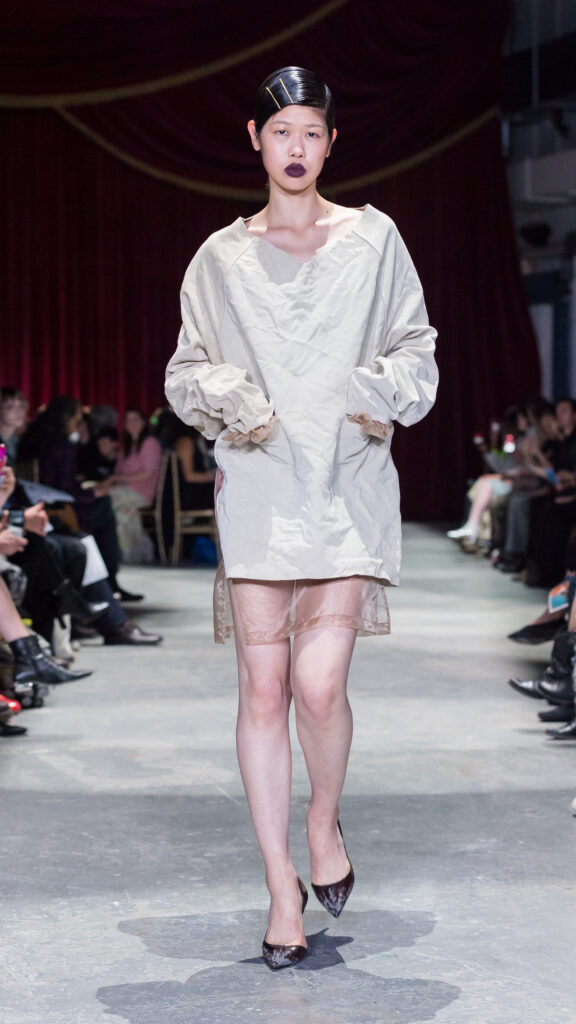
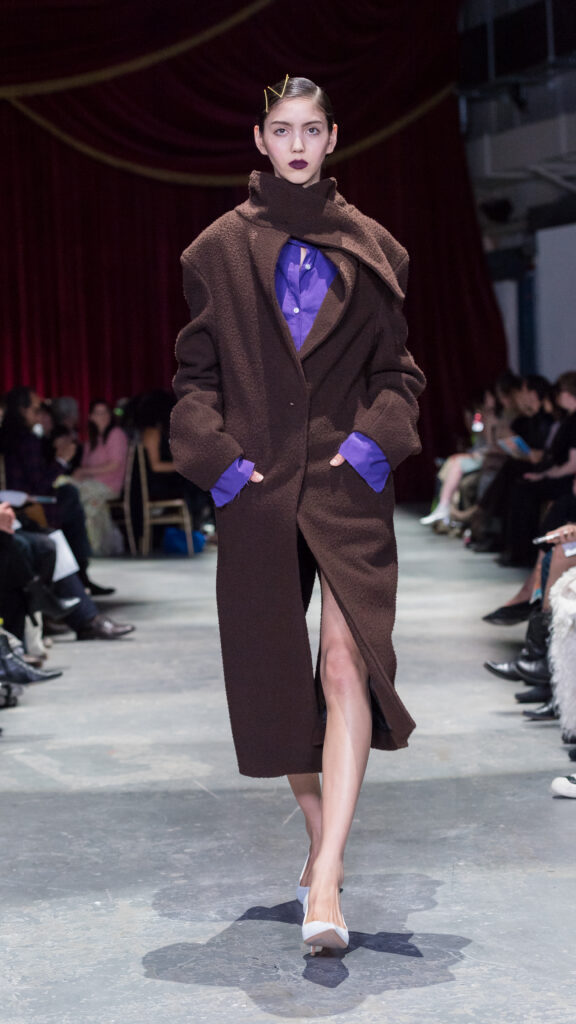
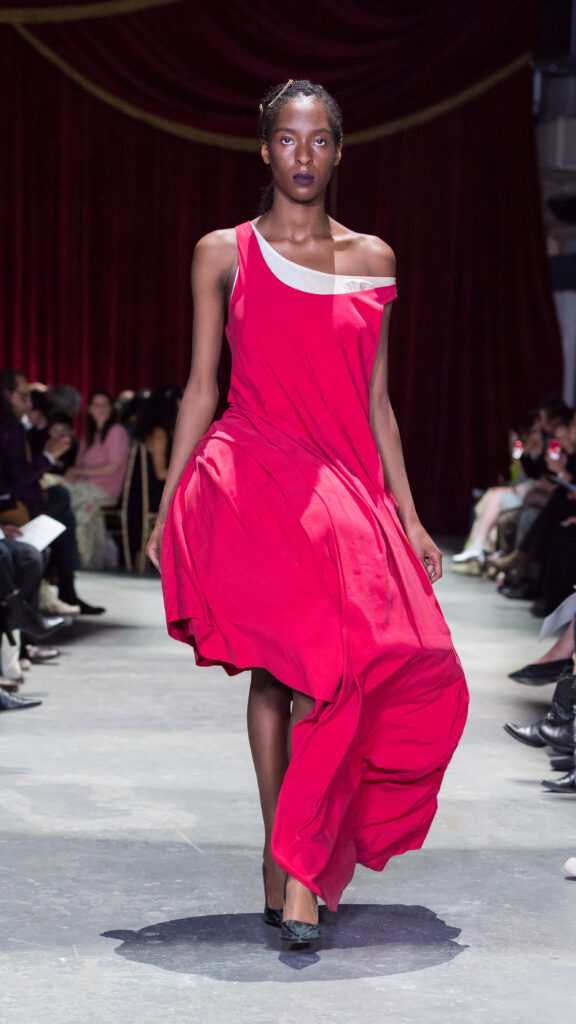
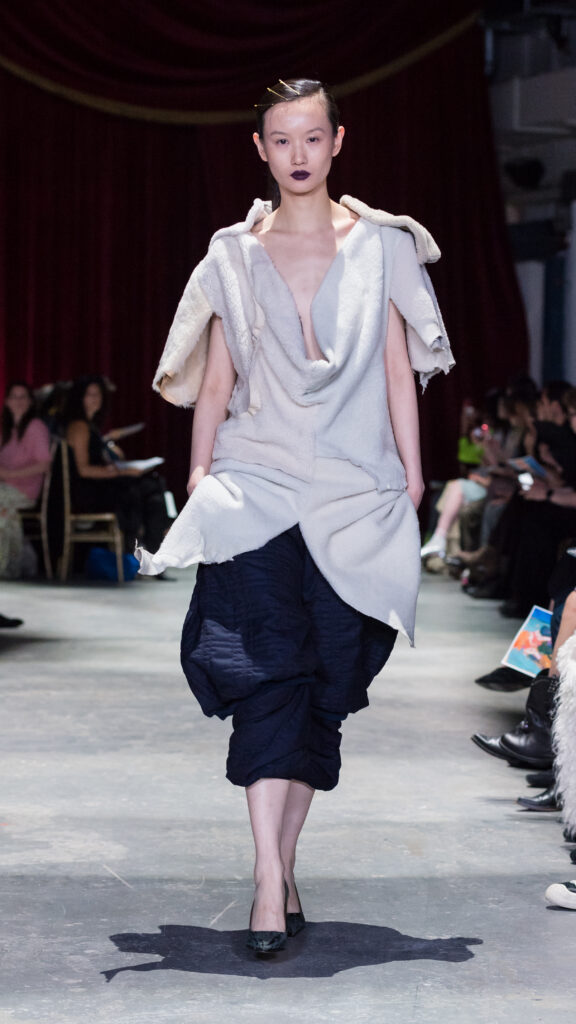
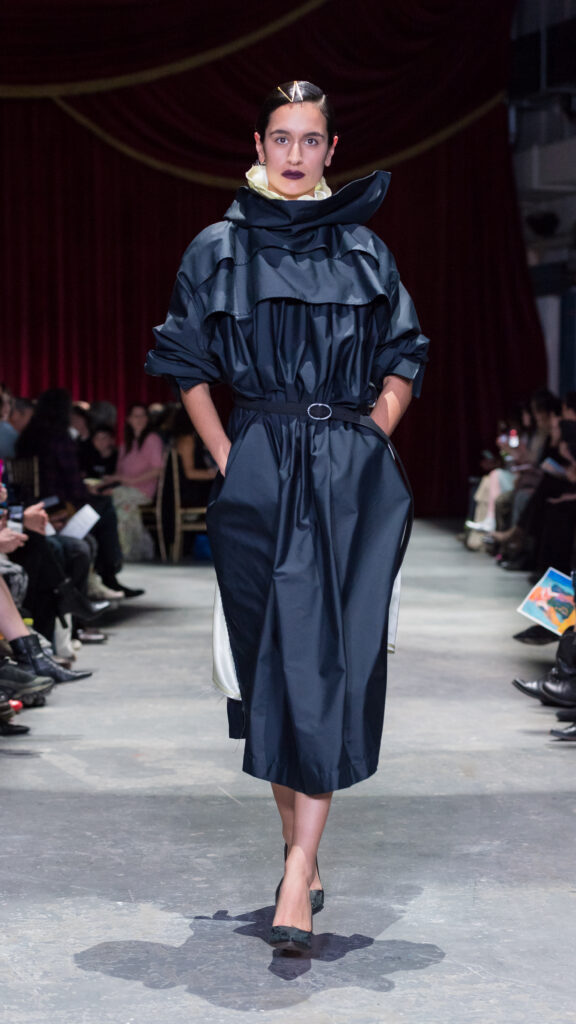
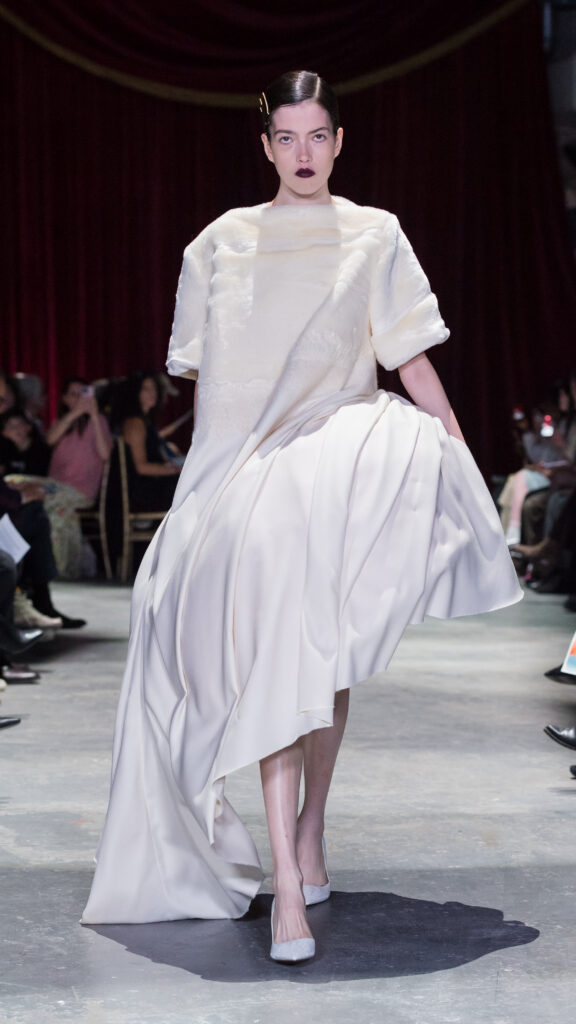
Leqi Zeng
What if the mundane was the whole point? Zeng’s collection took the fleeting and the overlooked — skirts lifted by a breeze, broken heels, oversized coats with exposed linings — and transformed them into relaxed but genuinely powerful elegance. These are pieces shaped by movement and imbalance, by everything that happens not at departure or arrival but somewhere entirely in between.
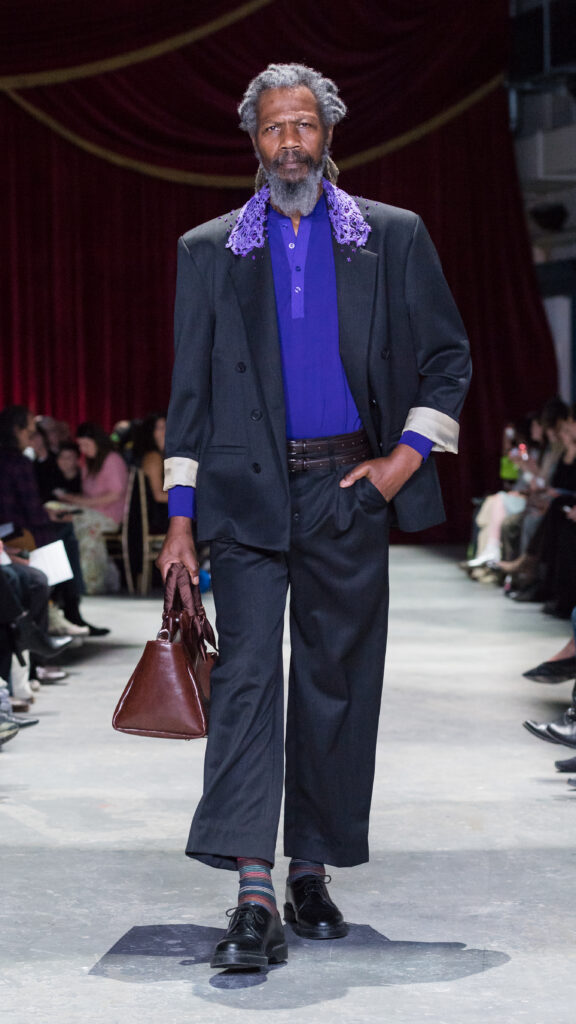
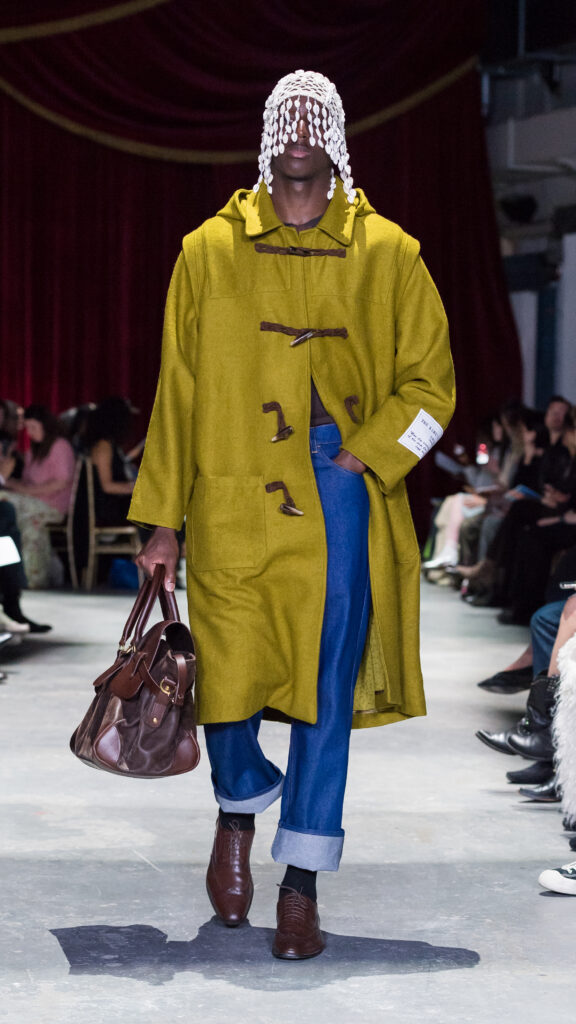
Rachael Adegoke
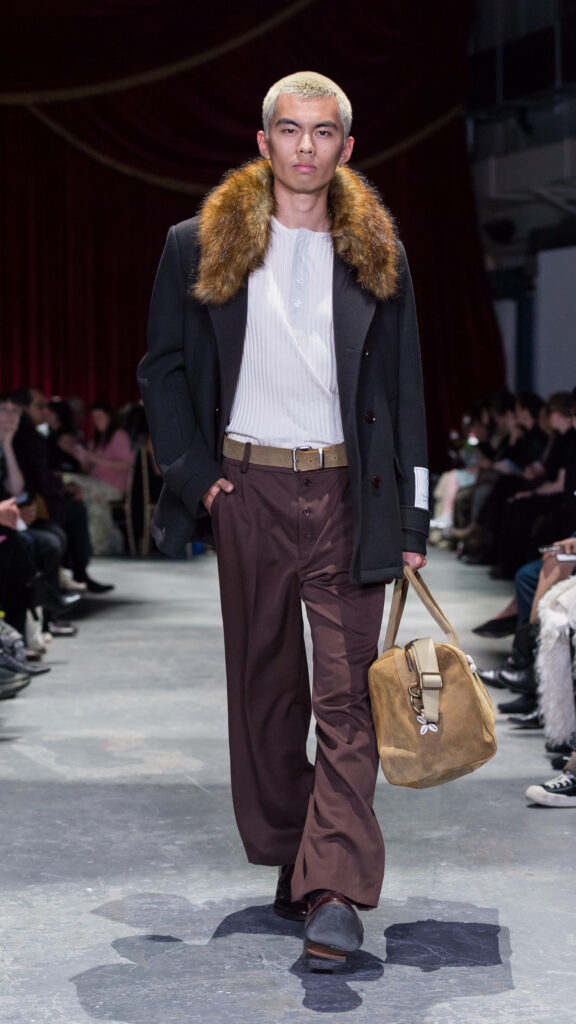
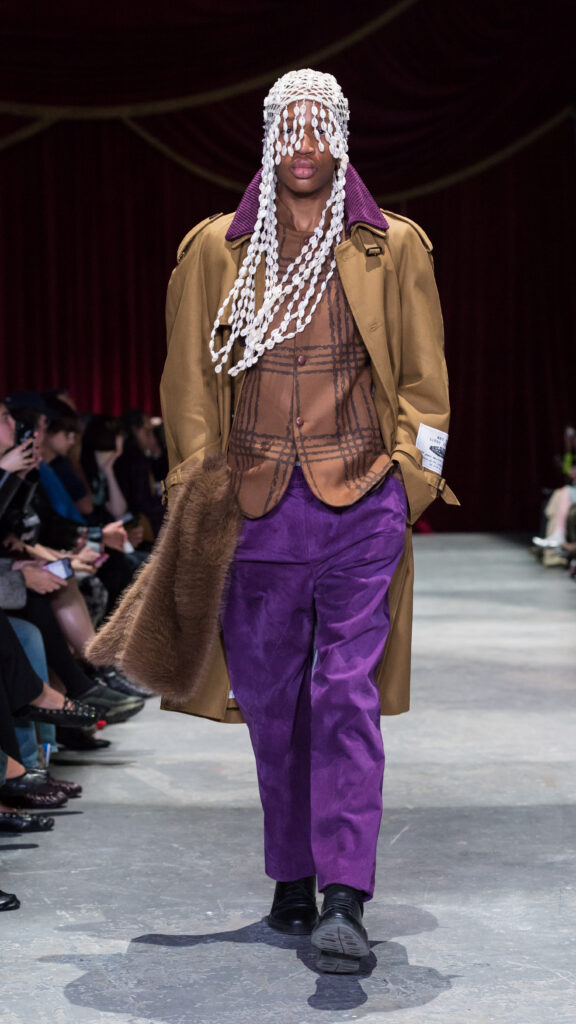
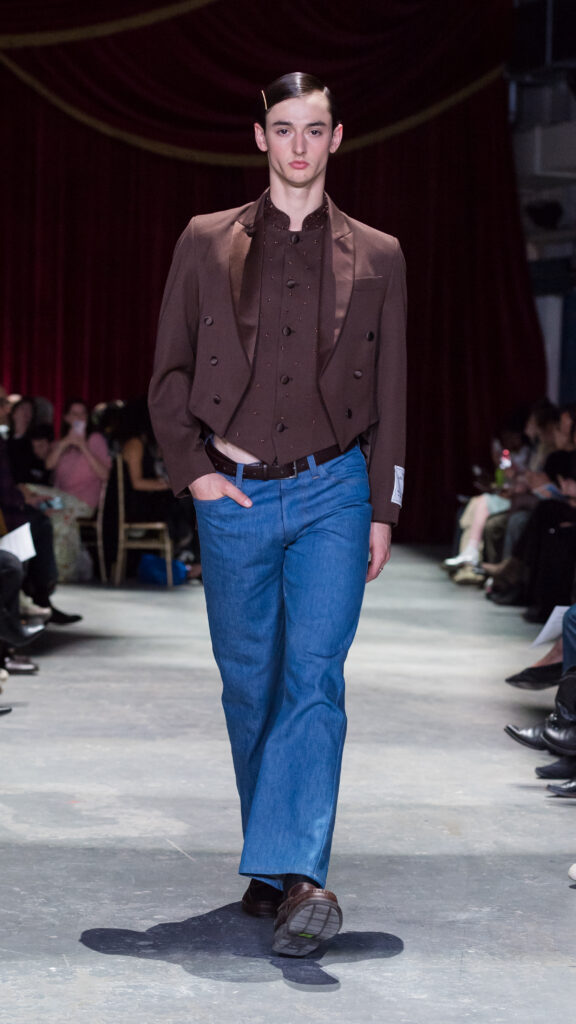
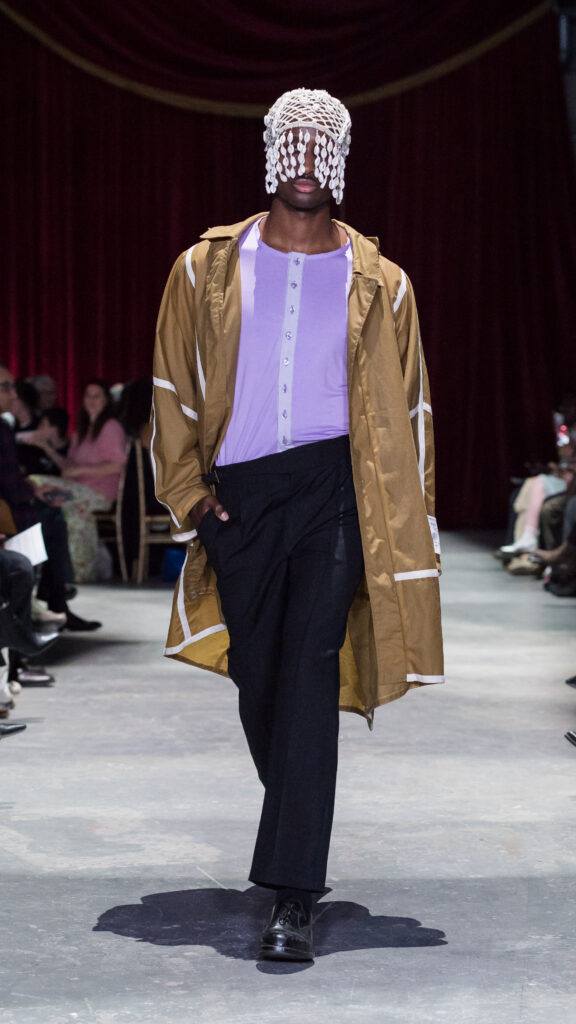
London and Lagos, in generous and direct conversation. Bridging Aso fused Nigerian folk culture and contemporary Nigerian art with the tailoring codes of British menswear, archival portraits of folk attire set against Henley Regatta suiting. Custom beaded lace embellishments echoed the rhythm of mid-century Nigerian art and discarded materials were transformed through craft into leather bags that completed the cross-cultural link with real feeling.
Alex Lyons
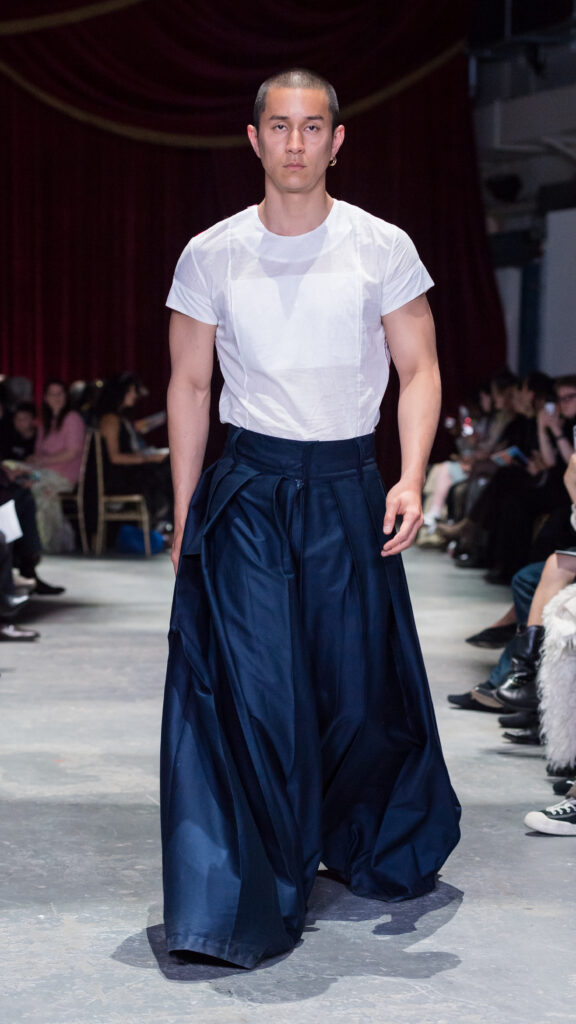
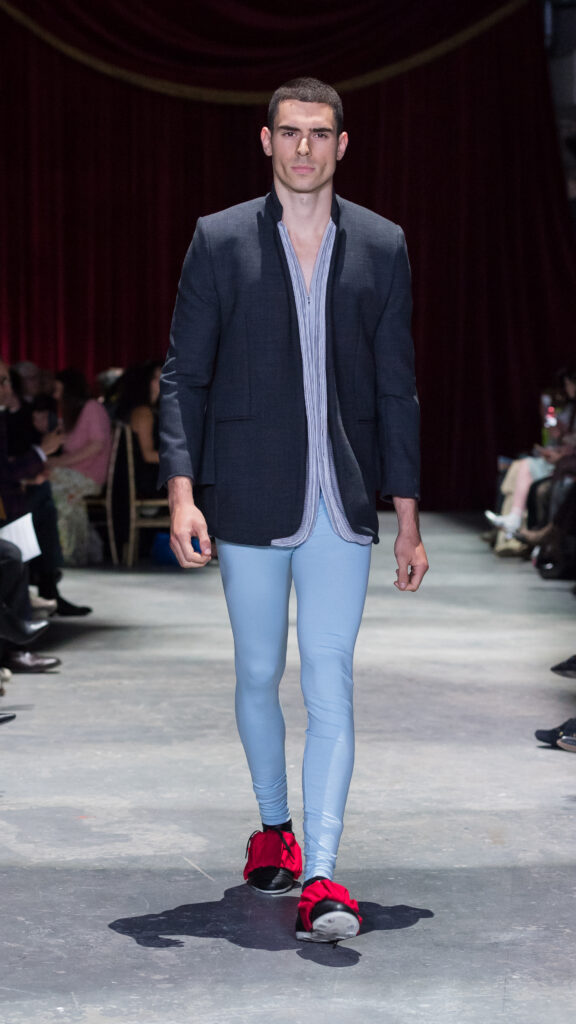
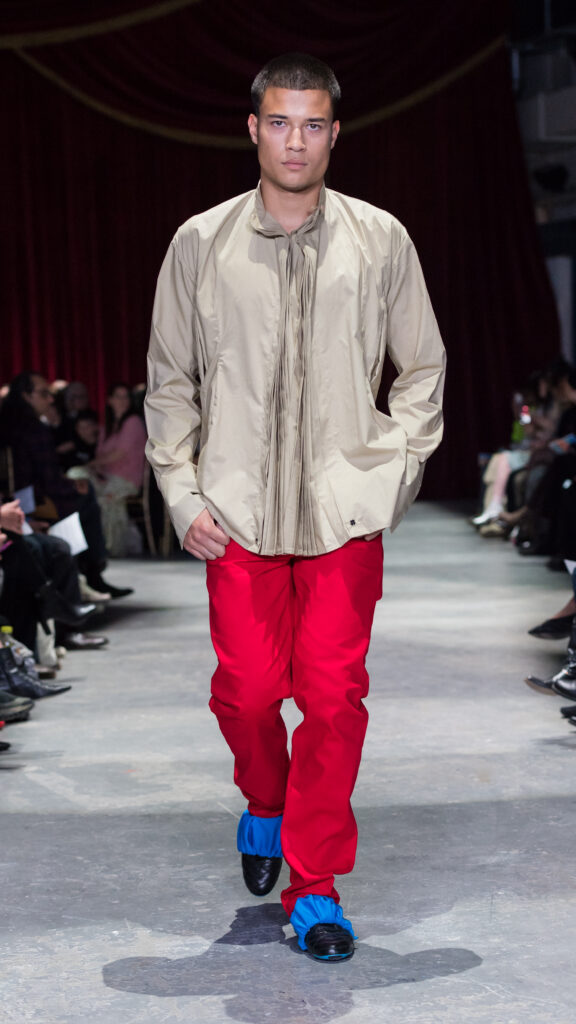
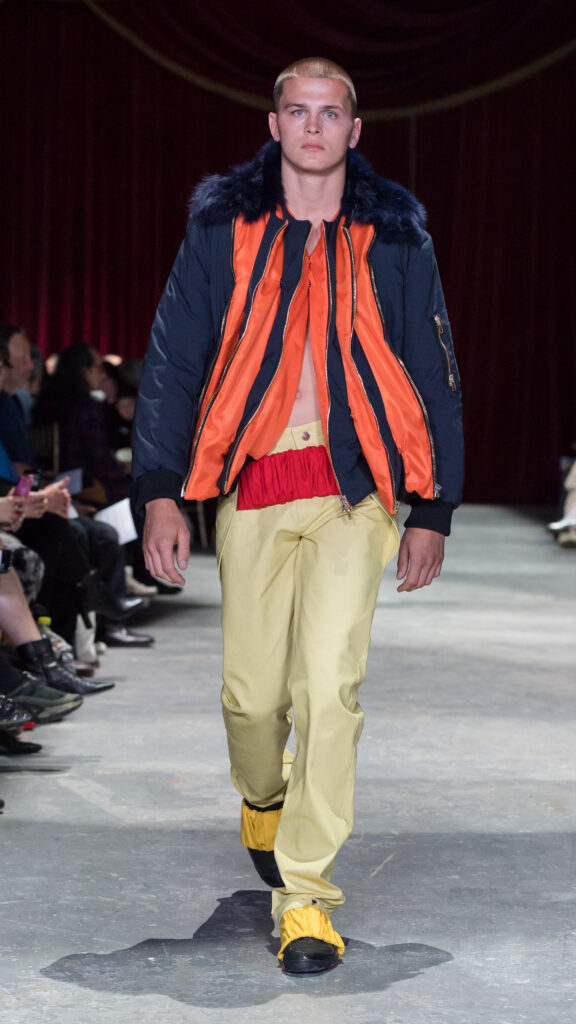
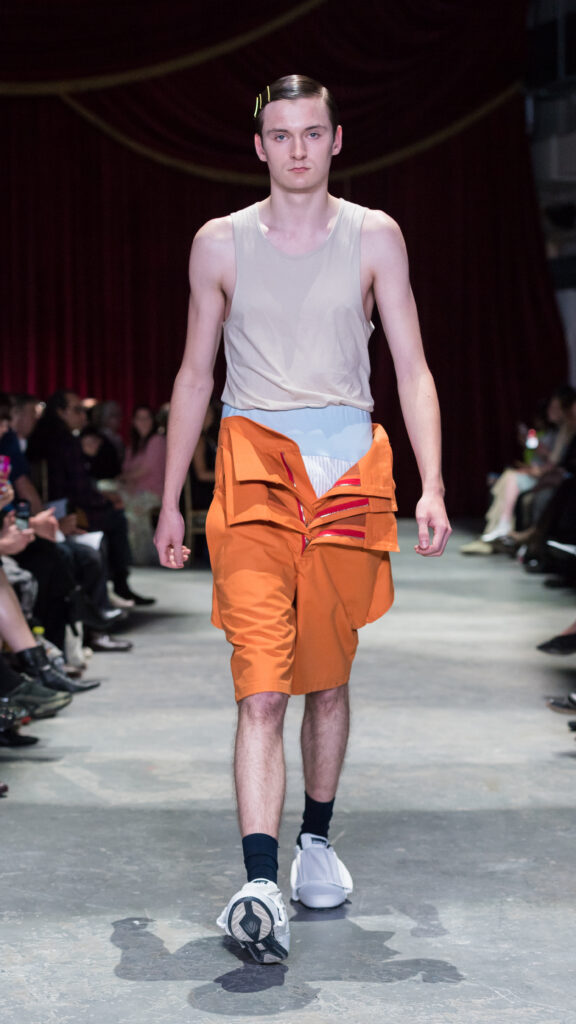
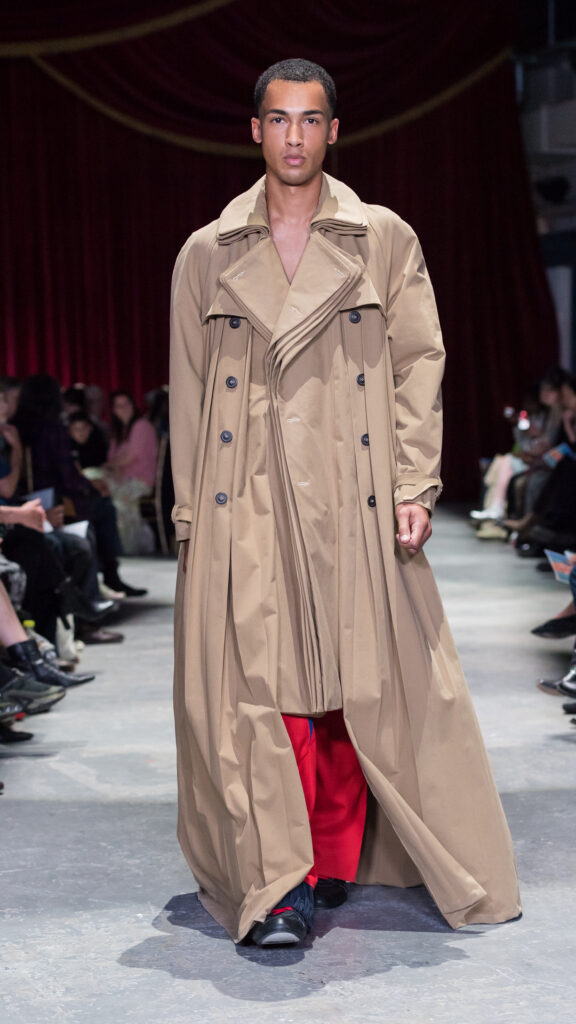
Mastery takes time. Using the Samurai not literally but as a framework for thinking about ritual and discipline, Lyons mapped each look onto a stage of a journey forward, pleating and repetition reinterpreting classic menswear silhouettes with extravagant volume tempered by restraint. Deadstock and donated fabrics throughout, sustainability worn as moral position rather than marketing point.
Georgia Tennant
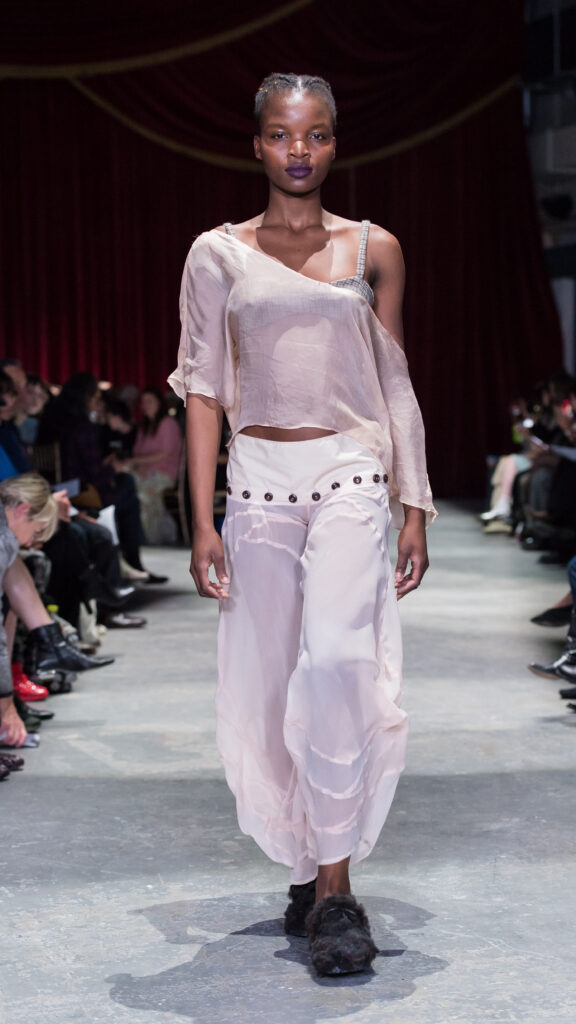
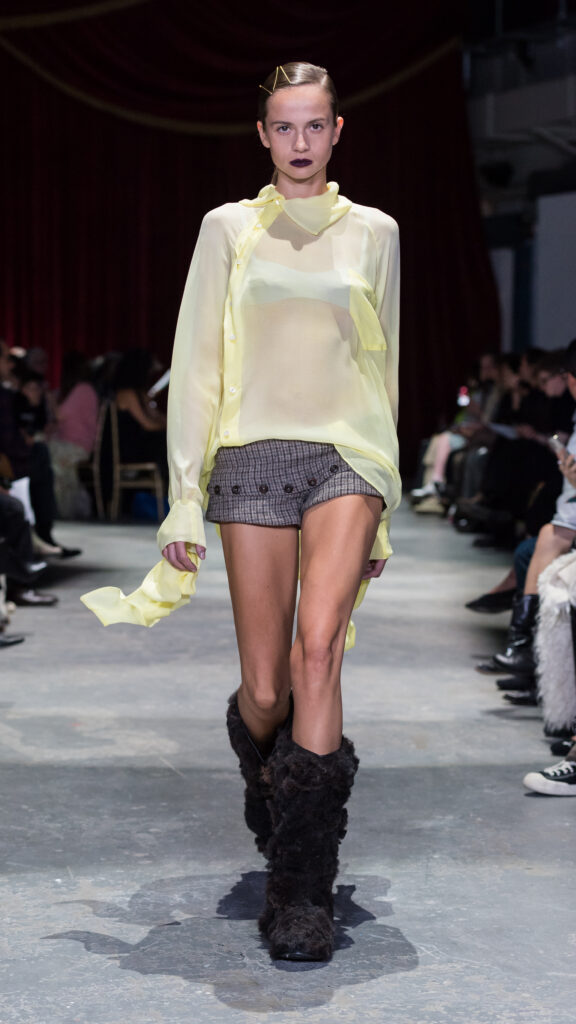
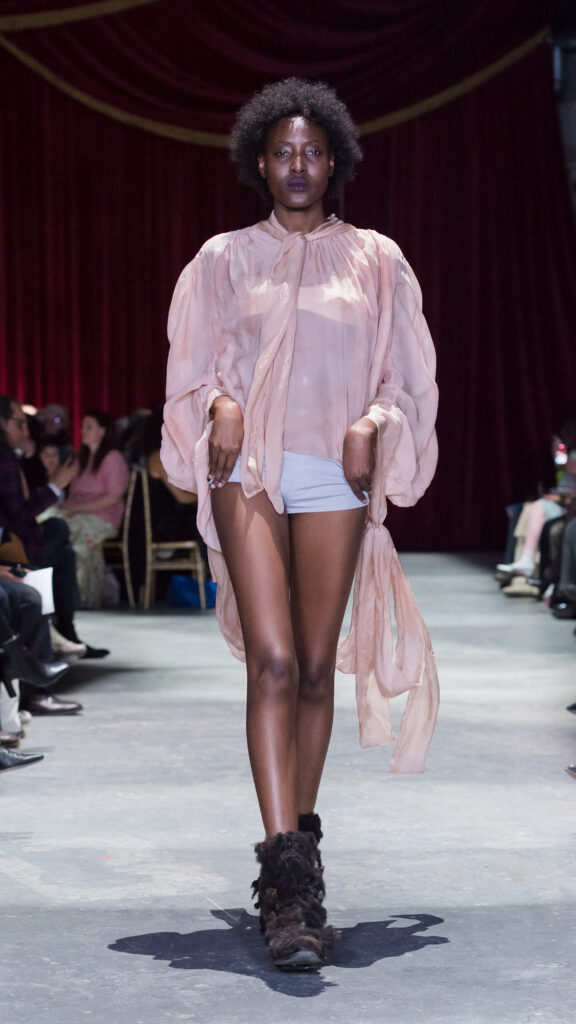
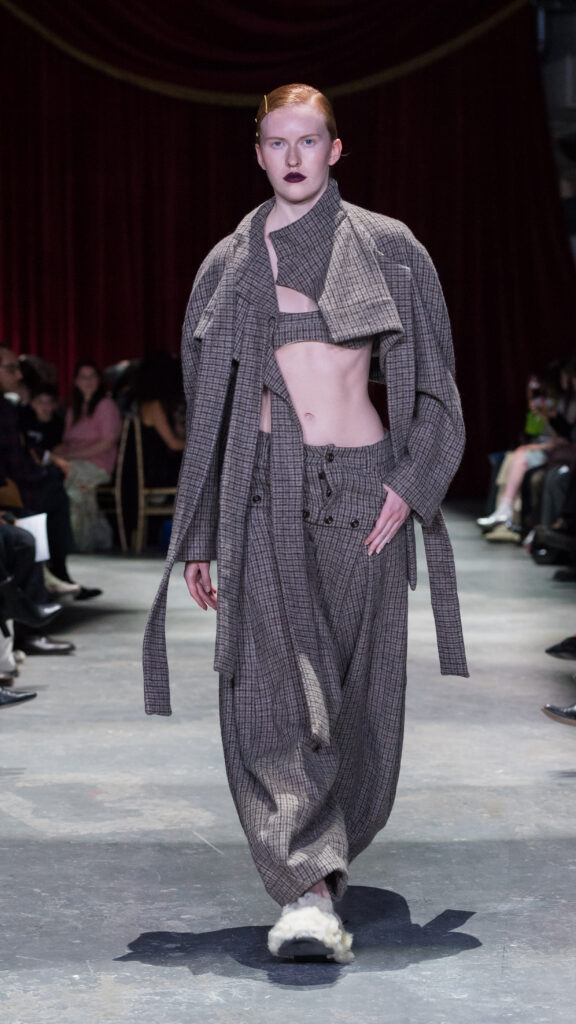
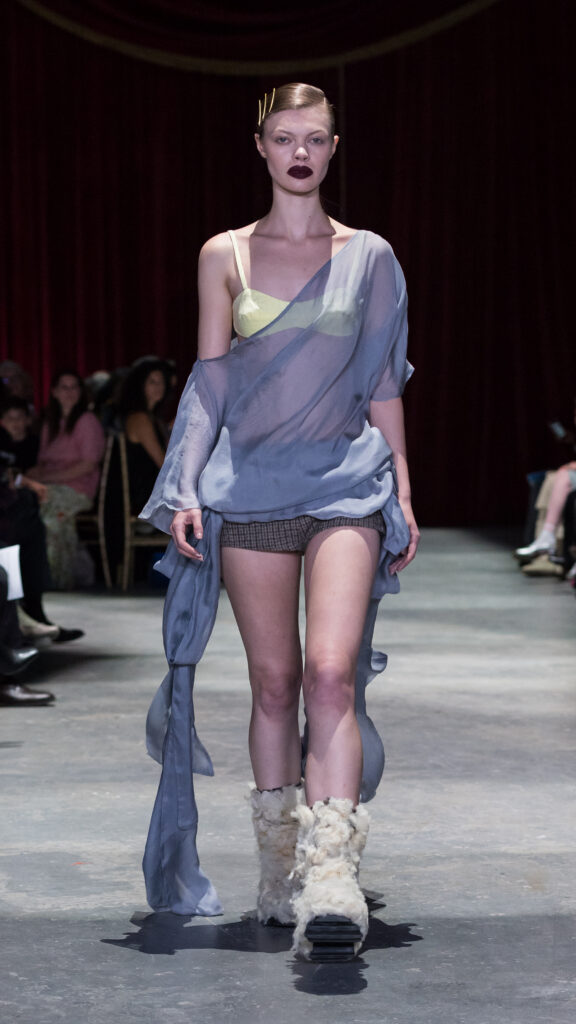
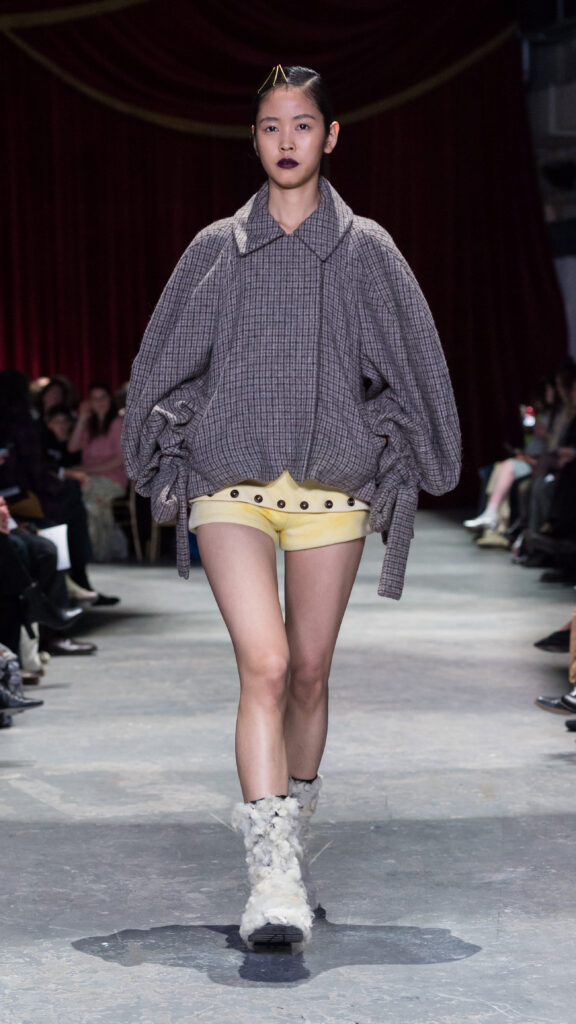
Every element was considered, and it showed. Tennant used donated Shetland tweed woven in her home town of Hawick, plant-based dyes and fully compostable natural materials, inspired by entomology and a long-standing love of the natural world. Button-off waistbands interchange across looks, leftover scraps became accessories and beauty was never once separated from responsibility.
Kane Chan
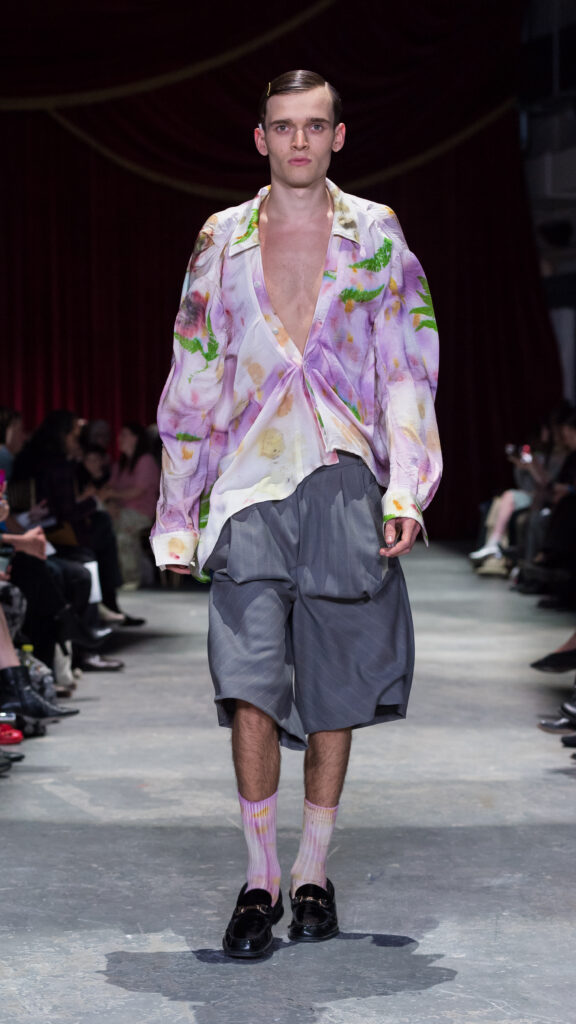
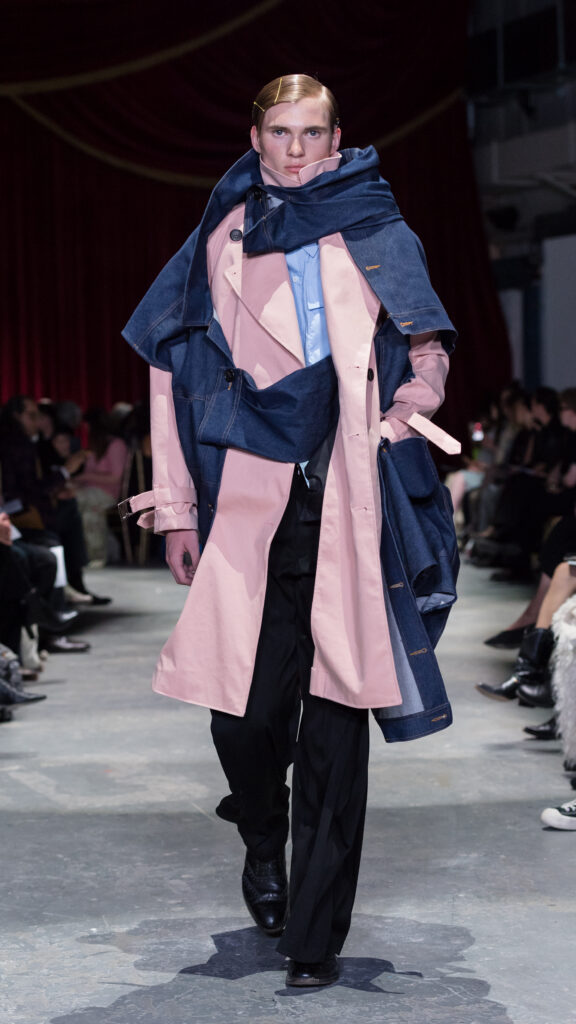
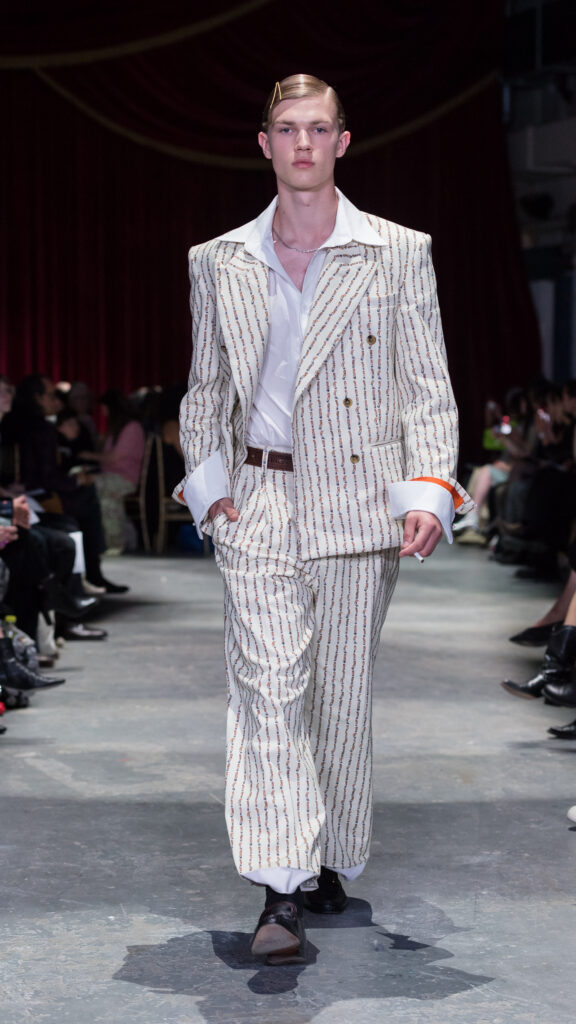
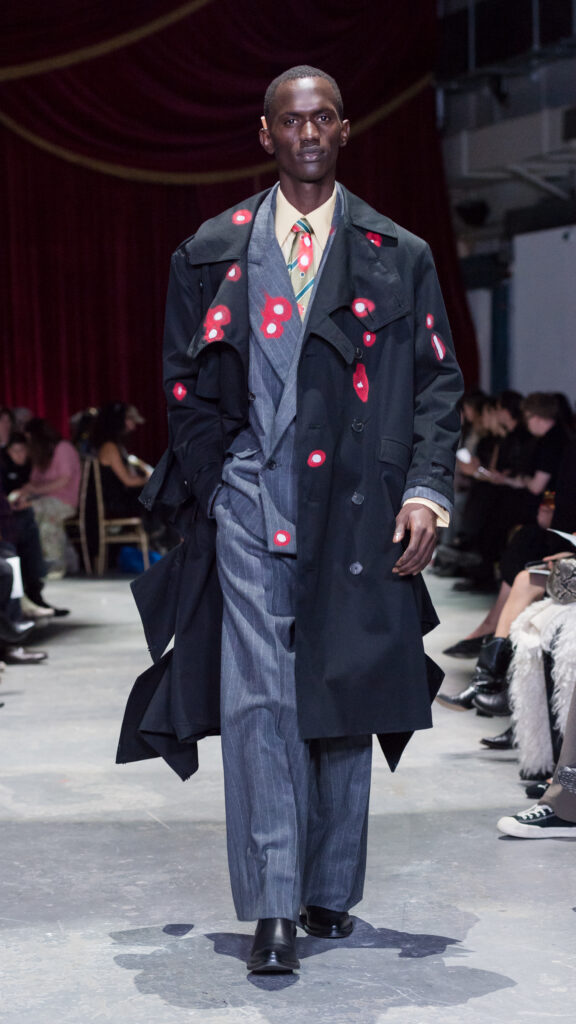
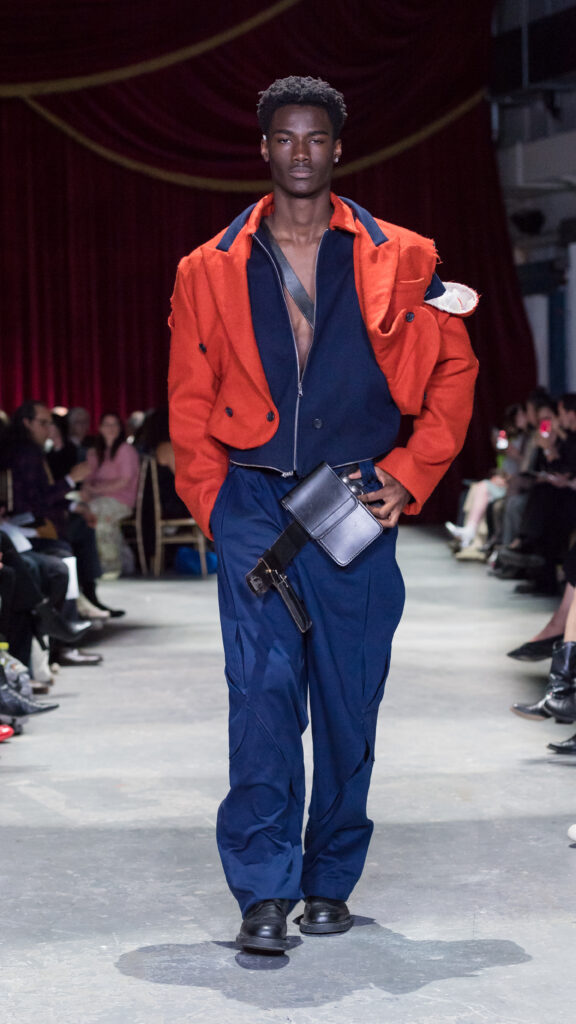
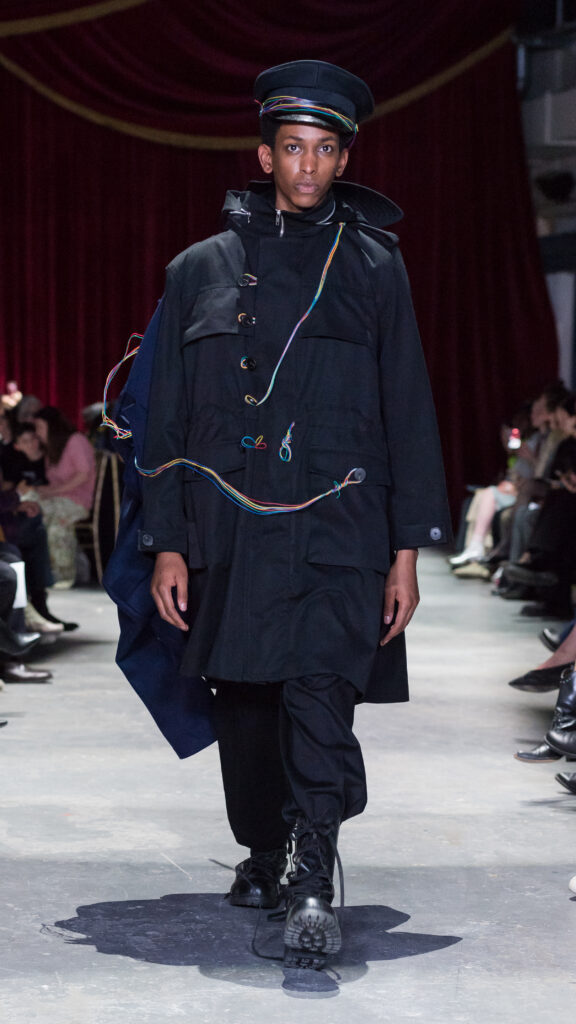
Chaos, done brilliantly. Vice City drew from Hong Kong crime cinema of the 1980s and 90s, translating the violence aesthetic of those films into deconstructed power silhouettes set against louche gangster style. Dishevelled layers, water-drenched prints and rifle laser-beam motifs brought conflict onto the body with complete and unwavering conviction.
Sumi Kim
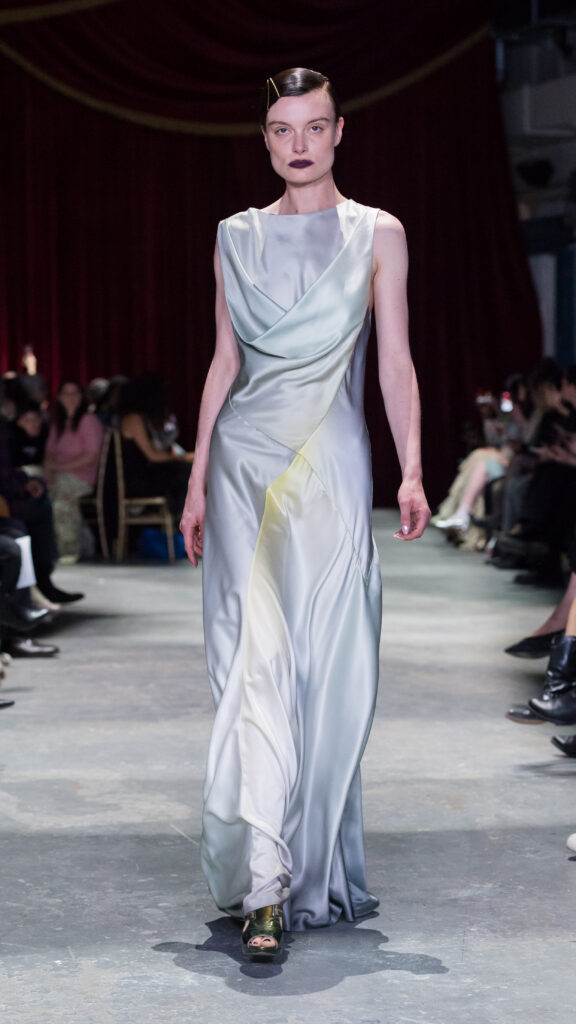
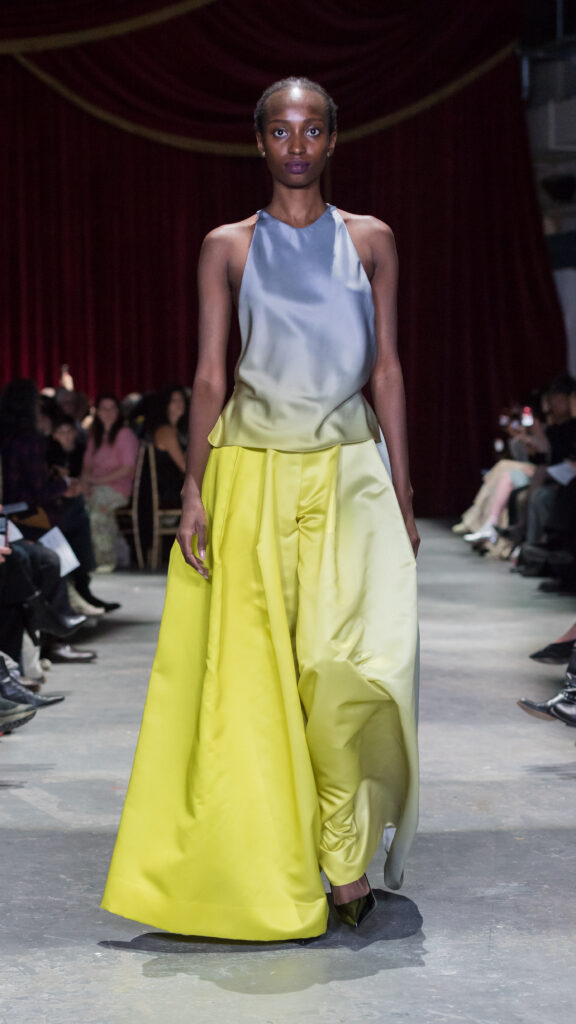
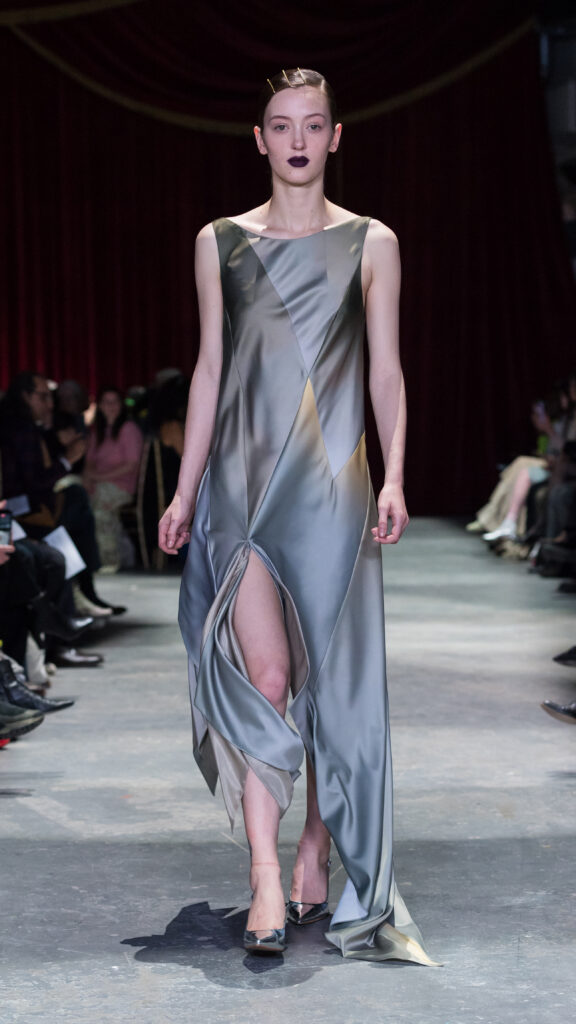
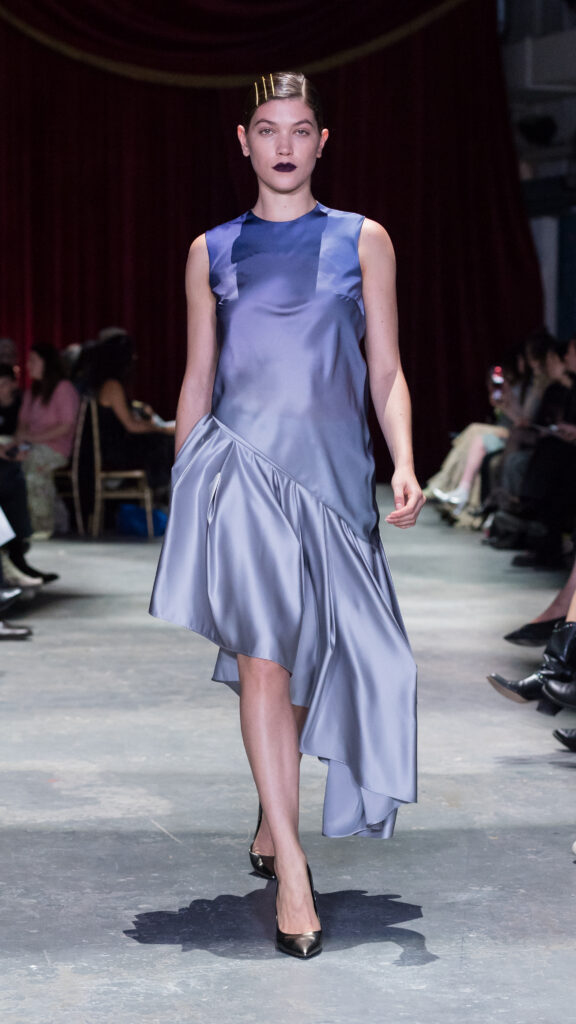
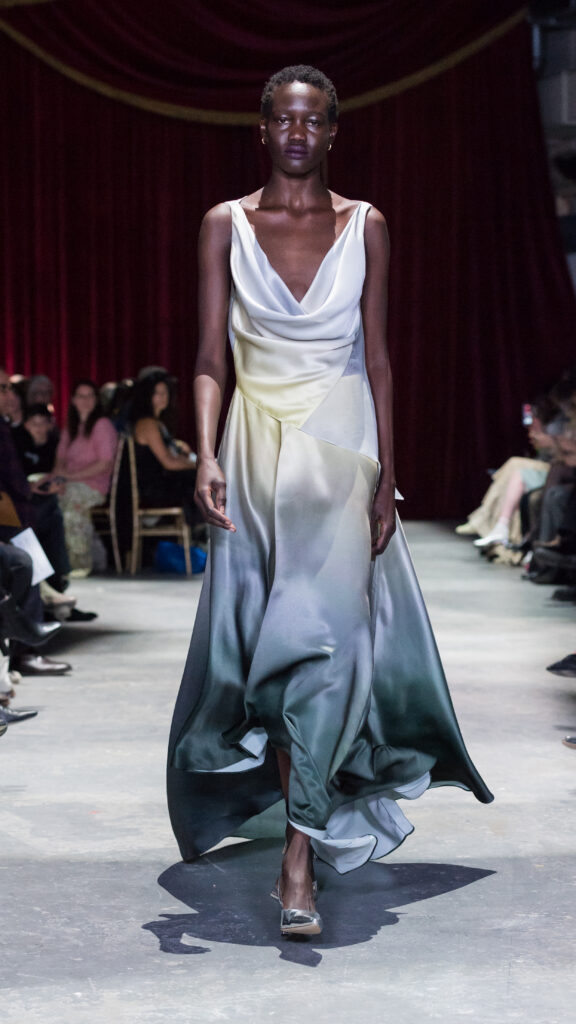
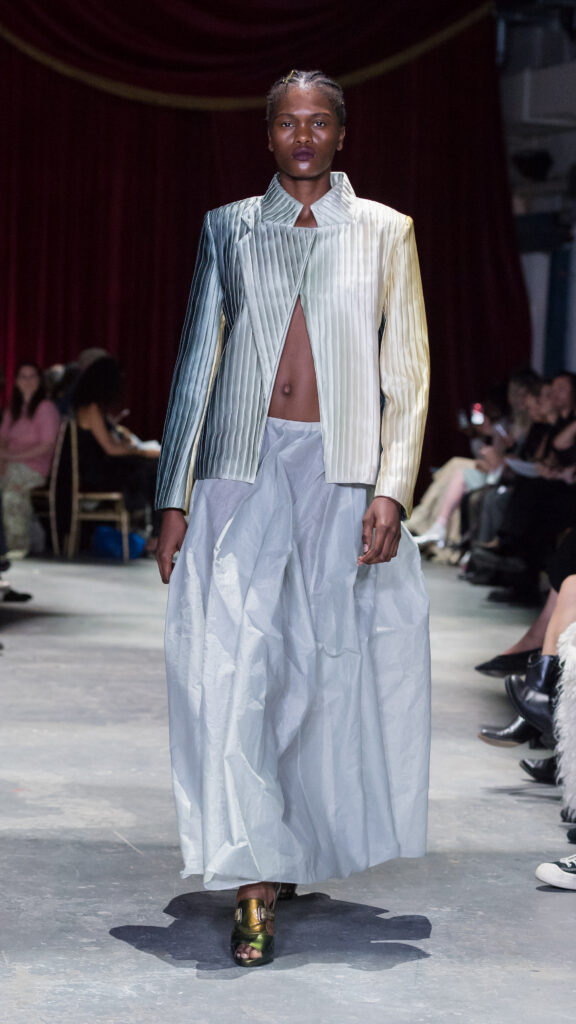
After Chan, a breath. Kim took the moment sunlight breaks through a window as her starting point, translating it through sharp seam placement, controlled silhouettes and hazy bias-cut satin. Linear precision softened into fluid drape, crisp structure melting into soft gradient. Working in the quietest register in the show and all the more affecting for it.
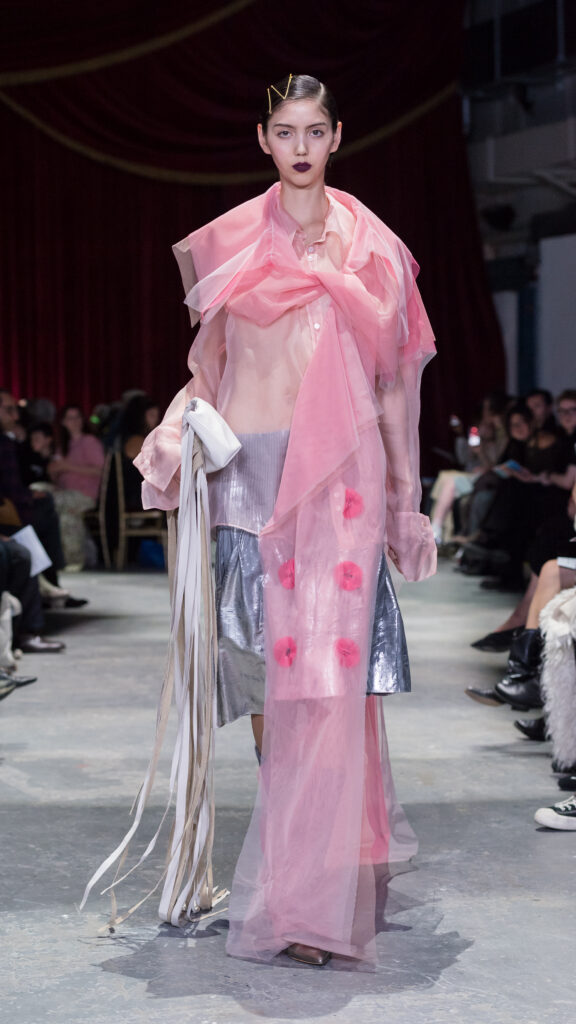
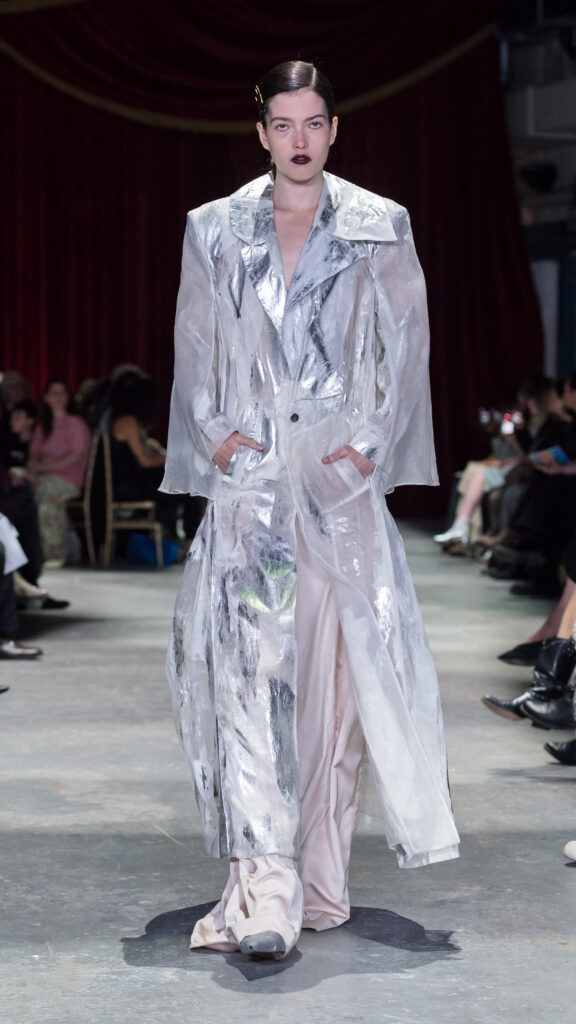
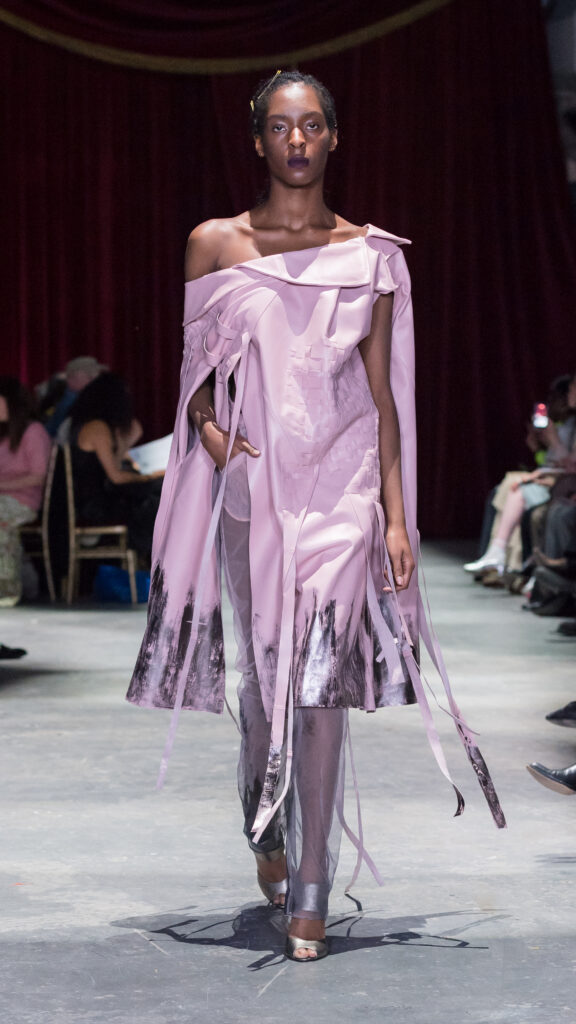
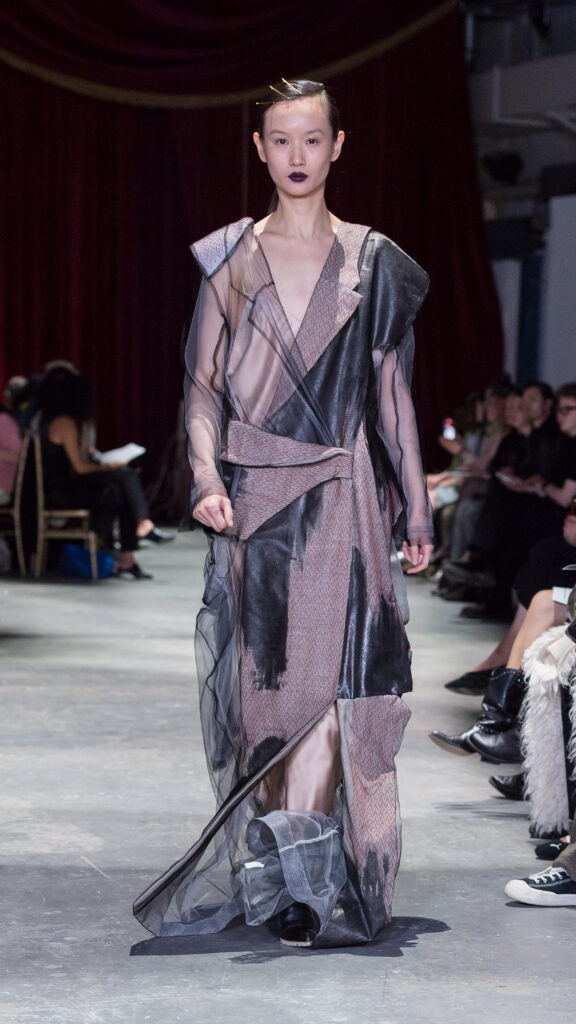
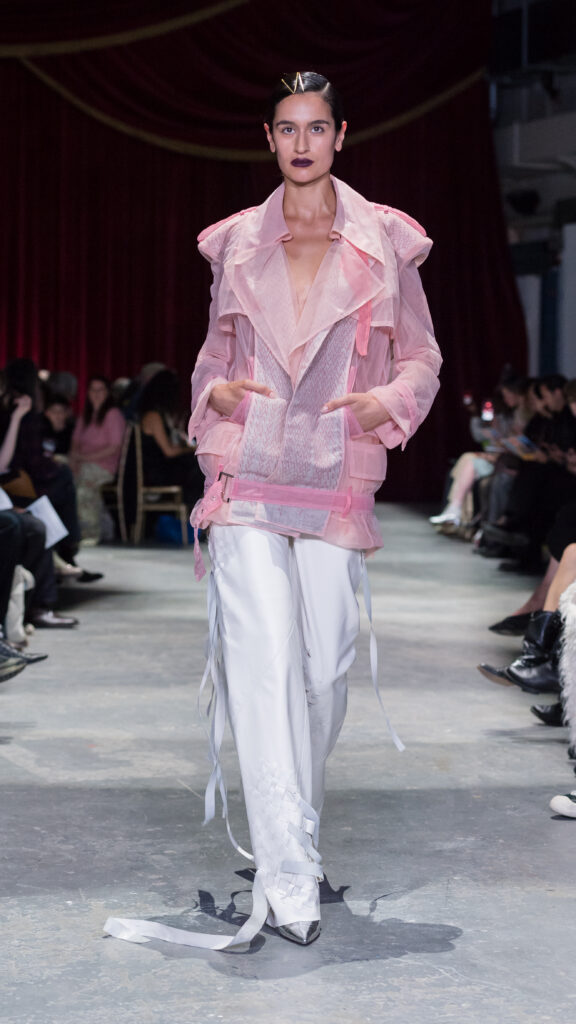
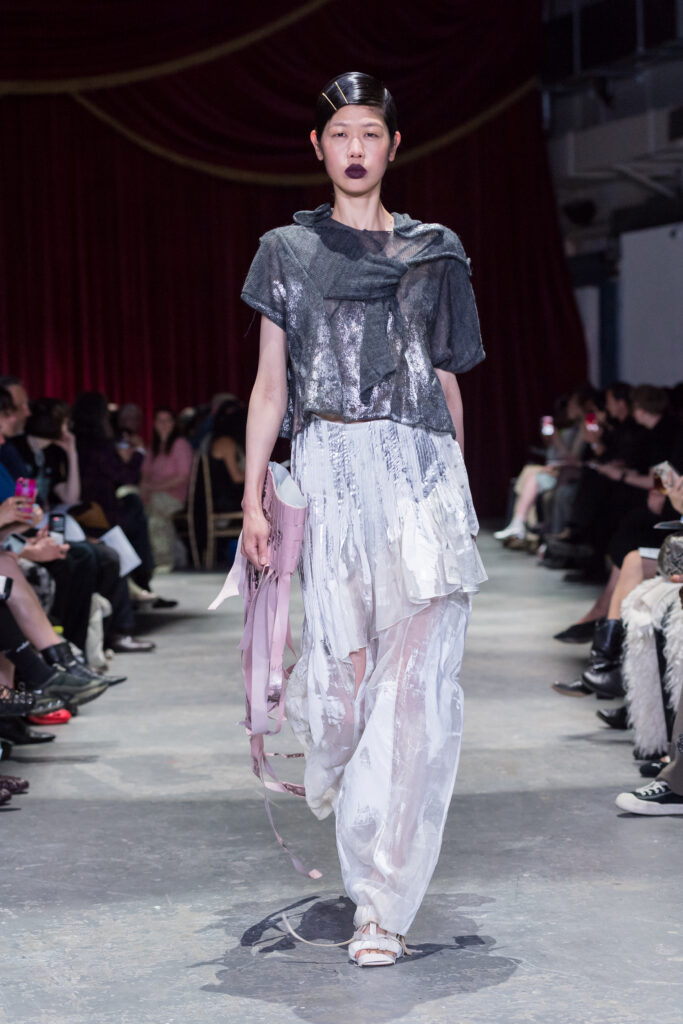
En Zhi Khoo
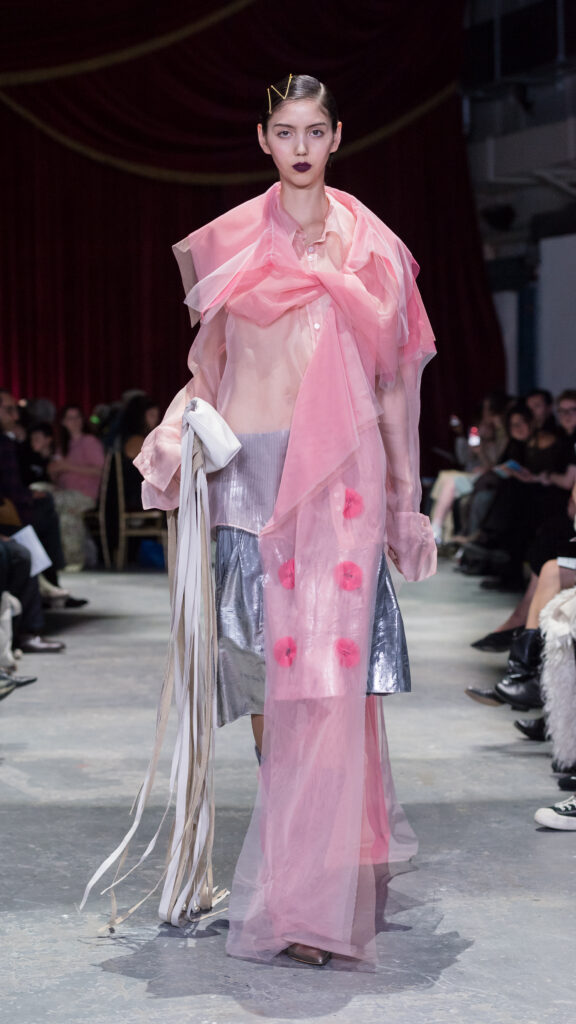
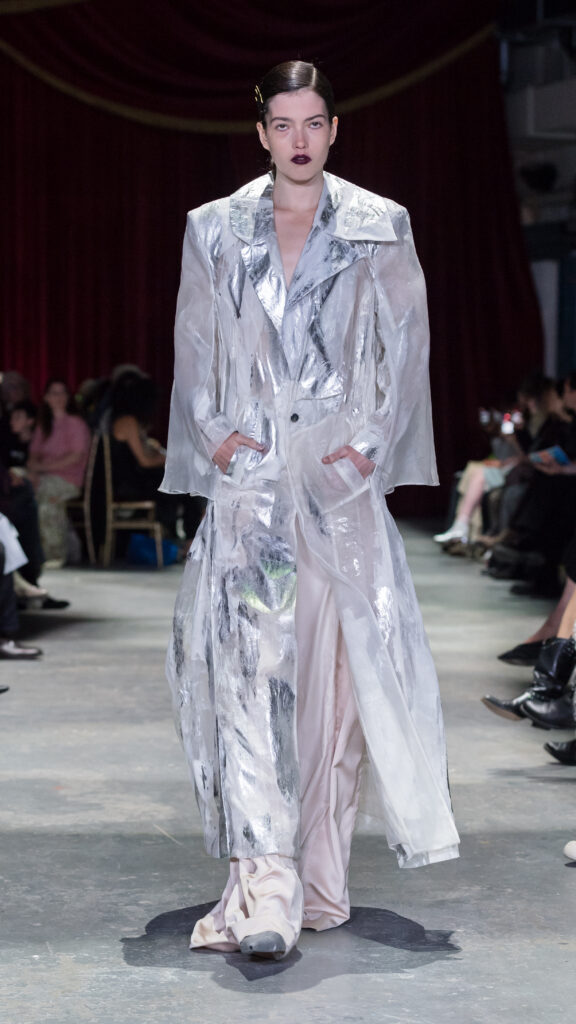
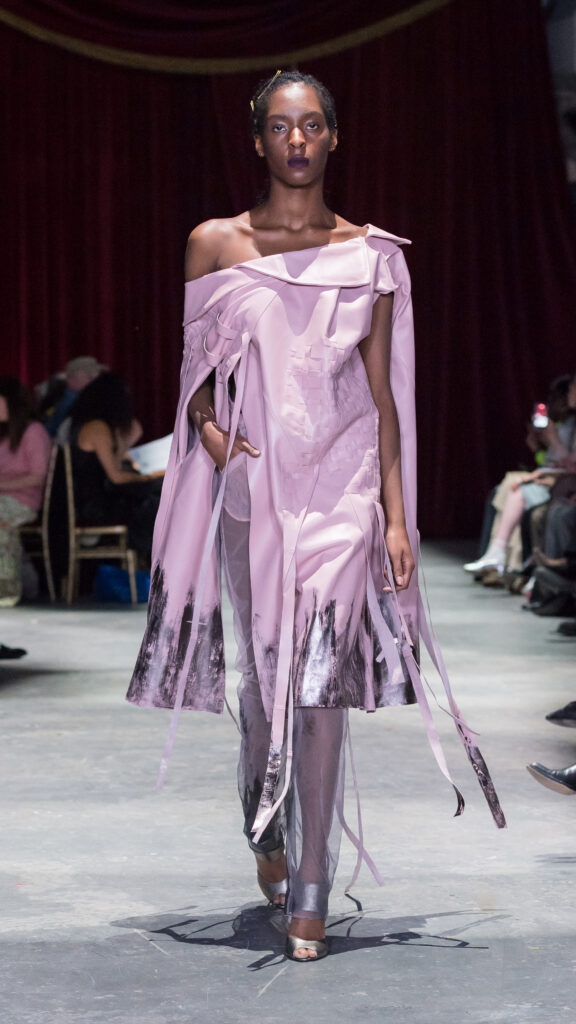
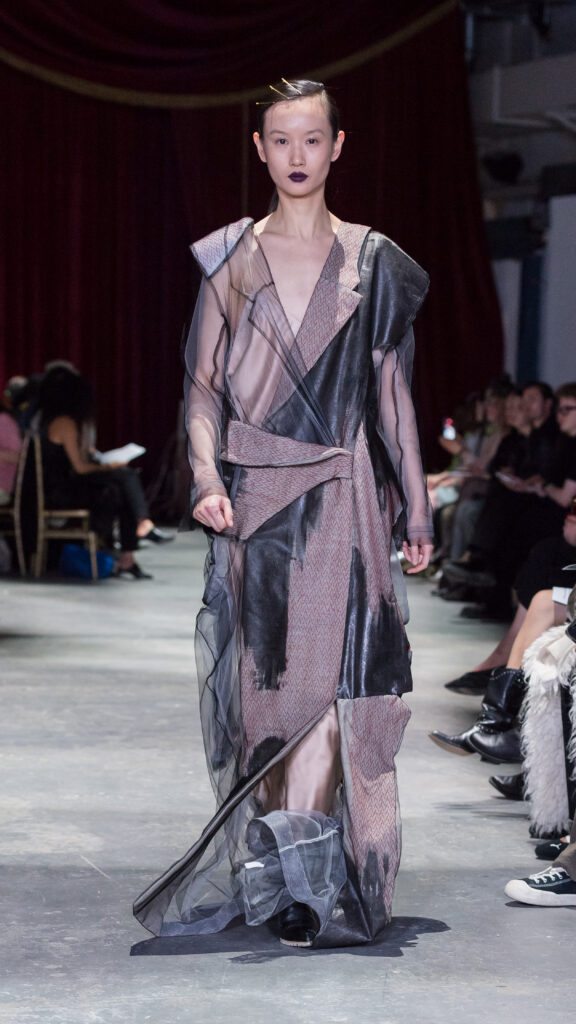
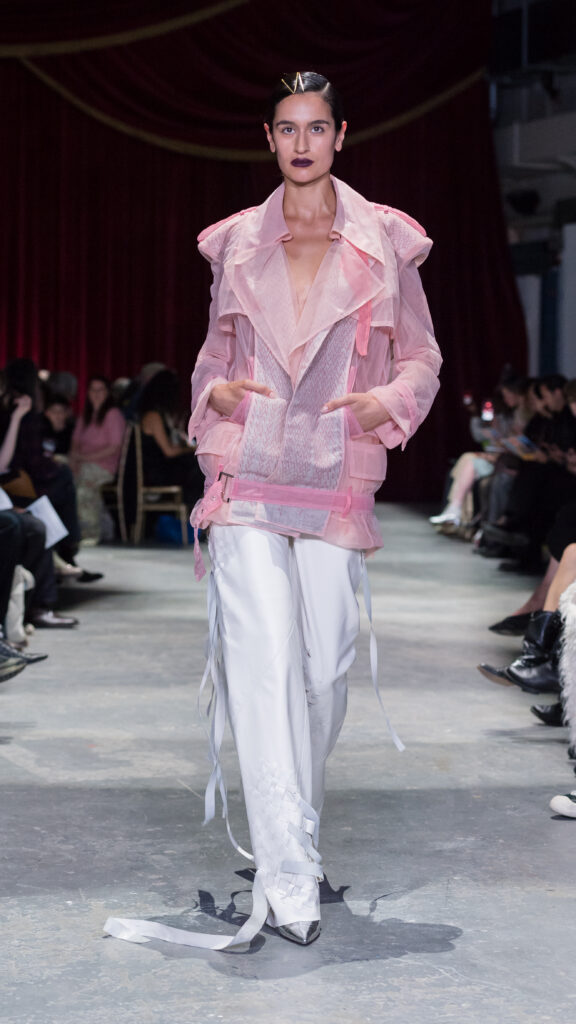
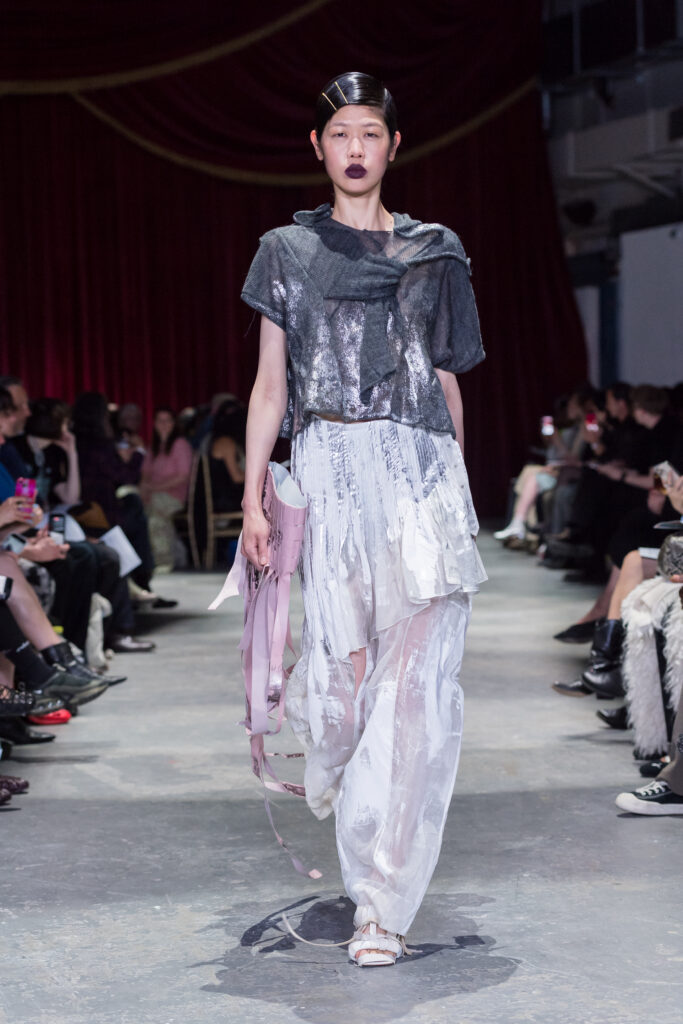
History is something still lived and worn. Khoo made that argument beautifully, structured menswear codes informing delicate and layered womenswear in the softest shades of pink, white and silver punctuated with charcoal grey. Identity here was not fixed but in constant evolution, shaped through memory and layering and the long passage of time.
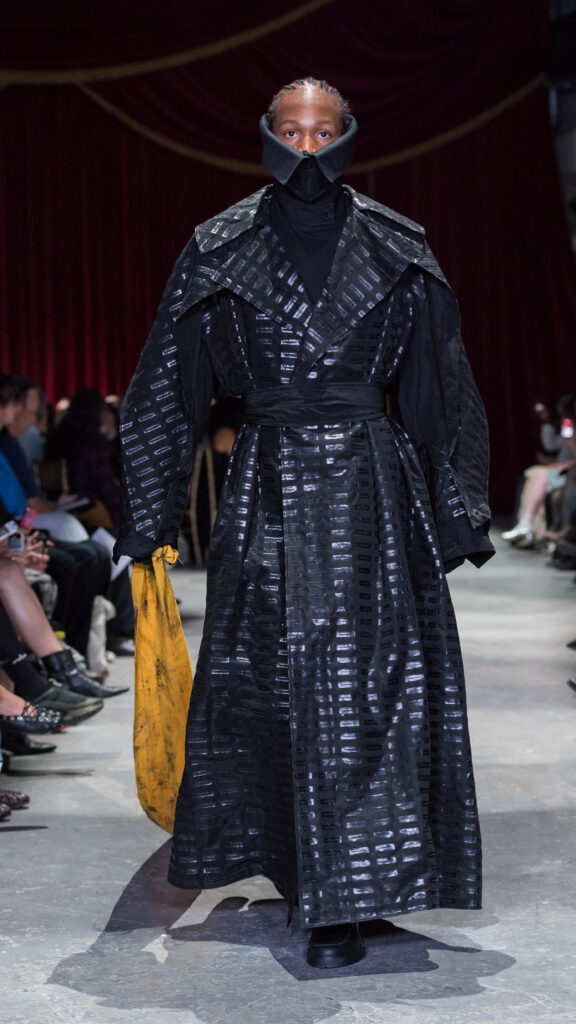
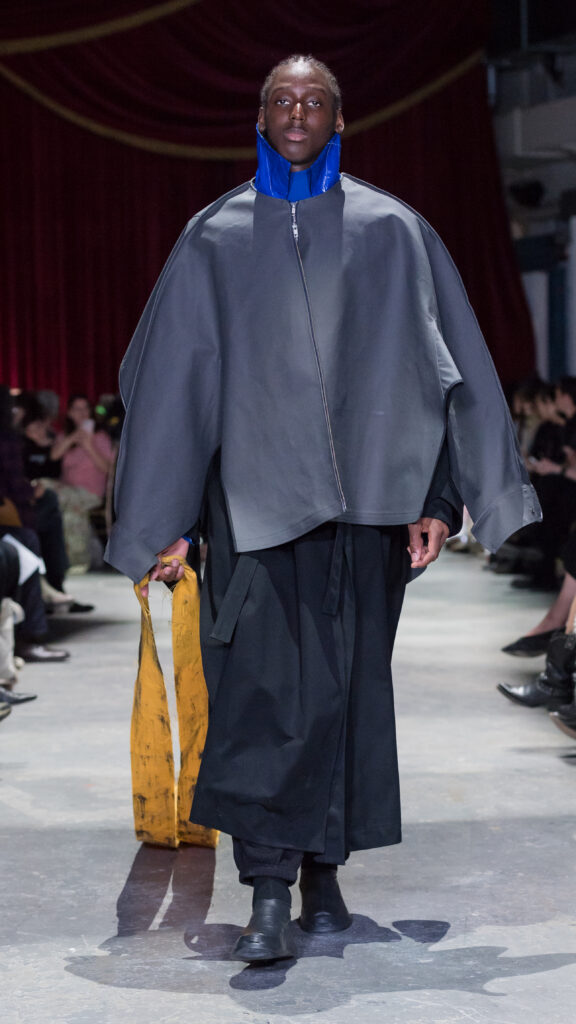
Tom Fee
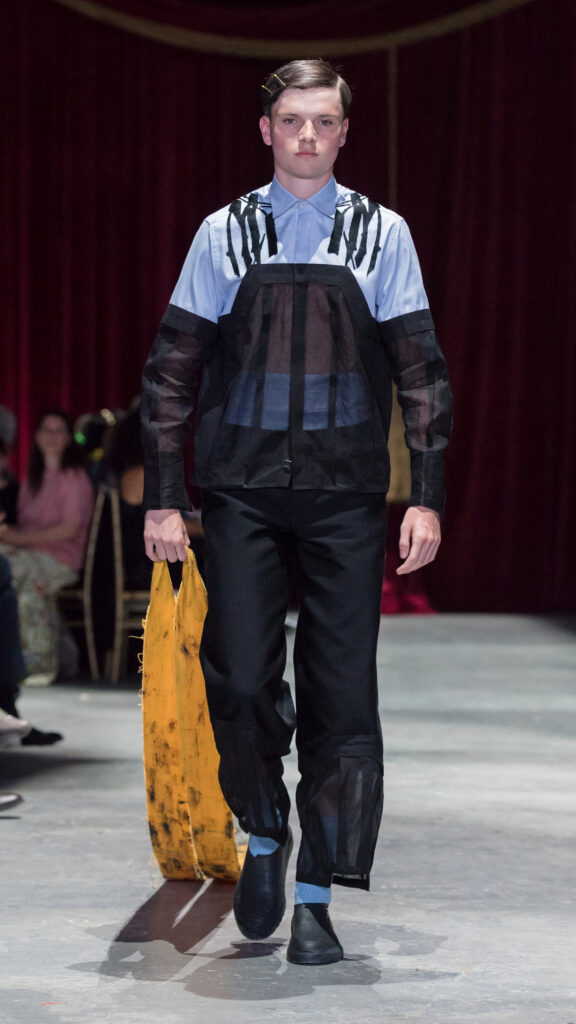
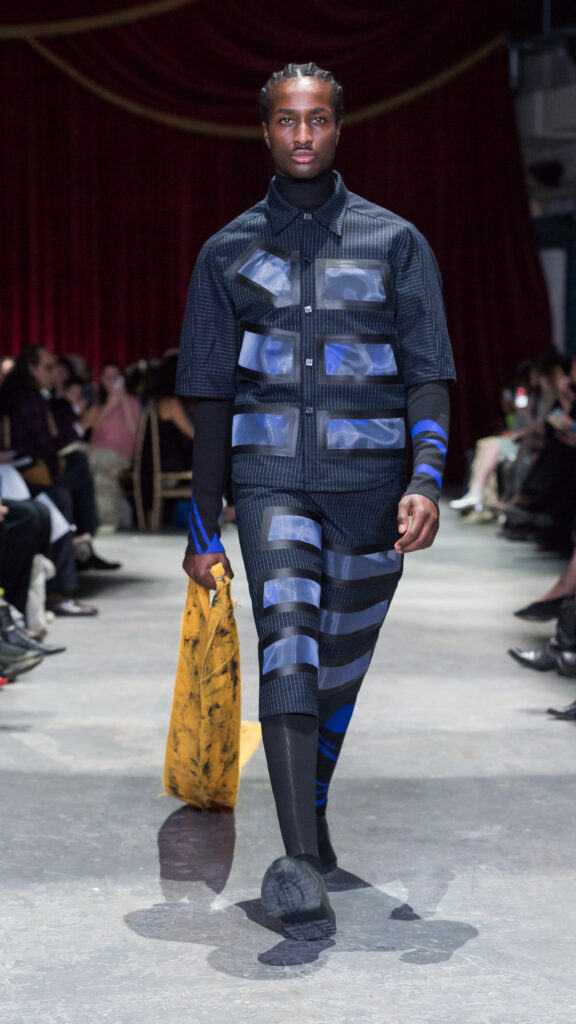
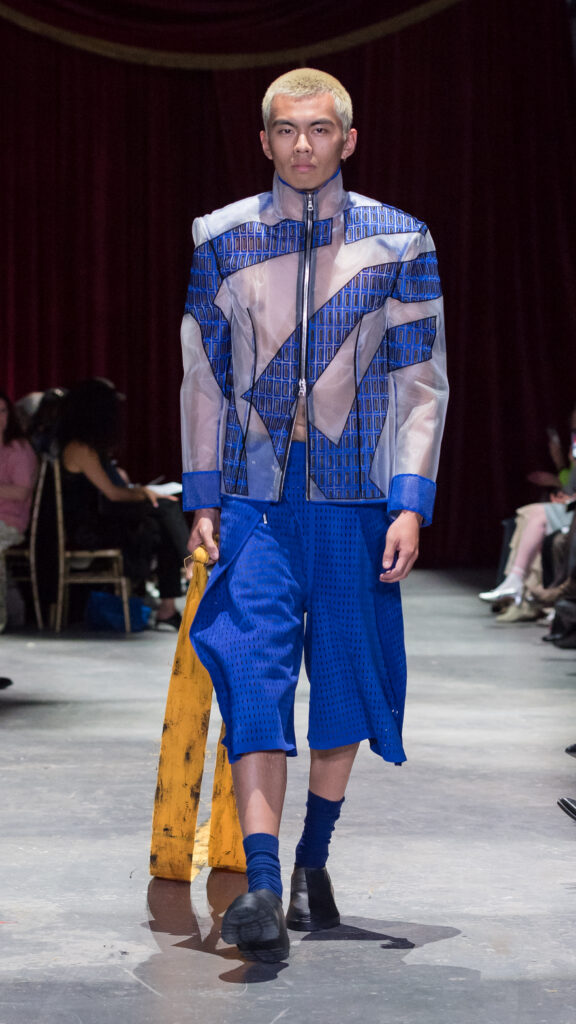
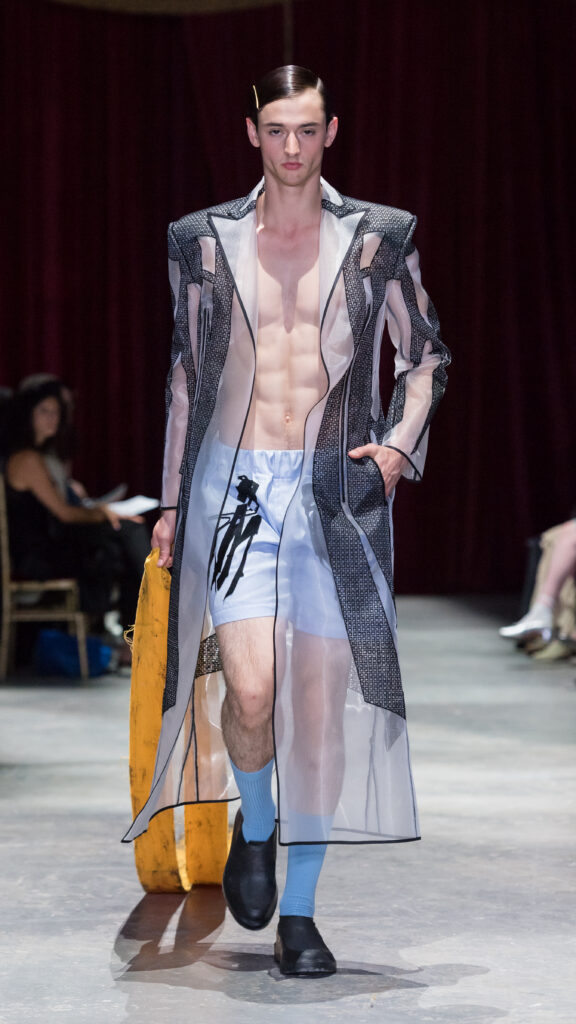
Six looks, one trajectory: darkness toward light, concealment toward release. Deeply influenced by Agnes Martin and the repetitive structures of techno music, Fee interrogated how order and control can function as tools for freedom, how masking transforms toward visibility and acceptance. Precise and considered with reflective details catching the light at exactly the right moment.
Florence Kelk Whall
Joyful, referential and completely its own thing. Archive images of early Tour de France events inspired a light-hearted menswear collection that reinvented vintage cycling dress with genuine charm, deadstock fabrics layered and softened to evoke pieces worn, repaired and passed through many hands over many years. Classic stripes, race lettering and King of the Mountain polka dots handled with real affection for the absurdity of English sporting culture. It sounds like pastiche. It really isn’t.
Chien-Jui Tseng
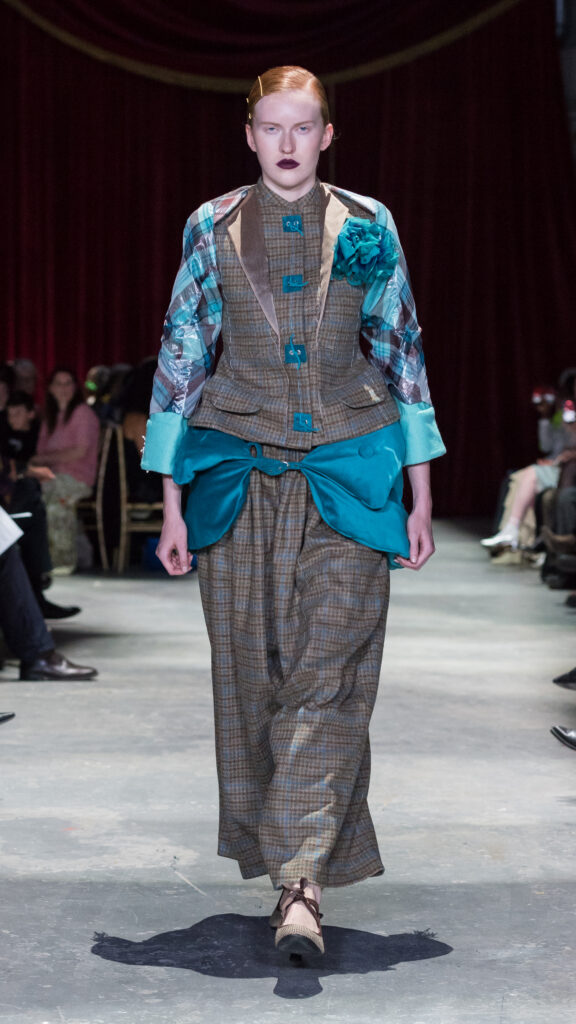
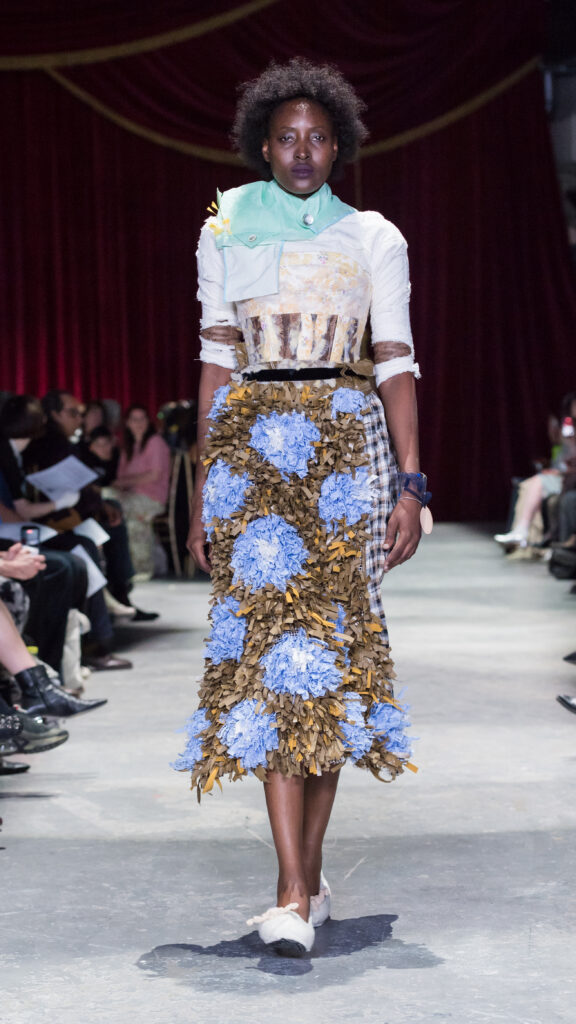
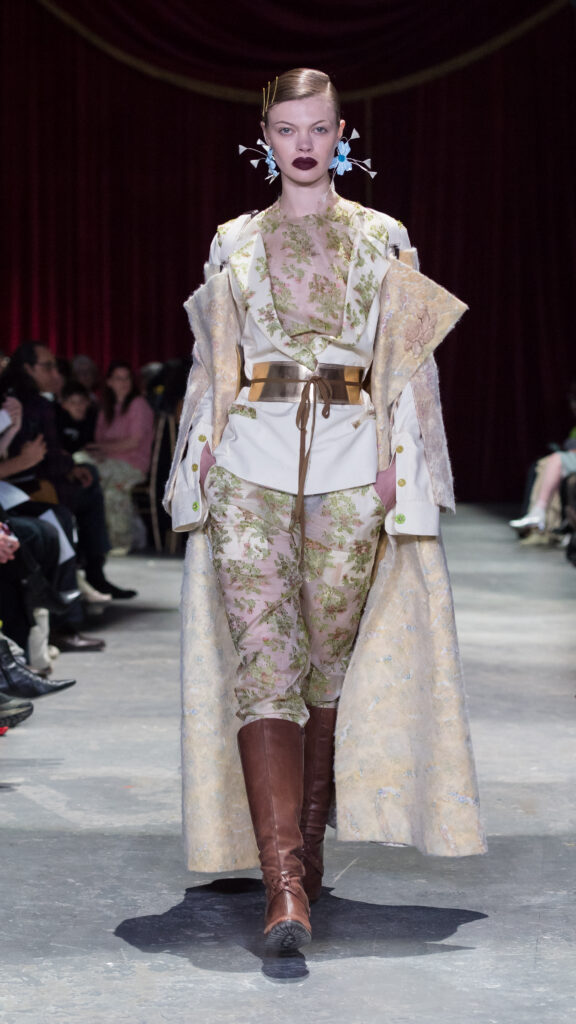
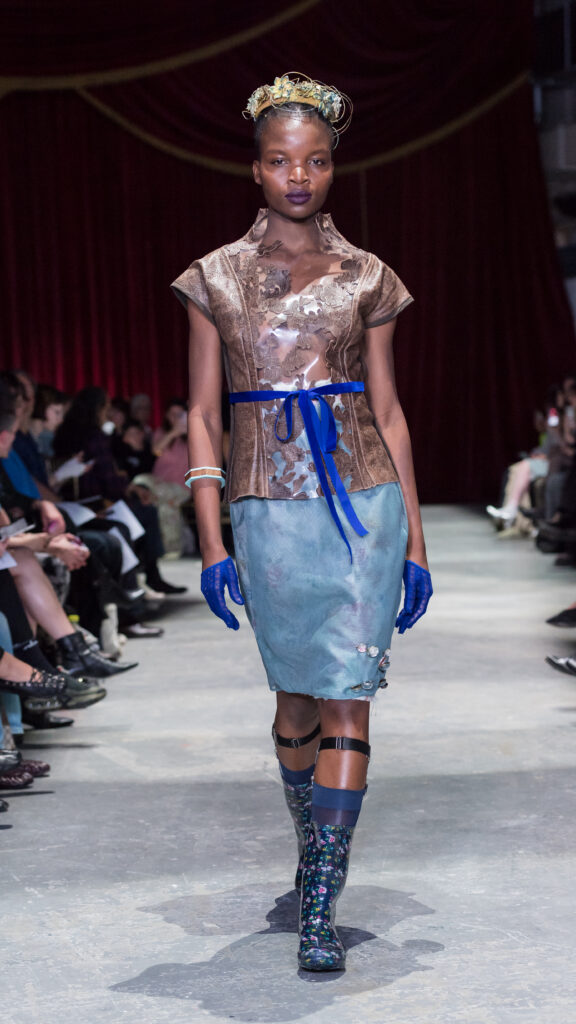
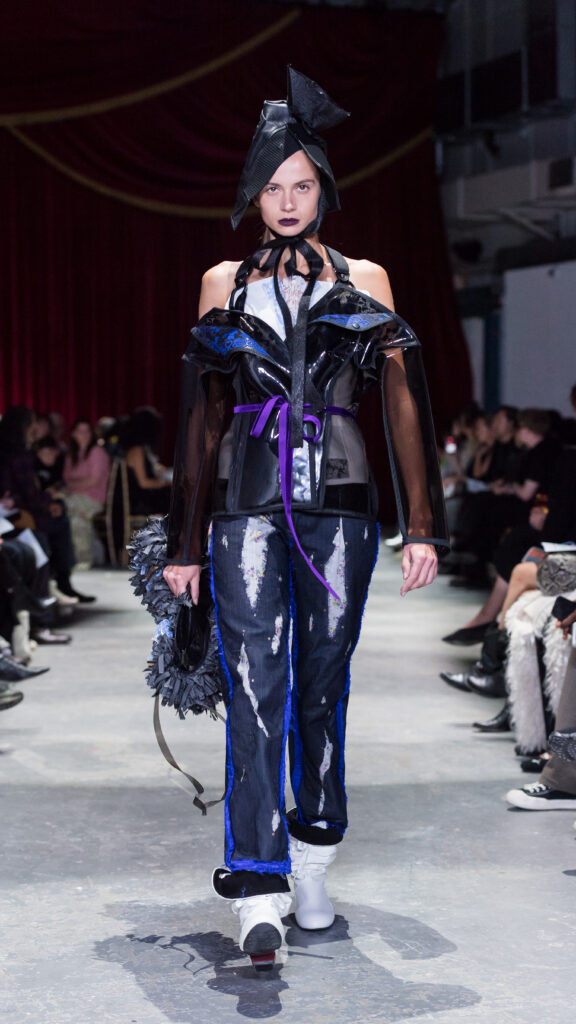
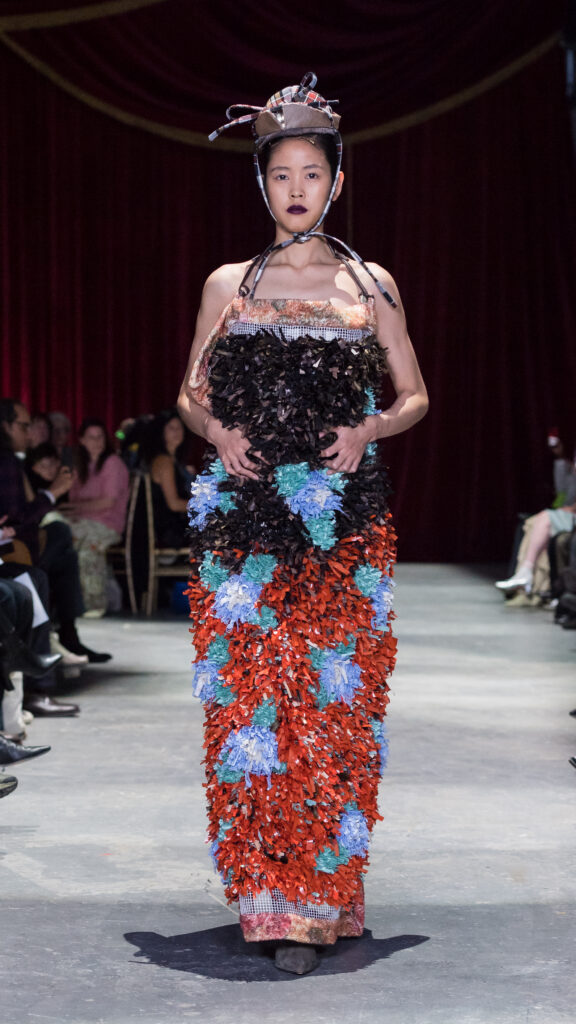
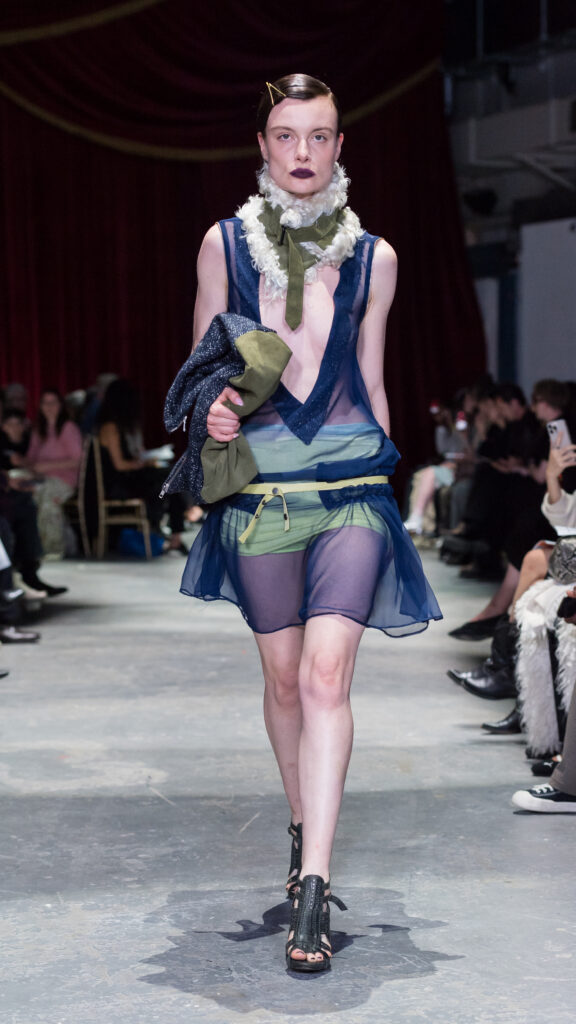
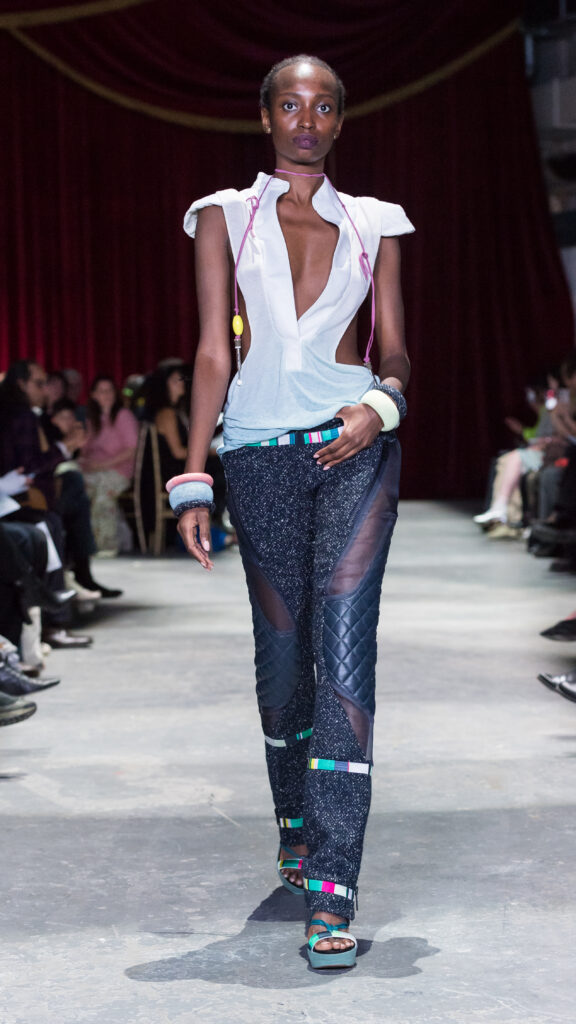
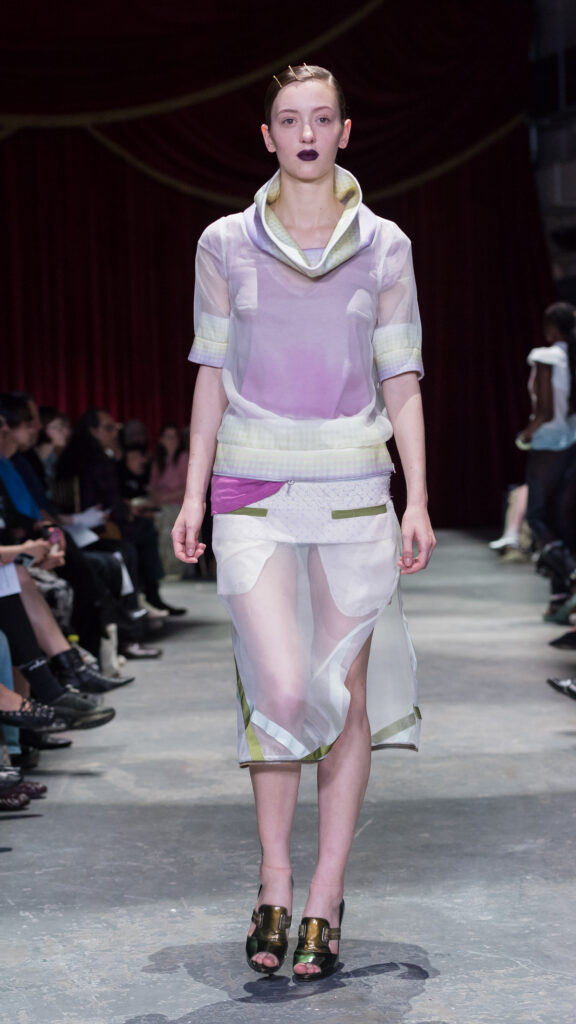
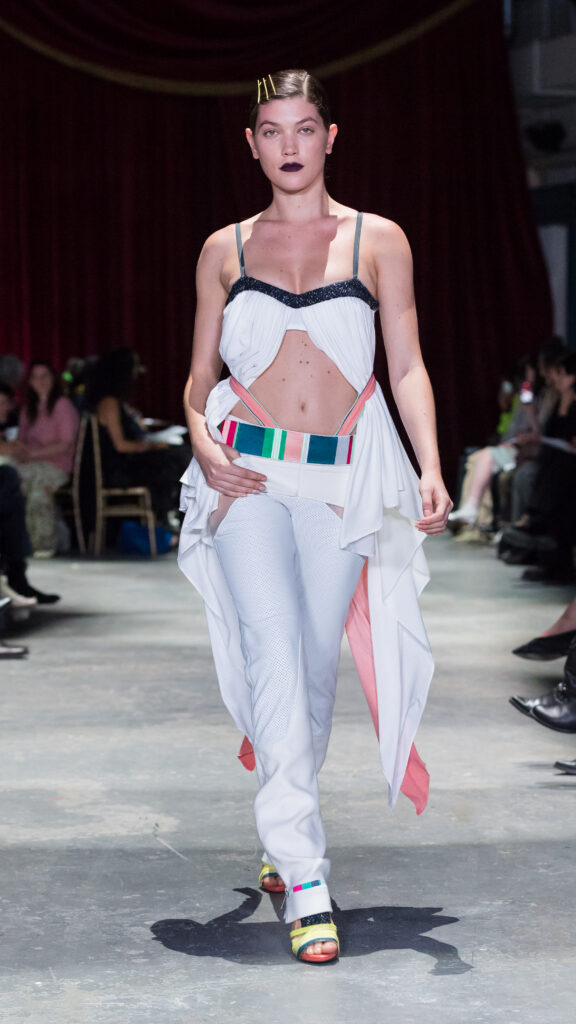
Three homes, held in memory, stitched into cloth. Fusing Savile Row tailoring discipline with hand-crafted textiles and found materials, Tseng negotiated a balance between restrained construction and richly layered surfaces with donated and vintage fabrics doing the quiet work throughout. These are clothes trying to establish a conversation between space and memory and matter and they largely, beautifully succeed.
Oliver Orr
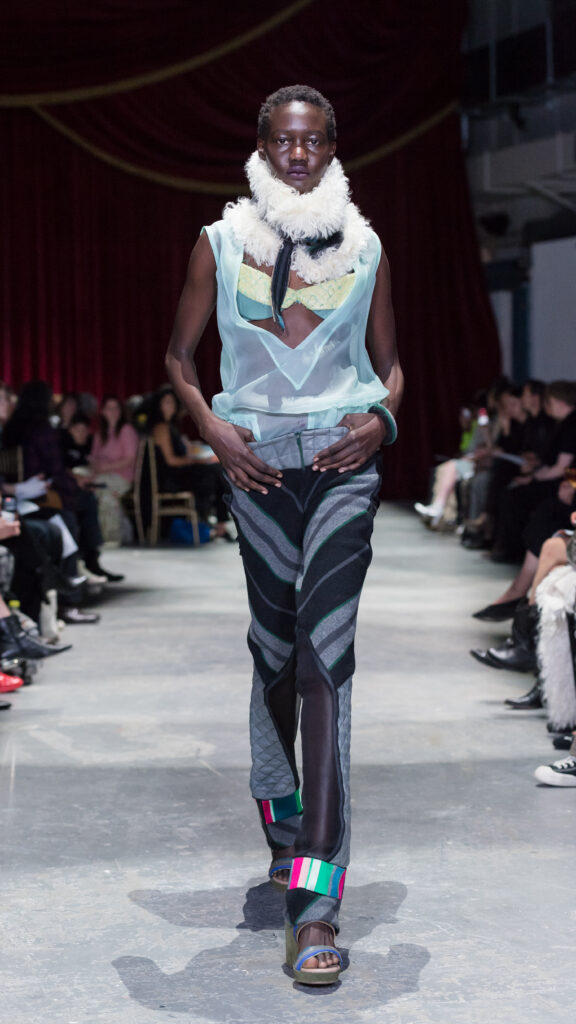
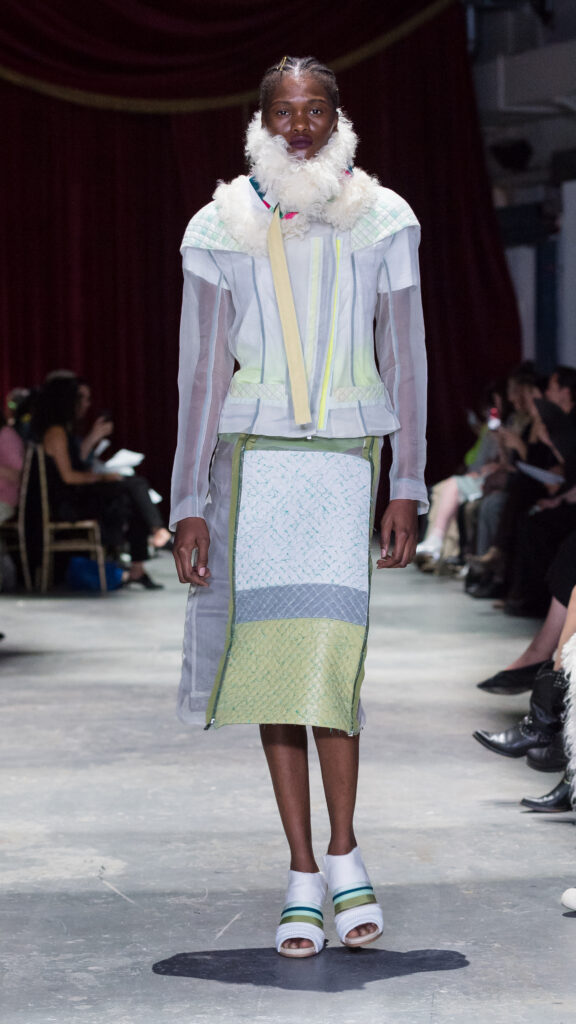
Every look had a person behind it. Drawing from the wardrobes of personal friends and the flux of city life, Orr built around specific muses rather than abstract ideals, celebrating the quirky and the slightly awkward with real intelligence. Interiors worn as exteriors, deliberate mis-matching and experimental cutting held together by quilting. Youthful eclecticism at its most considered.
Kun Luo
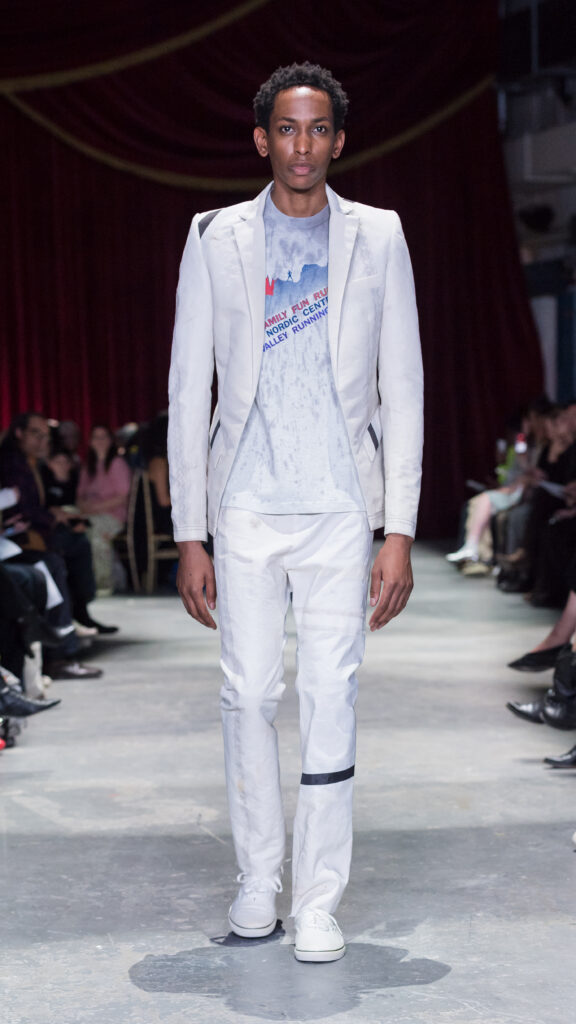
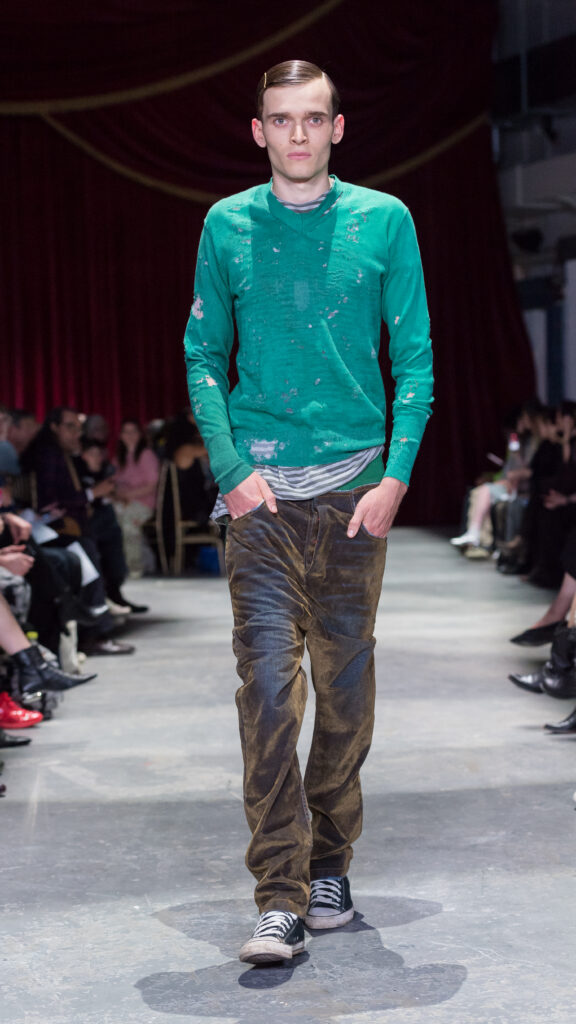
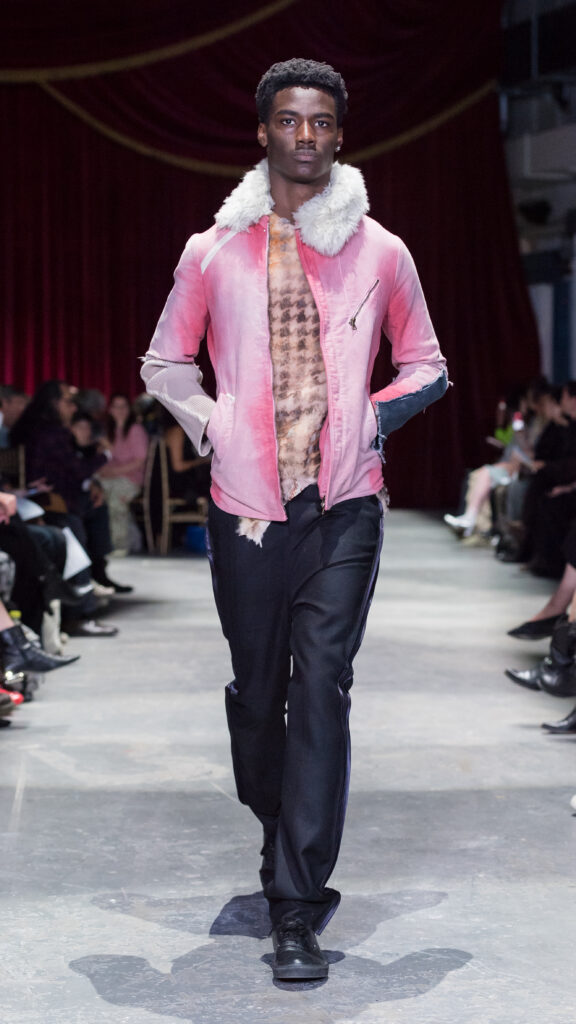
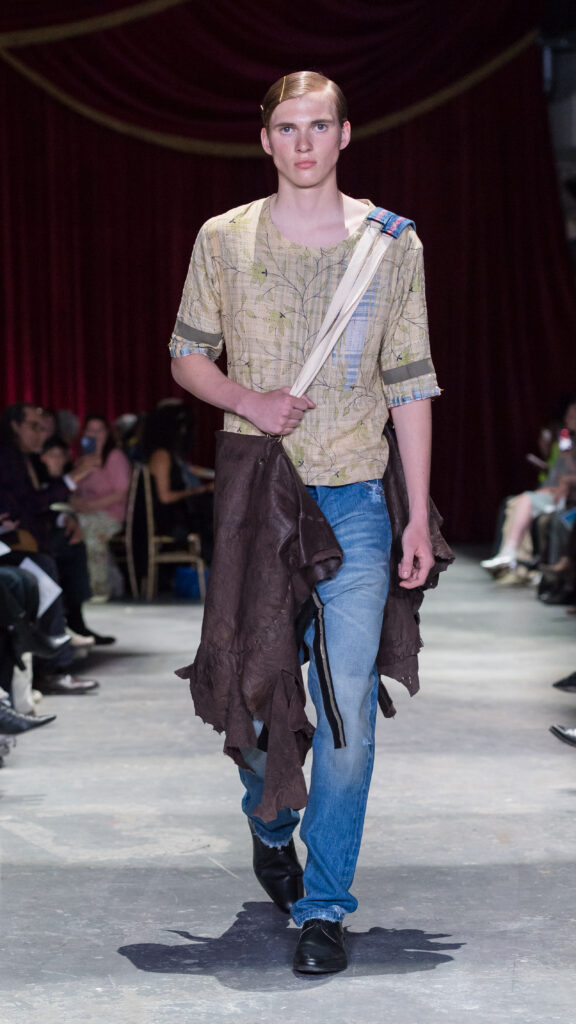
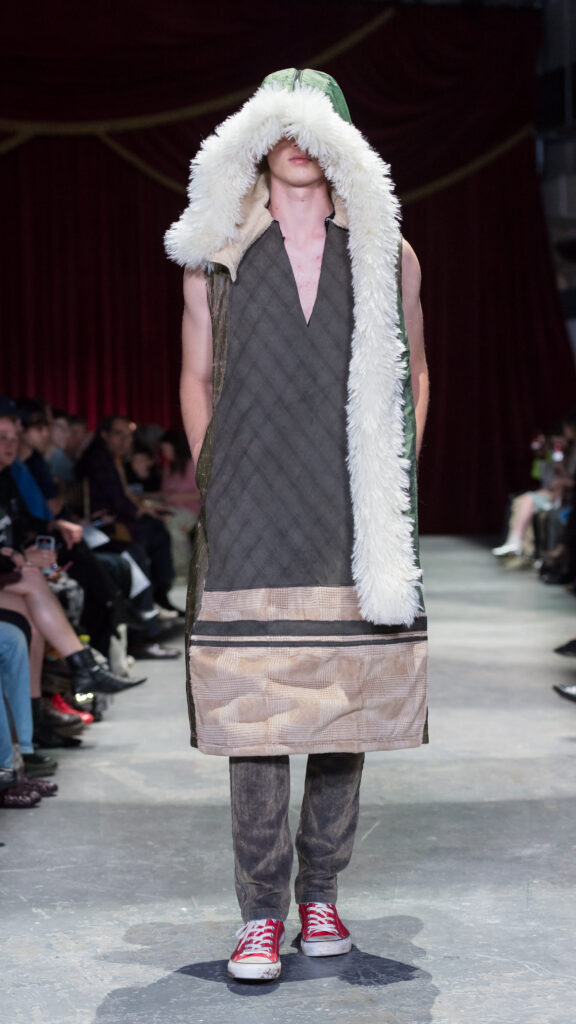
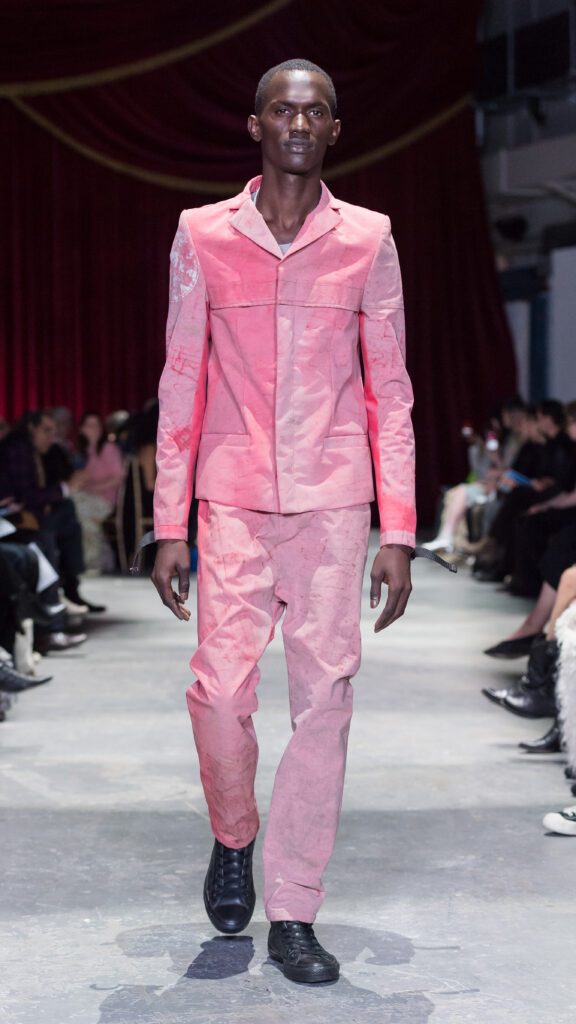
Sun-faded surfaces, needle-punched wool, singed knitwear and reconstructed denim alongside a tailored piece cut from a weathered boat sail. Rooted in teenage street culture and the emotional weight of worn things, Luo built a wardrobe that favoured cool over curated and understood precisely why. Imperfection here was not an aesthetic choice but a philosophical one. Remaining begins with what is already there.
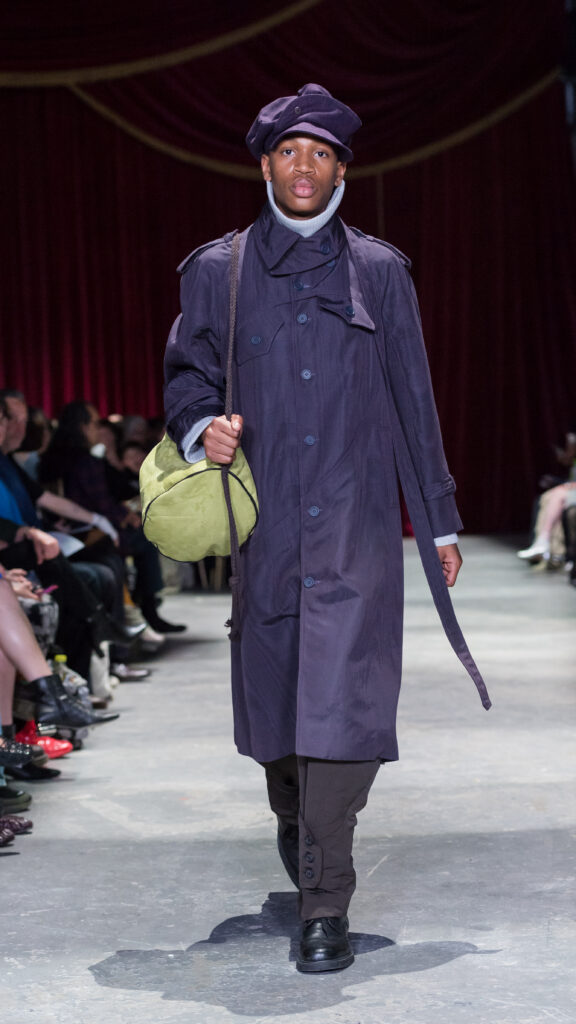
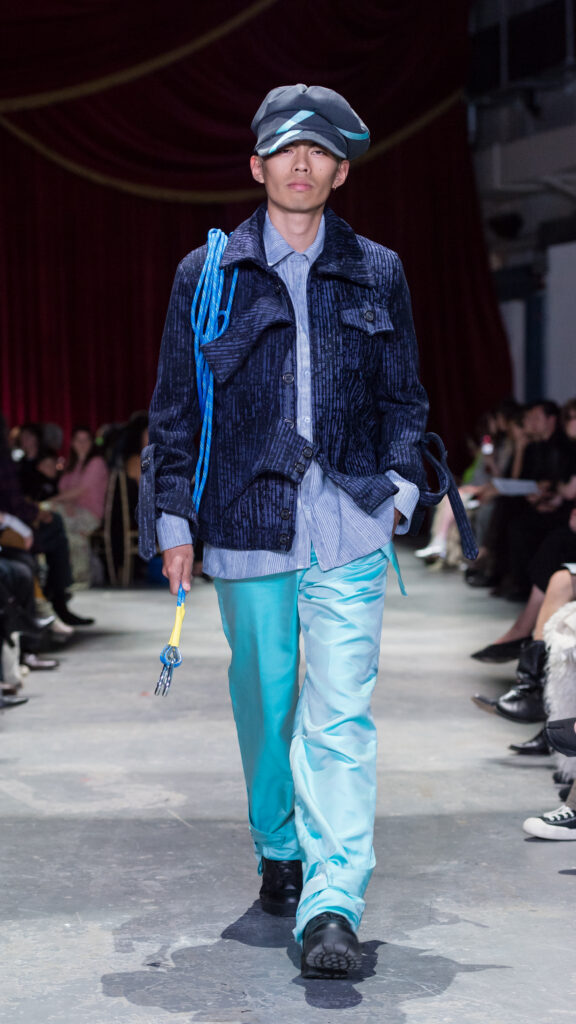
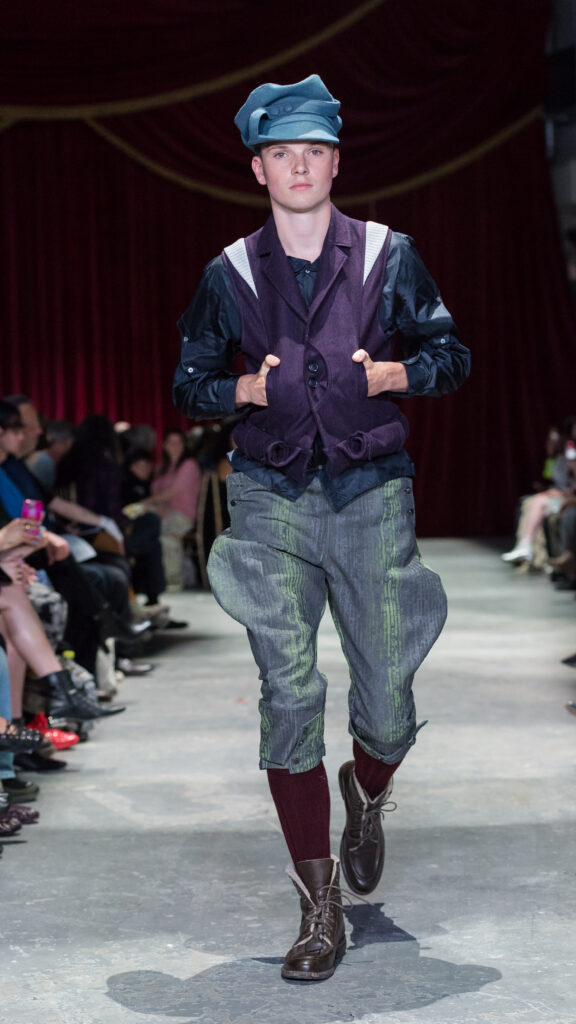
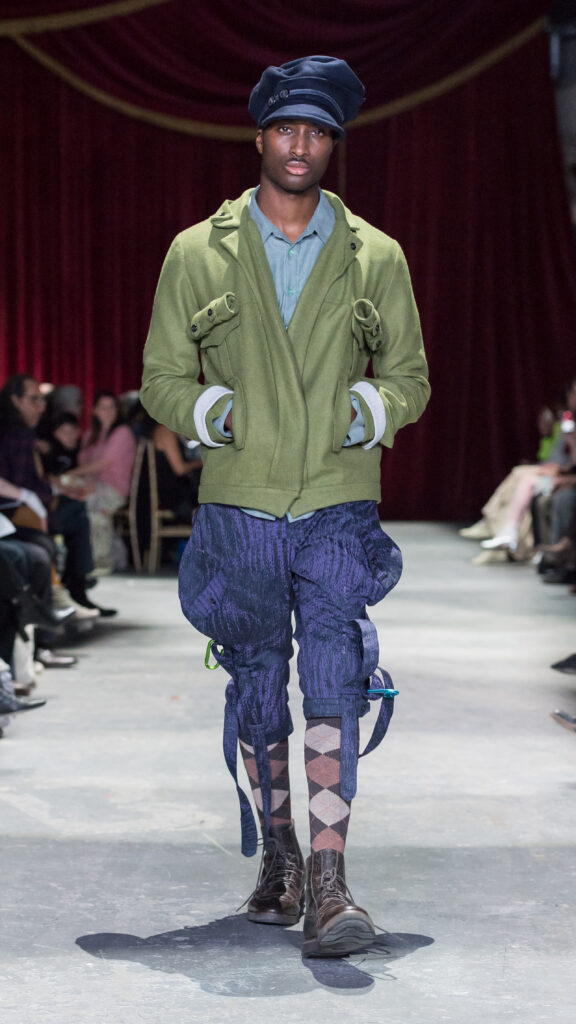
Haeun Stemple
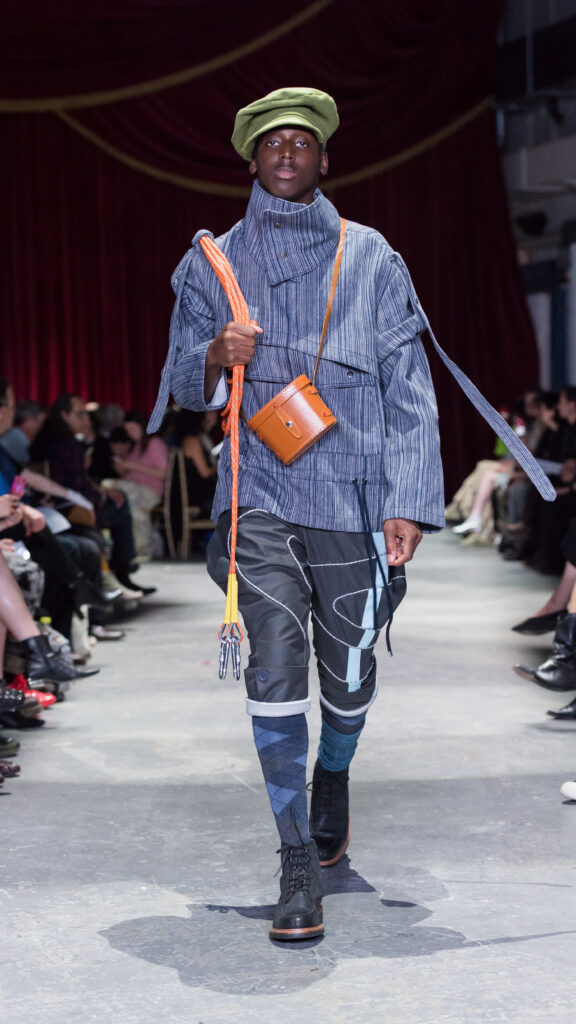
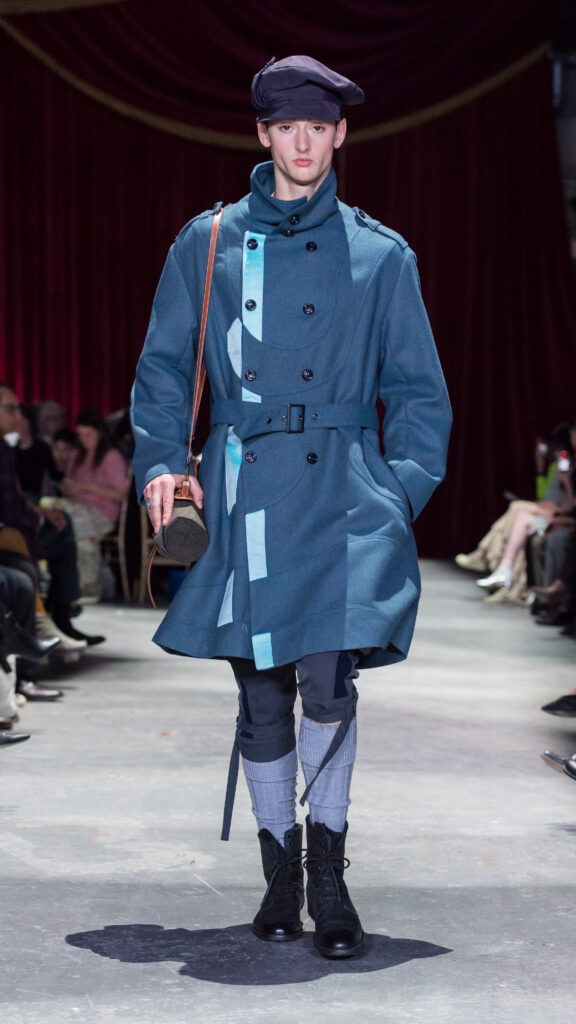
To be in transition is to never quite arrive. Stemple built that feeling directly into the construction, intentionally misaligned pattern cutting and transformable garment features and glitch-inspired puff prints documenting the emotional instability of life in transit. Errors and amendments were made visible in the cloth itself, layered constructions shifting silhouette as they shifted meaning
Nikyla Natividad
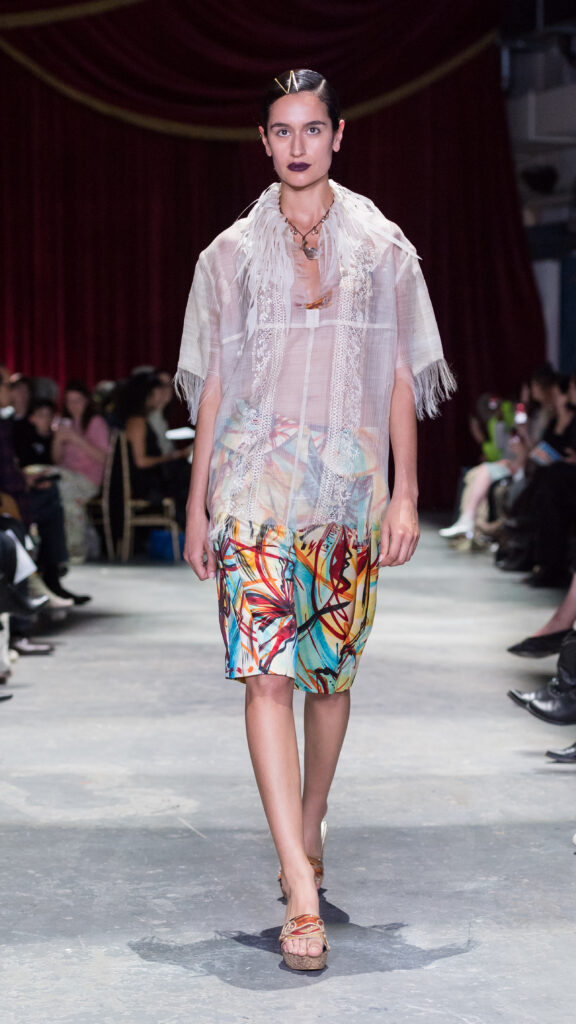
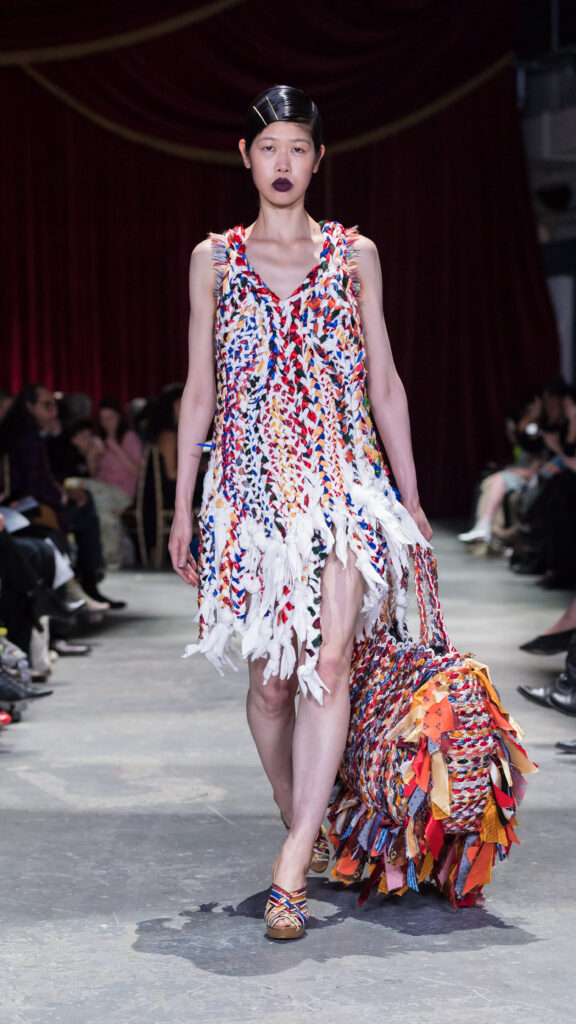
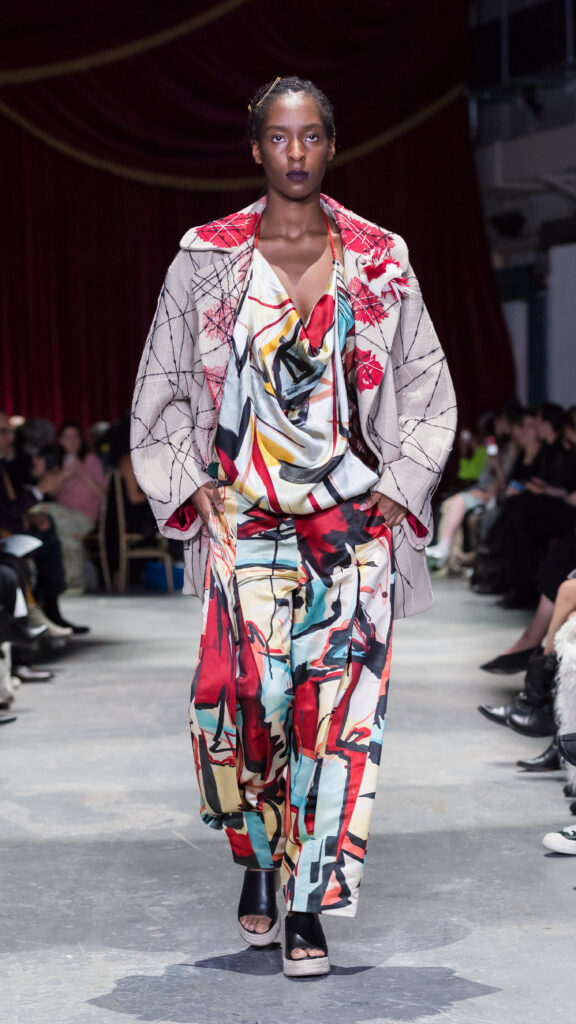
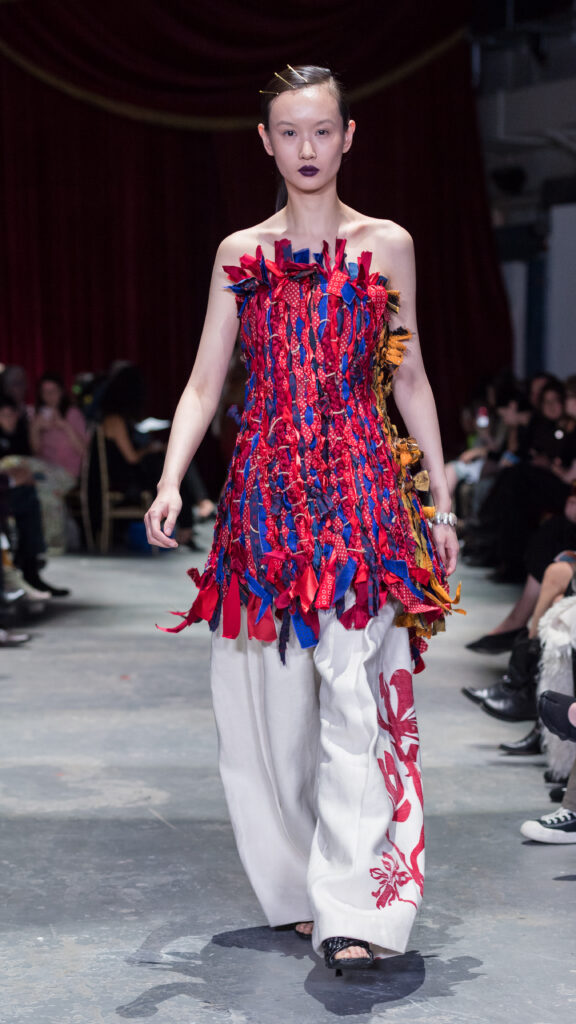
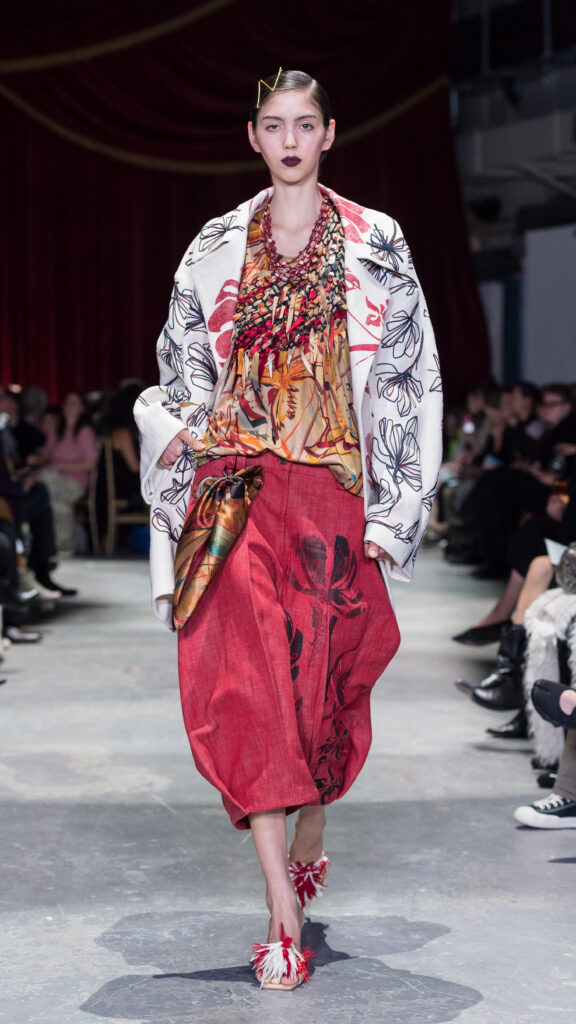
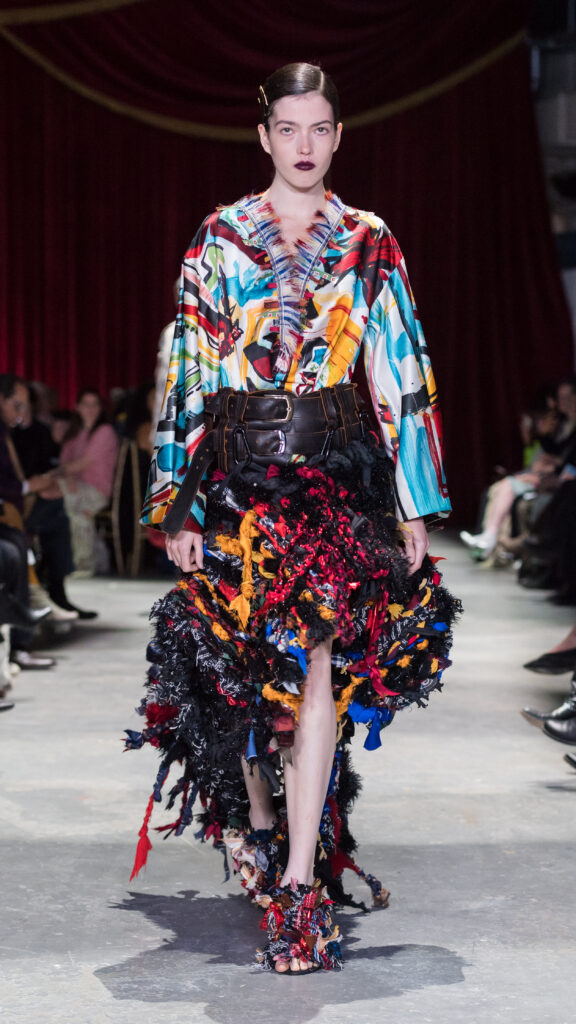
Kaleidoscopic, personal and alive with craft. Opening with a modern interpretation of the traditional Filipino Barong Tagalog in Piña fabric, that treasured cloth woven from pineapple leaf fibres and deceptively delicate yet exceptionally strong, Natividad built a collection rooted in childhood memories of the Philippines. Hand-drawn pattern inspired by Benidicto Cabrera’s Sabel painting ran alongside the traditional Bayong bag transformed into a vibrant modern tote, all donated and deadstock fabric and every piece hand-sewn without a machine in sight. A designer for whom process is entirely inseparable from meaning.
Olly Dye
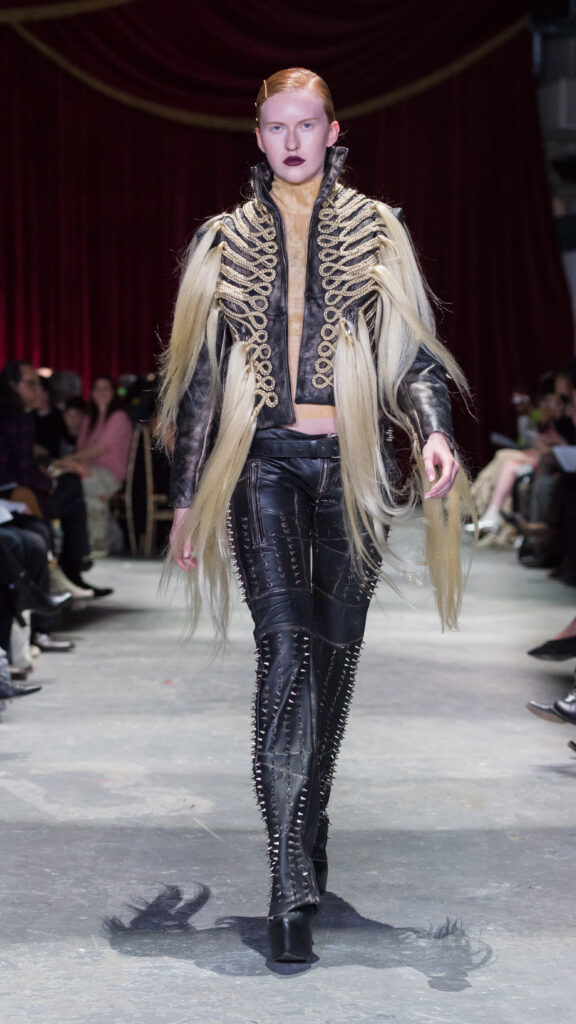
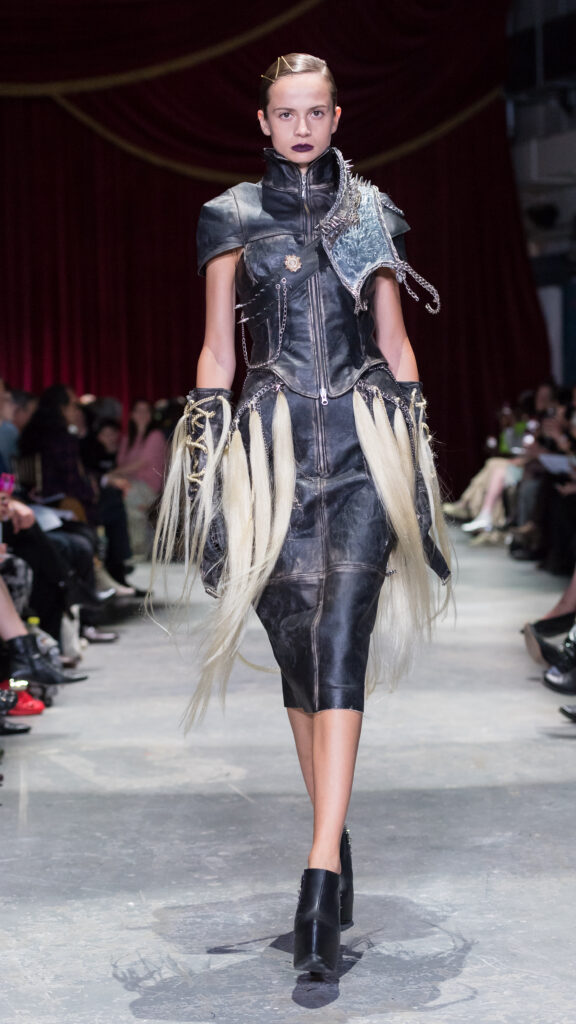
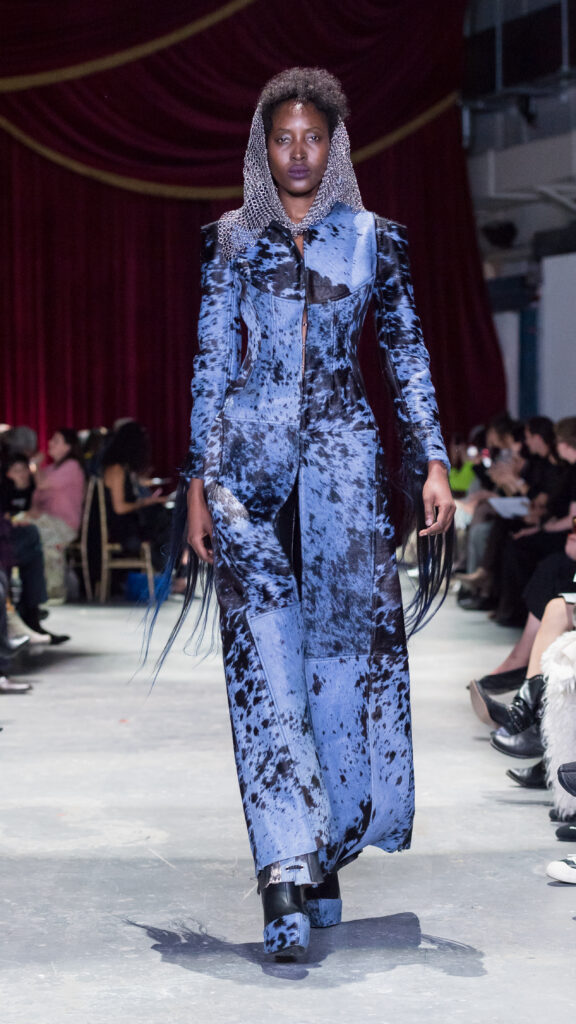
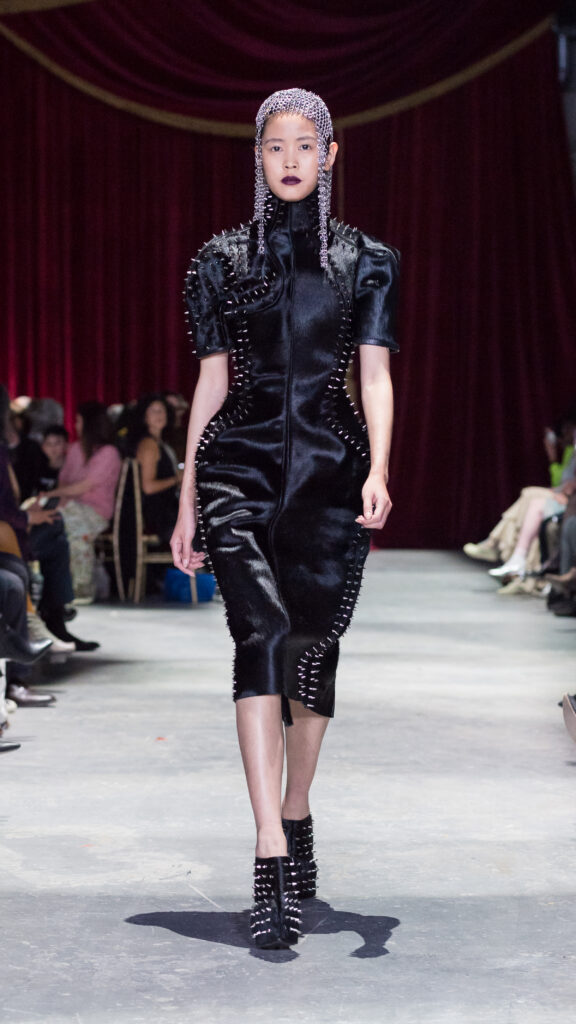
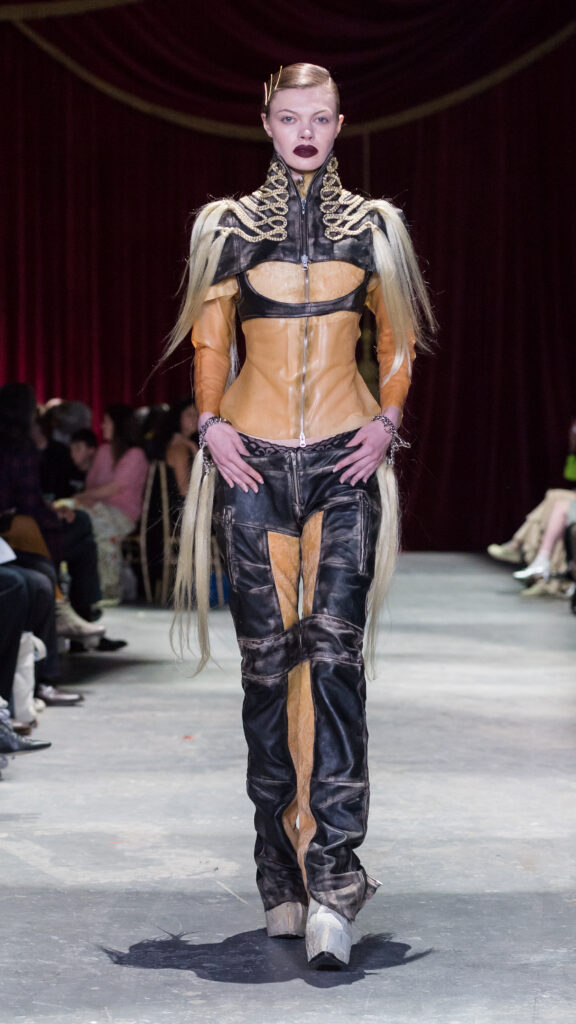
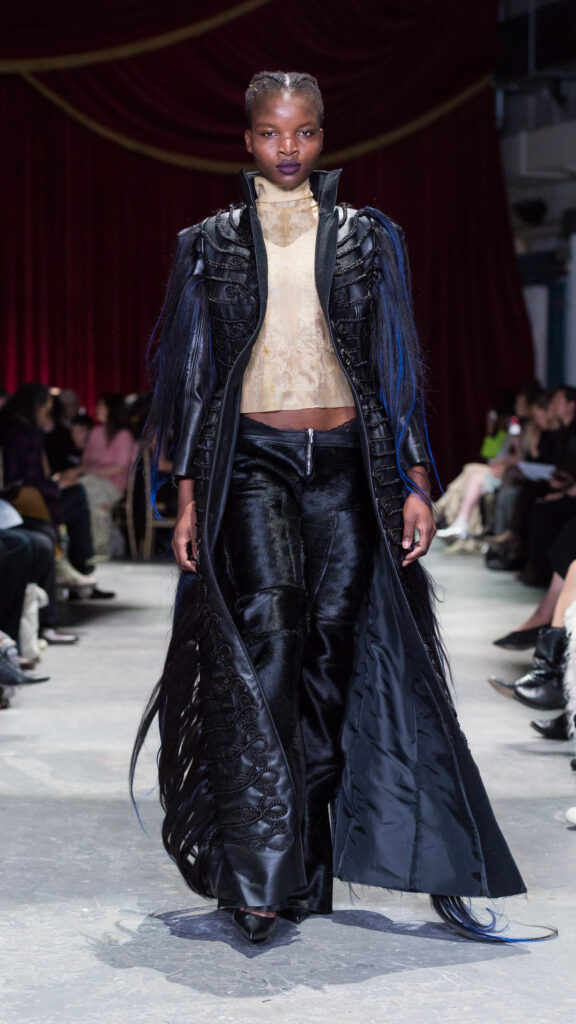
Nothing else in the show came close to this for sheer presence. Leather and hair came together to explore shielding and self-protection, Napoleonic and medieval armour silhouettes rendered in smooth leather and adorned with copious flowing, plaited and twisted hair strands in black, blonde and blue. The chainmail pieces were crafted by Yasmin Kenny, a Chelsea UAL fine art graduate whose fascination with metal, armour and weaponry led her to teach herself the techniques of chainmail-making during her second year of study. “I’d always been fascinated by metal, armour and weaponry,” Kenny explains, “and set out to learn techniques to make chainmail which I initially used within some sculptural work.”
The collaboration came through friendship, Dye bringing Kenny in knowing she made chainmail. One headpiece had already been made the previous year; the second was fashioned last minute from a flat sheet into a hood, a coif in everything but name. Original plans had called for chainmail across all looks but closing and connecting every link by hand made that unfeasible, and what remained was more considered for the constraint. “The military tone that ran through Olly’s collection was really showcased,” Kenny reflects. Bright hair as confidence, as metaphor and as unblinking gusto, metal chains and studs completing a statement that was arresting and fully committed.
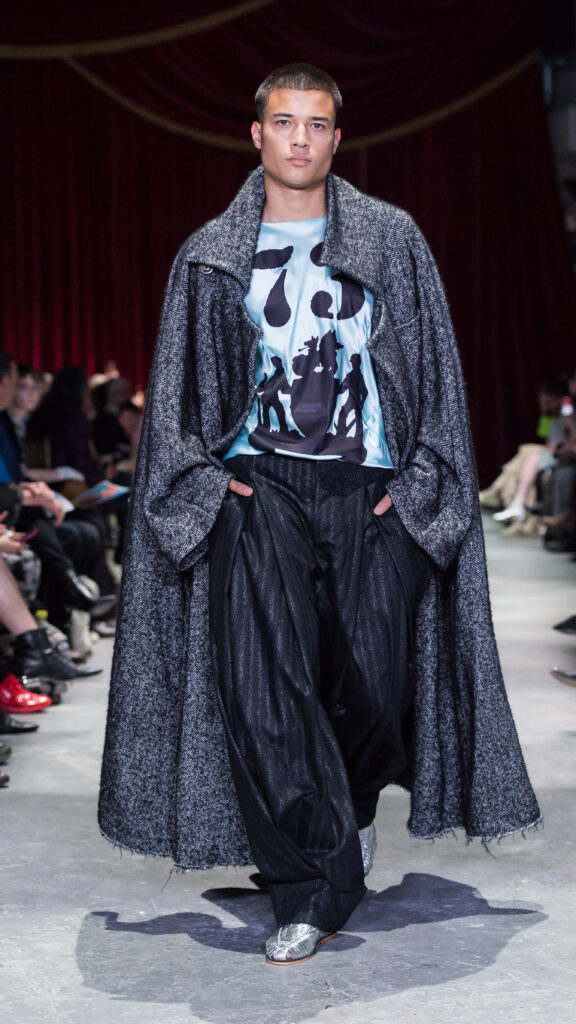
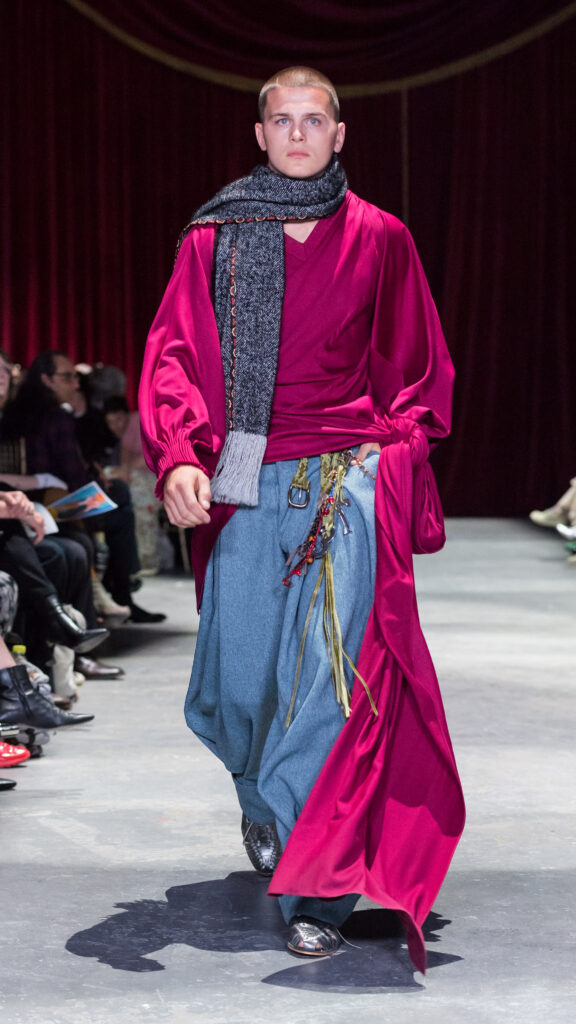
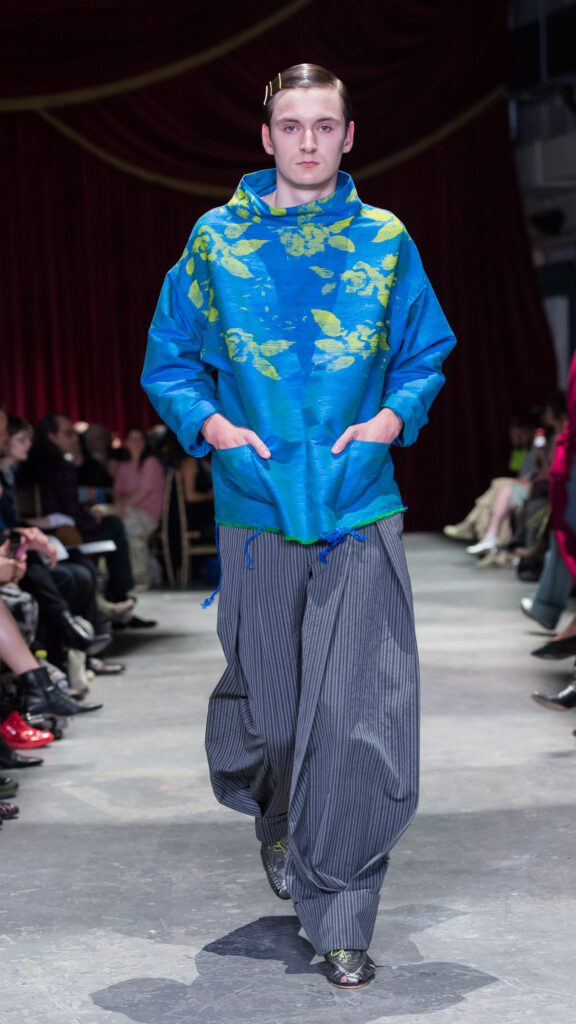
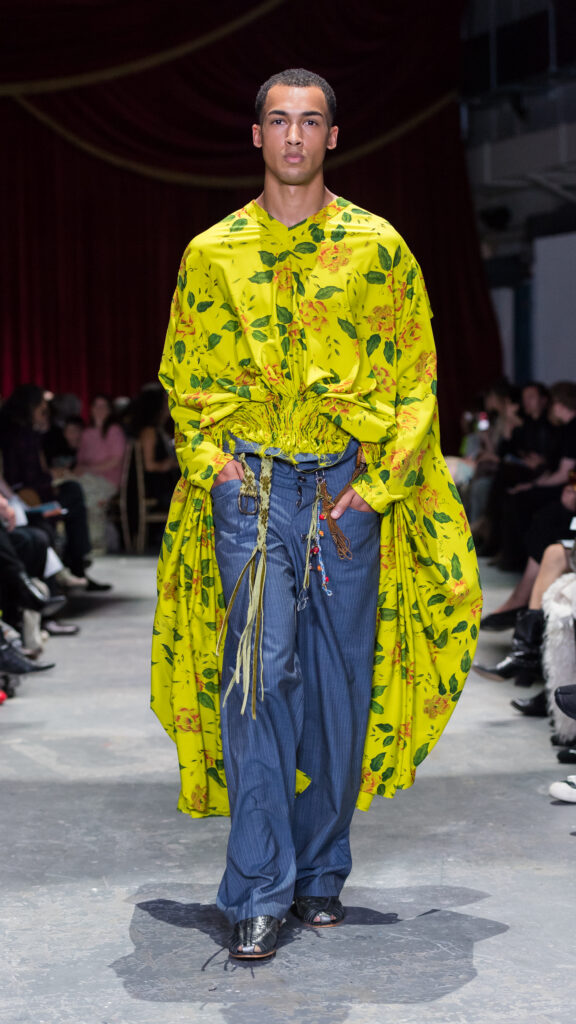
Olivia Grace Robinson
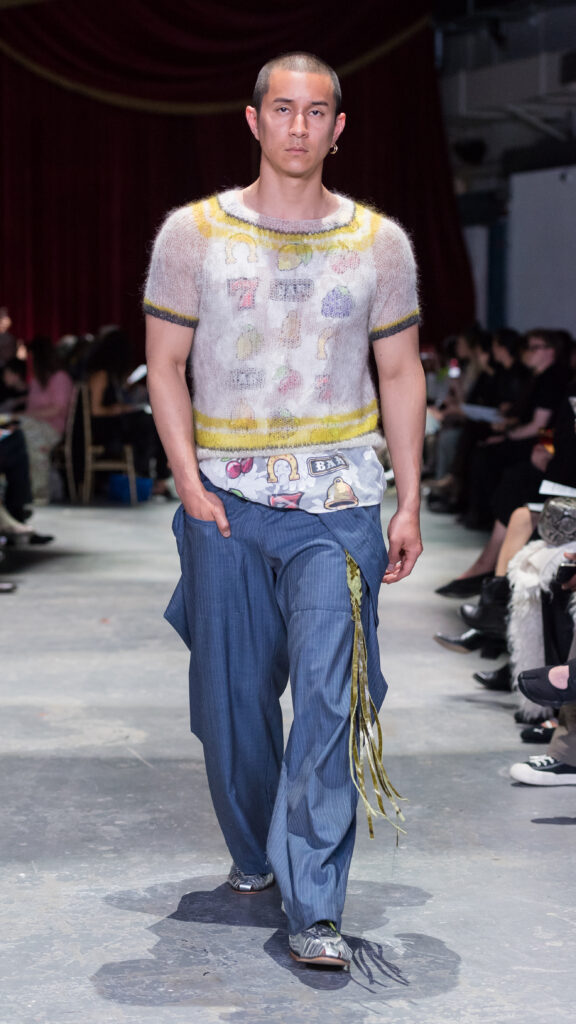
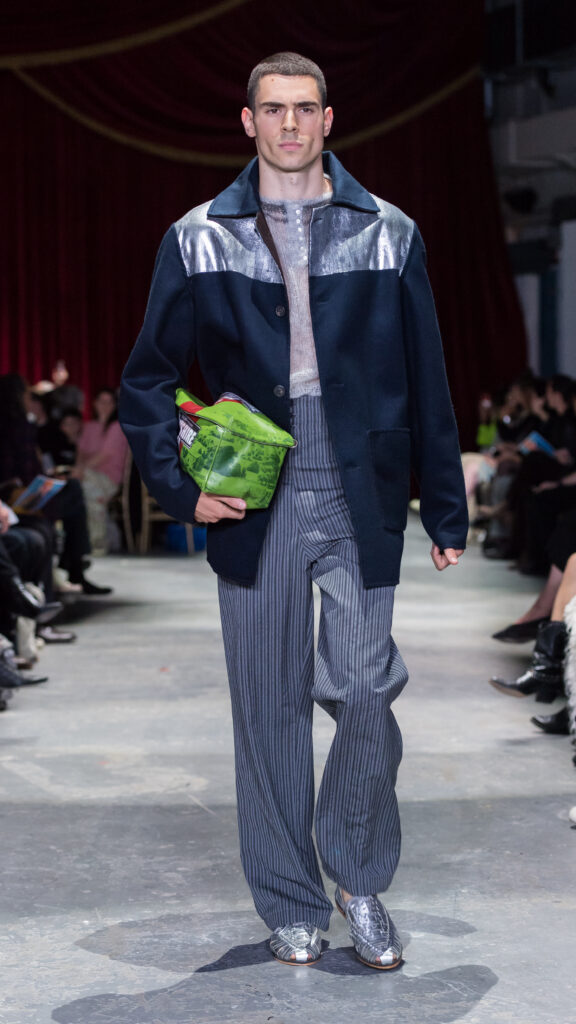
Contradiction worn openly and worn well. Intricate bias cutting developed back to basics softened the menswear while silk saturated in symbols and nostalgia pulled it somewhere stranger and more interesting altogether. Sponsored wools from Yorkshire mills and a collaboration with Mumbai shoemakers grounded everything in real labour and real place. London and Barnsley. The perfect cup of tea and the constant search for balance.
Olucci Oko
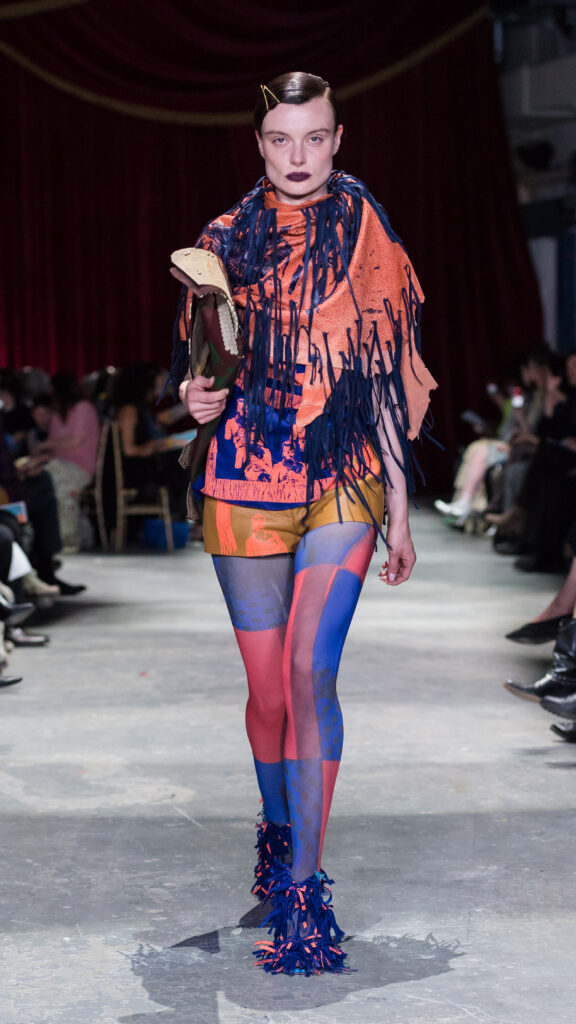
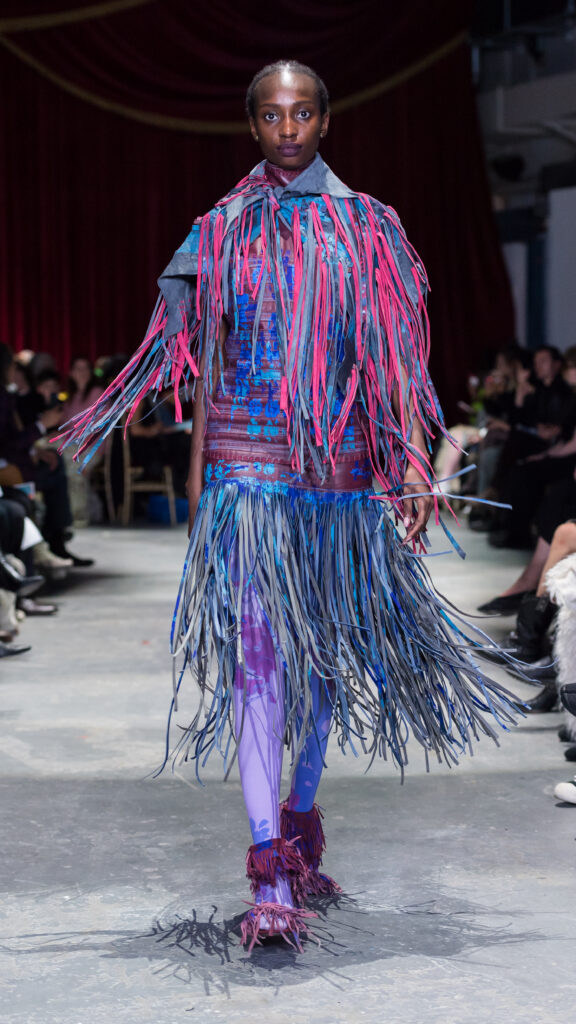
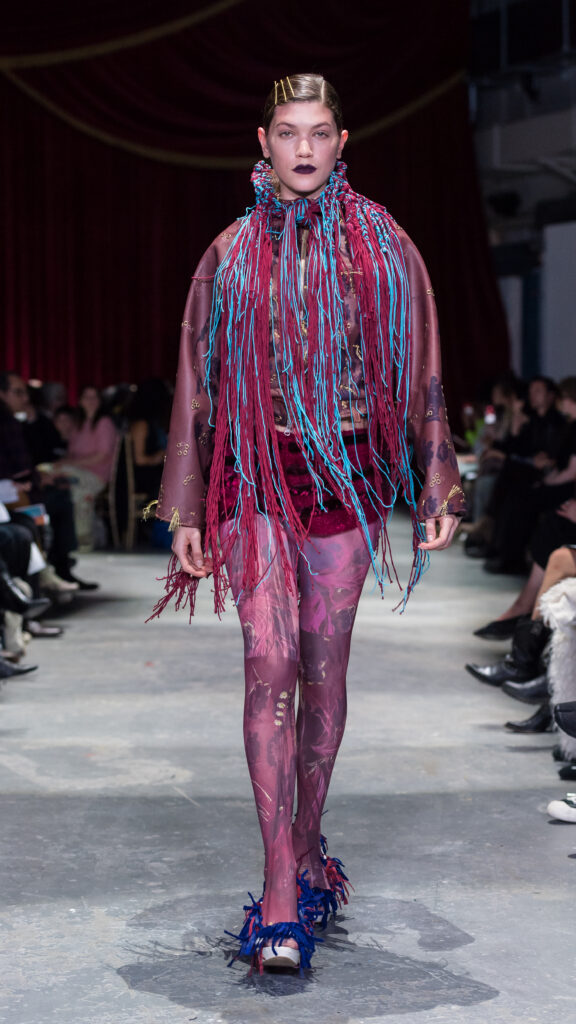
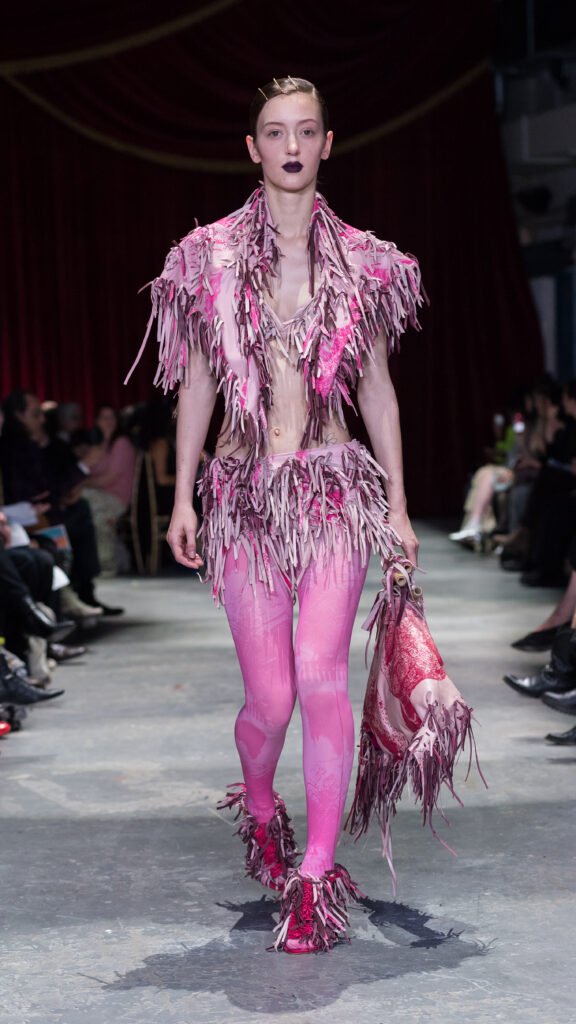
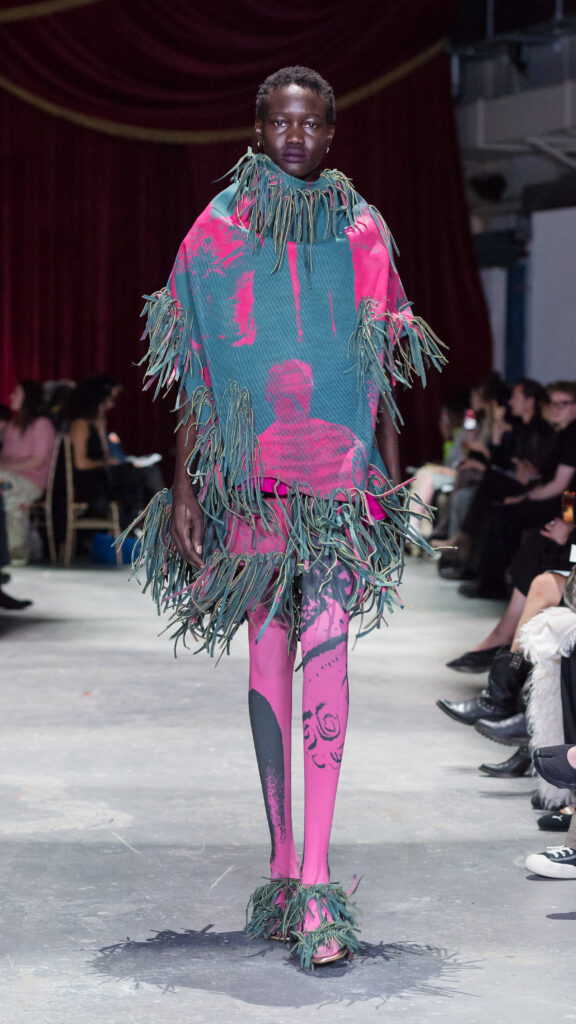
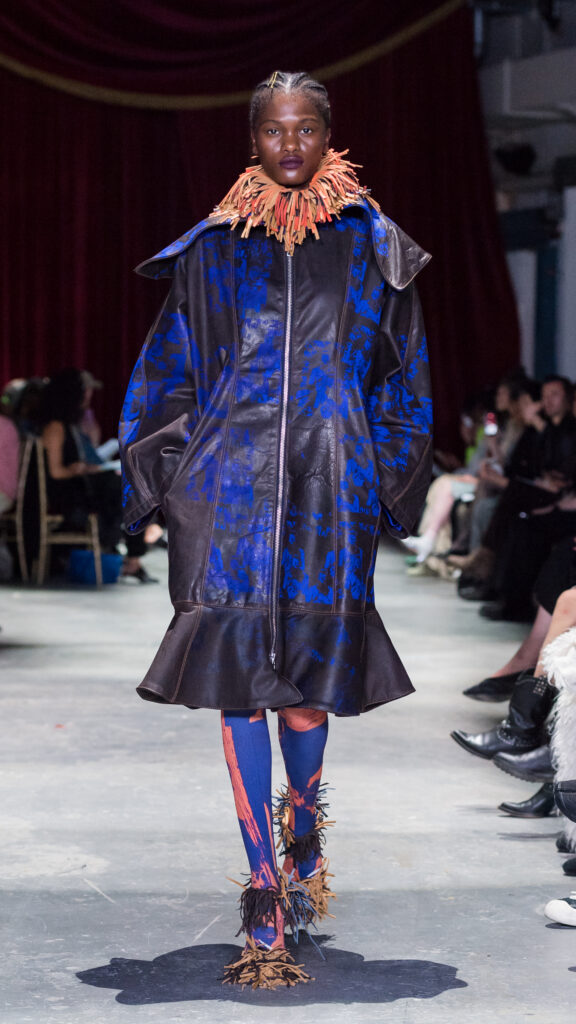
Let the colour speak, and then let it speak louder. Drawing on Nigerian cultural traditions, family portraits and the movement of ceremonial dance, Oko built through zero-waste draping and deadstock fabrics in warm jewel and earth tones, fringing and wrapping and weaving adorning the body at every turn. Statement jewellery repurposed from fabric and leather completed a collection that was wonderfully and unapologetically itself.
Elise Cullen
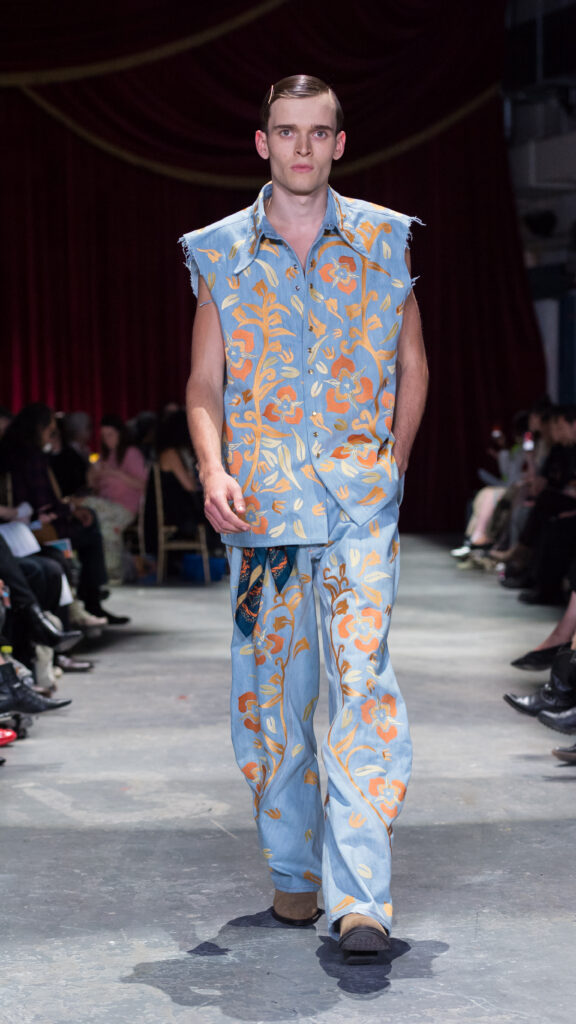
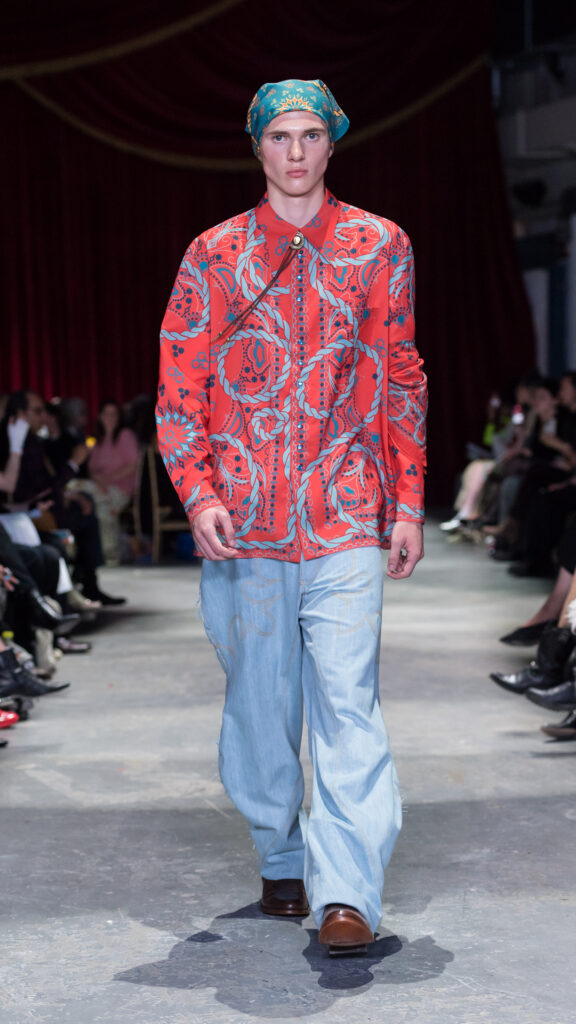
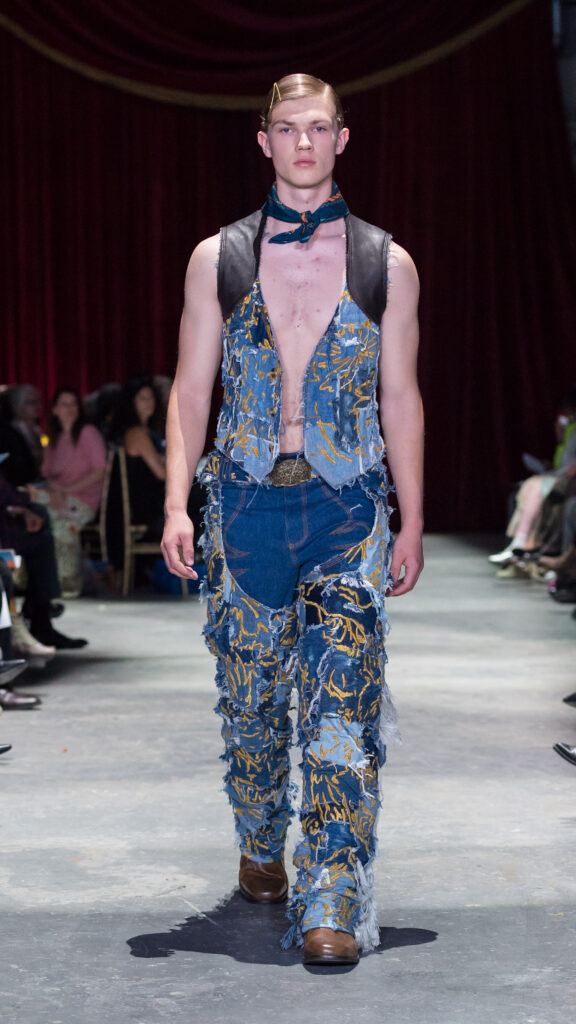
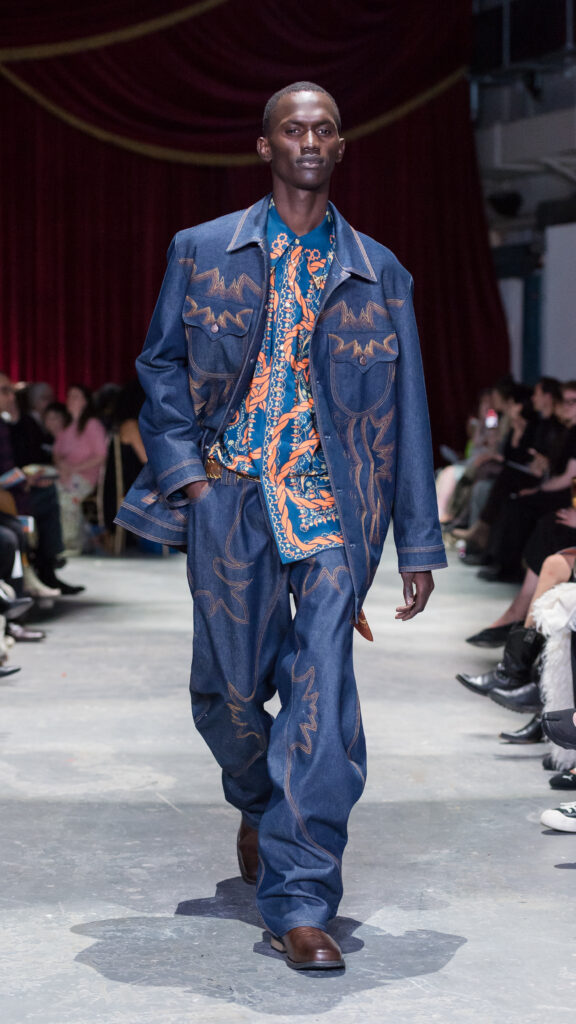
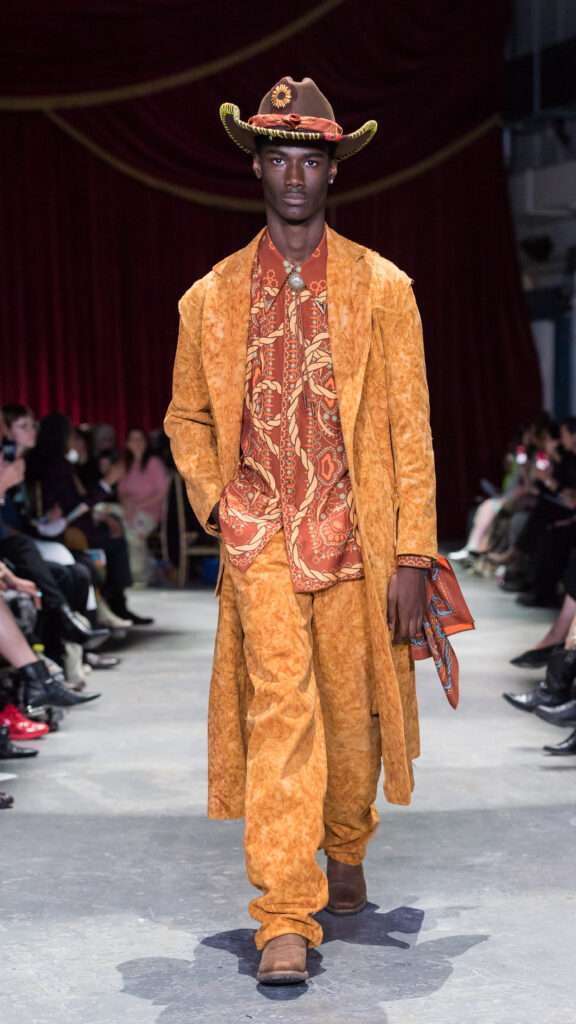
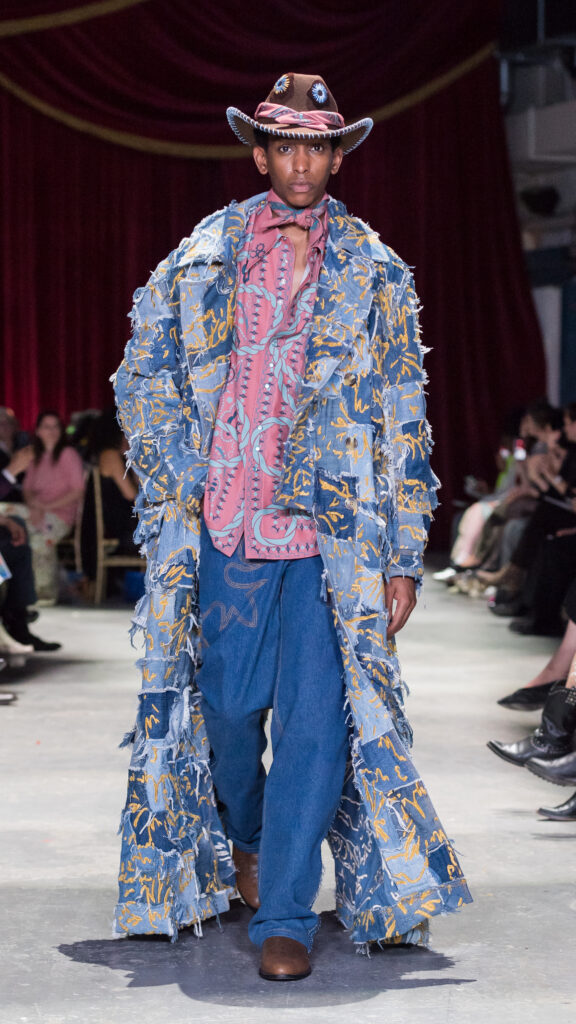
Playful, pointed and not letting anyone off the hook. Cullen pushed back against cowboy mythology with both humour and rigour, questioning authenticity and calling out aesthetic adoption without lived connection. Every look was made from secondhand fabrics or deadstock denim and a naturally rust-dyed piece introduced themes of wear and inventive decay with a wink. Genuinely fun and genuinely critical at once.
Jocelyn Andra
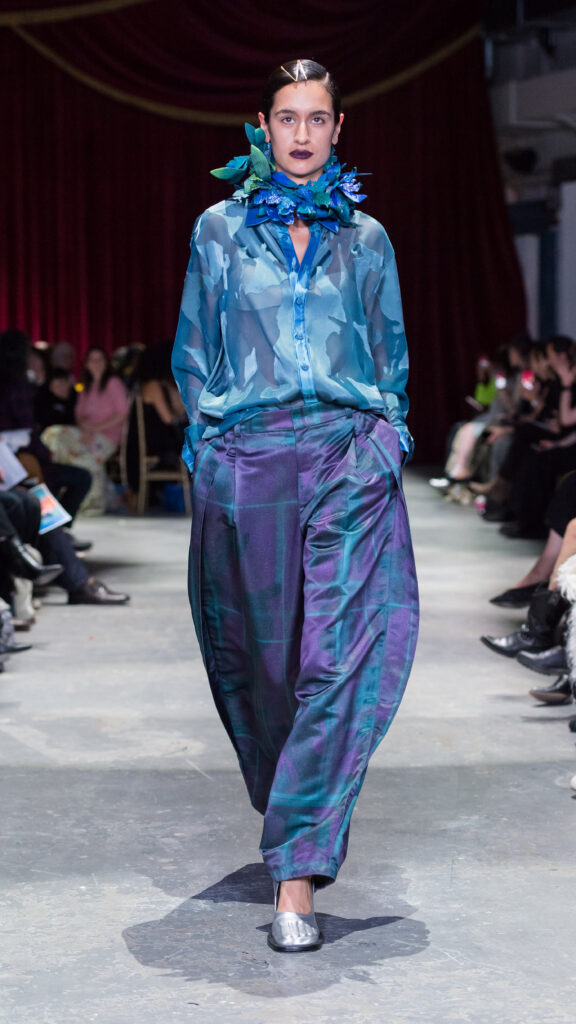
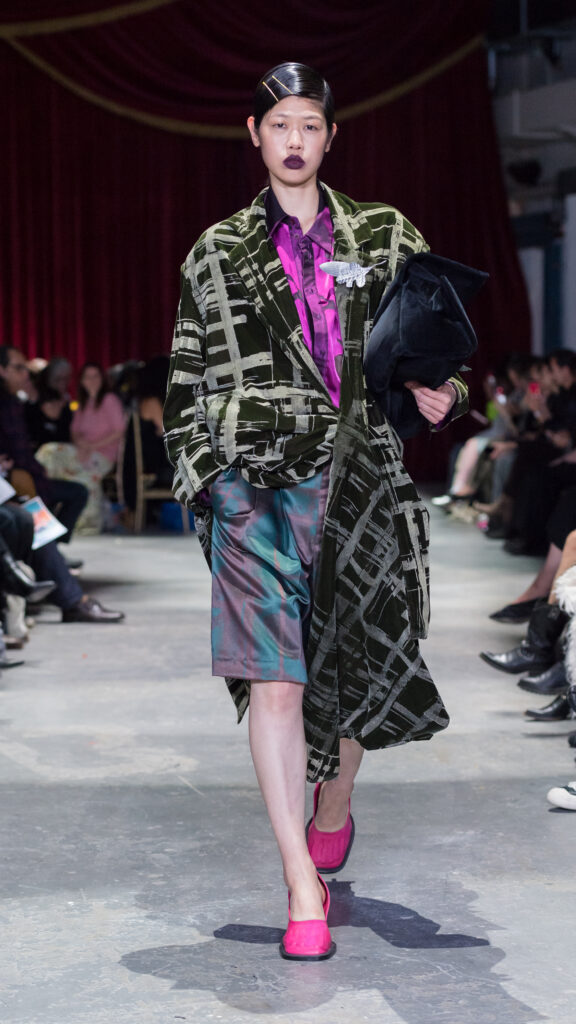
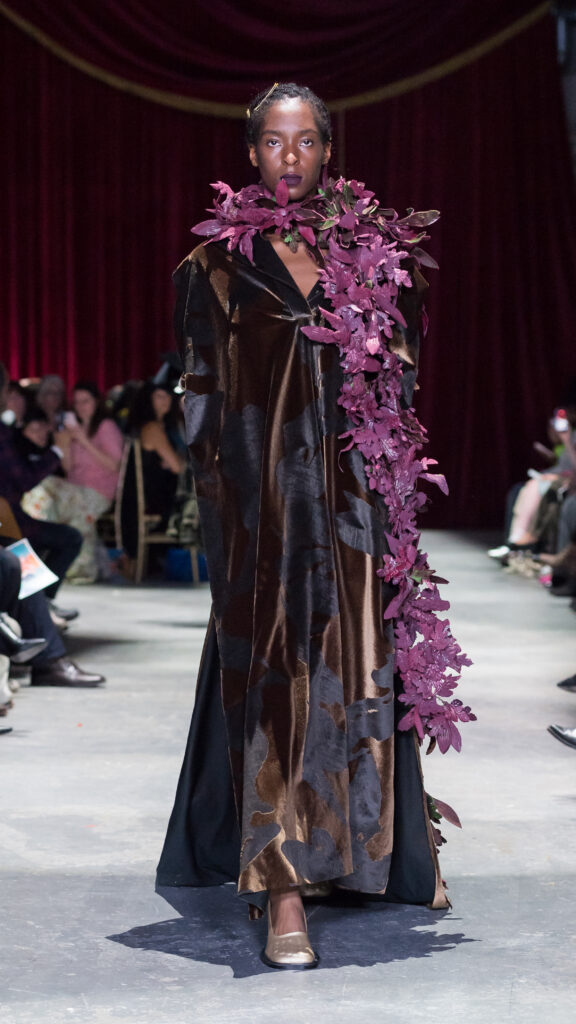
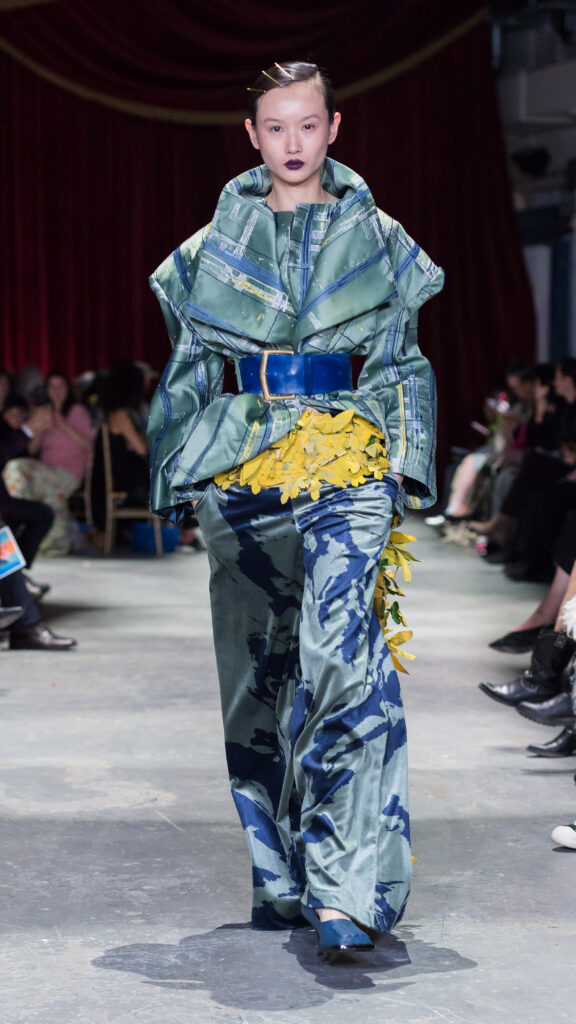
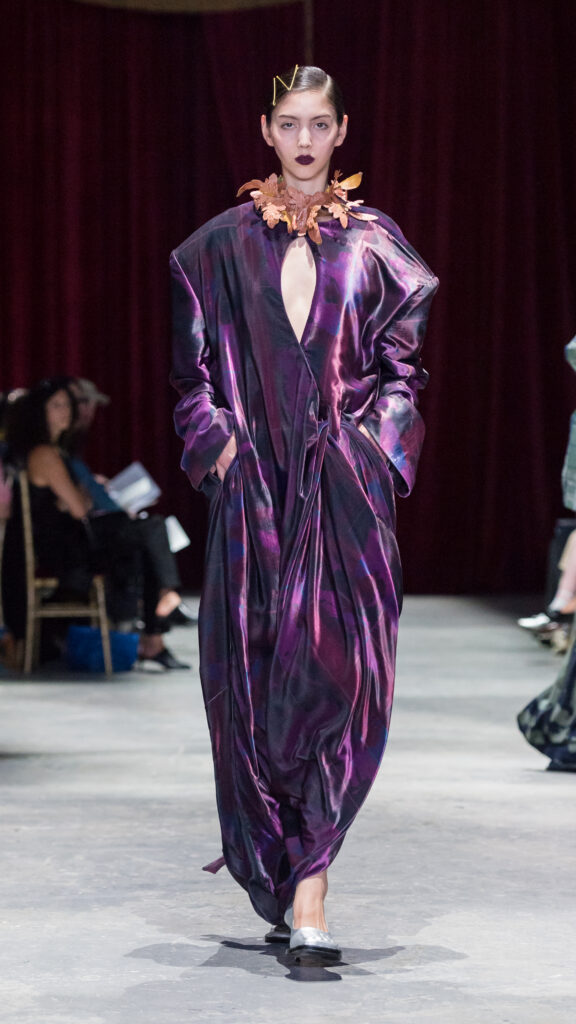
A love letter, stitched. Rooted in Indonesian archival research and in tribute to her grandfather, Andra fused tailoring with wrapped silhouettes in opulent textiles, screen printing on velvet and devoré and satin fabrication building into something rich and deeply layered. Hand-cut fabric leaves her grandfather once made in his small business were transformed into accessories, those long-discarded objects finally and tenderly returned to meaning.
Xinyan Chen
Chen closed the show with something that lingered. Metropolitan Villagers explored identity shaped through collective history, intergenerational memory and inherited silence, rural origins and urban transformation held in careful tension within each garment. Structure against fragility, restraint against intimacy and repression against desire. A reaction, a resistance and a final word. It was exactly the right note to end on.
Westminster’s class of 2026 is fluent in the language of contemporary fashion and willing to expand its vocabulary. There are designers needed to be added to the dictionary.
by Ellis Dowle