
IN THE next instalment of McQueen’s archival film series, Documenting McQueen, the iconic skull print is explored.
The latest instalment revisits one of the house’s most enduring and recognisable motifs, tracing the evolution of the McQueen skull from its origins in the 1990s through to its codification with the Skull Scarf in 2003. The episode forms part of an ongoing series dedicated to uncovering the narratives and visual codes that define the house’s identity.
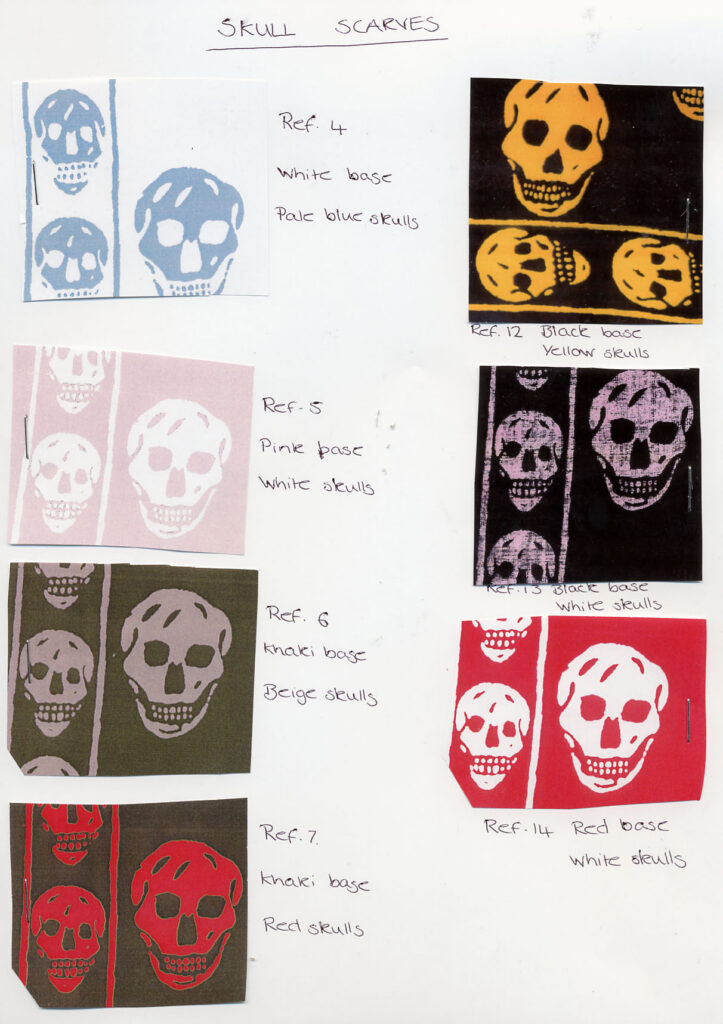
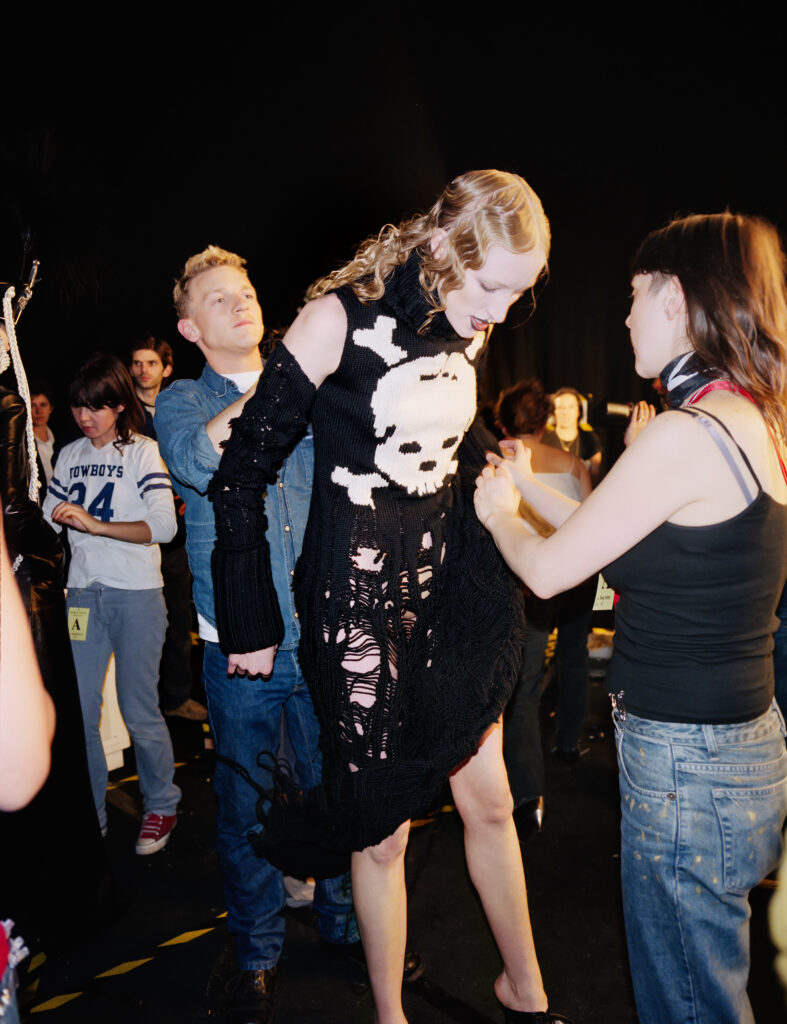
Left: Skull References | Right: Backstage
At McQueen, the skull operates as both symbol and signature, rooted in a longstanding fascination with mortality, memento mori and the tension between beauty and decay. Rather than functioning as a purely gothic device, it is treated as a refined emblem that bridges the macabre and the decorative, appearing across tailoring, accessories and print. Its repetition across decades has transformed it into a visual shorthand for the house, one that is instantly recognisable yet continually reinterpreted.
Guided by fashion historian and Central Saint Martins professor Alistair O’Neill, the film examines the skull’s cultural resonance and creative development through archival material and critical insight. Among the defining moments explored is the bespoke skull-printed dress created for Kate Moss, worn during a performance in the 2004 Black show, choreographed by Michael Clark.
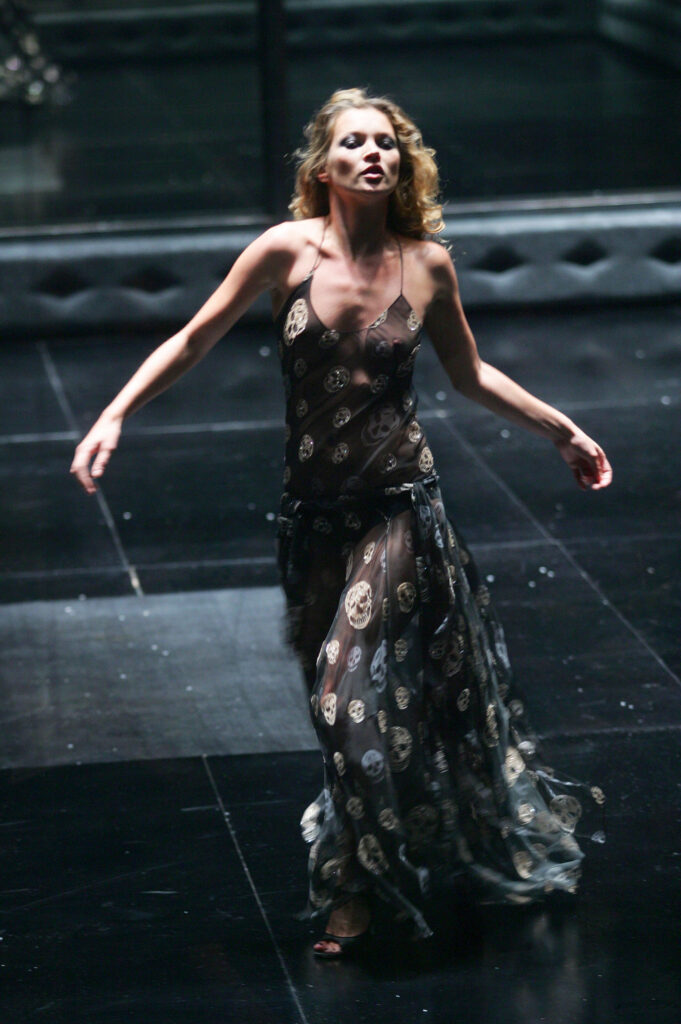
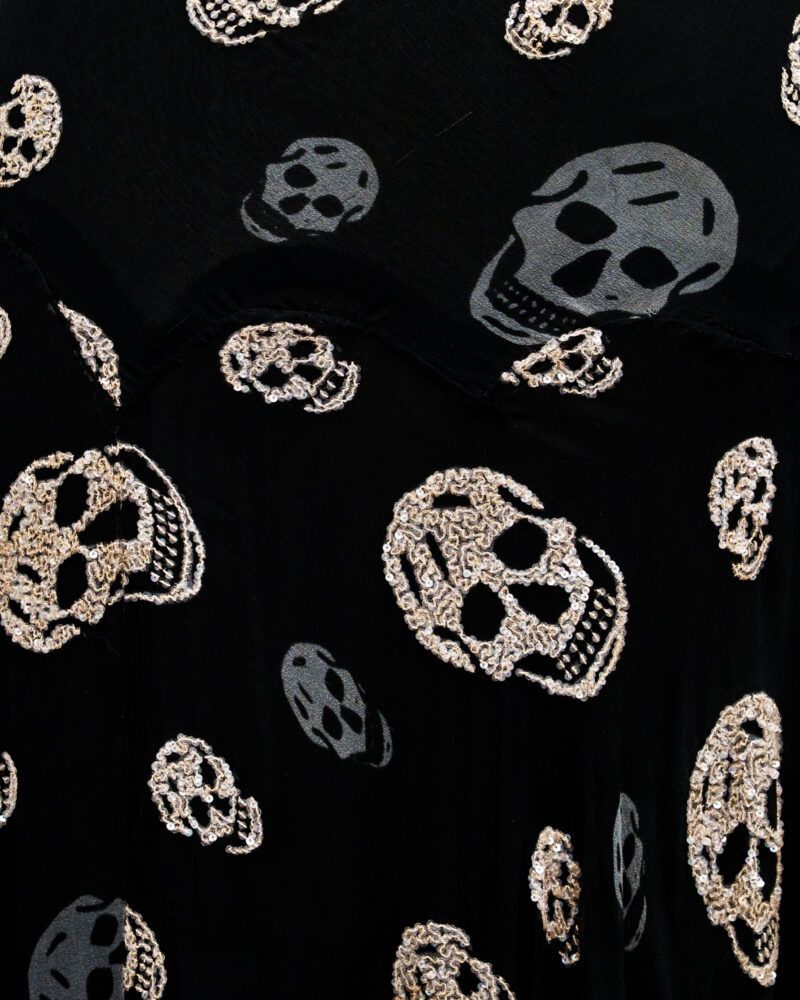
Left: Kate Moss for Alexander McQueen 2004. Photograph: Mike Marsland | Right: Closer look at the dress
Through this lens, the episode situates the motif within a broader dialogue around mortality, performance and image making, while reflecting on its continued relevance within the house today. Under the direction of Creative Director Seán McGirr, the skull remains a recurring visual language, evolving across contemporary collections while retaining its symbolic weight.
by Ellis Dowle