
FLORENCE, ITALY — Here’s the thing about the future: it’s not going to be so different from modern times. Of course it’ll be different, and in a wealth of ways we can’t yet anticipate. But when you get down to brass tacks, humans aren’t going to grow extra arms or develop the power of flight: they’re still going to be sweltering when it’s warm outside, as it was in Florence over the last few days. The inexorable humanity and gentleness of human beings was on Simone Rocha‘s mind this season, and that focus made this subtly pitched outing one of the designer’s more grounded collections to date.
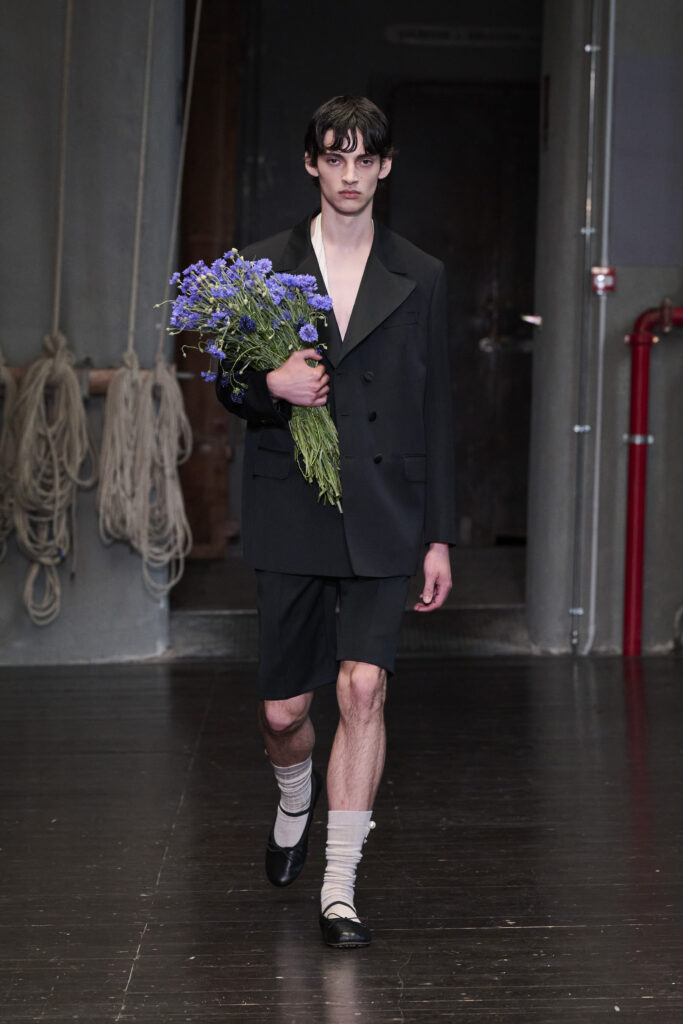
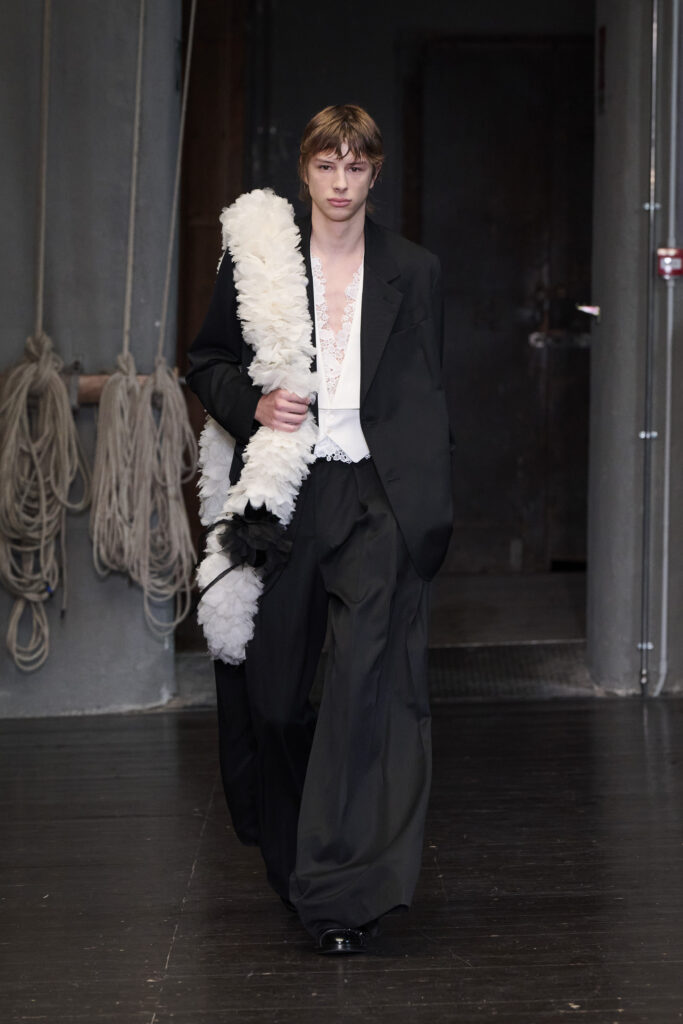
Rocha occasionally has a tendency to over-fuss her silhouettes. Not so this time. Taking cues from her Irish roots, which telegraphed through space and time, starting in London and projecting to Florence, the designer leaned into offerings with a matter-of-fact tone and a gently volumised take on tailoring. That direction showed up most clearly in the label’s classics, subtly disrupted and subverted: kilts, organza, and half-cut lace pieces rooted equally in sartorial classicism and contemporaneity.
“I’m really happy to be here, and it’s an incredible honour for my first menswear presentation to be in such a historical place with such a beautiful tradition,” Rocha told reporters in a preview ahead of her show. On the venue, she spoke with unguarded honesty. “It’s so beautiful, and for me it was the perfect backdrop,” she said. “I love bringing people into a space where they always feel isolated and get to step into their own world, and the minute I walked into the theatre, I felt that – transported into its own little universe.”
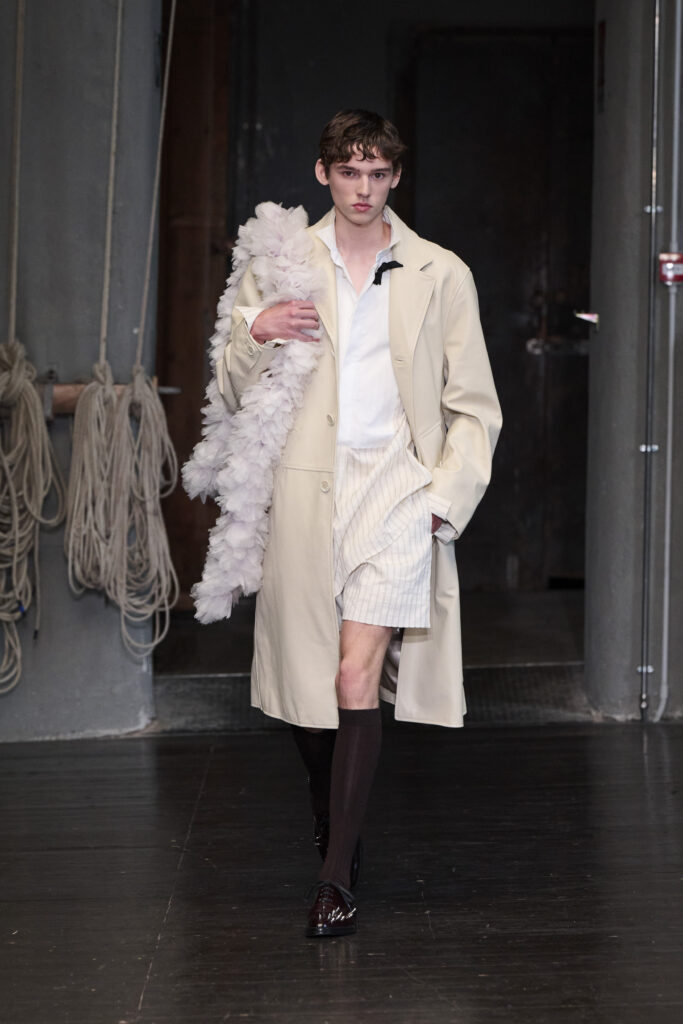
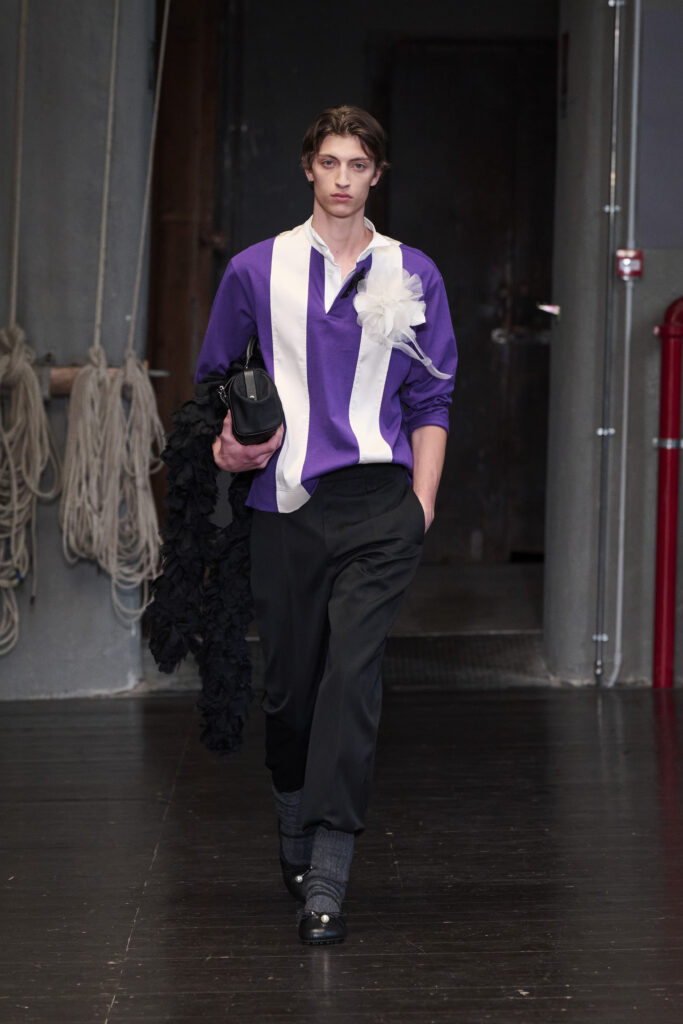
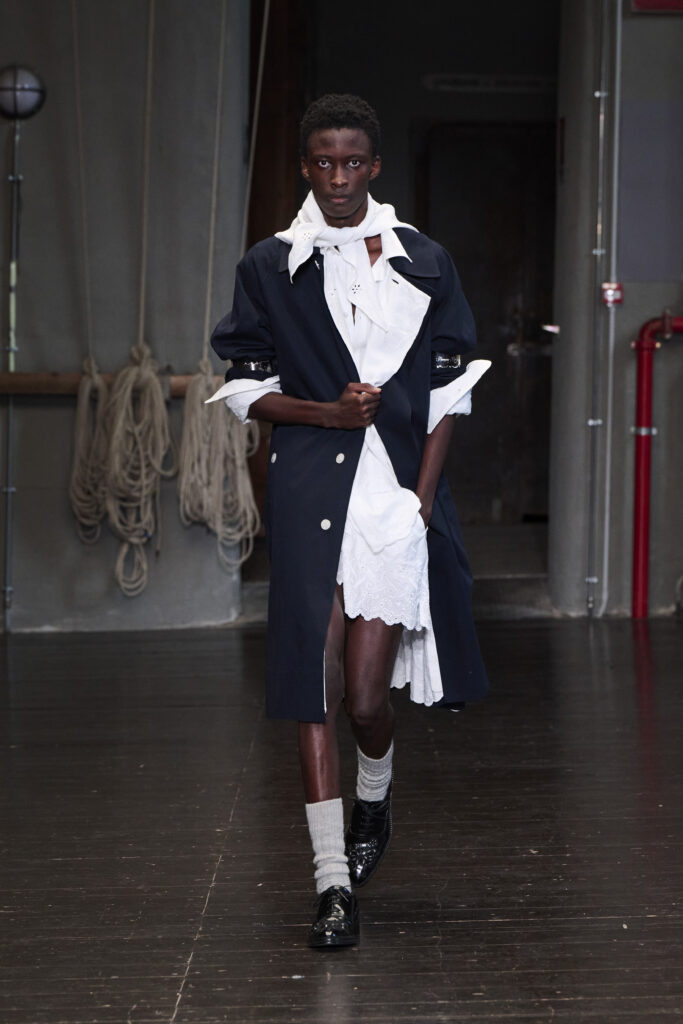
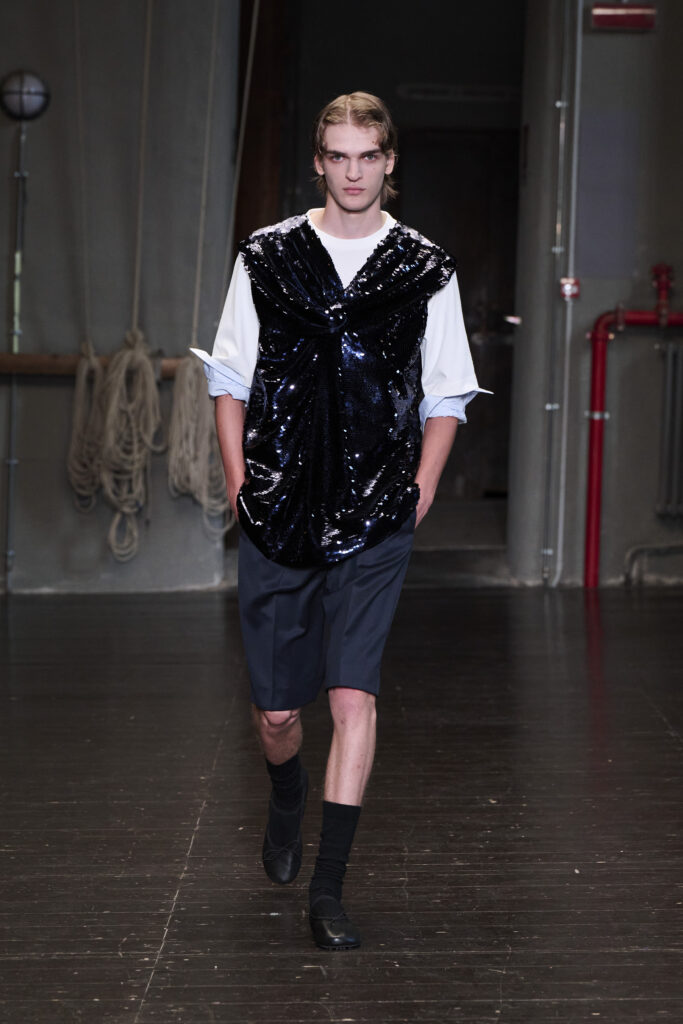
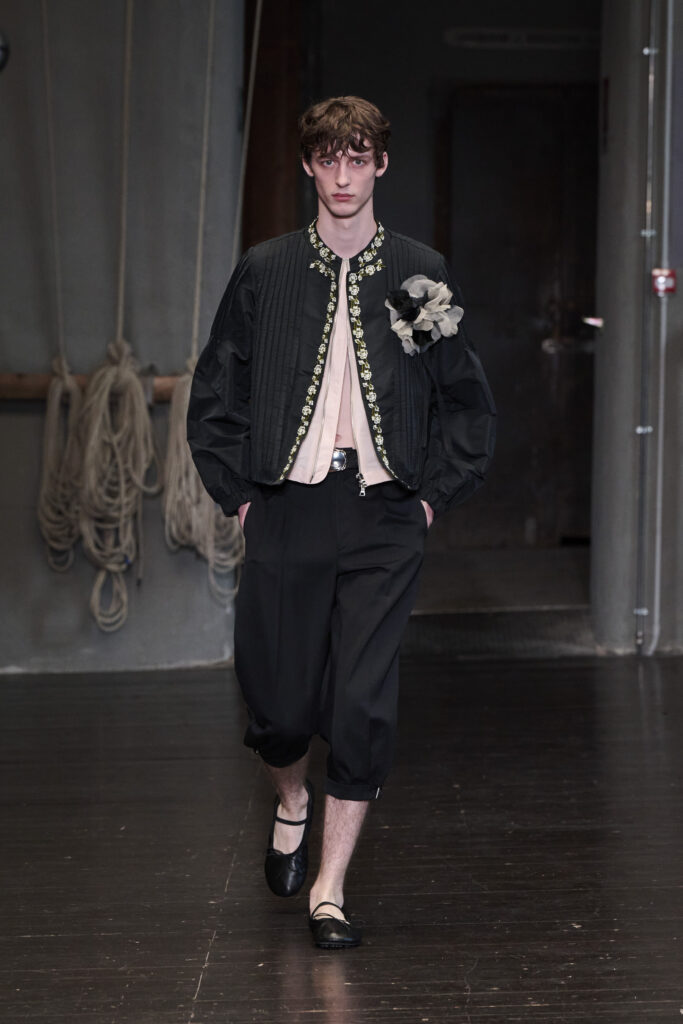
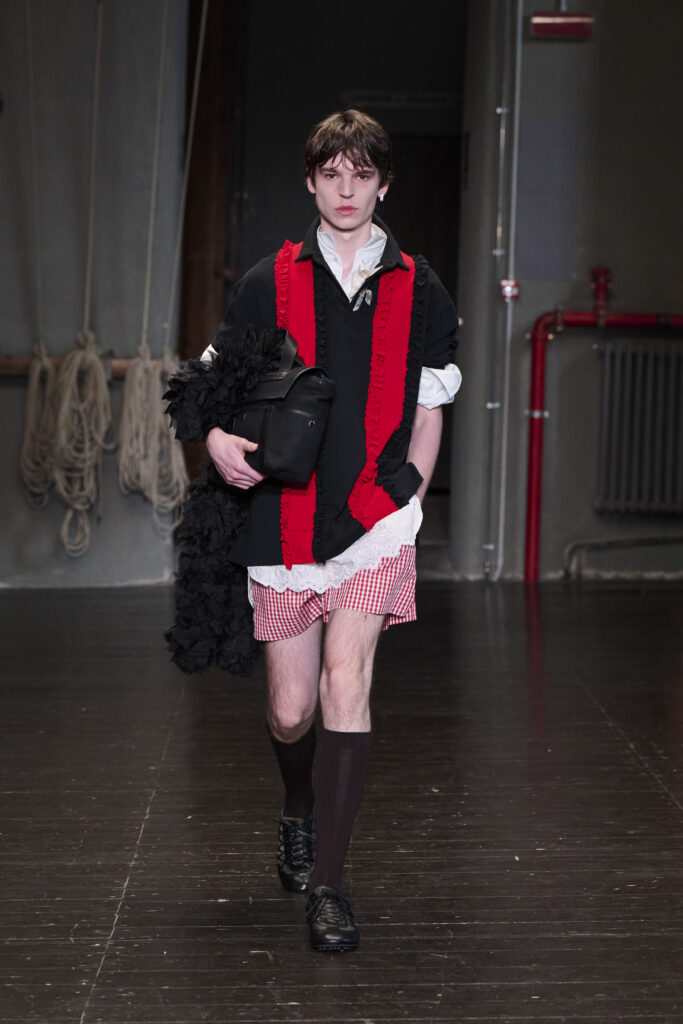
Rocha wanted men to be the main characters of this Florentine chapter, pushing them to perform and take the stage. Beyond the theatrics, this season’s menswear “feels tender,” and also quite grounded. “I wanted to conceive of beauty, but also bring a realism to the proposal of menswear,” she said. Rocha’s moodboard drew on the city’s buildings as a key source of inspiration: its marbled walls and rough edges. “I love manipulating surfaces, so that influence has been really strong here. I integrated some floral prints and checks into the lineup, and when I was in the venue, all the old costume trunks and linings were covered in floral tees,” she said.
“I brought that into the collection too, so there’s a real sense of the place’s character within the pieces,” she added. “Some of this season’s characters became painters, some performers, others workers, so it was more about characterisation than a single muse,” the designer said, explaining her aim to break tailoring down in her own way, whether mixed with a kilt or folded into a pleated short. “That’s how the show started, then it got a little more eccentric and eclectic in the details as it progressed.”
By exposing the underpinnings – which became the front-runners of the collection – Rocha brought an intimacy to the pieces, making each one feel more personal to its wearer and character. “I always try to show in a circle: beginning, middle, and end,” she said, adding, “it was nice to do that in this space, physically.” The collection comes full circle through the tailoring, which then grows more fluid and languid. “The volume I’m known for, in a more structured way – I wanted to de-puff it this time, take it out and let it loose.”
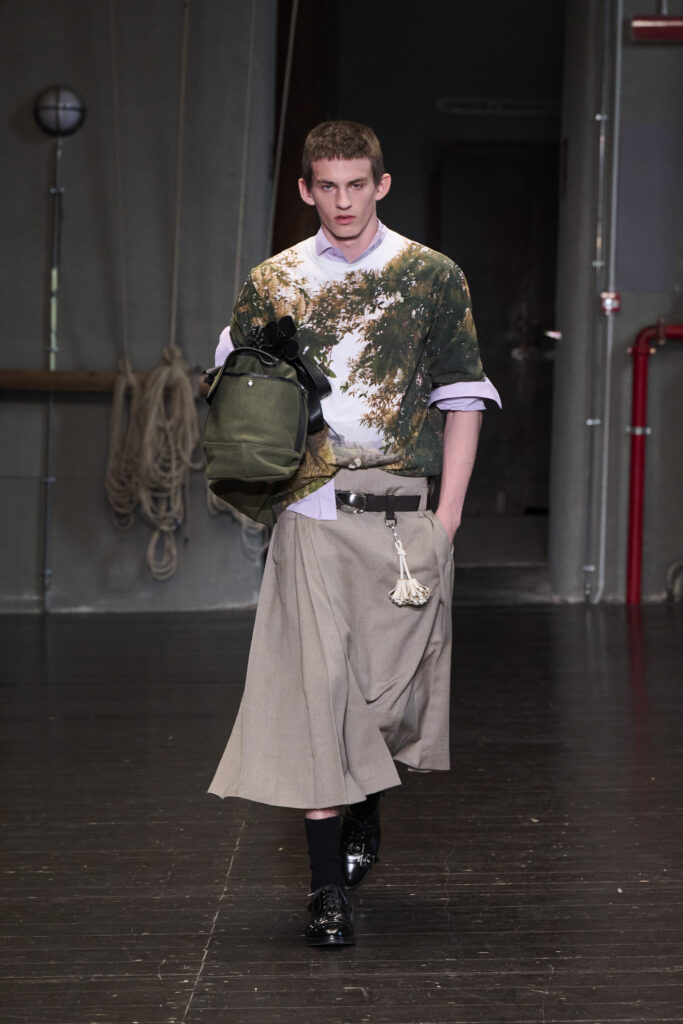

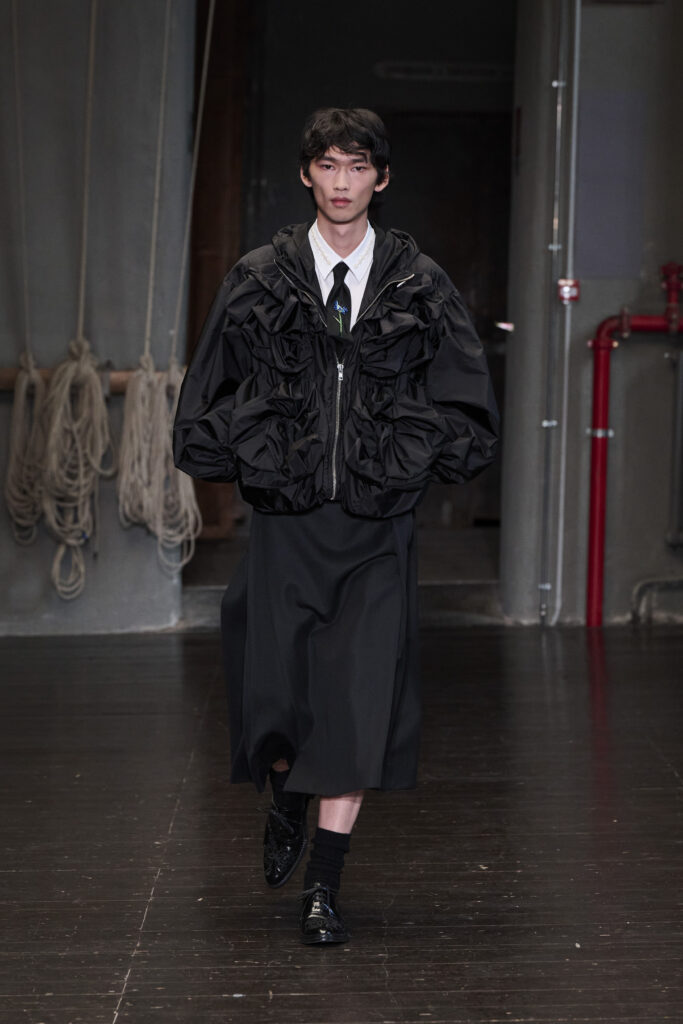
It turns out the designer is no slouch when it comes to tailoring. This season she showed Venetian kilts later reworked into tailored trousers, cut and turned into apron-pinnies. She also drew on linen to evoke domestic textiles like tablecloths and curtains, lending the collection a sense of place. “These pieces became more languid, whether it’s a high-button peak jacket or the sportswear with engineered cornflower details worked into it,” she said. “The cornflower came from being in Florence, near the Merchant Ivory room at The View — it became a token of the collection. It started there because they’re in season, but we also had them all hand-beaded.” Rocha wanted to take what she started at the beginning and distill it down into pieces like nappa aprons, workwear patterns, cordons, and layered looks.
“With my Autumn/ Winter show, I introduced the idea that I’d be showing at Pitti – that’s why I showed in the theatre in London, but in the stalls. I really wanted this character to travel from Ireland to Florence and become the one who ends up on stage. I was very influenced by things that feel historical and untouched, but brought into the context of today.”
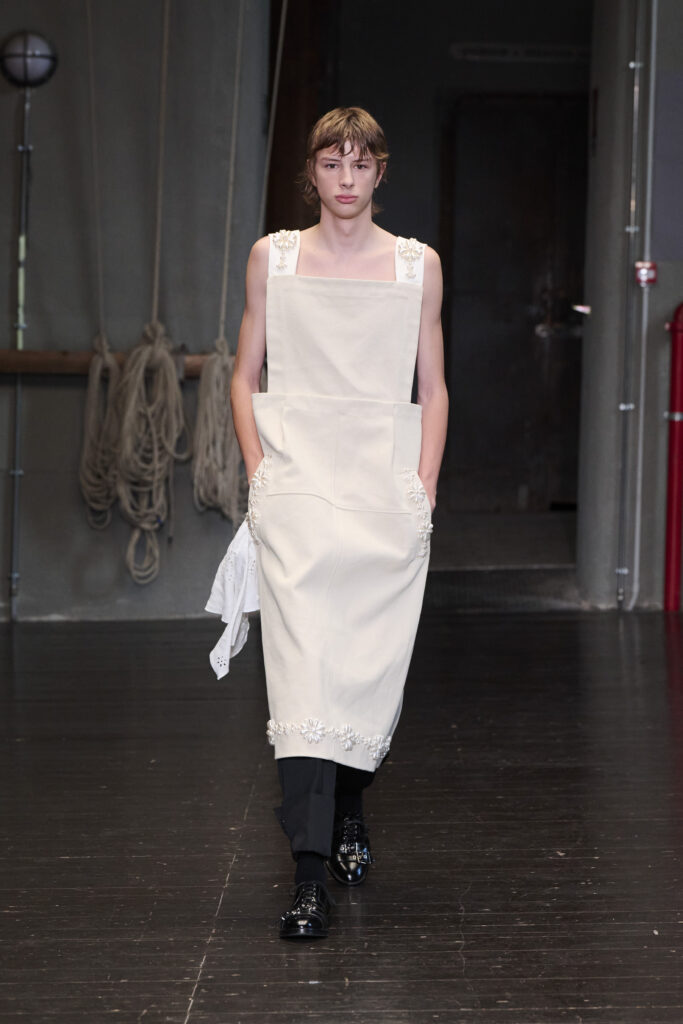
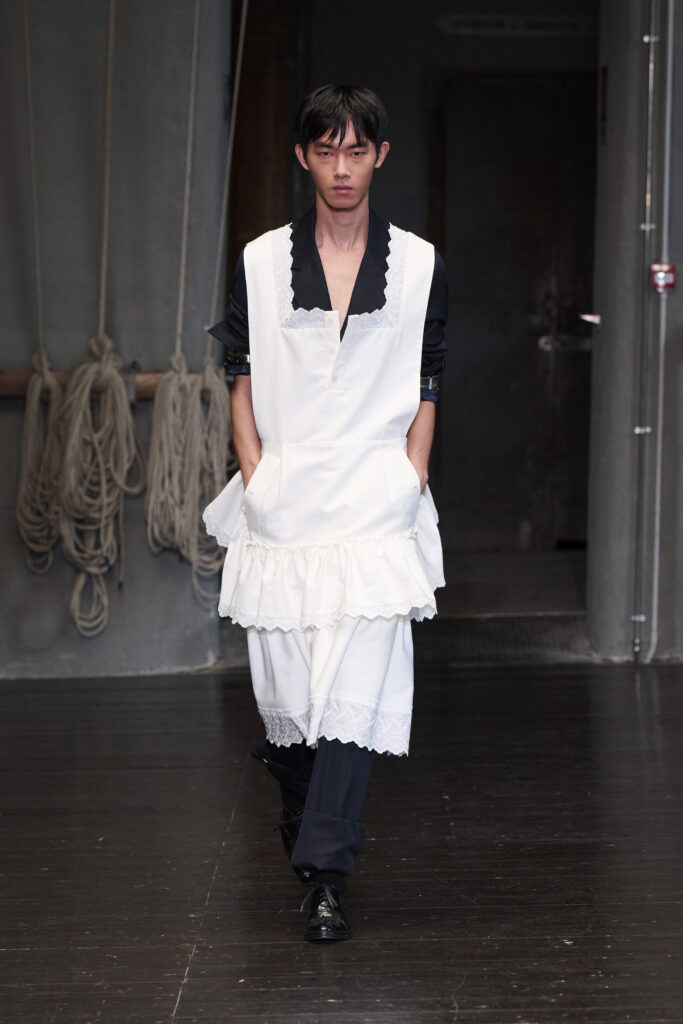
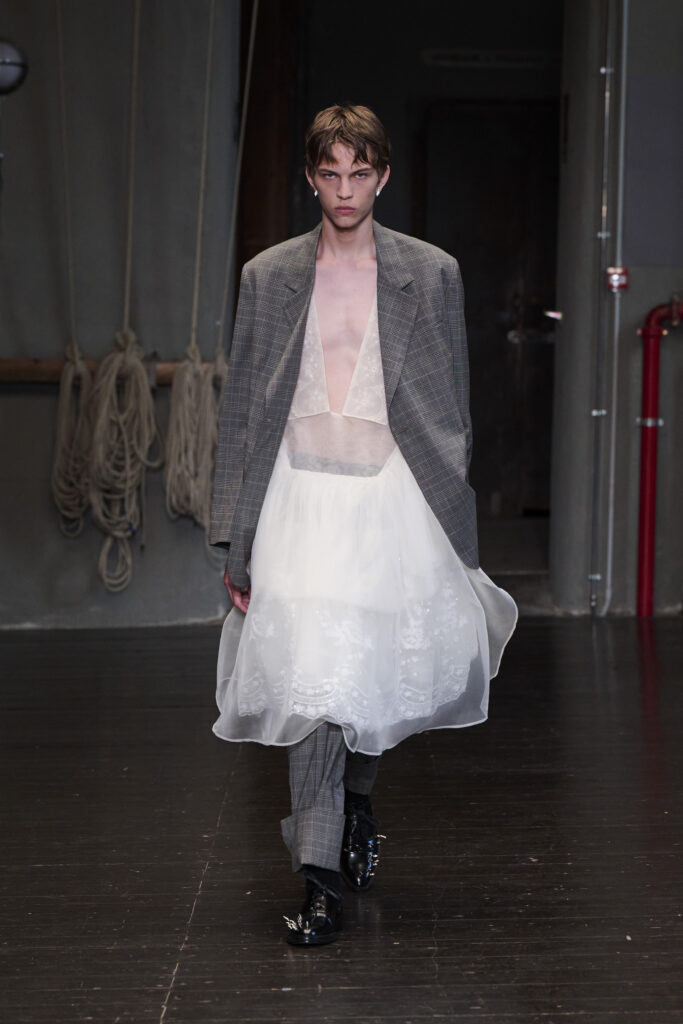
The rest of the collection continued the steady development of her body of work — a bit grunge-romantic, with an underlying thread that, as always, wound back to her Northern roots. “I really design clothes with people in mind, humans, whether they’re men or women. It’s really about emotion, and putting that into the clothes,” she said. “But personally, thinking about menswear has been interesting because of the codes and the details, it’s forced me to slow down, look at what I can do, what I want to propose as a masculine wardrobe, and carve out space for myself in this category.”
For Rocha, fashion is a living, breathing thing that’s always changing. “Fashion is such a part of my life and work: you have to hold onto it and harness it the best you can to carve out your own space,” she reflected. “I love the contrast and tension. I don’t think it should be all fantasy, and I don’t think it should be all reality, it’s that sweet spot in between.”
Rocha, a London city-dweller, is on an ongoing mission to present a gentle, alternative elegance that could, for the most part, be worn on the street. This collection marked a softer, more accomplished step in that direction.
by Chidozie Obasi