
EVEN if you have been to Rome and visited the sights, seeing them zoom past from a sidecar of a Vespa scooter is another experience altogether. You become the eye of a camera on location, for an extended tracking shot, and what is seen cannot be separated from this cinematic mode of observation.
It also endows you with minor celebrity status as pedestrians pause to gaze: the Vespa’s painted pressed steel body has been around since the middle of the last century, but ones with a custom-designed sidecar are not common, and they attract attention from scooter aficionados.
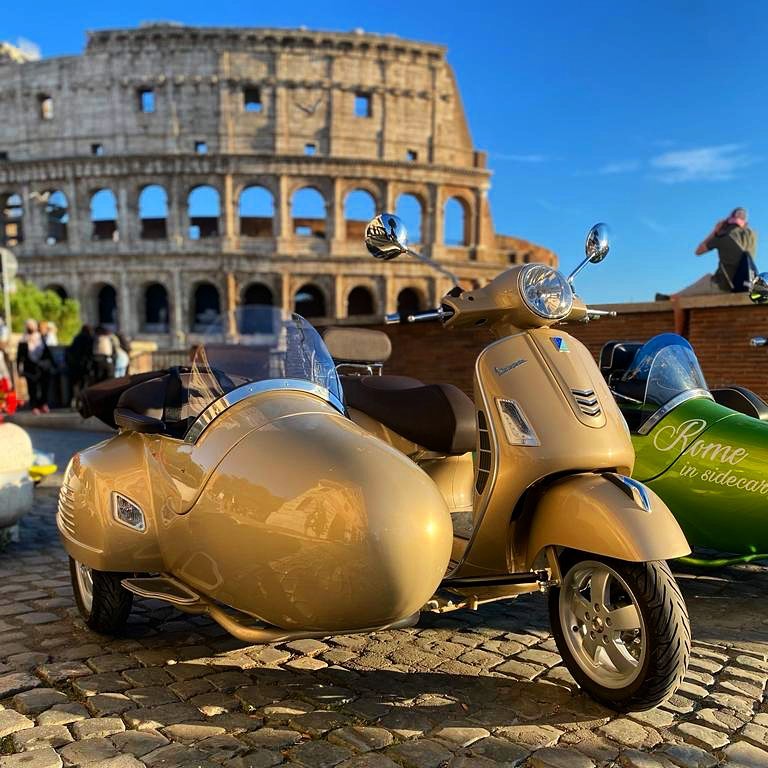
The very newish parked in front of the very old
After a morning on a Vespa Sidecar Tour, zooming around the Colosseum, Vatican City and Trevi Fountain, up narrow side streets, zipping under washing lines and stopping for a gelato, returning to the still calmness of Palazzo Ripetta becomes a therapeutic charm.
The locality is what distinguishes this hotel: its street address, Via di Ripetta, is marked at one end by an Egyptian obelisk in the centre of Piazza del Popolo. The piazza lay just inside the walls of ancient Rome, and travellers from the north knew they were inside the legendary capital when taking the dead straight road running close and parallel to the River Tiber. This road became Via di Ripetta, and the convent on it that dates back to 1642 is now the elegantly restyled Palazzo Ripetta.
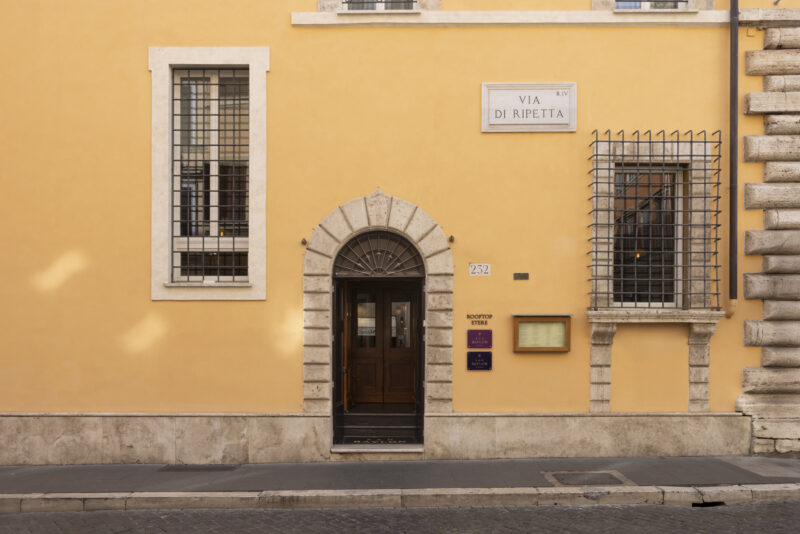
The unassuming exterior of Palazzo Ripetta in Rome
It is an artwork in the lobby, from the five-star hotel’s private art collection, that first attracts the attention of guests staying in one of the nearly 60 bedrooms or 21 suites. It is a sculptural piece from Arnaldo Pomodoro’s series of striking bronze spheres with broken interiors, and not as scary as the way he expressed his artistic endeavour: ‘an intensification of a condition of imbalance in order to create a striking contrast to any stasis or any reached or predictable order’.
The hotel’s stasis is a state of elevated luxury, from Italian marble in the bathrooms to Murano glass chandeliers and the enticing garden setting of the courtyard where lunch or dinner – with the sound of water trickling into an ancient sarcophagus in the background – is a gracious affair. Seeing a parked espresso machine on a trolley is a reminder that you are now most certainly in Italy. Other food and drink outlets include a fine-dining restaurant, a bistro and, for views of countless churches and the river, a rooftop bar.
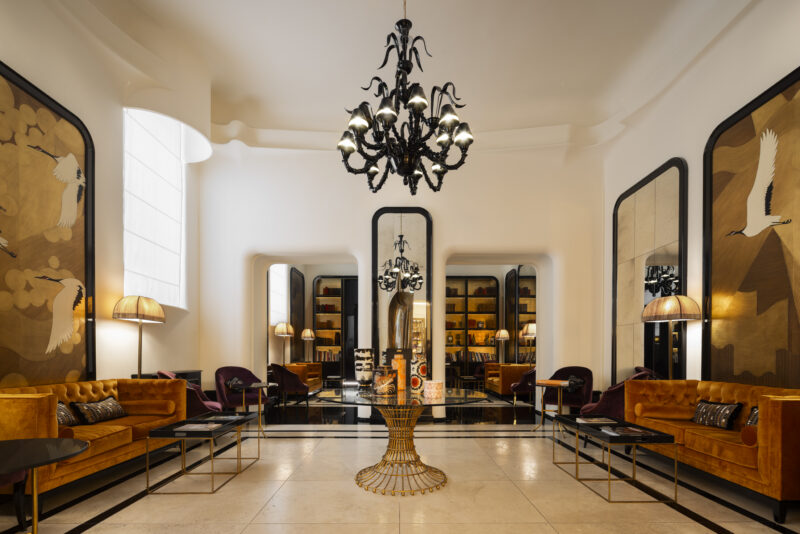
Palazzo Ripetta’s art-filled grand lounge
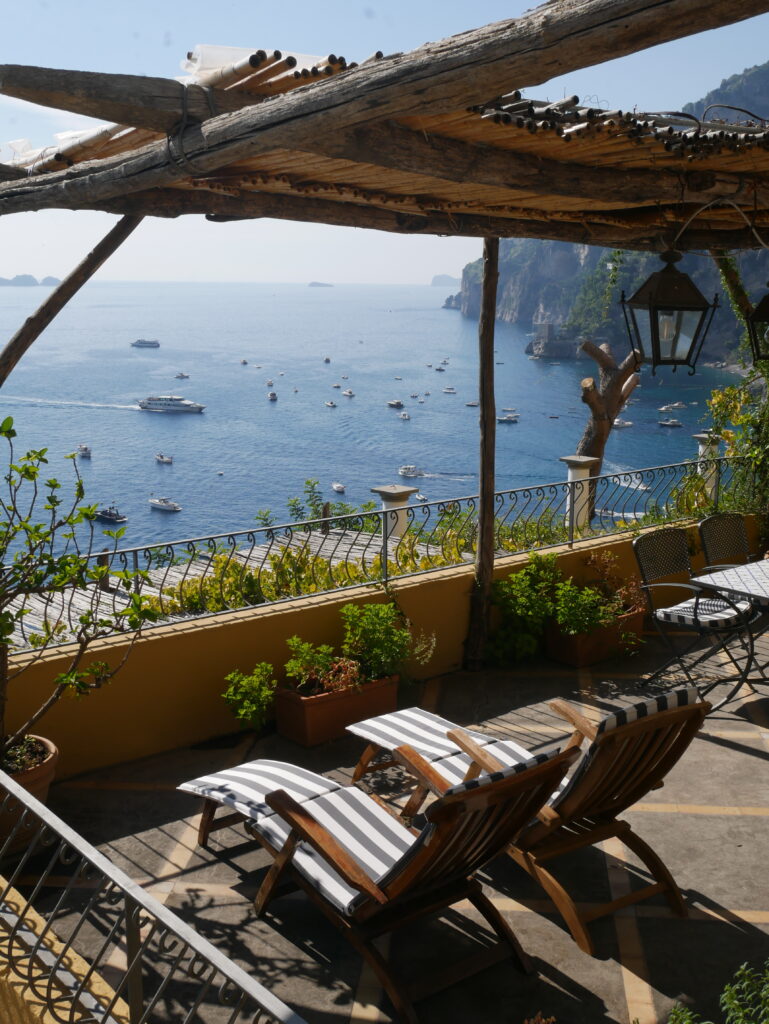
A vista of your own from a Torre Sponda villa
Turning right outside the hotel, a short walk down Via di Ripetta leads to Ponte Cavour and, crossing the bridge, it is a fifteen-minute stroll to St Peter’s Square. Niche shops are equally close by, and many will be passed on a walk to the Spanish Steps, like the small store Schostal that has become famous for its designer pyjamas and shirts.
The dreamy beauty of vertically situated Positano on the Amalfi Coast is the place to dial down in after Rome’s urban buzz, but be aware: mass tourism has engulfed the town, endangering its appeal, and visitors have to discriminate in order to share the enjoyment that the ancient Romans found when they built fine villas on its dramatic cliffs.
They came to their summer homes here for the location’s escape value and its spectacularly serene seascapes; today, finding a base to share this experience without the busying crowds is a fine art and in this regard, Torre Sponda achieves the impossible: cliffside villas with assured privacy; seaviews of your own; and insulation from the traffic and swarms of day trippers that cannot be heard or seen. Torre Sponda is below the town centre, and the multiple steps down to it are a small price and well worth paying for the guaranteed seclusion.
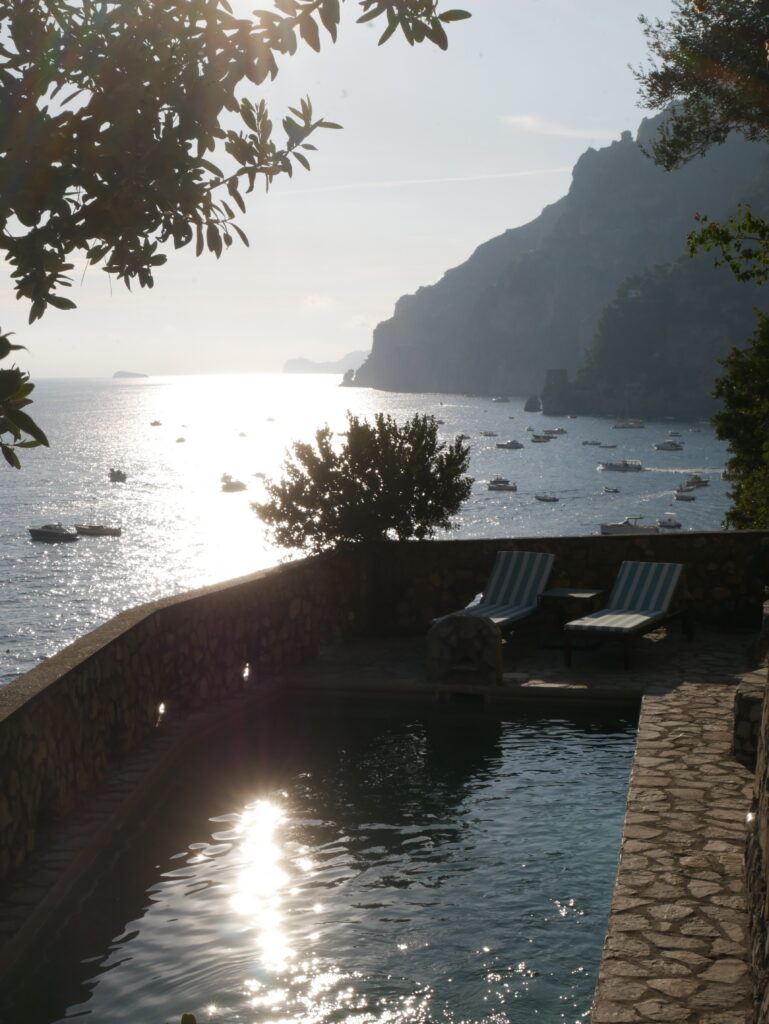
Dusk at Positano from Torre Sponda’s pool
The five villas vary in size, from one bedroom in an ancient watchtower to the palatial Casa Grande for up to ten people in its five bedrooms. Each villa, whether one, two or five bedroomed, has a terrace with views and a kitchen of its own. There is a shared outside pool, private access to a pebbly beach and, for a quality restaurant on your doorstep, the adjacent Terrazza Cele. Like Torre Sponda, the restaurant lies below the main thoroughfare, shielded from the madding multitudes, and its air of unruffled efficiency, Mediterranean food and wines – the scenic tranquillity of the Tyrrhenian Sea is thrown in gratis – makes it feel like an extension of the accommodation.
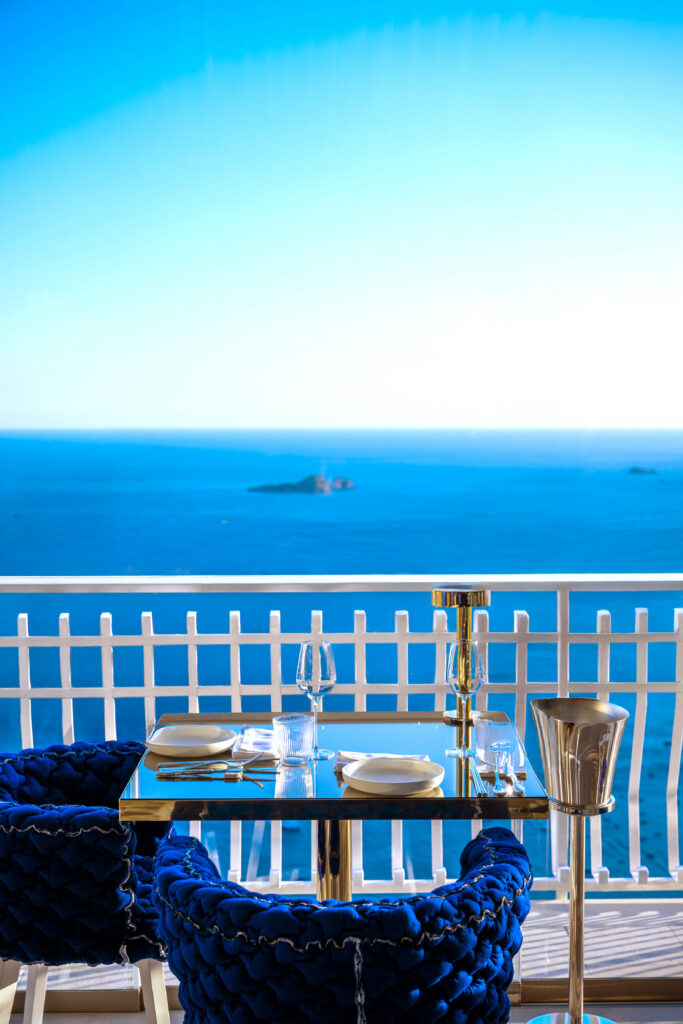
A table at Chic Mama for its enchanting views
For a special dining experience high above Positano, Chic Mama is not to be missed and for a full-on driving sensation – alarming at times – transport there is best arranged with the restaurant. Having arrived, cocktails and the wine ritual help restore the body’s emollience before you settle into an exciting evening of good food, glamorous décor, live music and exemplary service. Chic Mama earns additional brownie points for its understanding of vegetarianism and veganism, an aspect that may be found missing in some of the town’s oversubscribed beachside restaurants.
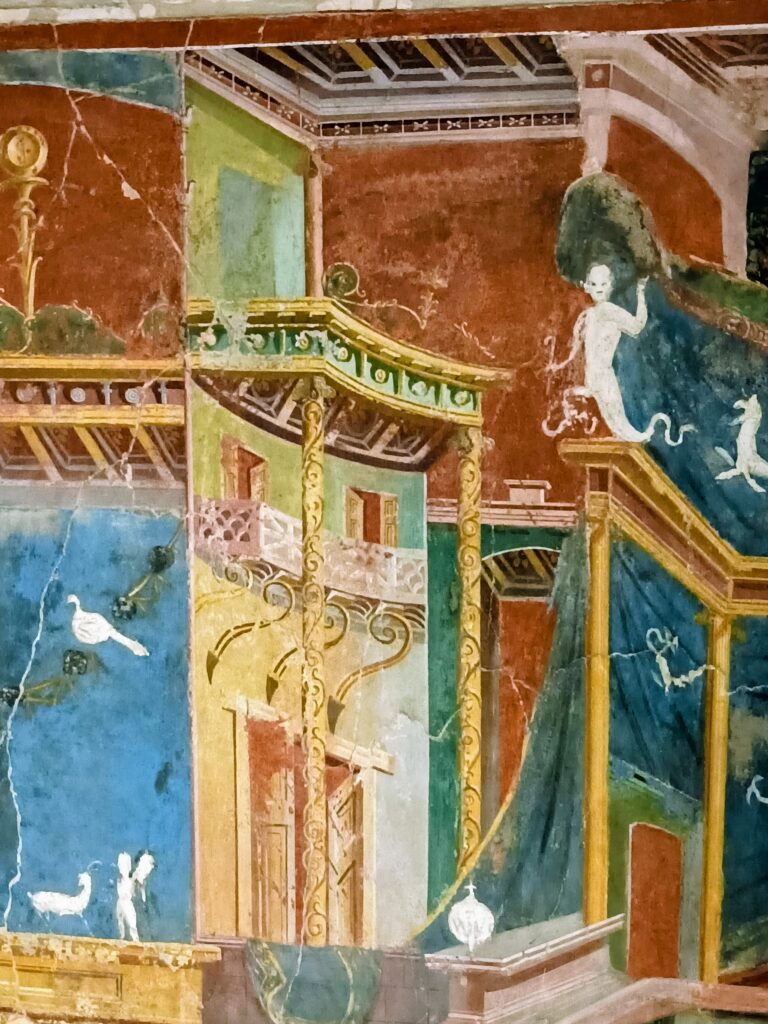
A wall painting in the Roman villa buried by the AD 79 Vesuvian eruption that destroyed Pompeii
Edification of the culinary kind is compellingly matched on the cultural front by the excavated remains of a luxury villa built by the Romans in the 1st century BCE. Now the centrepiece of the Roman Archaeological Museum of Positano, the villa’s lavishly-decorated walls are a sight to behold, painted with whimsical zeal and a reminder that what drew wealthy Romans to this part of the Amalfi coast two millennia ago – otium (leisure time) – is operating more strongly now than ever before.
by Sean Sheehan