
MILAN, ITALY — Dramatic change from one season to the next isn’t what happens at Paul Smith. Change is certainly happening; it’s just mostly impalpable to anyone outside the inner circle of brand people and buyers. This is why, in the world of fashion, just a few visible concepts are as significant as many elsewhere.
For starters, the timeless classics conceived within the label’s Spring 2027 offering consist of fuss-free, wear-anywhere pieces that were common in Britain and Italy between the ’70s and ’80s (think flared pants and finely sculpted blazers), colour-sorted into grey and blue groupings and assembled into a relaxed wardrobe proposition.
Why only that period? Because those were the pre-saturation years, when notions of design were still forward-looking and inspiration brimmed aplenty, telegraphing novelty, creativity, and levity to clients and aficionados alike. Back then, pieces were limited by virtue of fabric supply and unique because each pattern differed from the next.
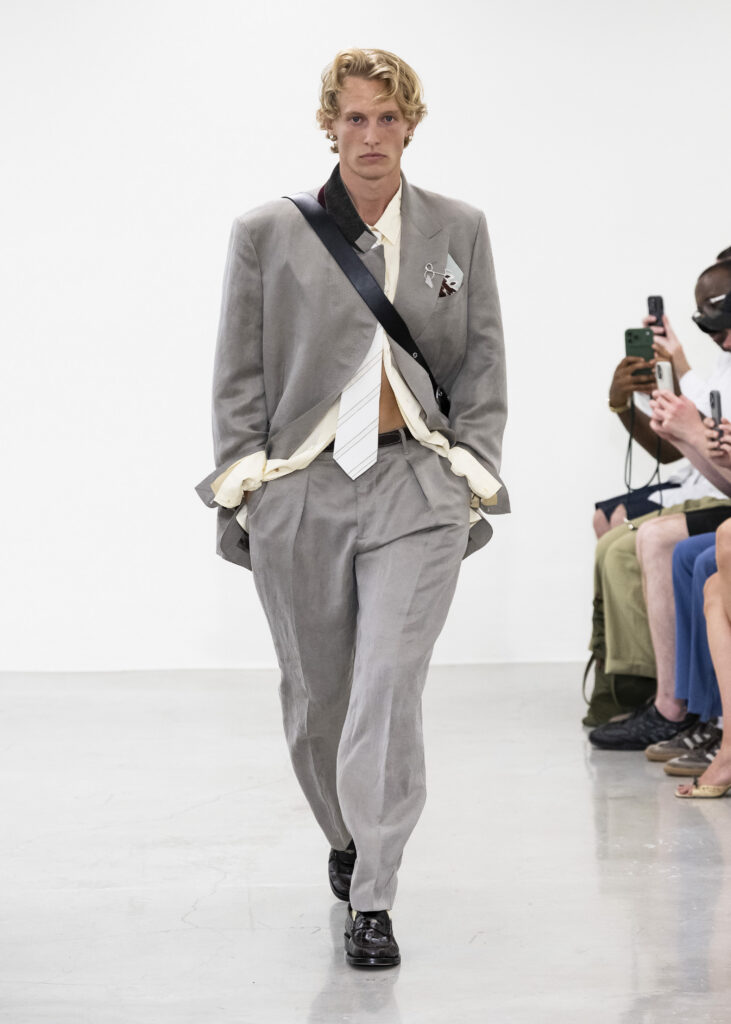
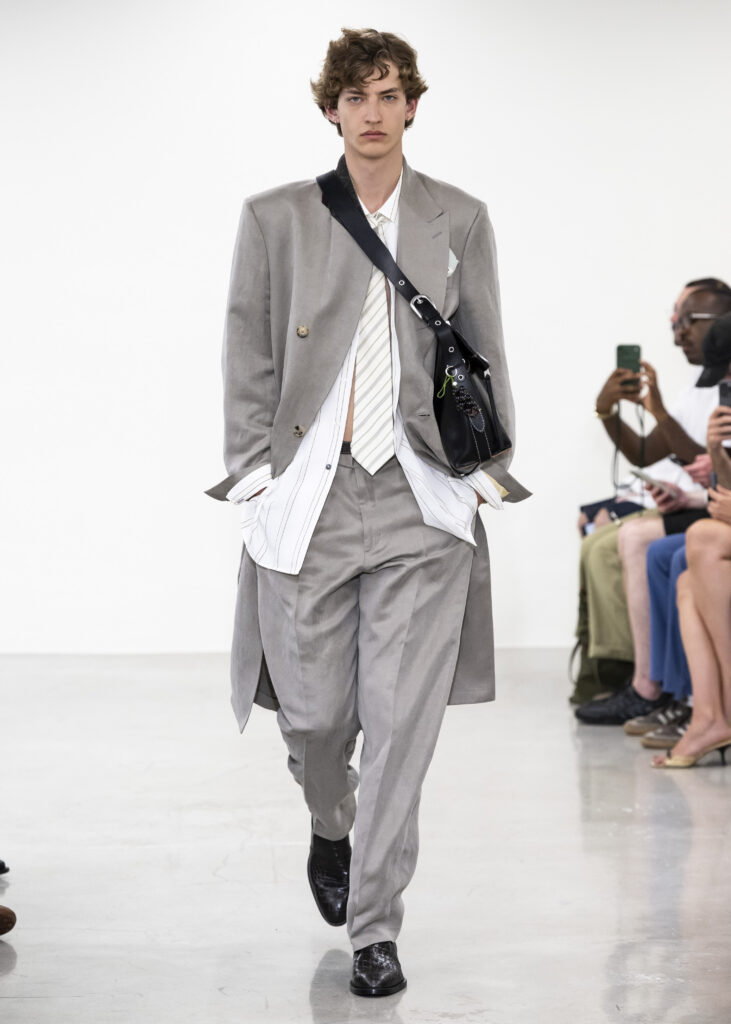
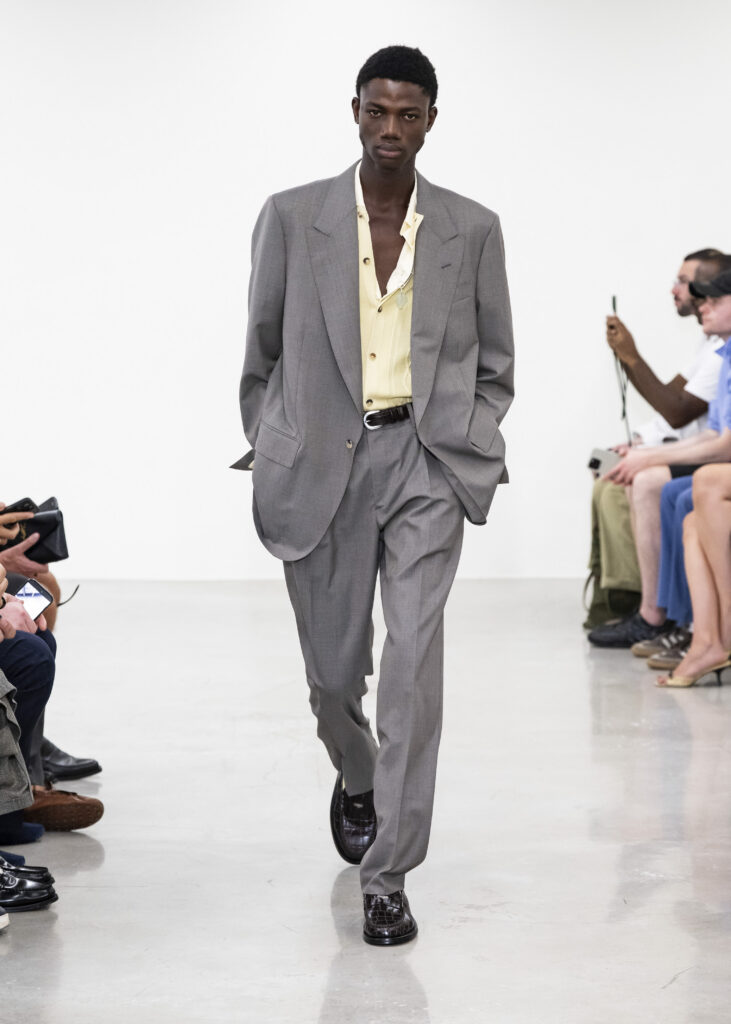
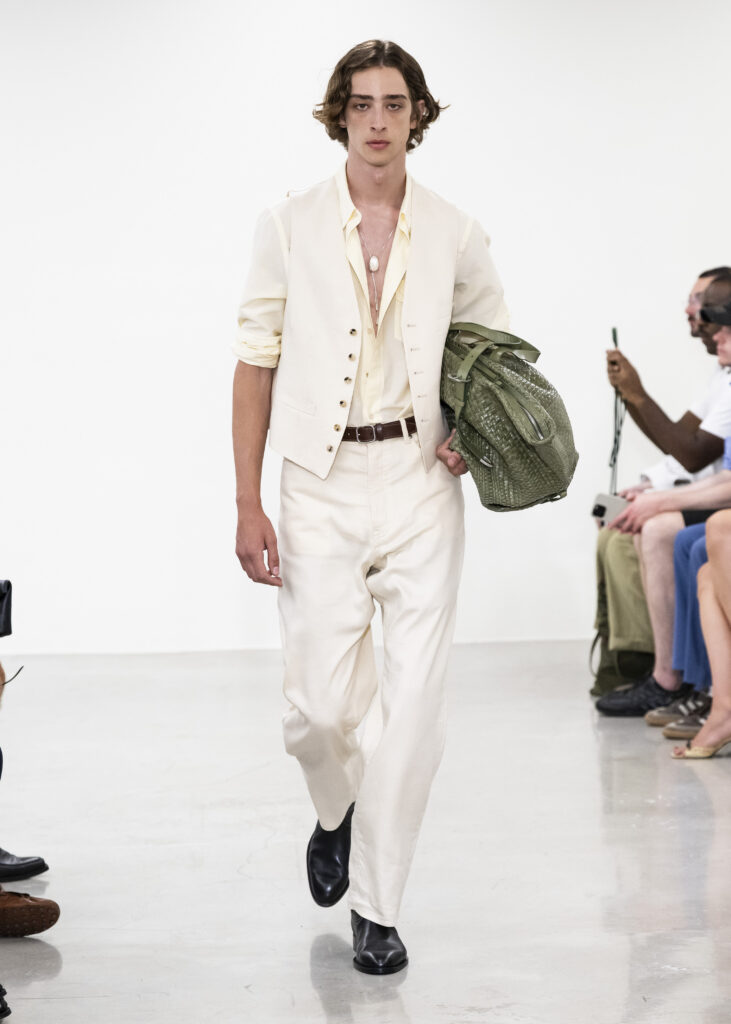
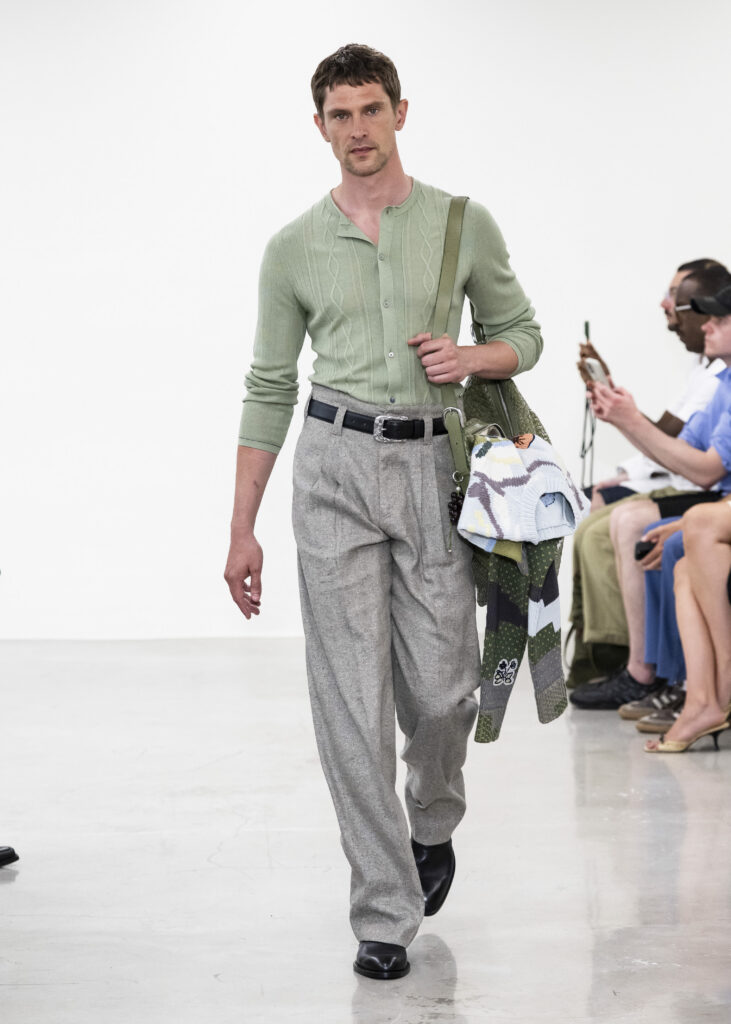
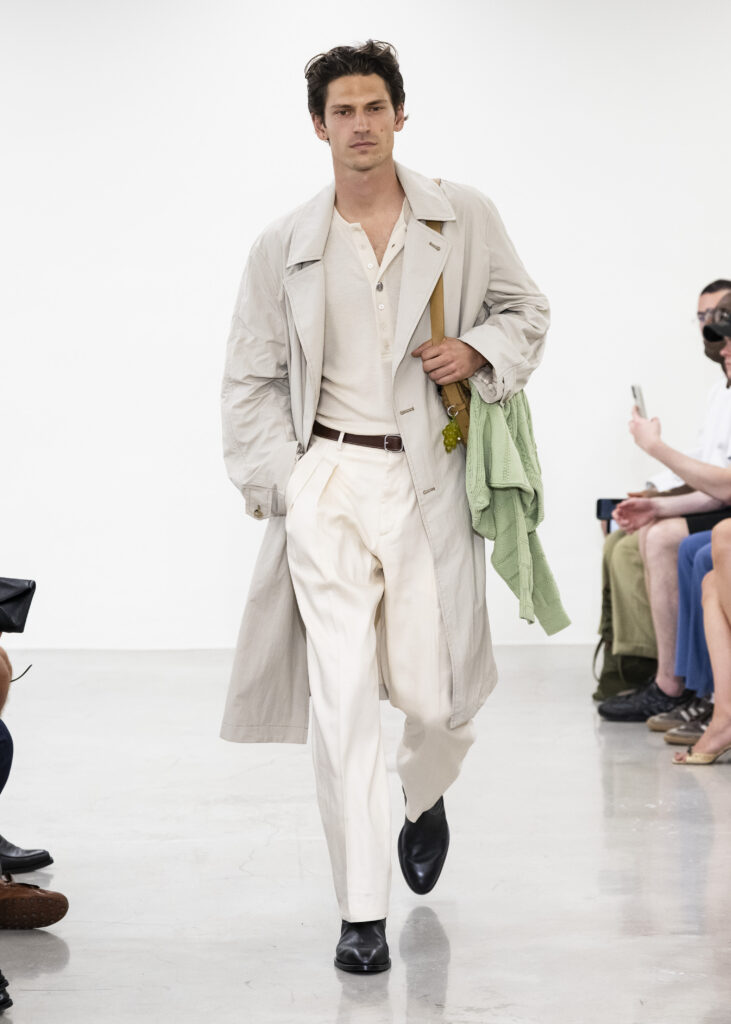
The fact that Sir Smith leaned on his past to inform the present adds to this season’s exquisite touch. “The starting point was all my past shows,” Smith told reporters backstage. “I’m very old, and I’ve done many shows over the years. A lot of my young staff and many young people are into nostalgia while looking at things from different times, and it was very much about going to my archive, where we have 5,000 pieces of clothing and perhaps 120 shows across men’s and women’s,” reflected Smith.
“It’s my collection seen through the eyes of my young staff, and very relaxed clothing,” he added. “A lot of linen, silk, and cotton; very fluid fabrics, oversized silhouettes, and massive details.”
The designer knows his clothes have projected an androgynous vibe for years, often so strongly that nowadays – in the current trend cycle – men buy into women’s and vice versa. With this collection, led by the house’s Design Directors Helen Holmes and Sam Cotton, Smith figured he would go full throttle on that ambiguity while stopping short of gender-neutral tailoring. To this end, the team created a spectrum of sartorial basics and essentials that are conventional by their standards, but still somewhat abstract by ours (despite a strong knack for structure being plainly visible).
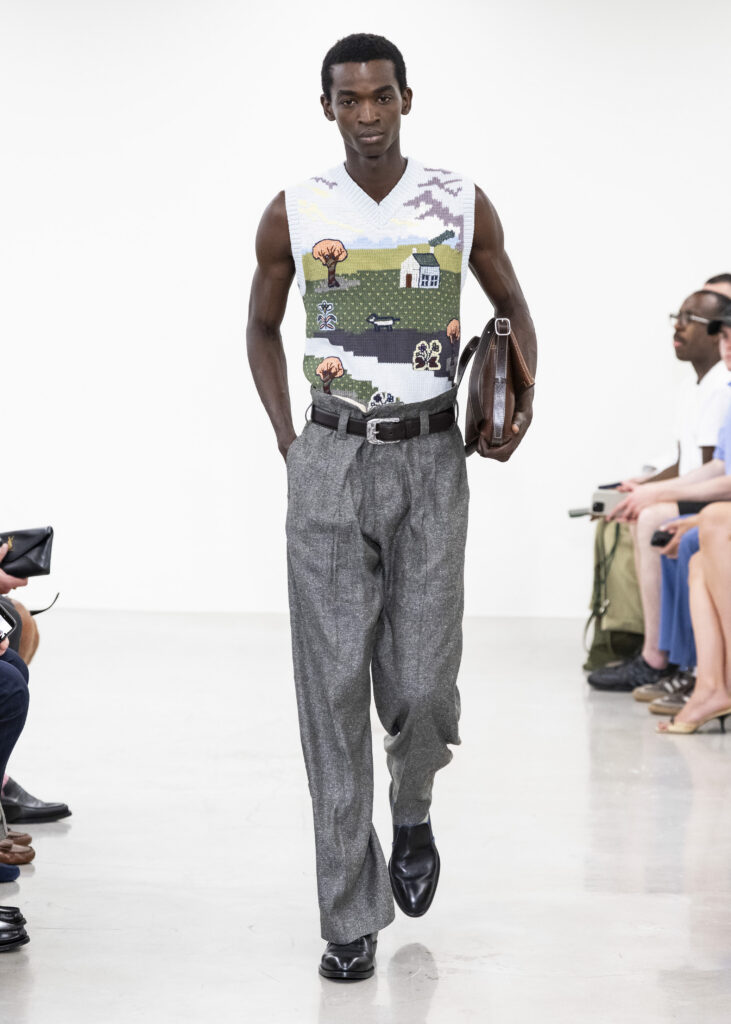
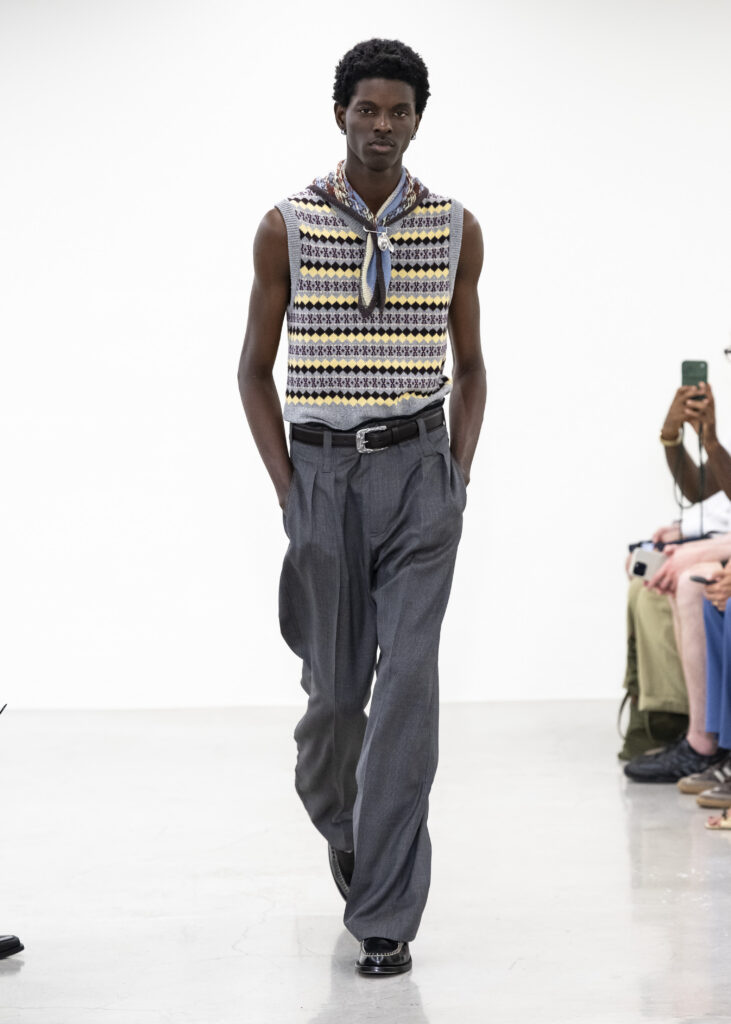
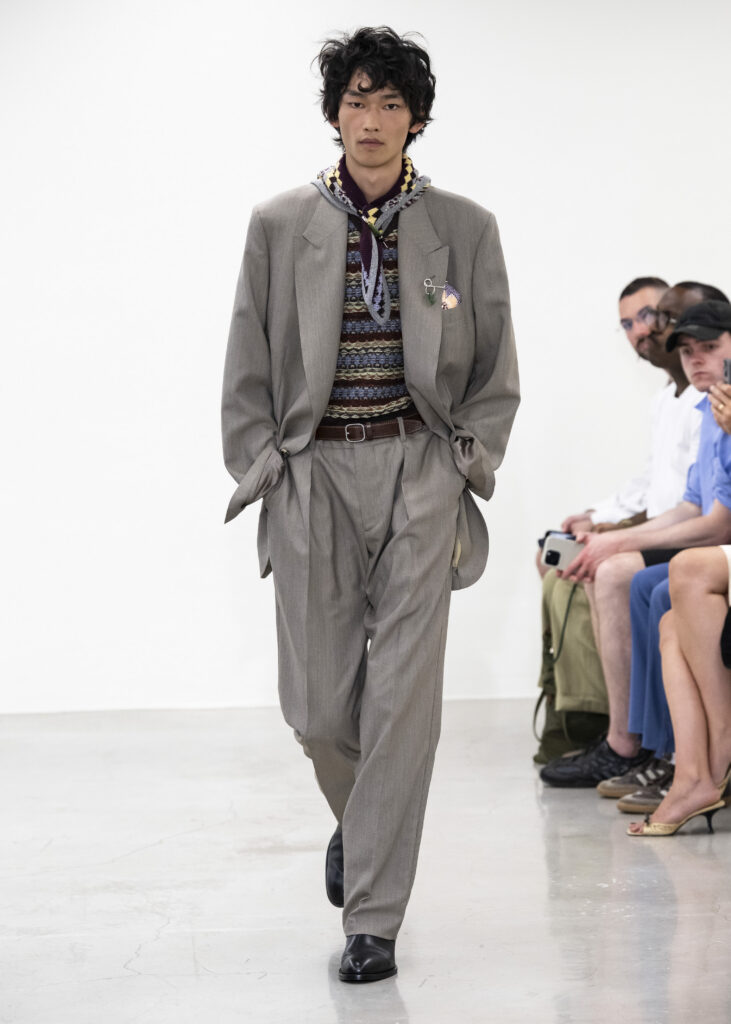
Billowing pants, body-hugging linen, and unstructured coats, for example, were remarkably voluminous, though never unflattering. “All designers that you’re going to see need to get reference points from someone,” opined Smith. “So they’ll either get them from other designers or vintage shops. But in my case, I have the joy of being able to find them in my own collection.”
The ratio of signature minimalist seersuckers was lowered to accommodate more distinctive fabrics, including vintage silks and cottons (both possessing a worn-in quality), as well as an amorphous pastel-toned coat that felt feather-light. The breezy shirts with sinuous pale-green stitching were an easy standout—the type of light, enveloping piece you’d want to live in if you were an office worker. But then a sportier aesthete might argue that the fluidity and transparency of the gilets also qualified them as essential outerwear. “I think it’s a hot [boy] summer,” said Smith. “We knew it was going to be a hot summer, so pastels, creams, beiges, and putty colours all look so cool,” he grinned.
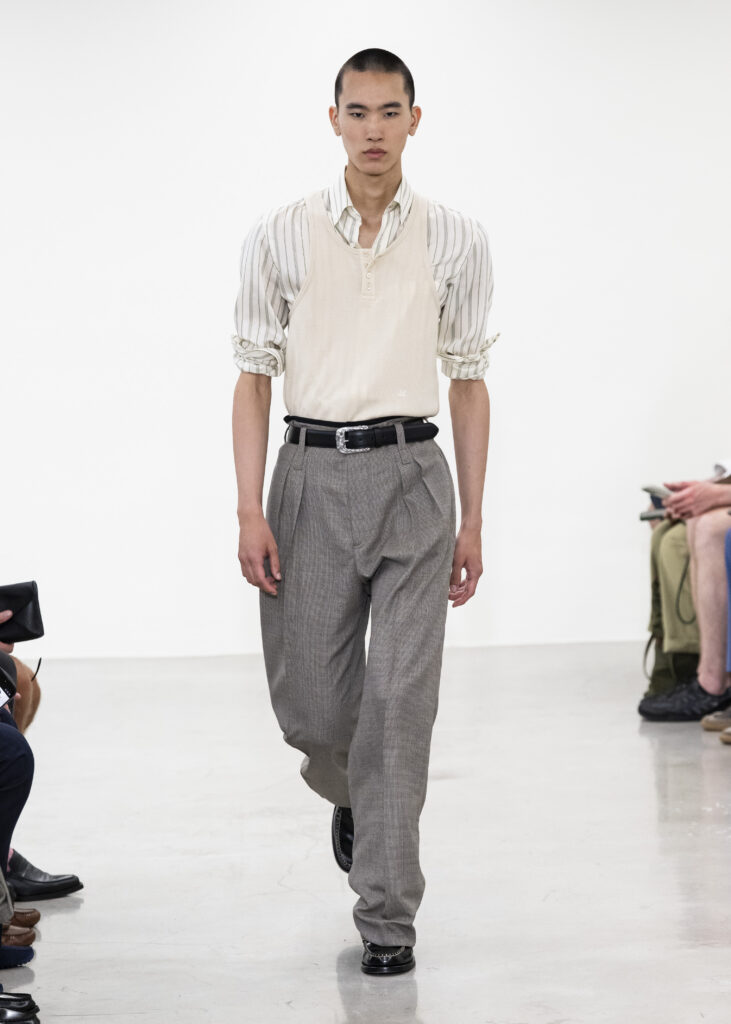
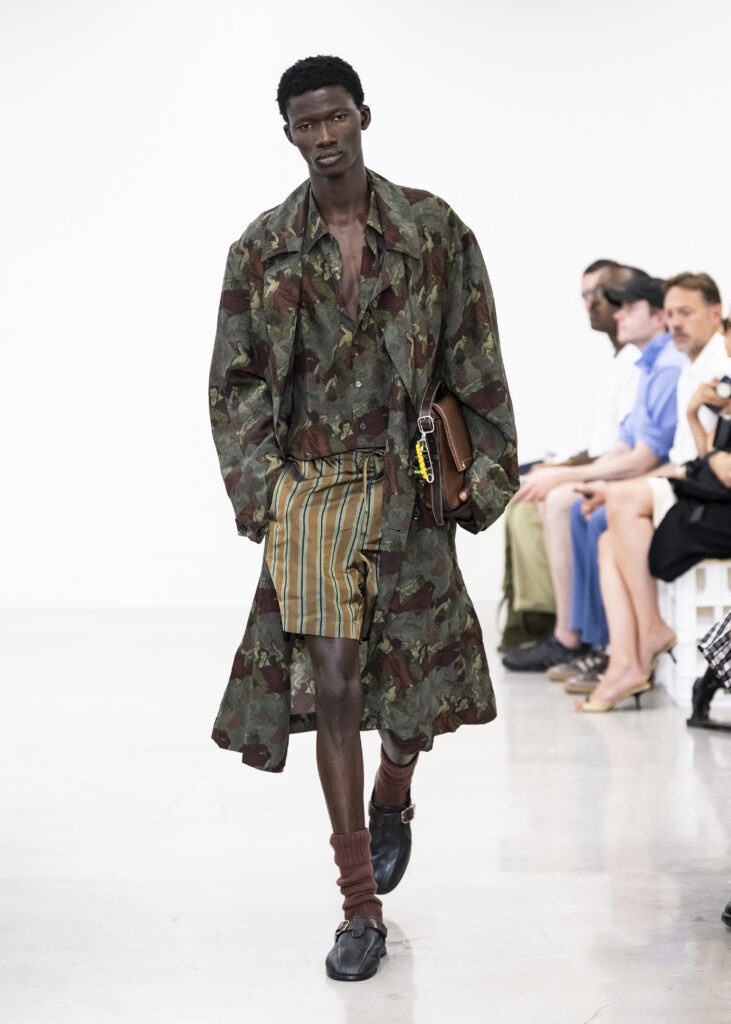
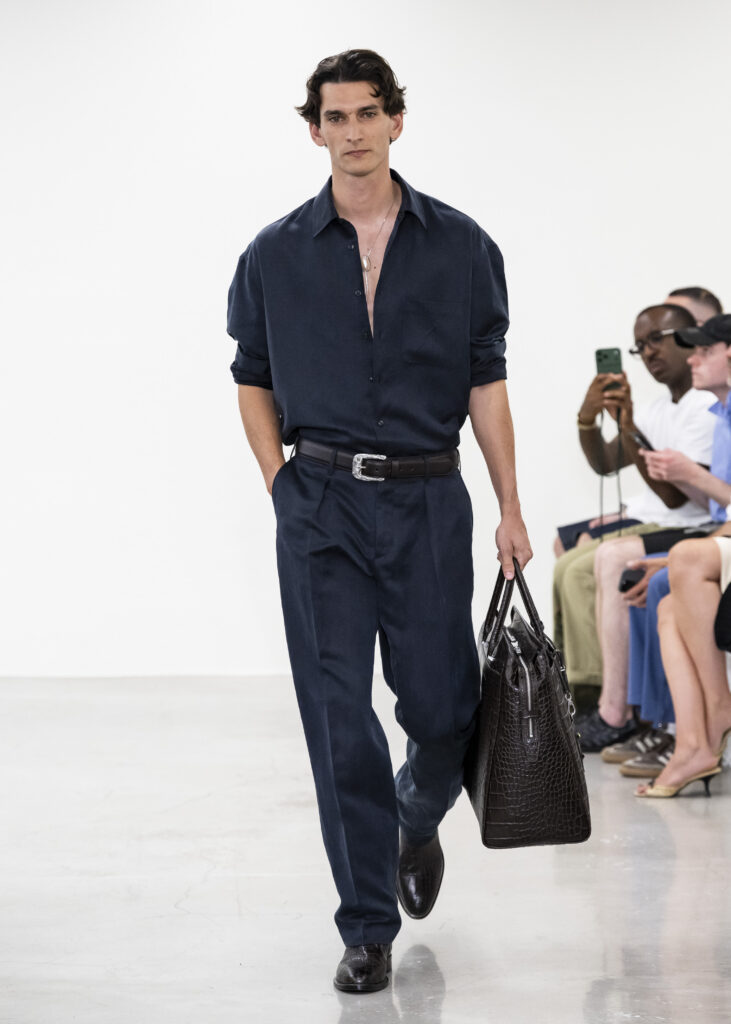
Sir Smith deems the company “quite unique” because of its private ownership 56 years after its founding. “I’m still at work at 6 o’clock every morning, so the continuity of the brand is quite interesting in the world of fashion,” he shared.
There was commercial appeal throughout the range, while the hand-worked category once again featured seaming details and nuanced shaping that would delight customers who geek out over such things. In the broadest terms, though, these elements result in a finer product that leans on the archive while looking ahead with cohesion and intent. “I think there’s a word which is used a lot in Europe at the moment, which is nostalgia,” reflected Smith. “Many of my young staff are talking about nostalgia, and I think it’s probably because, obviously, we had the pandemic, which narrowed everything down. We’ve got a world which is run by dictators,” he said.
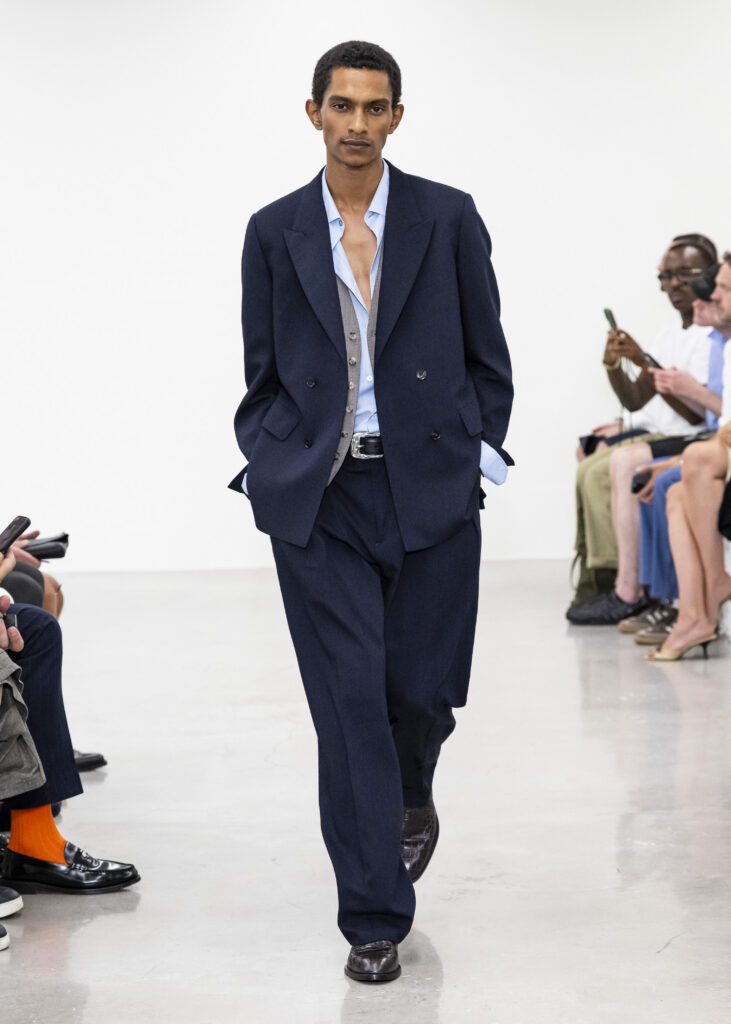
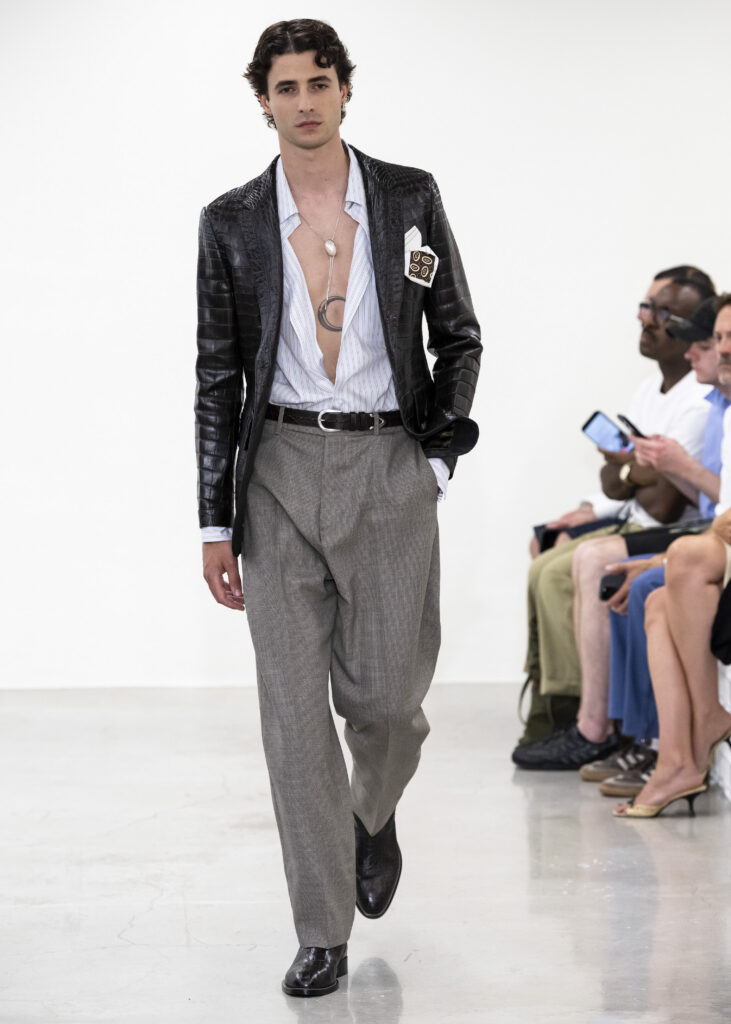
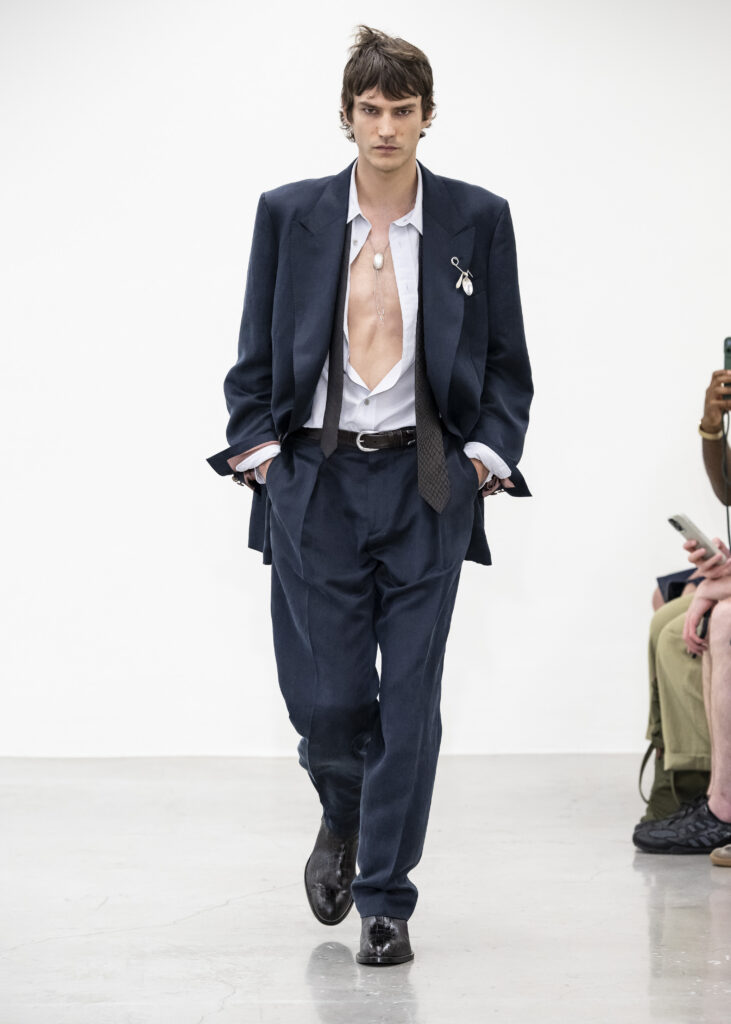
The designer’s offshoot, meanwhile, interspersed a greater variety of modern shapes with its reimagined vintage sensibility, so the collision of “tailored opposites” (namely, stiffness and breeziness creating a rounded effect) filled any gaps in what we perceive as masculine—because today, of course, it’s all fluid. “What we’re trying to do at the brand is show that you can still be individual, have your feet on the ground, and still have a heart in this corporate, homogenised world that we live in!” he exclaimed, filled with excitement and joy.
Cheers to that.
by Chidozie Obasi