
MILAN, ITALY — Designer Alessandro Sartori has garnered a hip following for his signature approach to reworking classic men’s tailoring to fit an eclectic range of physiques.
For Zegna’s AW collection, he continued to pursue that personal obsession, but strengthened it by incorporating influences from the house’s generational codes. That meant using retro suiting fabrics to make baggy, textured pants, and replacing the formal coat with breezier variations of toppers and outerwear.
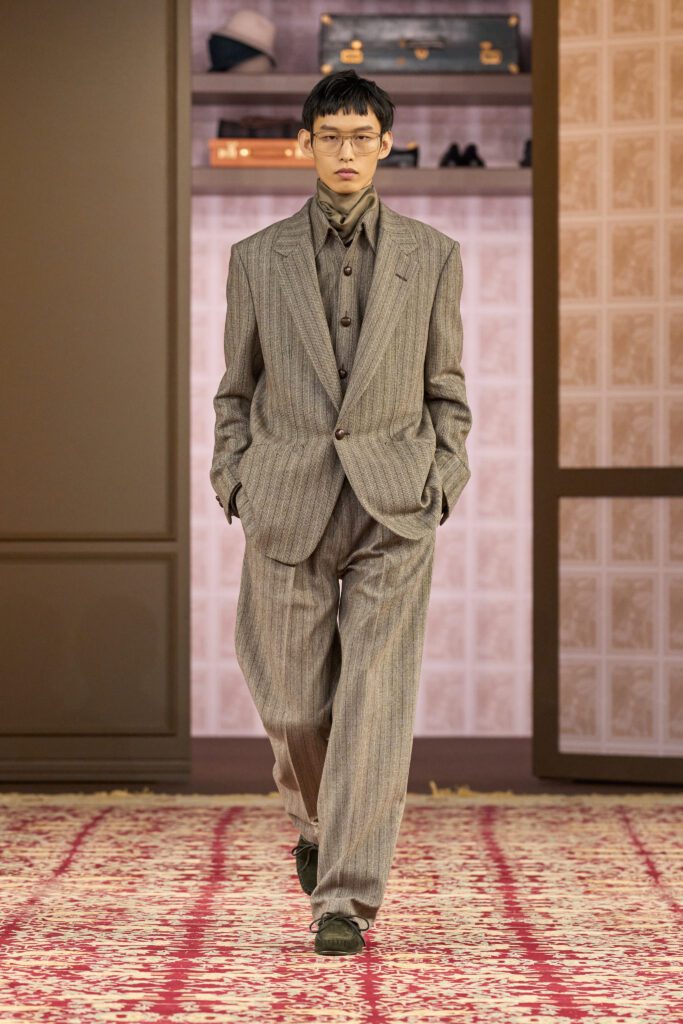
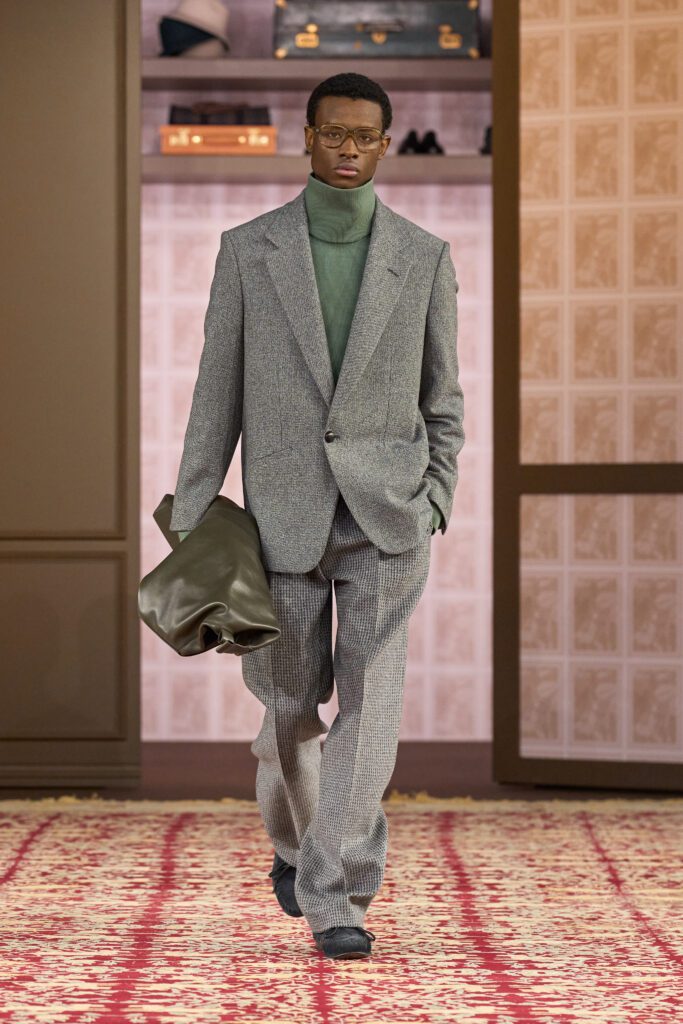
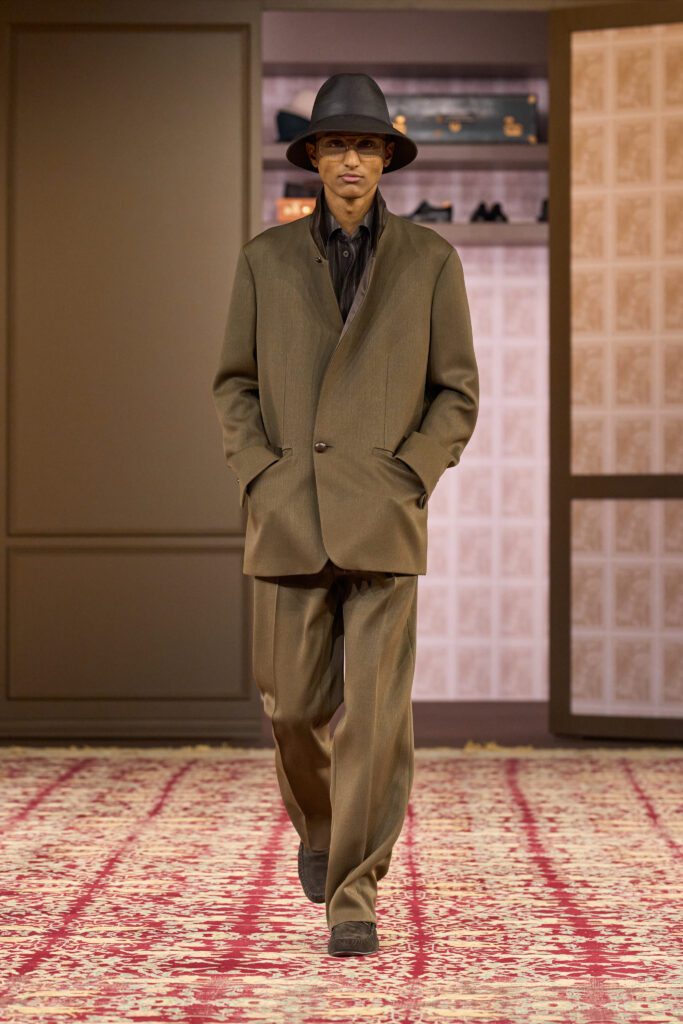
Taking the family closet as a key source of inspiration – a space where things worth remembering are kept, acknowledging their endurance and value – the Autumn/ Winter 2026 outing is set in an imaginary one filled with real items belonging to Gildo and Paolo Zegna, as well as clothing passed down from ancestors.
“I feel like a guardian of this family of leaders, and the path of this collection begins from the closet,” Sartori told reporters at the show’s preview. “The closet is a place where items are kept, have a life, and hold the future. The meaning is that we want to convey pieces that will always be there, pointing to the creation of less, not more,” he added.
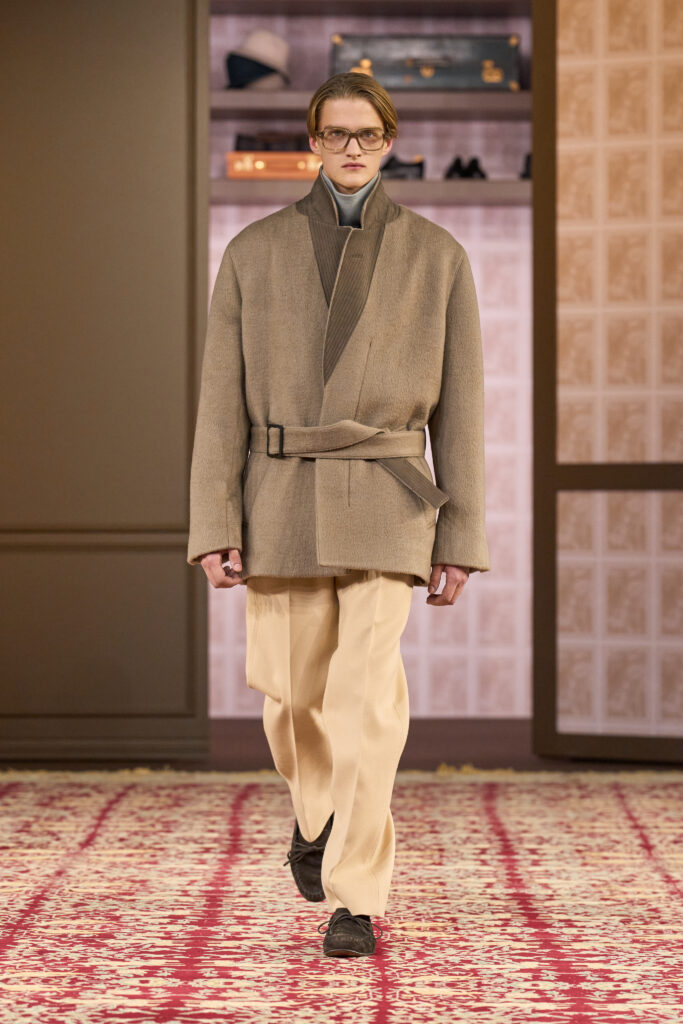
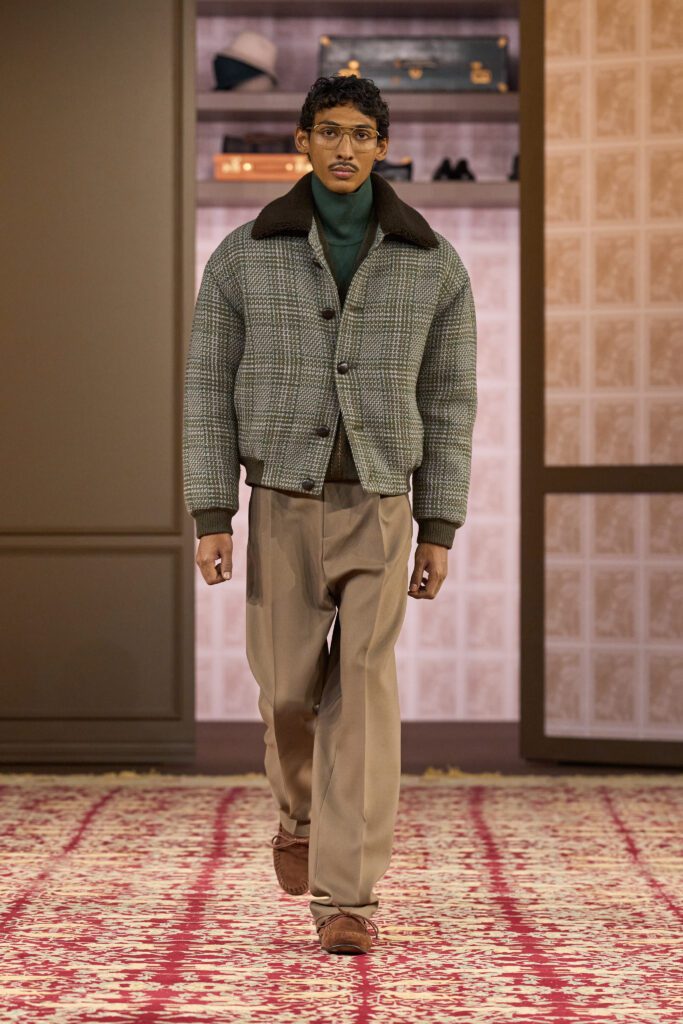
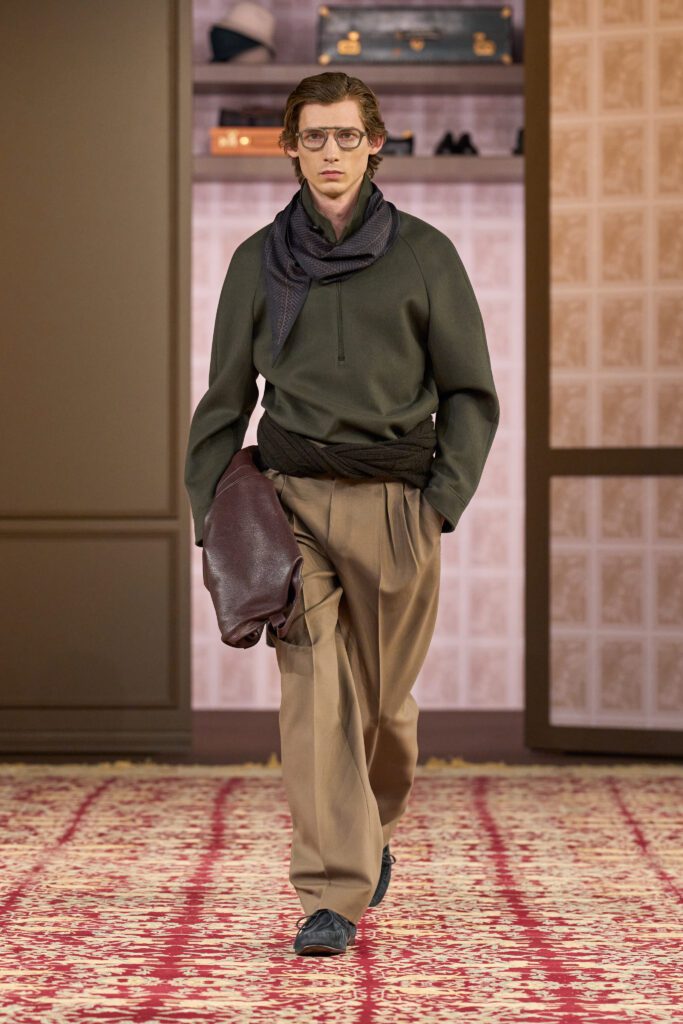
This season, a newfound sense of ease emerges from the strict androgyny often depicted across menswear offerings. Sartori devised refined double-breasted closures, crafting jackets with a central horizontal button positioned between the other two, and introducing a double set of lapels with layered collars.
“We have rejigged all the classics with the language of modernity, thinking of two elements that make a garment everlasting: aesthetics and quality,” he opines. But how can one achieve this? “By mixing the past, the present, and the future.” By all means, Sartori’s acts of simplicity are not frivolous: in his hands, the conventional structure of a garment is completely rethought. Jackets emerge fluid and sophisticated; elsewhere, shearling or knitted pieces deliver texture and warmth, shifting their quality between breezy lightness and graphic tactility.
“Our client is not a person who takes clothes and uses them for two or three seasons, then puts them aside and throws them away,” Sartori explained. “Zegna’s client is a collector.”
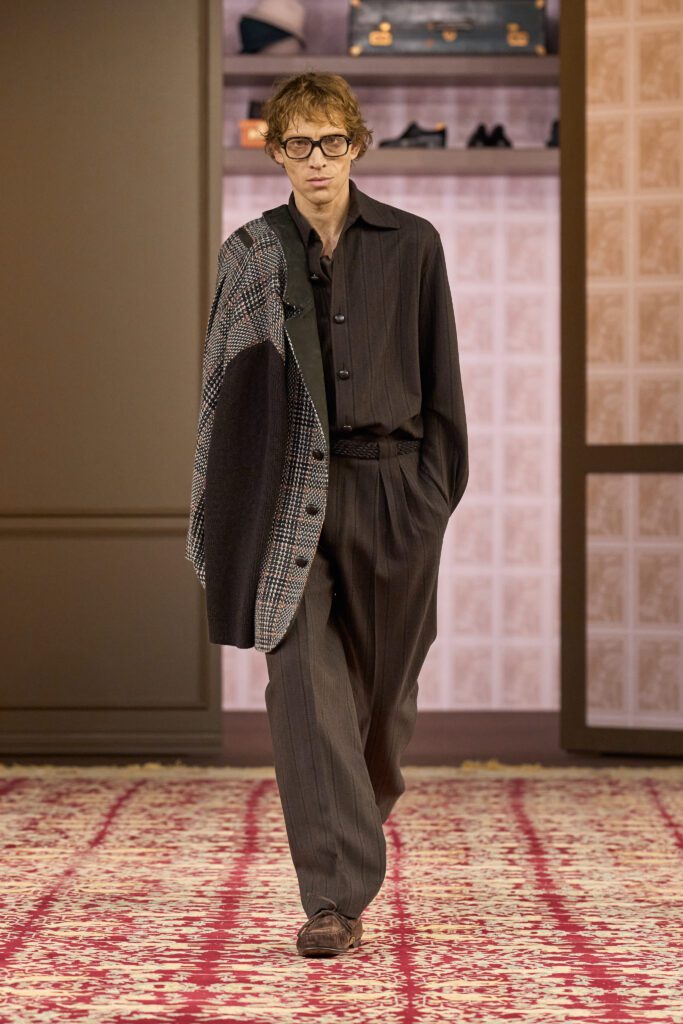
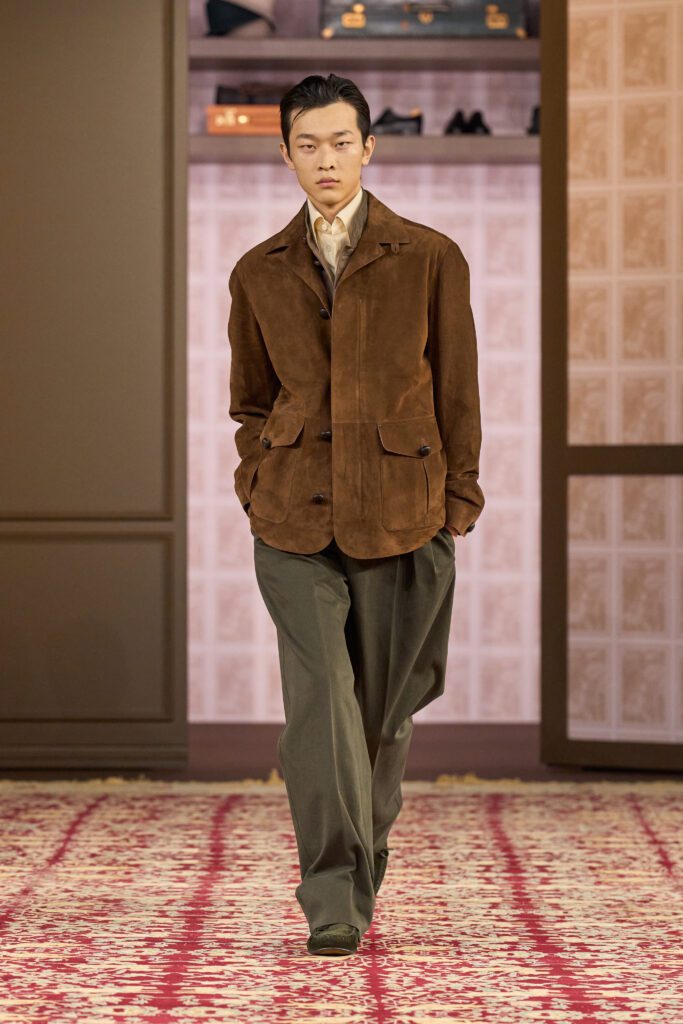
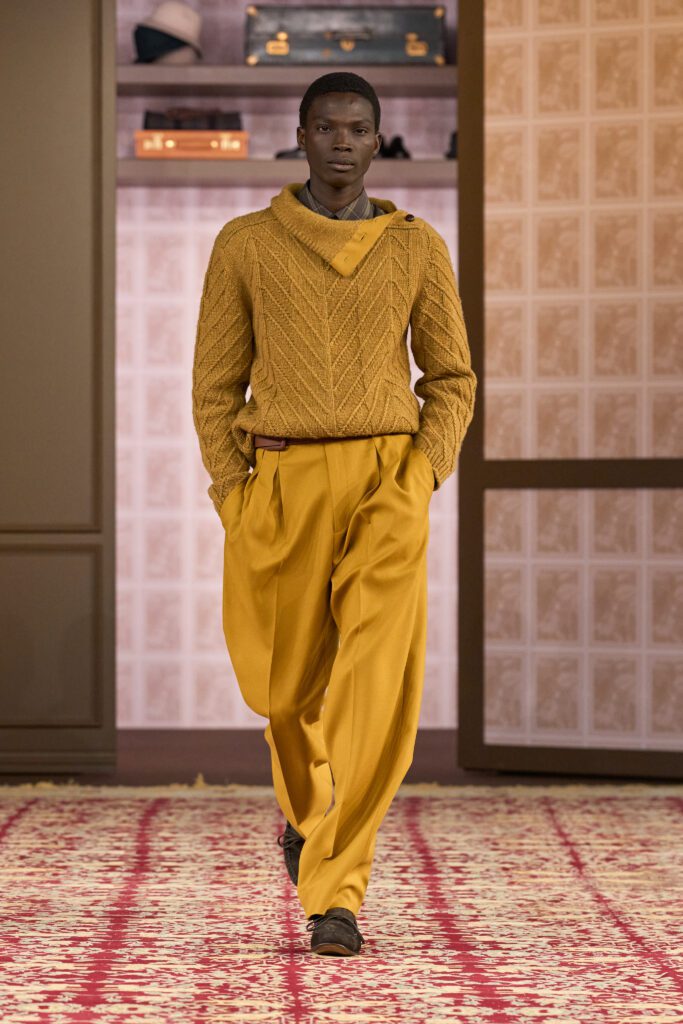
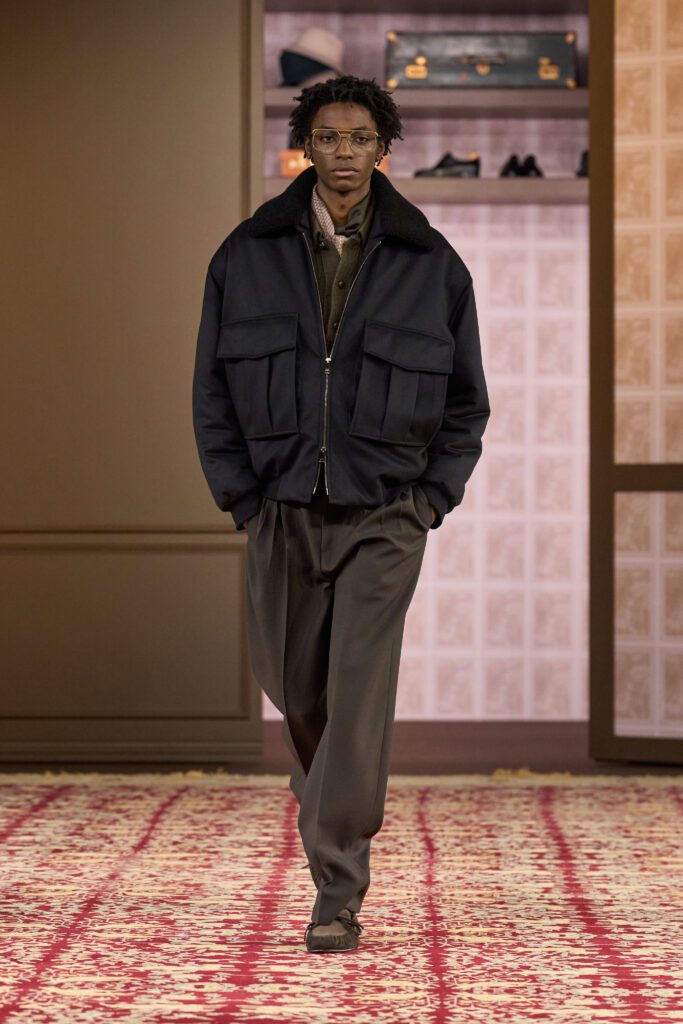
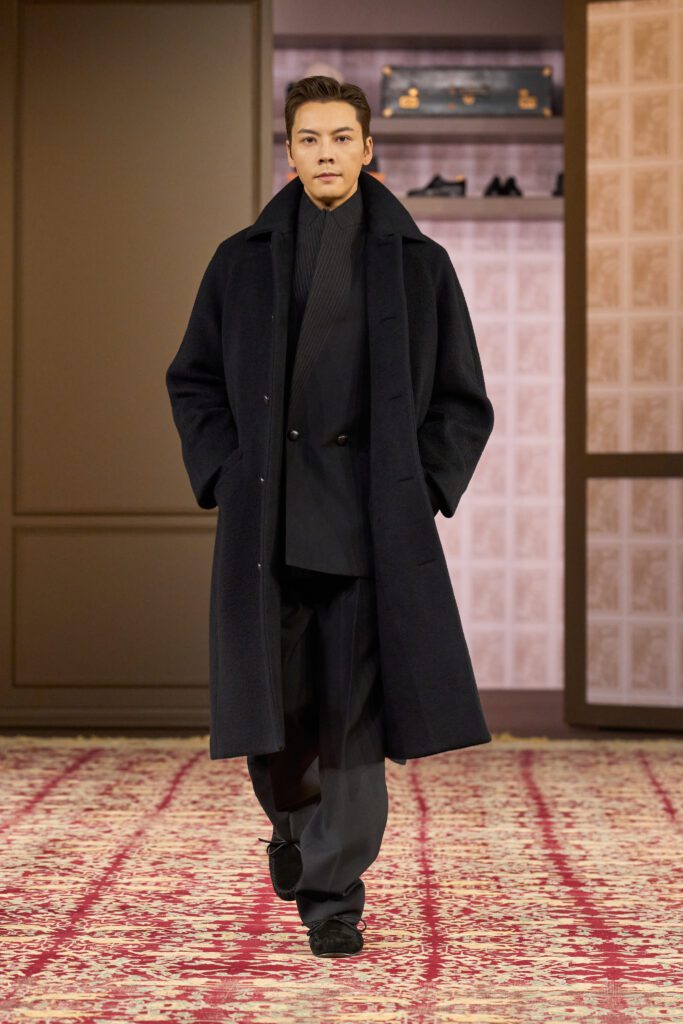
These days, form and function seem to sit atop the house’s vernacular, and this season was no exception. Further standouts included outdoor slippers and suede moccasins, squared glasses, and a winsome brew of colours juxtaposing browns with yellows, greens, blues, and neutrals—all of which kept the bold layering from becoming overbearing. There were no agenda-setting volumes here, but plenty of handsome pieces for the man about town.
by Chidozie Obasi