
MILAN, ITALY — We’re at the end of Milan men’s season, and if insiders aren’t preoccupied with plotting their exit strategies to the next fashion capital, they’re tallying up Fall’s strongest shows and asking questions about what they all meant.
It’s a good day for Miuccia Prada and Raf Simons to present their menswear outing for Prada, as both creatives are no slouches in either the design or intellectual departments. At a time when people tend to make their fashion reputations with a bang, the duo have a habit of challenging the state of our times through the quiet philosophy of clothing.

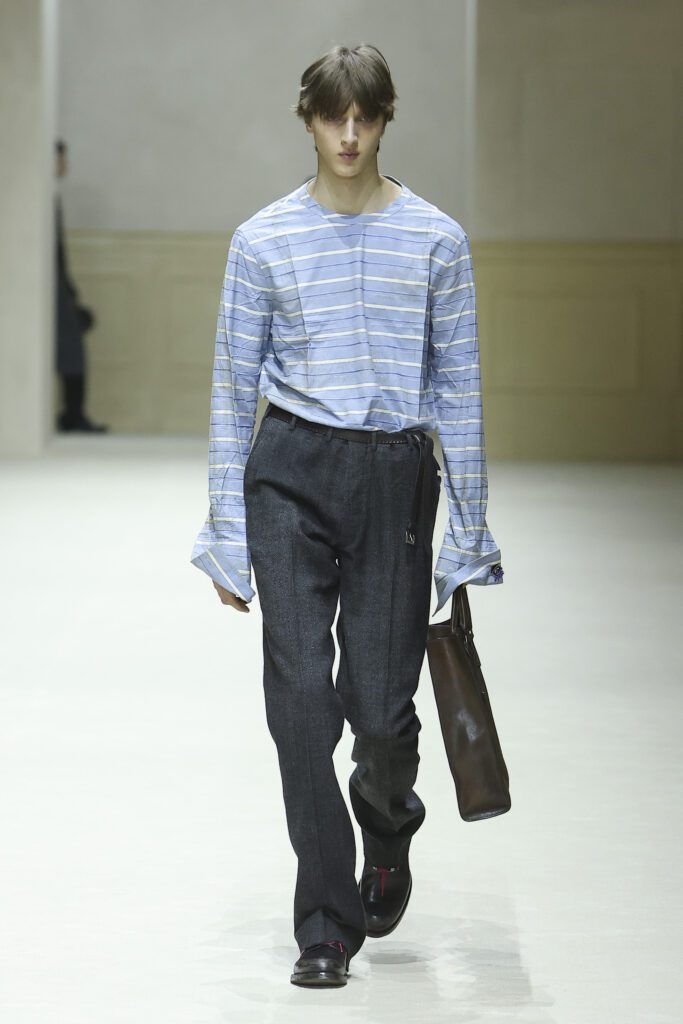
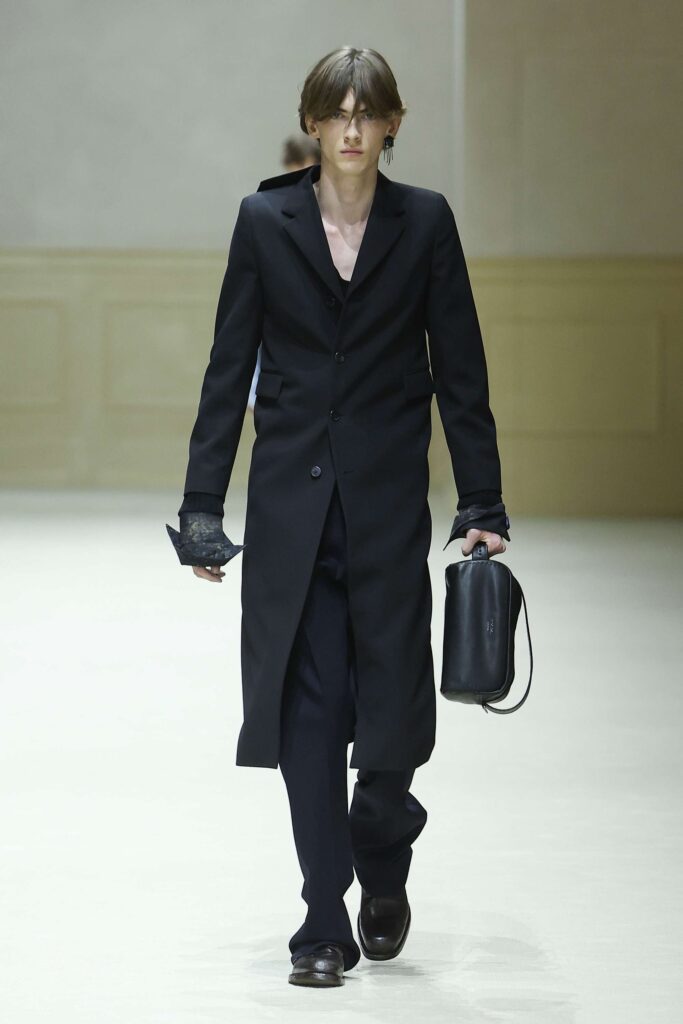
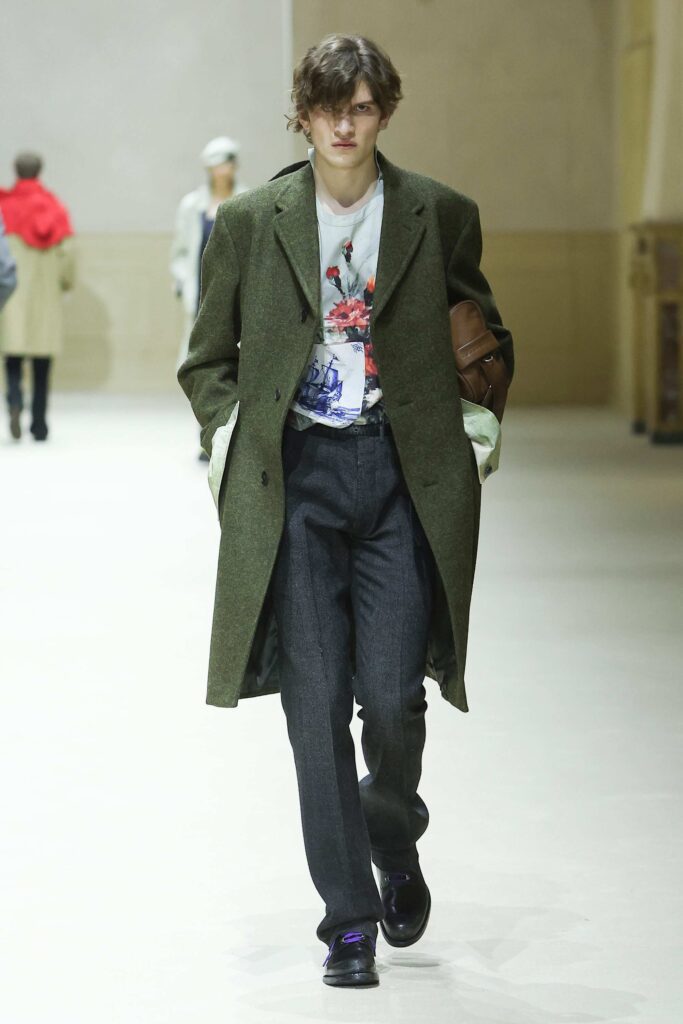
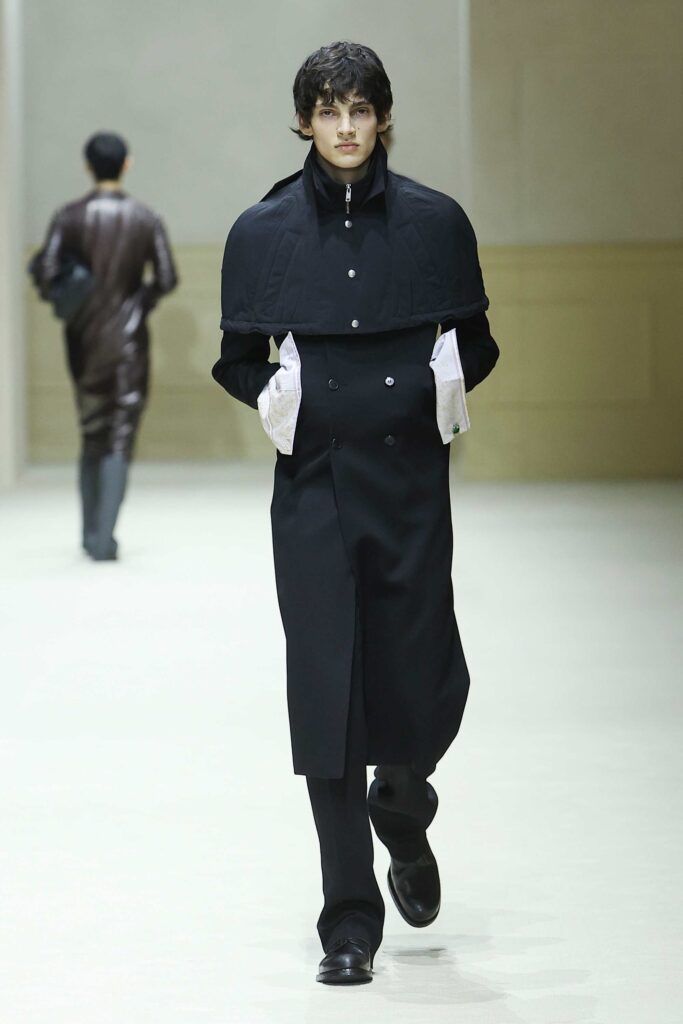
The mood of Prada’s latest collection is one of rigid contemplativeness – chiefly shaped by reflections on the world’s turbulent climate, and how that unrest informs construction and the use of fine detail in garments designed to promote comfort and freedom. This season, the resulting offerings possess a functional, matter-of-fact quality, and they threaten not to make an immediate impression. But they do reward scrutiny.
AW26 has seen the duo develop an interesting signature, built around the juxtaposition of dense and light materials: their use lending even a casual garment like a leather jacket a sense of substantiality, alongside a degree of aloofness. “What I’m thinking is difficult to say, because we’re talking about fashion,” Miuccia Prada told reporters backstage at the show. “It’s an uncomfortable situation, because with all that is happening, you either think about the bigger picture, or you think fashion is just about fiddly things.”
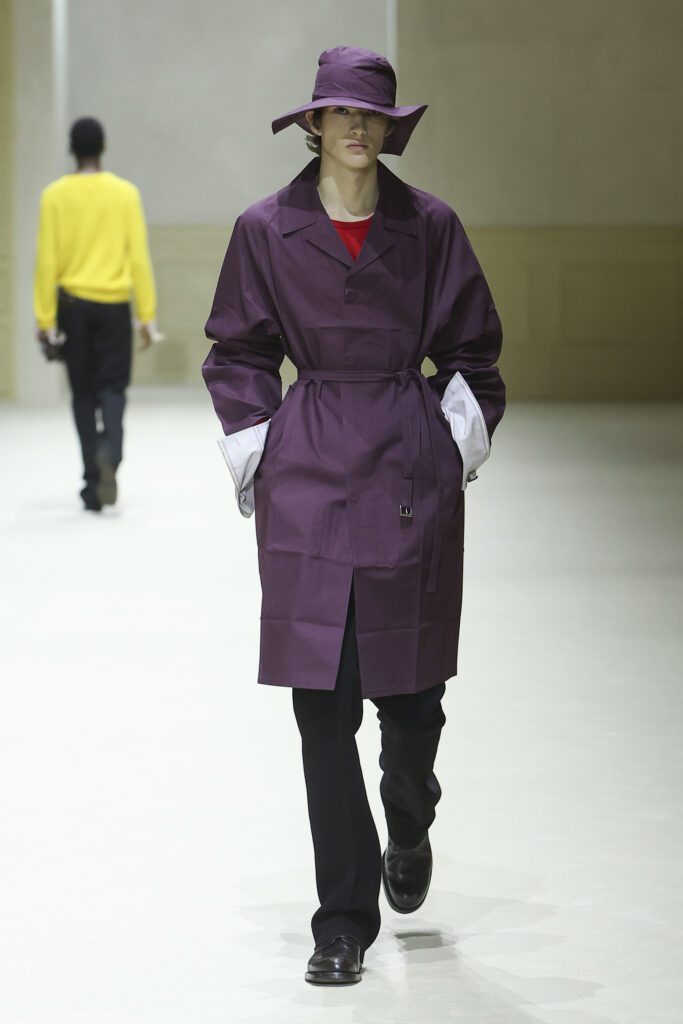
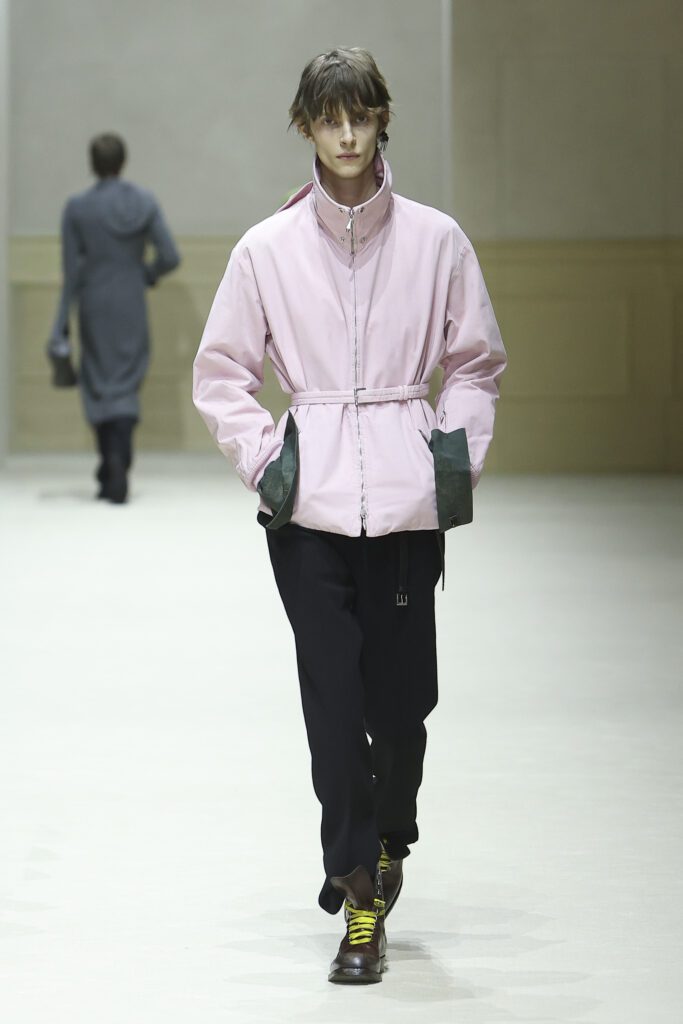
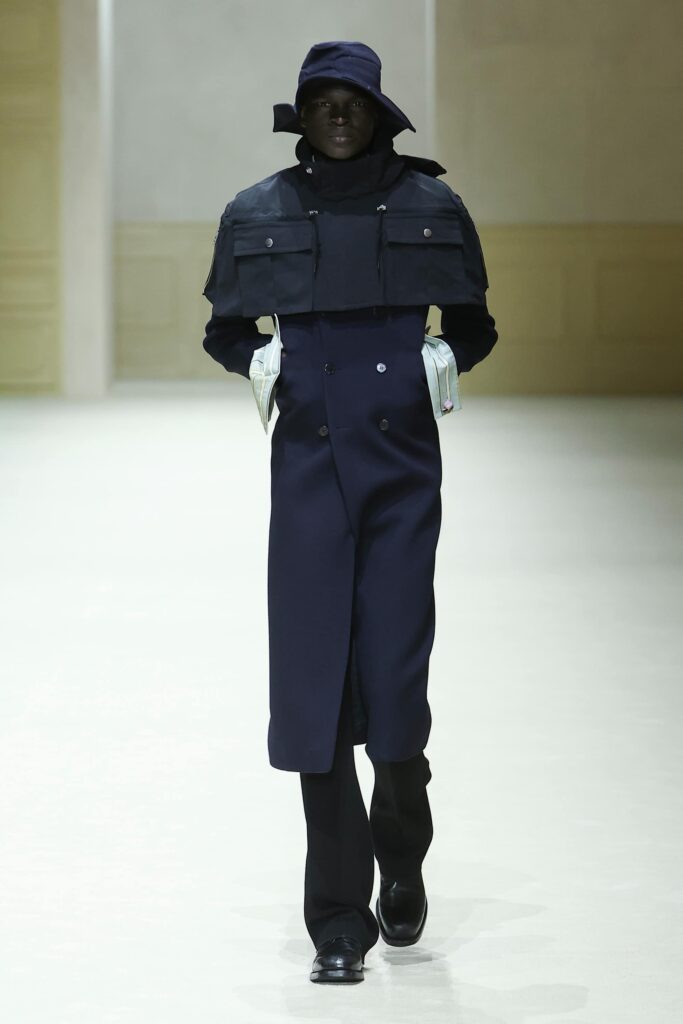
The collection points to an attempt at deciphering a moment shaped by social unrest. “I mean, of course, we always try, but I’m never satisfied,” reflects Ms Prada. “I don’t think we have an answer. Of course, no one has an answer in the world now. It’s all about a creative vision.” The outing had a polished veneer of cool, but it would be misleading to call it minimalist: the designers coaxed subdued drama from surface details, making particularly effective use of volume in coats and blazers.
“I think one has to look at the past,” said Simons. “There was a lot from the past here, and a lot about layering. If you peel layers away, you always find beauty—beauty, love, respect, and the knowledge that you still want to celebrate and use what exists, but also innovate.”
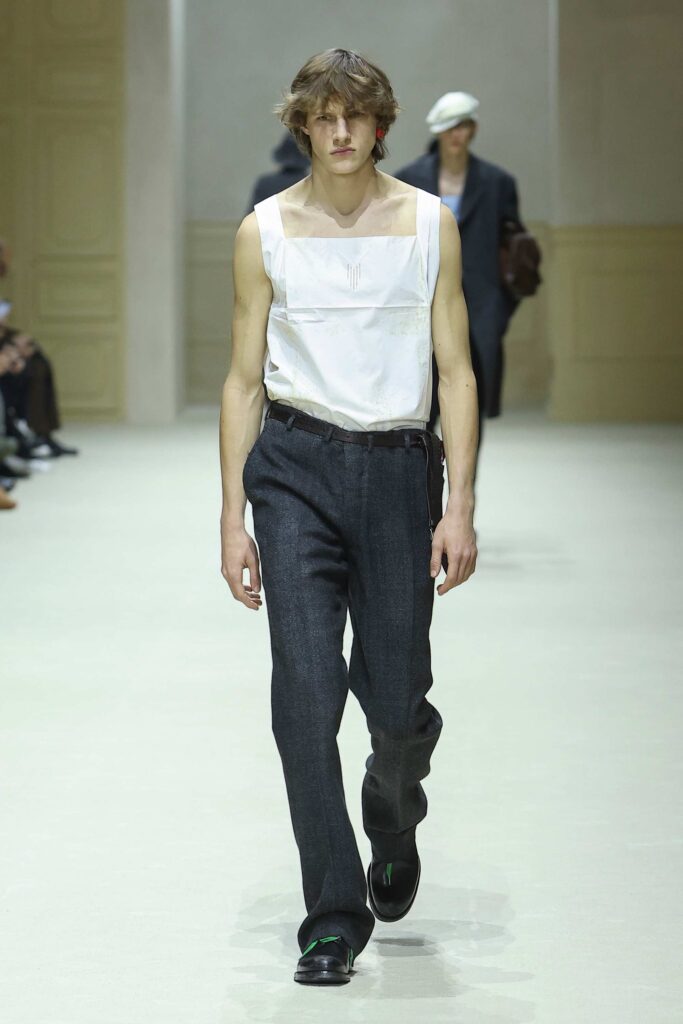
The task they set themselves was to encourage innovation while offering suggestions that might evolve from something rooted in the past. “Very often, people have reacted to world situations through the way they dressed,” Simons opined. “If you look at the 1960s and 1970s—and earlier—this was common. Now, this isn’t a direct reaction, but rather a feeling that we shouldn’t sit still or be frozen. We want to work, to try, and to have intellectual honesty and responsibility. My bones reacted. My head reacted.”
There are abundant plays on volume, translating directly into comfort. “There are very, very soft shoulders—never a hard shoulder. I think it’s an aspect of fashion that speaks to intellectual honesty,” said Simons. Working at a high-end house is no mean feat, something Ms Prada knows well.
“We’re working for a brand that sells expensive clothes,” she says, “so you have to deal with beauty and elegance, and understand what is believable. To be very open is the rule.” Despite the systemic complexities, Simons remains optimistic. “It’s a very fascinating moment for us,” he says. “We’re trying to innovate across almost all areas of menswear. It’s a moment of very big change, and it’s all connected.”
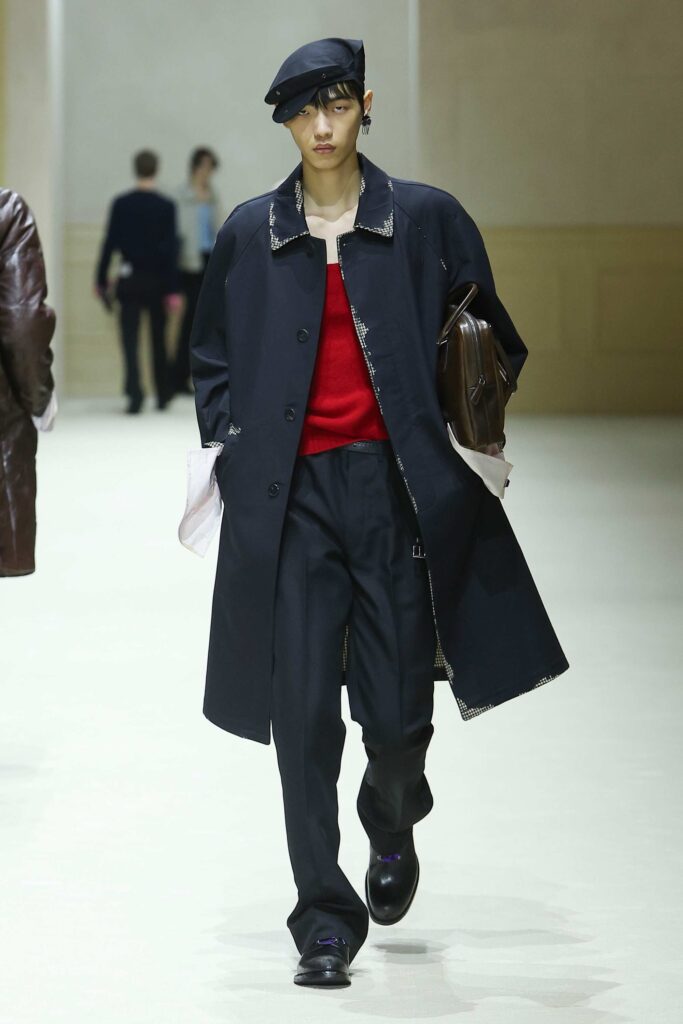
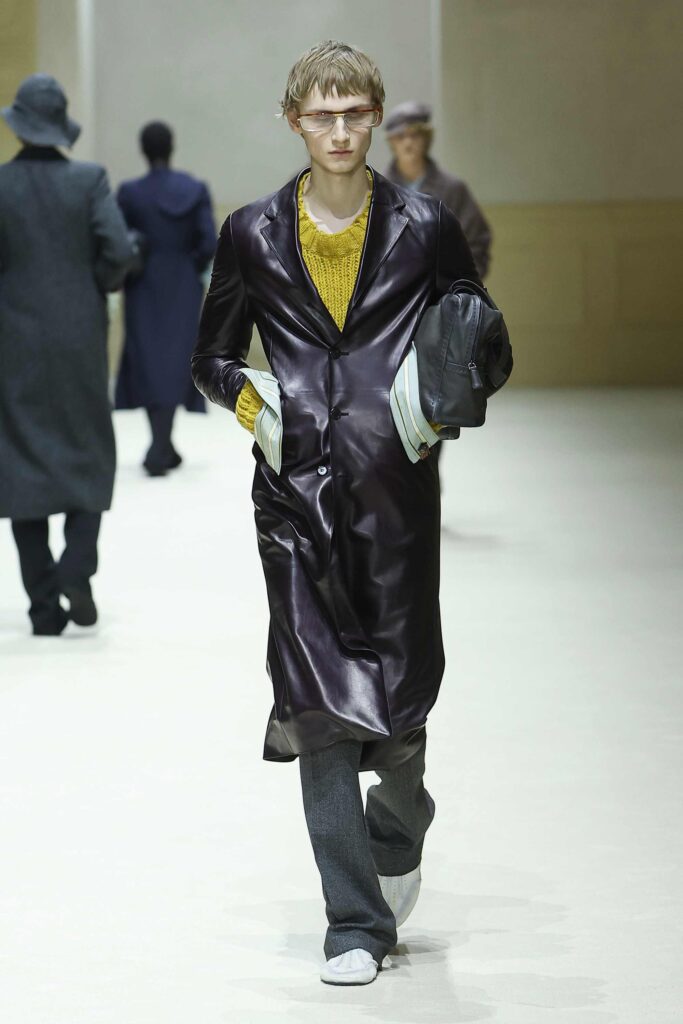
But references, can one ever have enough? “You think about the American businessman, or the politician’s shirt,” Simons explains. “At this moment, we feel you can transform that. What if you make it a T-shirt neckline? What if you age it? It’s about transforming many different things.” He expands on the brand’s broad pool of references: “There might be a tile from Holland alongside a landscape from Italy. Egypt, the Balkans, France, Asia, Tunisia—anywhere. We have to take everything from the world.”
On sustainability, Ms Prada speaks with unguarded honesty, reflecting on both the fashion business and its hypocrisies. “I do my job seriously, and I try to make it sustainable in the way that is possible. Because if we were to fully account for sustainability, we should close everything,” she concludes.
“No cars, no clothes. No consumption at all. There is a lot of hypocrisy around this. Of course, we want to reach a better state. But if we truly wanted to be sustainable, we wouldn’t consume anything. So I try to be honest: we must do our job as well as we can, bringing quality while capturing reality.” Cheers to that.
by Chidozie Obasi