
MILAN, ITALY — There’s power in subsuming a designer’s creative identity into a larger message. In traditional fashion, the question of function reemerges time after time. Across the Autumn/ Winter 2026 collections in Milan, it appeared in subtle gestures – a cocoon sleeve, delicate lace, the slap of black-and-white separates – and then in volumes and stagings, with offerings in radiant tones and celebrity-packed front rows anchored by cheer.
One of the strengths of this season’s outings was that designers weren’t arguing that individuality versus collectivity is a zero-sum affair. As seen at Max Mara and Emporio Armani, they articulated a more complex idea: looking to plurality and history to shape the codes of modernity, at a time when you can be all for one, or one for all.
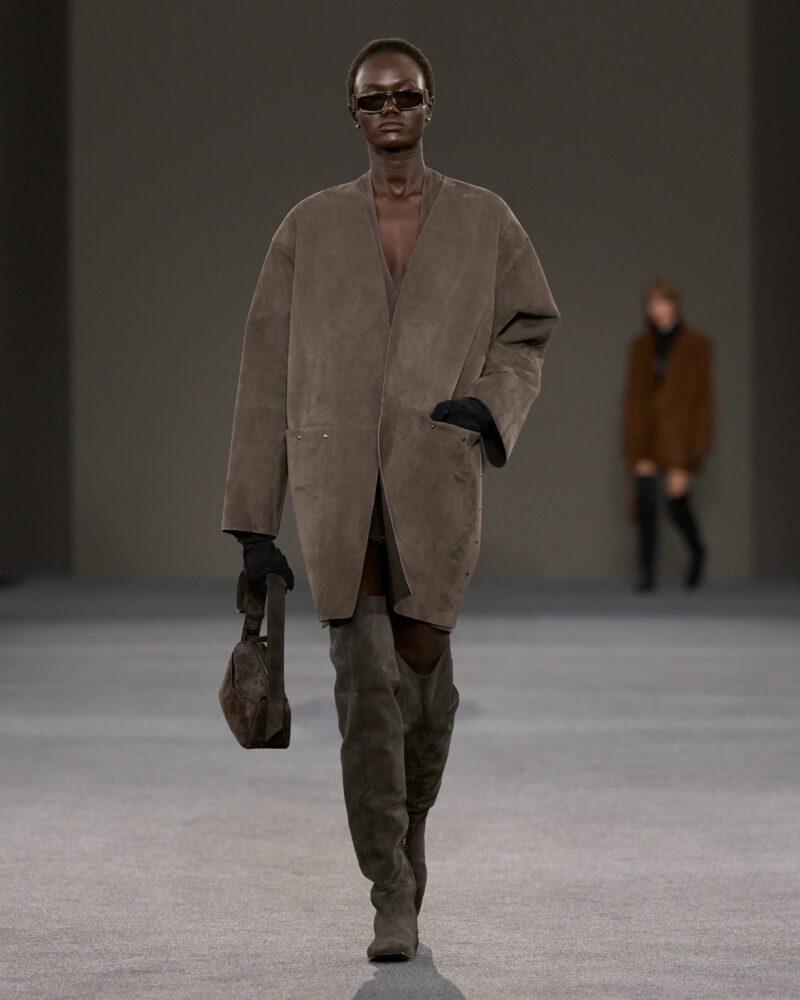
Max Mara AW26
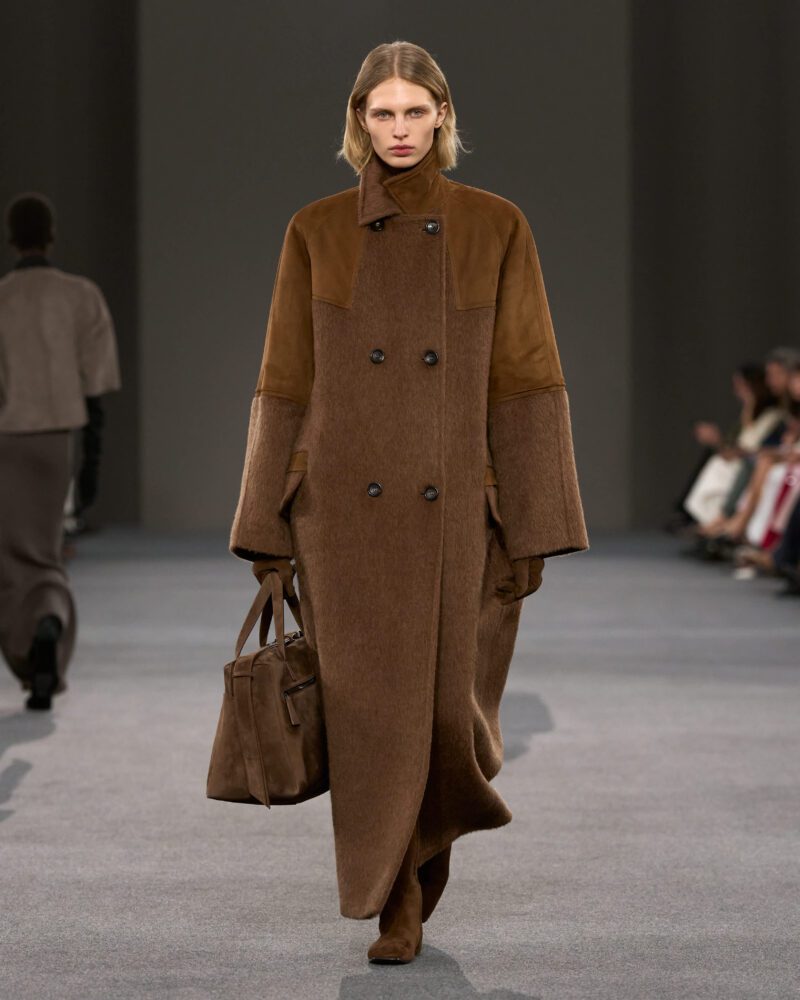
Max Mara AW26
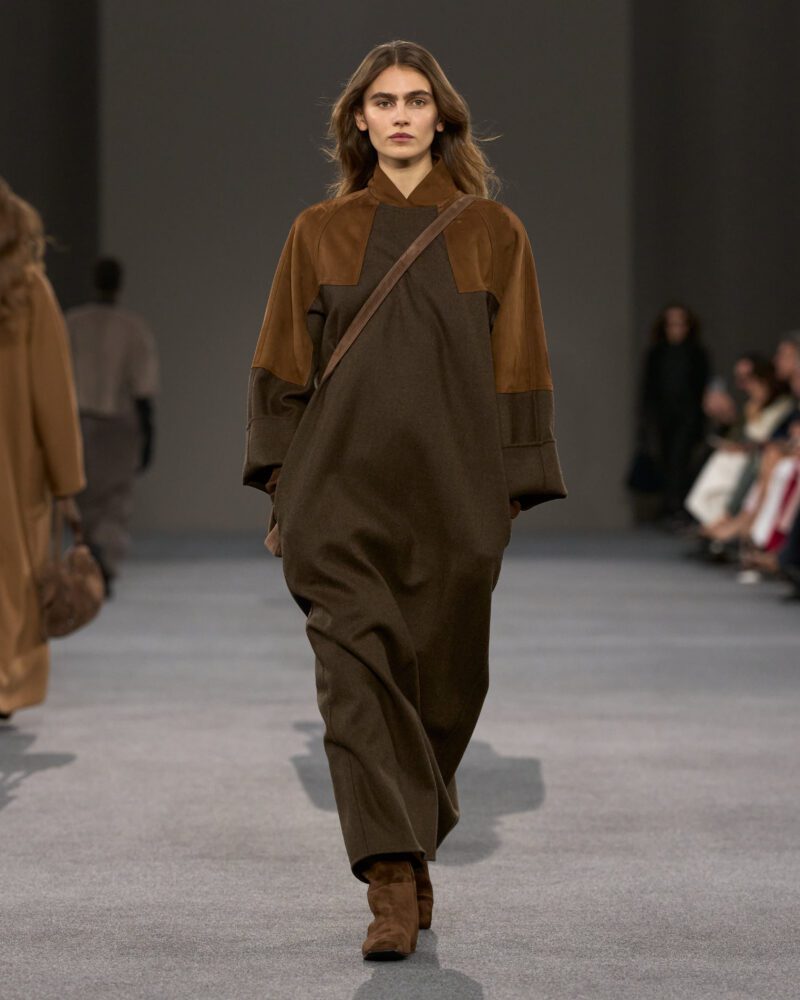
Max Mara AW26
Ian Griffiths’ vision is a case in point. “I leave it to you to make any parallels you wish between the Dark Ages then and the Dark Ages now,” Max Mara’s Griffiths told reporters backstage after the show. “The whole thing started with a trip to Suffolk, where I was struck by the beauty of artefacts made in the so-called Dark Ages. I was thinking about objects that grow more beautiful with time, the more they’re used. Which, of course, led me to Max Mara coats, because they are life companions.”
From the late medieval period, Griffiths leapt to Italy, citing Matilde di Canossa as a key inspiration, one of the most charismatic and powerful figures in Italian history, long before feminism was even conceived, and therefore, thoroughly deserving of her place in the Max Mara pantheon, he argued. “The great thing about Matilde was that she was said to have been as wise as a serpent and as graceful as a dove.”
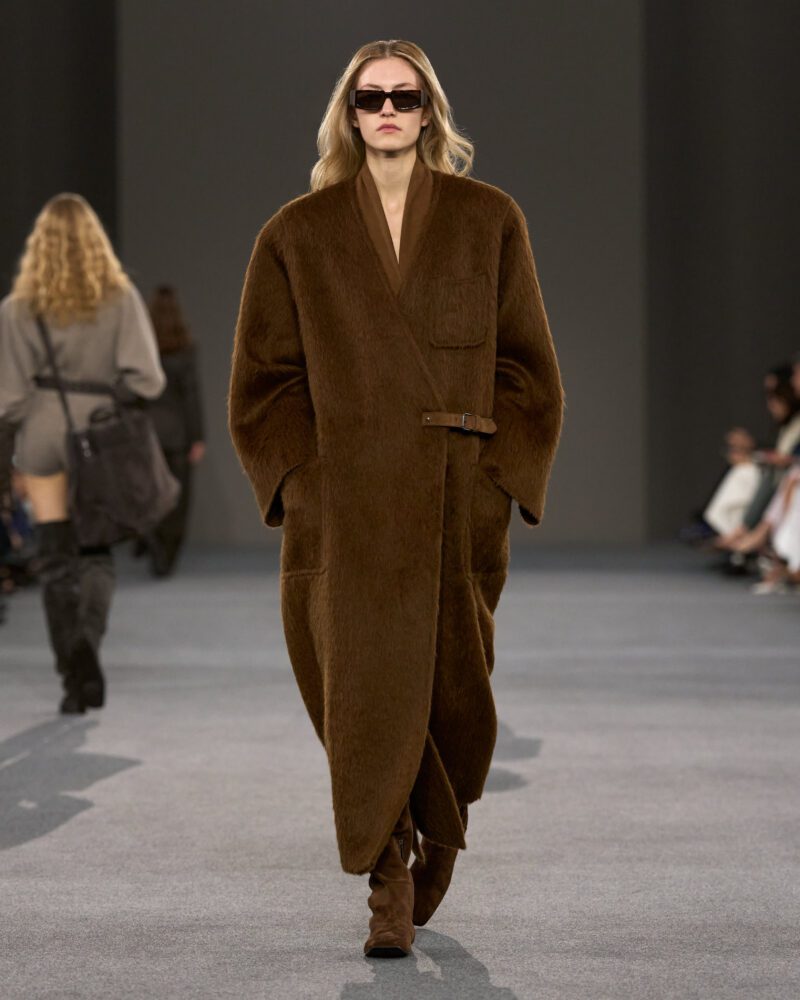
Max Mara AW26
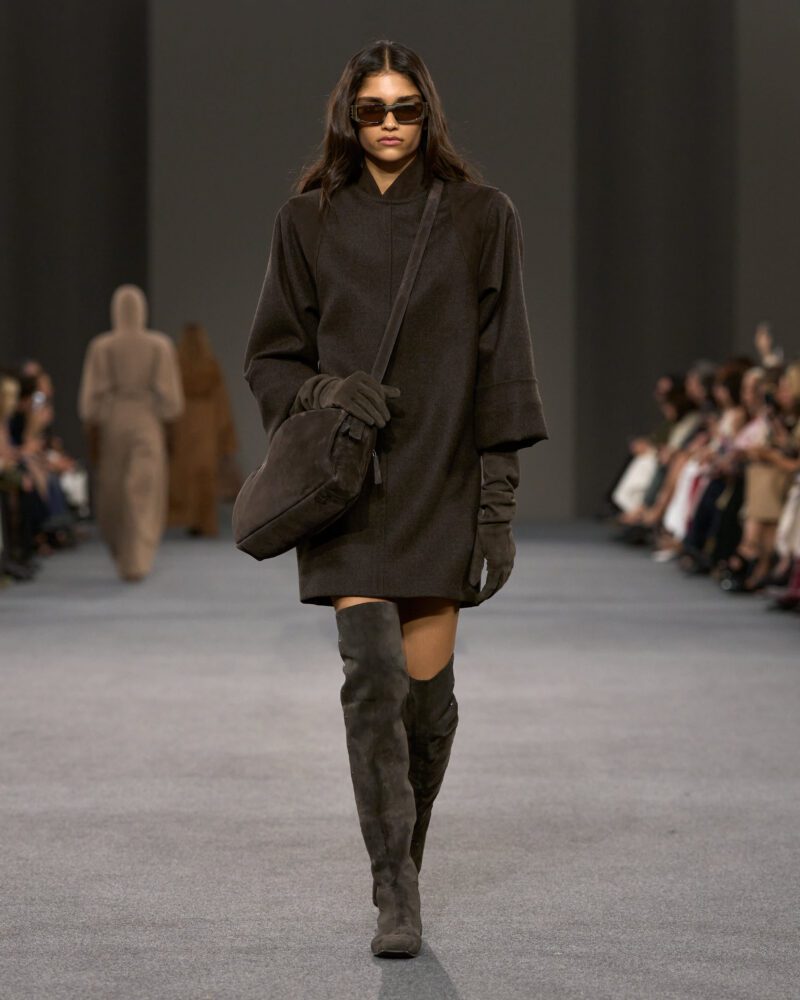
Max Mara AW26
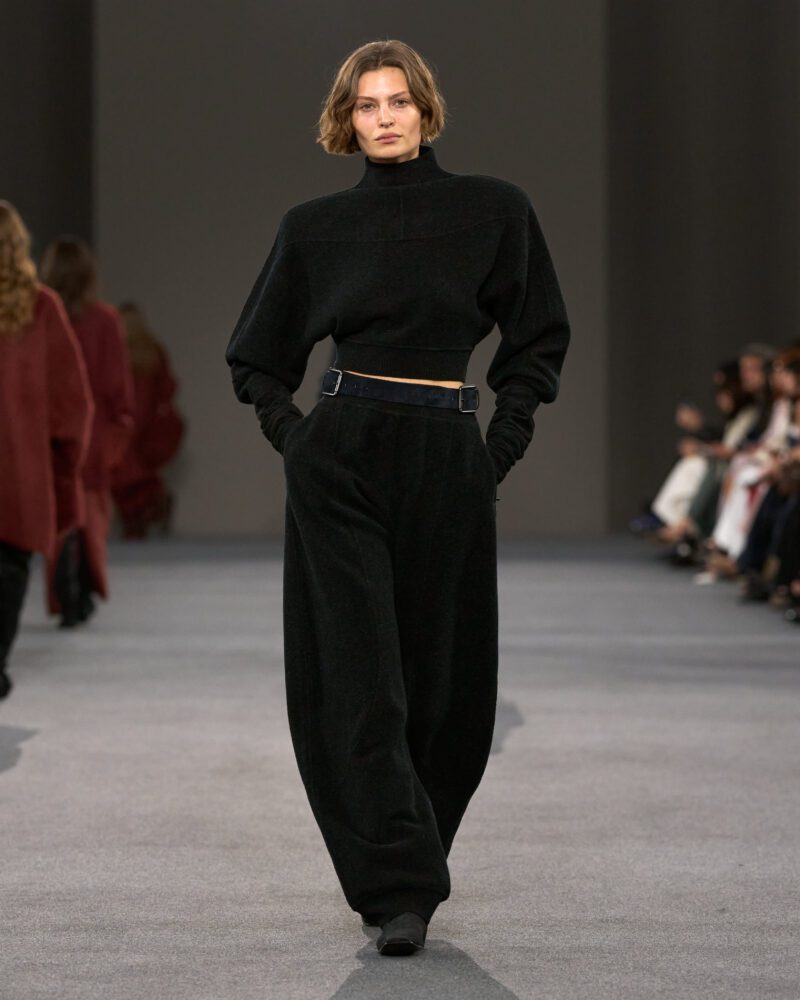
Max Mara AW26
Following this line of thought, Griffiths’ intent was to celebrate the durability and sustainability of Max Mara’s products and their lifelong beauty. “We’re celebrating the graceful power of the woman who wears them.” He yearned for distinct medieval touchpoints rendered with utter modernity.
Standouts included flat suede boots, with the material extending beyond detailing into full looks, such as a three-piece suit and a cashmere curve coat to match. “I really wanted to re-emphasise the coat as the fulcrum of this collection, and therefore the suit took a passenger seat.”
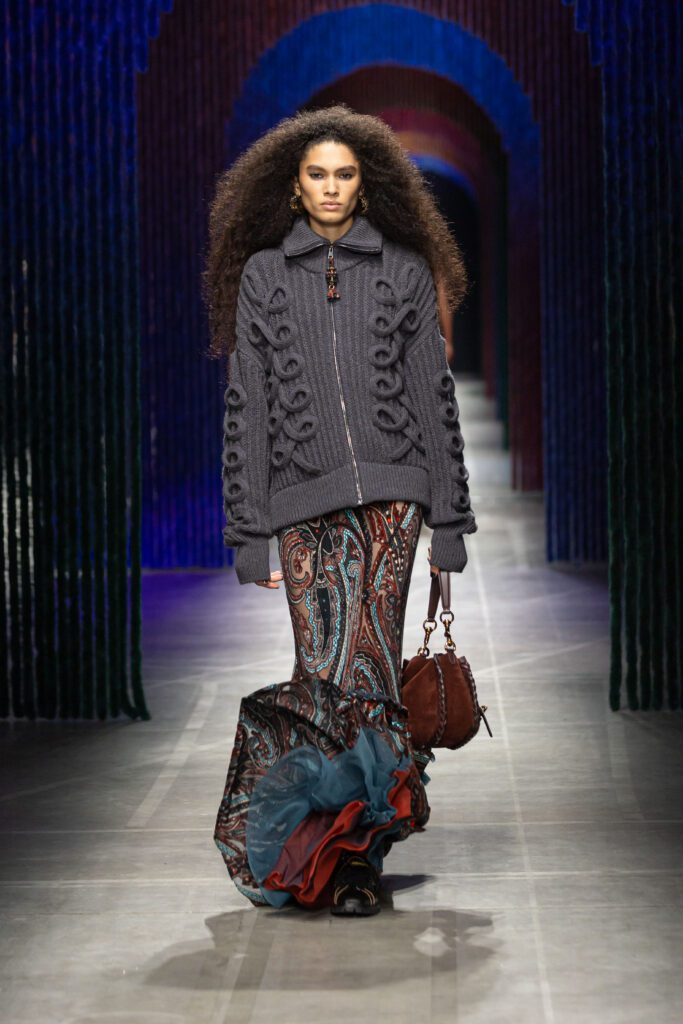
Etro AW26
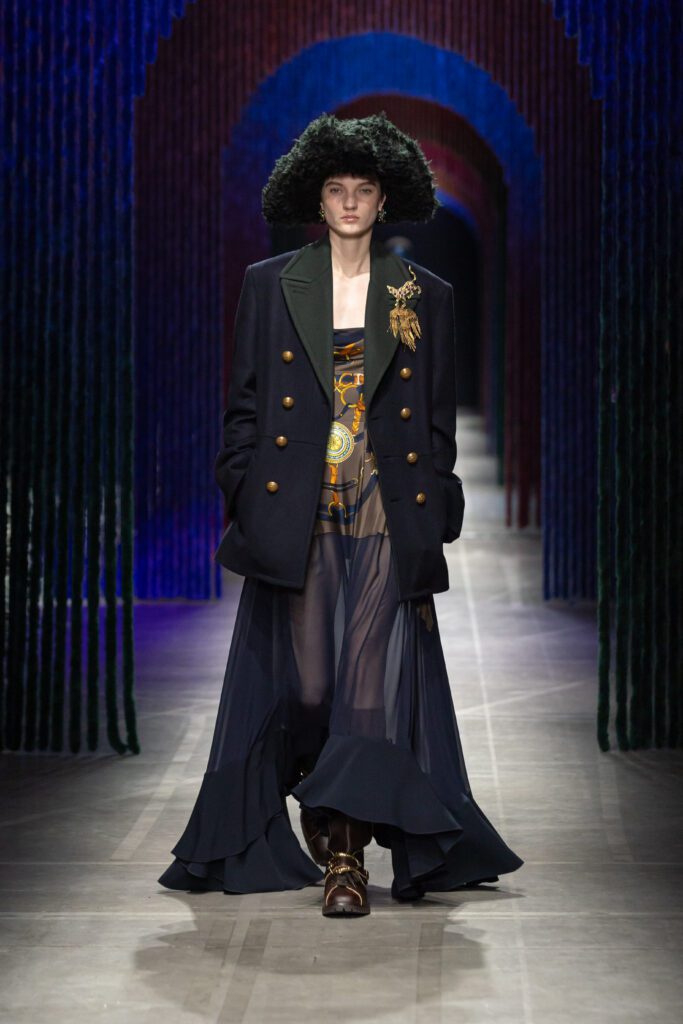
Etro AW26
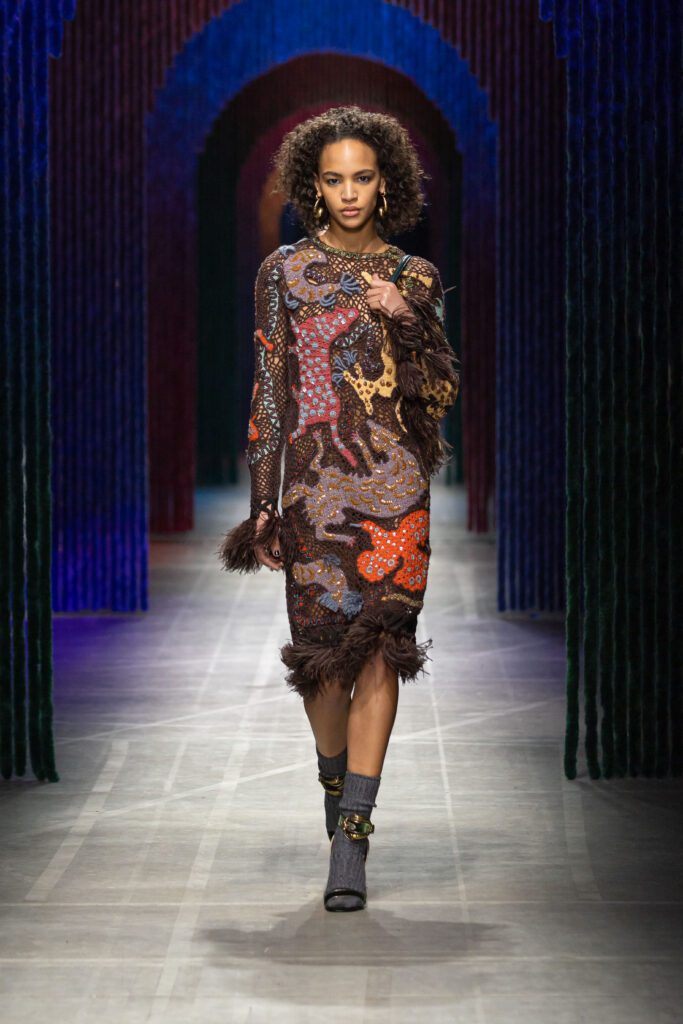
Etro AW26
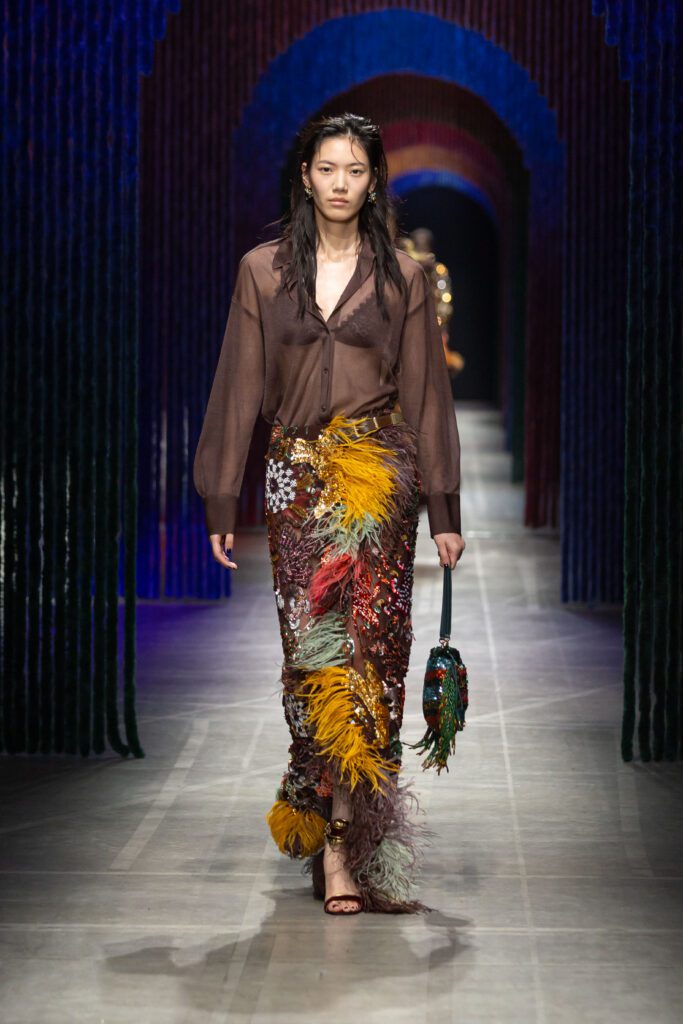
Etro AW26
At Etro, strong notes of sartorial playfulness and wear-anywhere offerings ran apace for AW26, as Marco De Vincenzo worked with references to a British-inflected masculine formal world imbued with a wandering spirit.
This season, so-called “Etro-sity” became an act of collecting—things and experiences—bringing far-flung worlds into a dialogue of wonder and function. Style-wise, key formulas included cords on knits, pleated skirts, long sequins fading into feathers, and devoré jacquards on jerseys. The palette mixed organic yellows, blues, and neutrals.
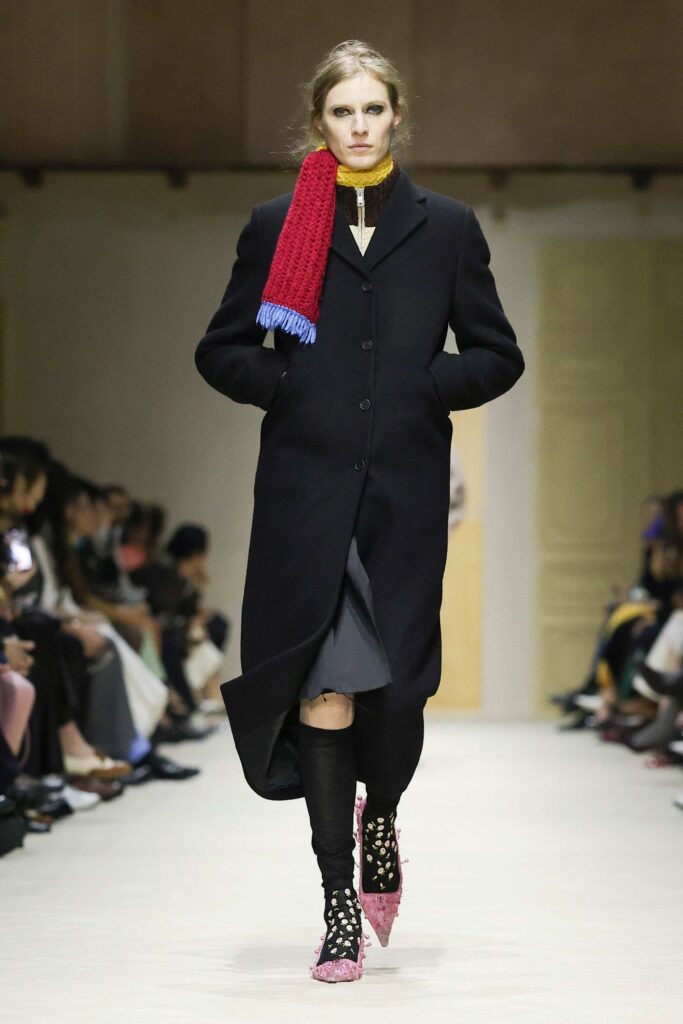
Prada AW26
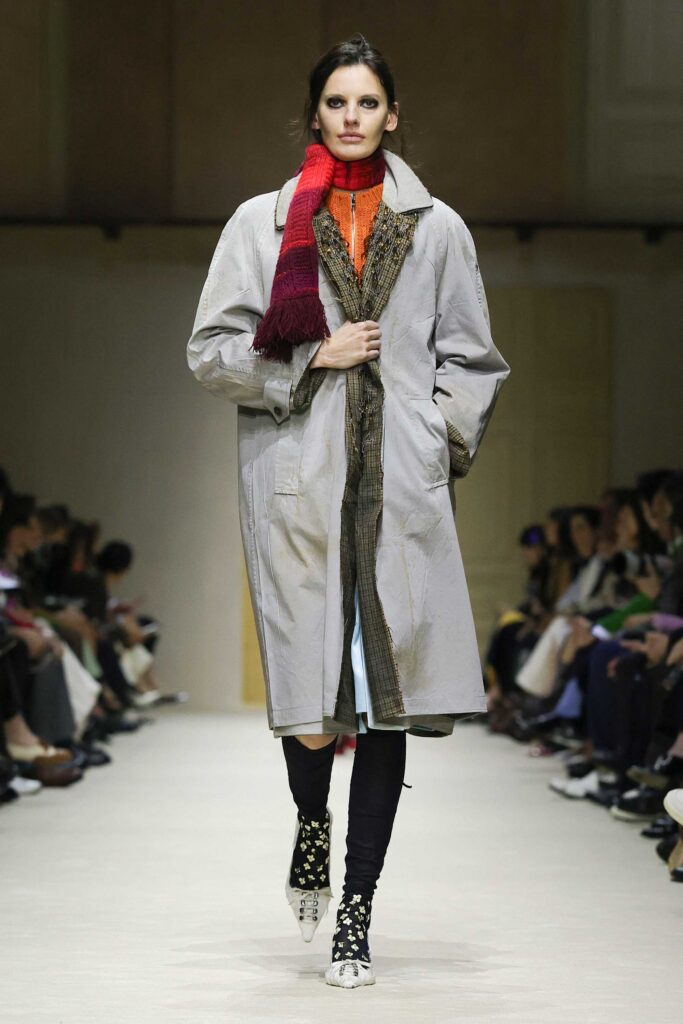
Prada AW26
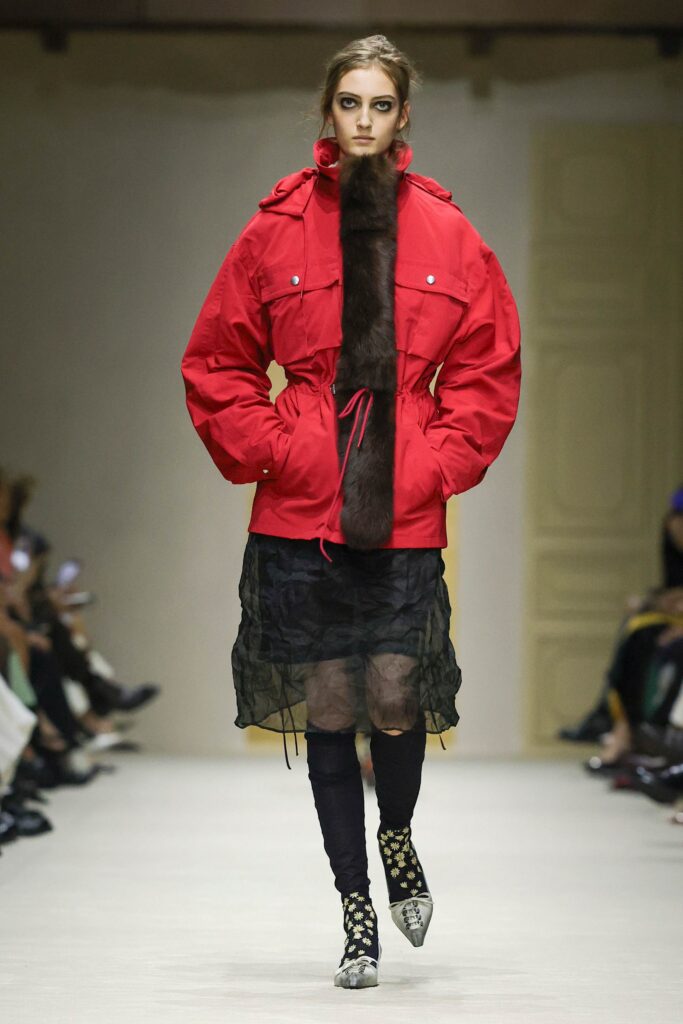
Prada AW26
Co-creative directors Miuccia Prada and Raf Simons unveiled a collection that emphasised change and its sensibilities at Prada’s Fall show, layering complexity drawn from history, politics, and life. “We looked at the continuous necessity of change—of leaving all the different personalities, moments, sentiments, sexuality—and this woman carries them together, in a day, in a life,” the designers said post-show. “That was the idea. We also loved the idea of having fifteen girls: a small cast allows you to relate in a different way to the women we worked with, because you see them multiple times and in different ways of dressing.”
In effect, it was like composing fifteen looks in myriad variations—though it could just as easily have been hundreds, an approach the designers deliberately avoided to escape monotony. “An important thing is that we don’t want to create a hierarchy between high and low—whether the clothes feel lived-in or worn over time. At the same time, we don’t want hierarchy at all, so there was damaged embroidery alongside minimalism and opulence, coming together.”
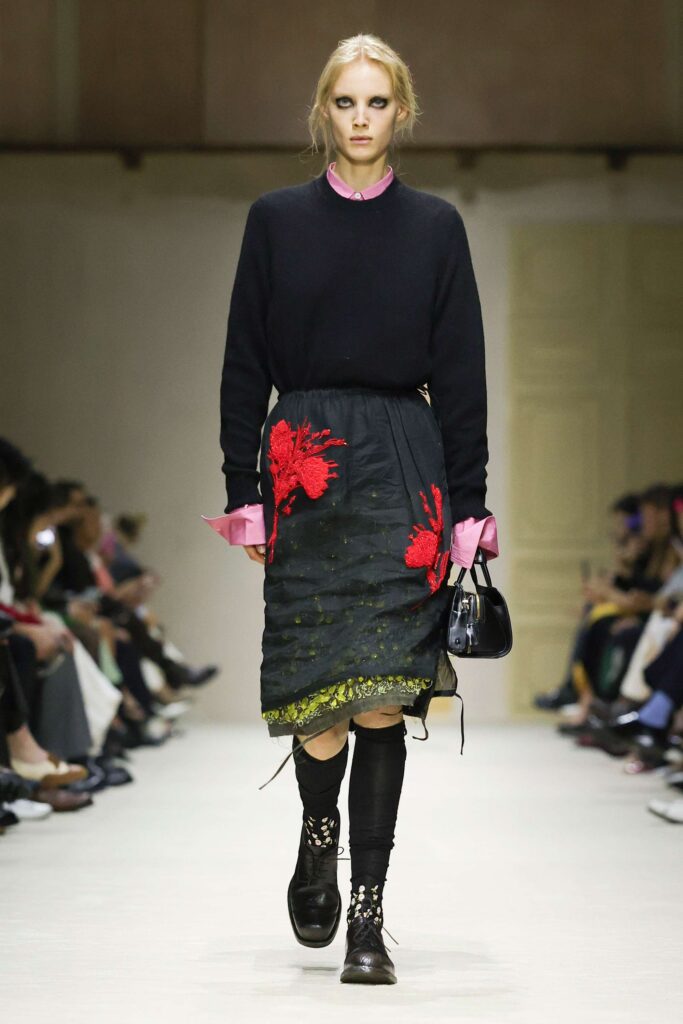
Prada AW26
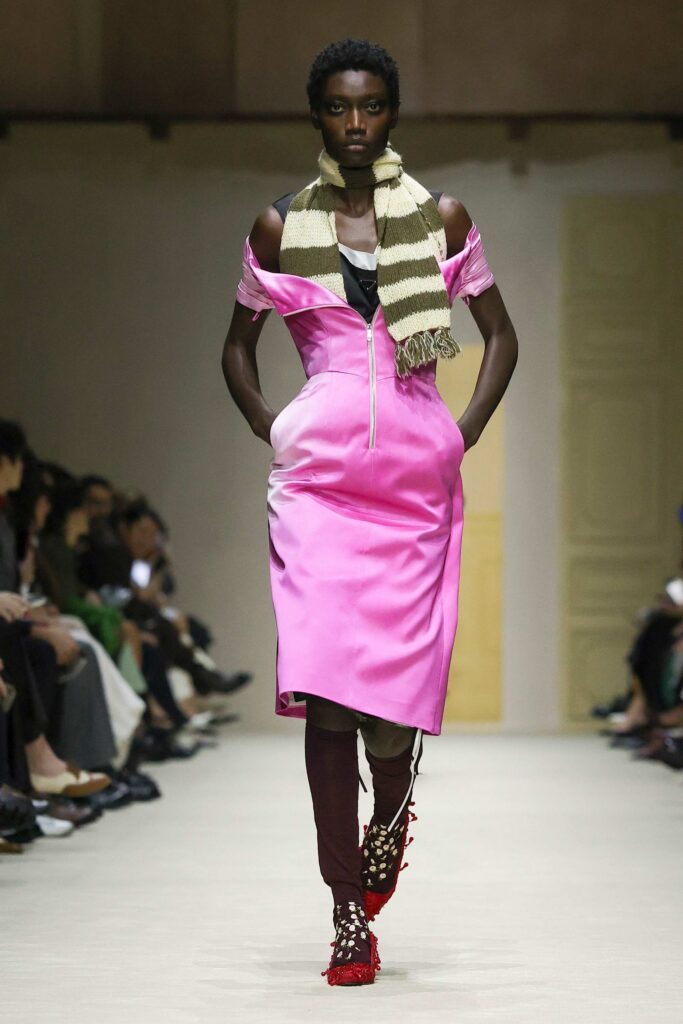
Prada AW26
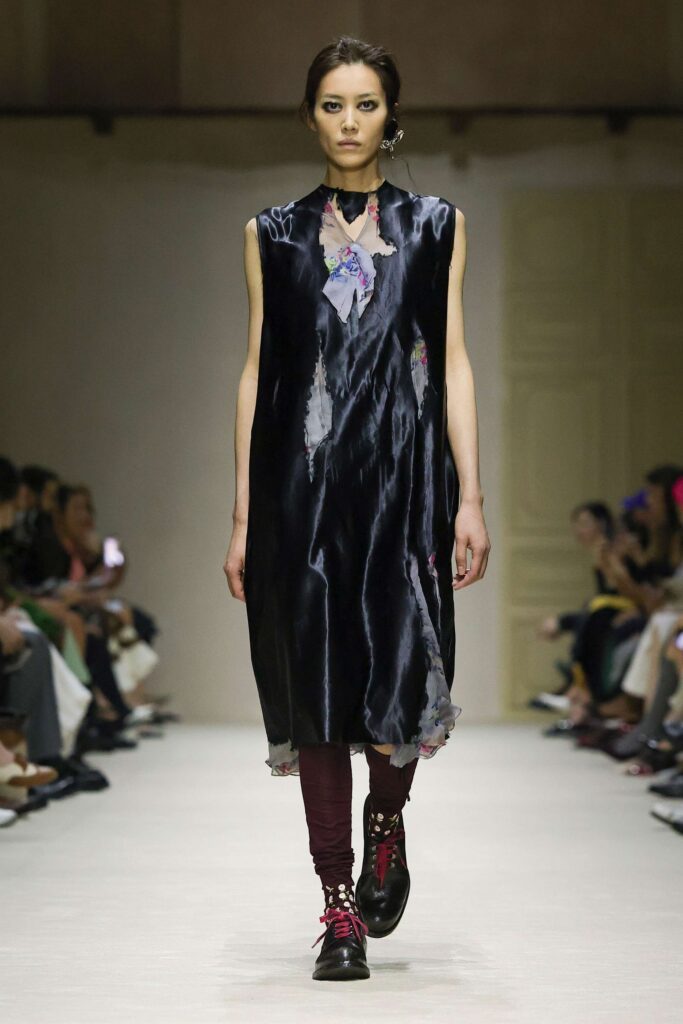
Prada AW26
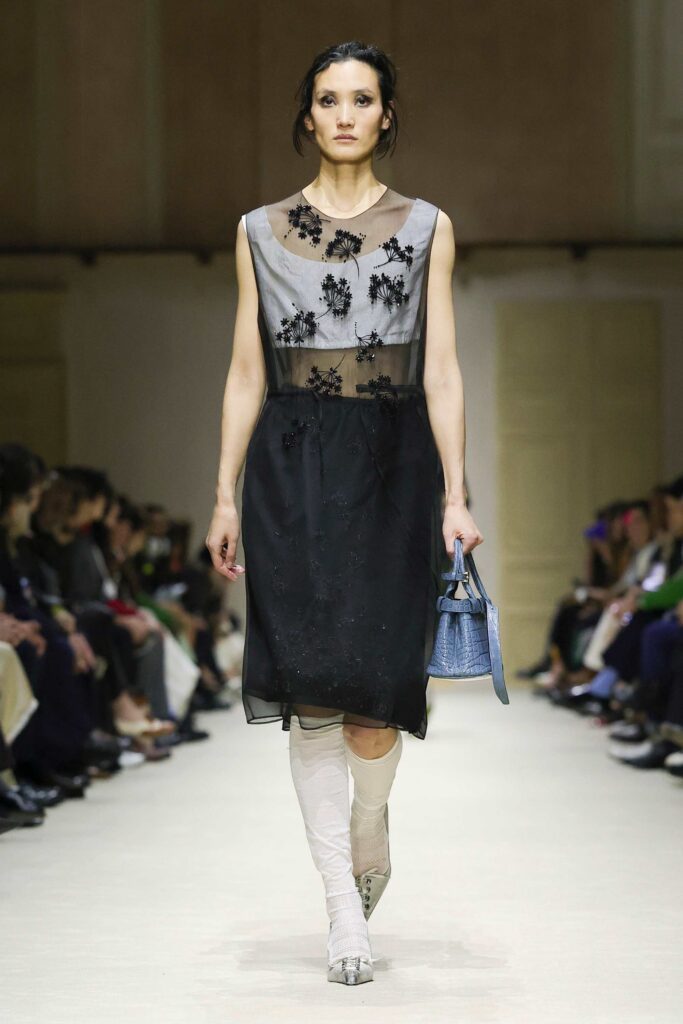
Prada AW26
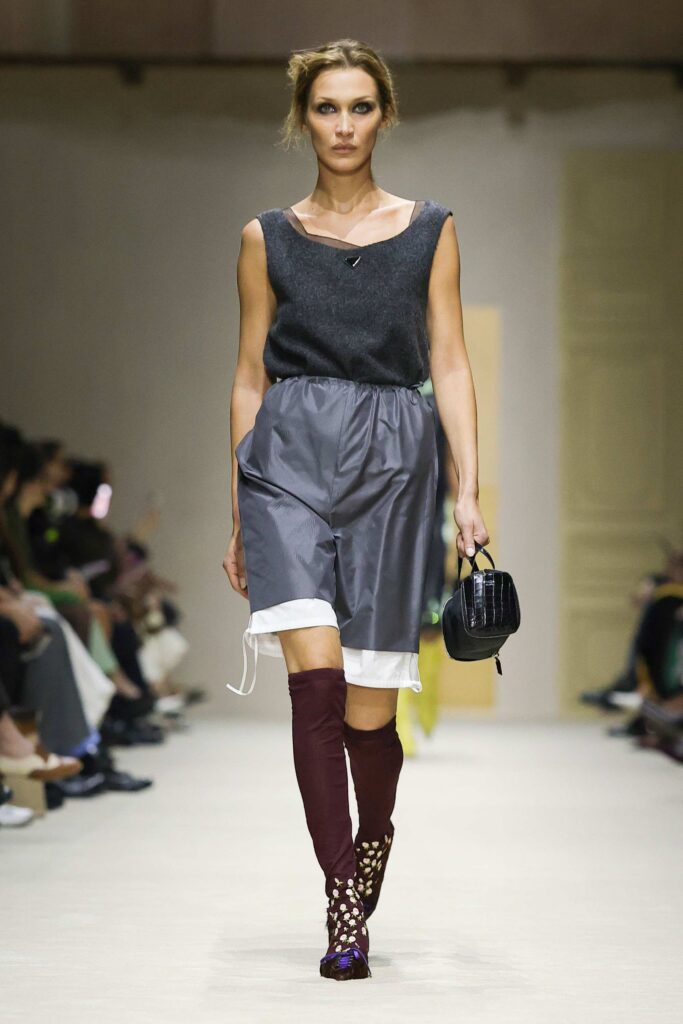
Prada AW26
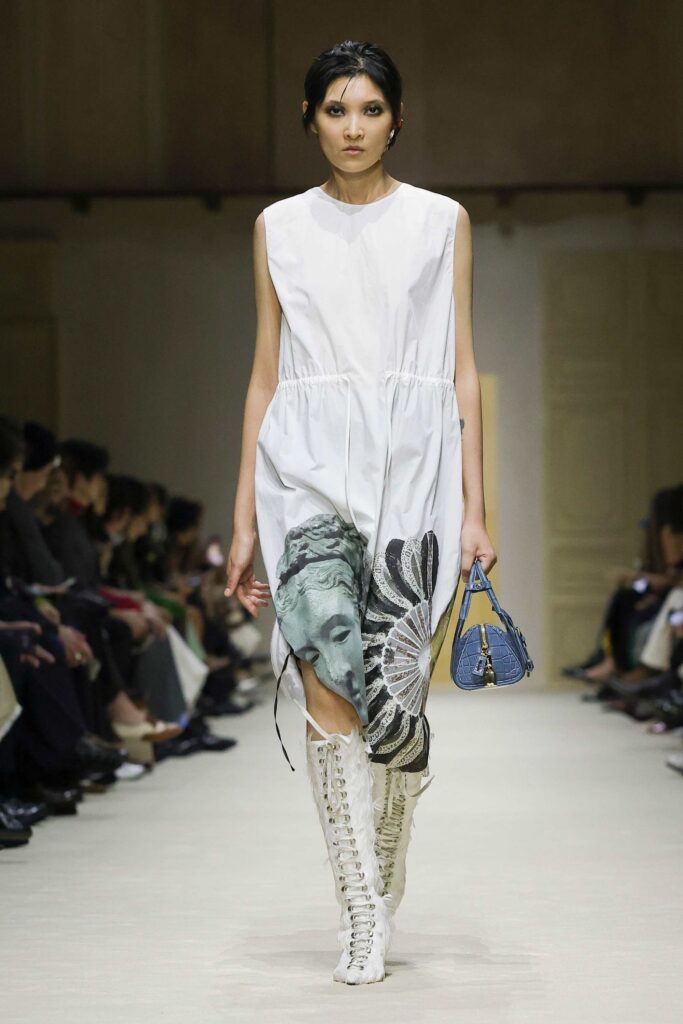
Prada AW26
Fragments of history surfaced, too, with references to Greece and Egypt (a longstanding fascination of Miuccia Prada). “I was thinking about the album Marc Jacobs did at his show in New York two weeks ago, when he referenced a Prada collection,” Ms Prada said. “It was a really interesting way of bringing in that element. Memory, history, personality—we talk a lot about our own history. There might be a very minimal dress, but underneath, fused within it, there is, for example, a 1950s volume. When I talk about history, I mean real history.”
This season, the co-creative directors deliberately shifted focus away from men. “Because in the end, women win,” they said. “At least in fashion shows. In life, not yet.” Fall was ultimately about the freedom to draw inspiration from disparate elements and bring them together in ways that feel contemporary, if not overtly narrative.
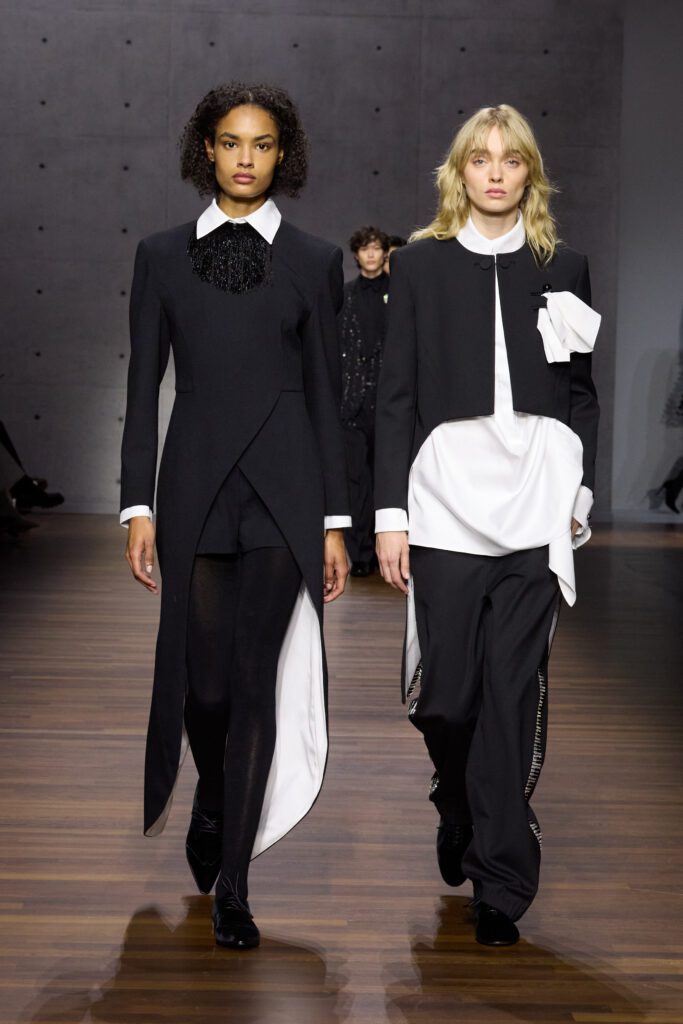
Emporio Armani AW26
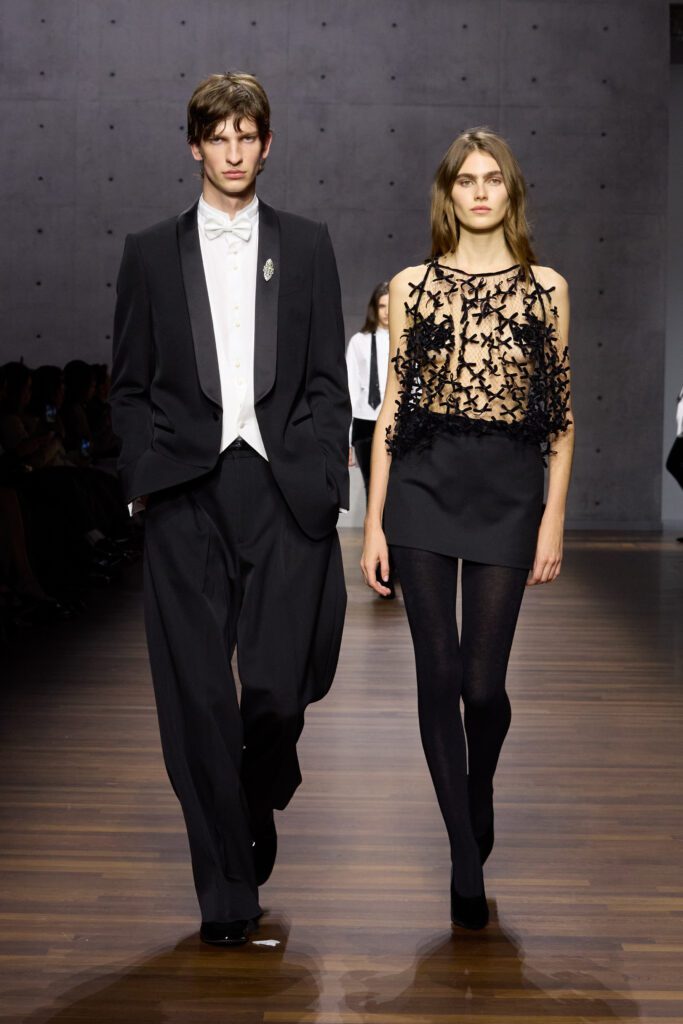
Emporio Armani AW26
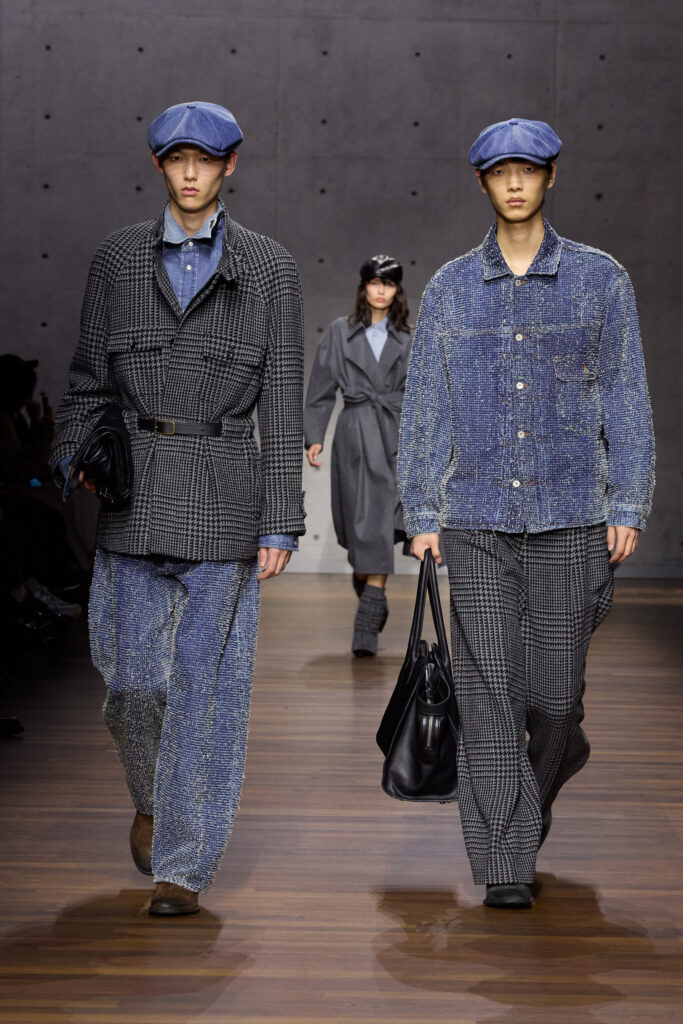
Emporio Armani AW26
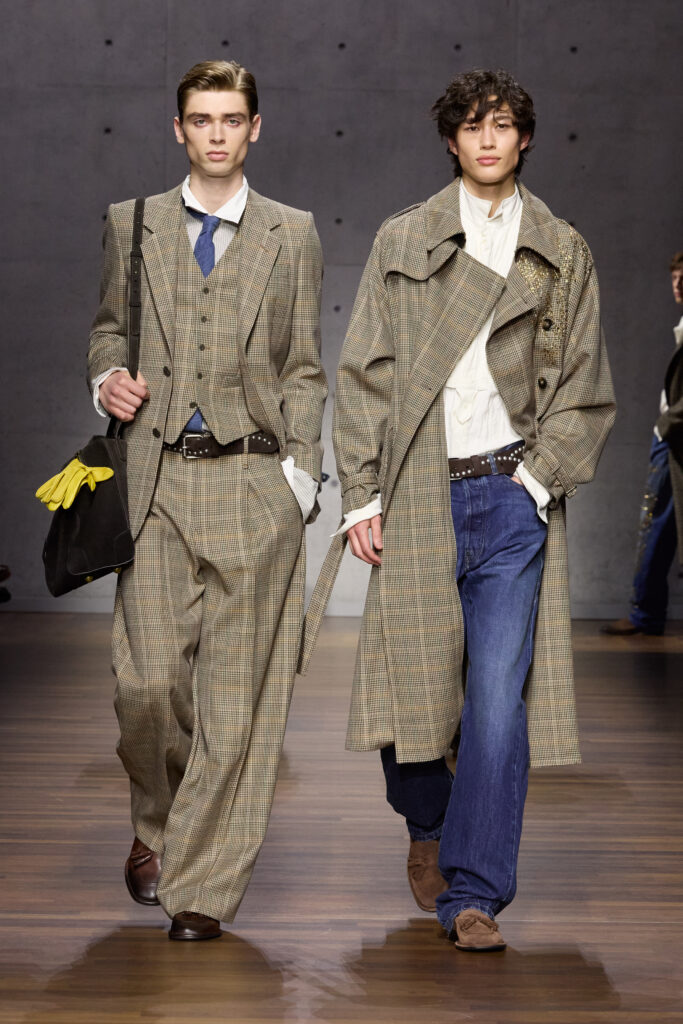
Emporio Armani AW26
A narrative of identity defined Emporio Armani’s latest collection—the first jointly developed by Silvana Armani and Leo Dell’Orco—which embodied a dialogue between masculine and feminine, the very foundation of the Armani aesthetic. Volume play reigned supreme: enveloping overcoats, jackets, long cardigans, and generous shirts worn over cropped trousers offered a fresh interpretation of tailoring.
Also notable were Bermuda shorts with deep pleats and denim treated as both everyday wear and precious fabric. Materials felt substantial yet soft to the touch, while a palette of beige, greige, and grey dissolved into shades of brown, creating a fluid wave interrupted by Armani blue with flashes of red and purple.
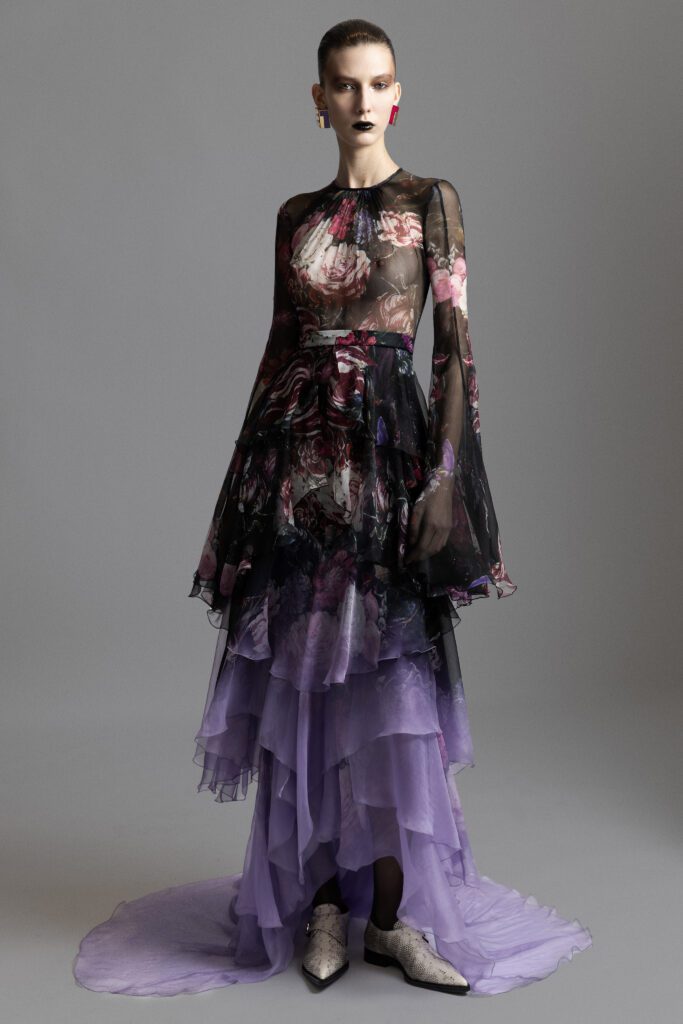
Roberto Cavalli AW26
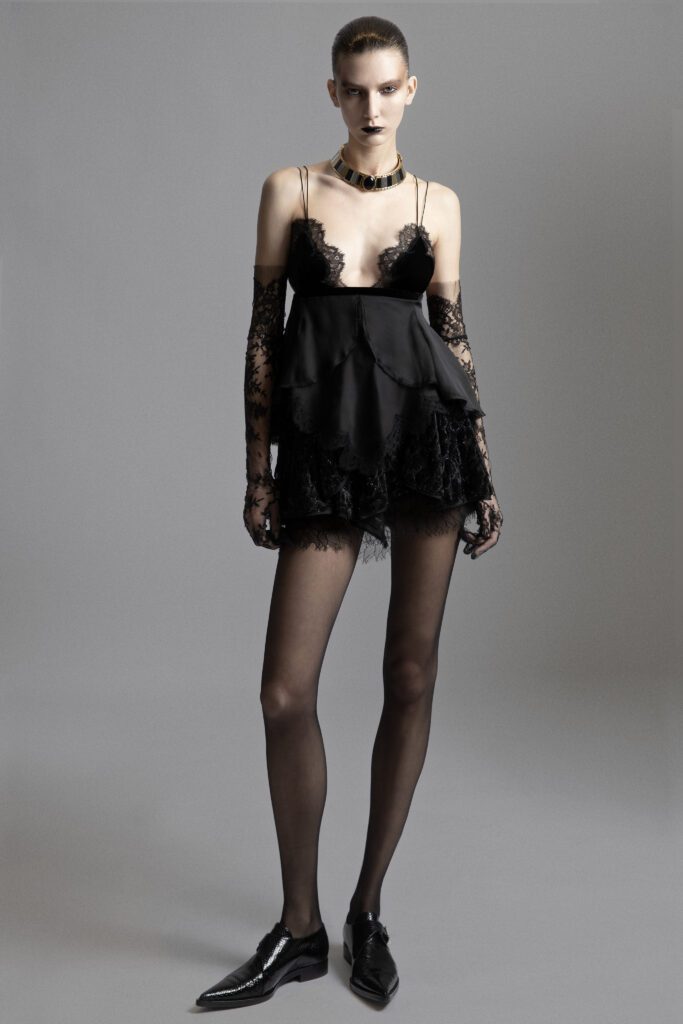
Roberto Cavalli AW26
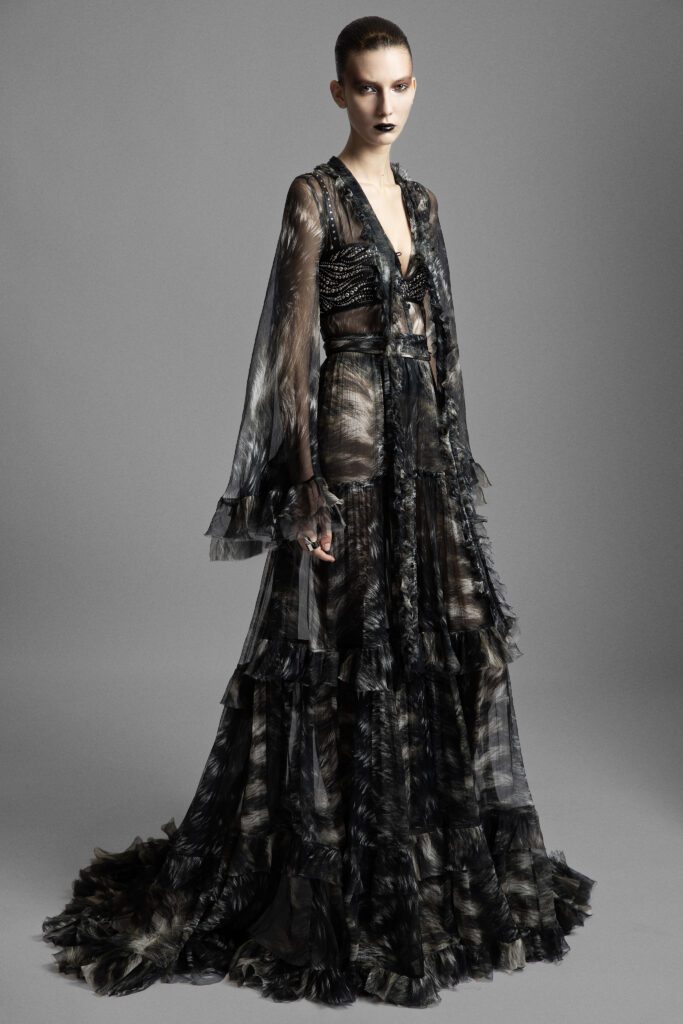
Roberto Cavalli AW26
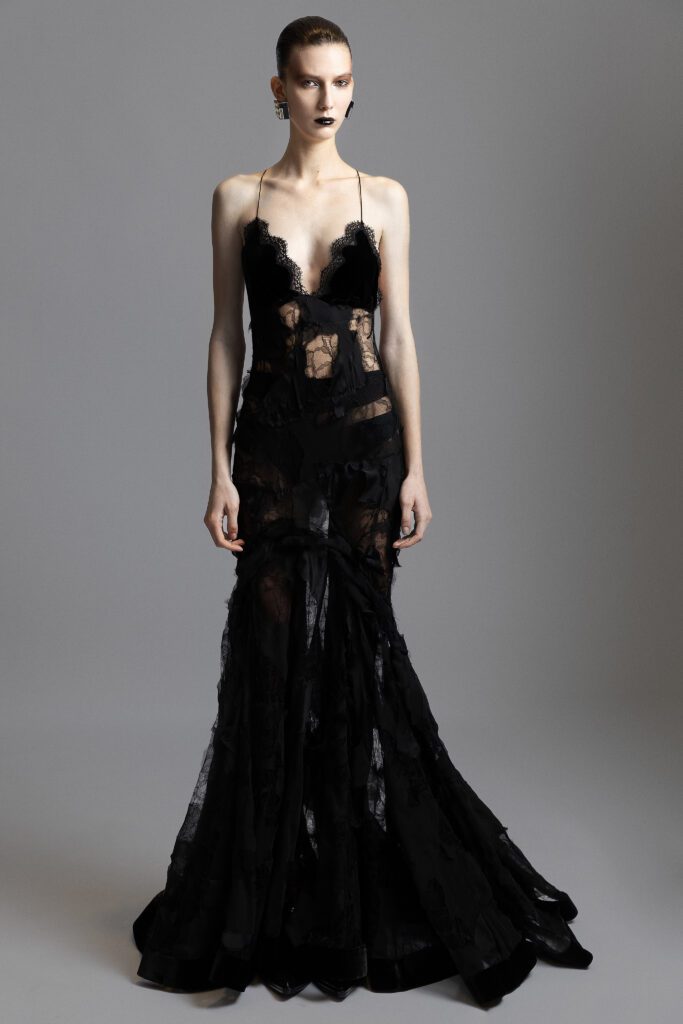
Roberto Cavalli AW26
Roberto Cavalli turned to black as its primary hue this season, infusing the collection with a surge of unabashed femininity: from crocodile jacquard sculpting sharp jackets to trousers with graphic detailing. At the heart of the lineup, Fausto Puglisi’s signatures came to the fore with bold intent: A-line skirts structured with crinolines to amplify the silhouette, gladiator dresses cut to sculpt the body, and sharply defined shirt-dresses.
by Chidozie Obasi