
From Autumn Issue 63
Glass speaks to rising star Phoebe Dynevor about her forthcoming film Anniversary, an unsettling Hollywood thriller examining the fault lines of society through a familial lens
Phoebe Dynevor doesn’t stray away from the unknown or unpredictable. With her big doe-like eyes and warm demeanour, it’s a surprise that she comes across more assertively than you’d expect. She’s a mixture of empathy, charm and intelligence.
“I’m interested in art as a way of starting a conversation and I think that’s what all good art does,” the 30-year-old British actor begins. “We need that right now. We need all the perspectives.”
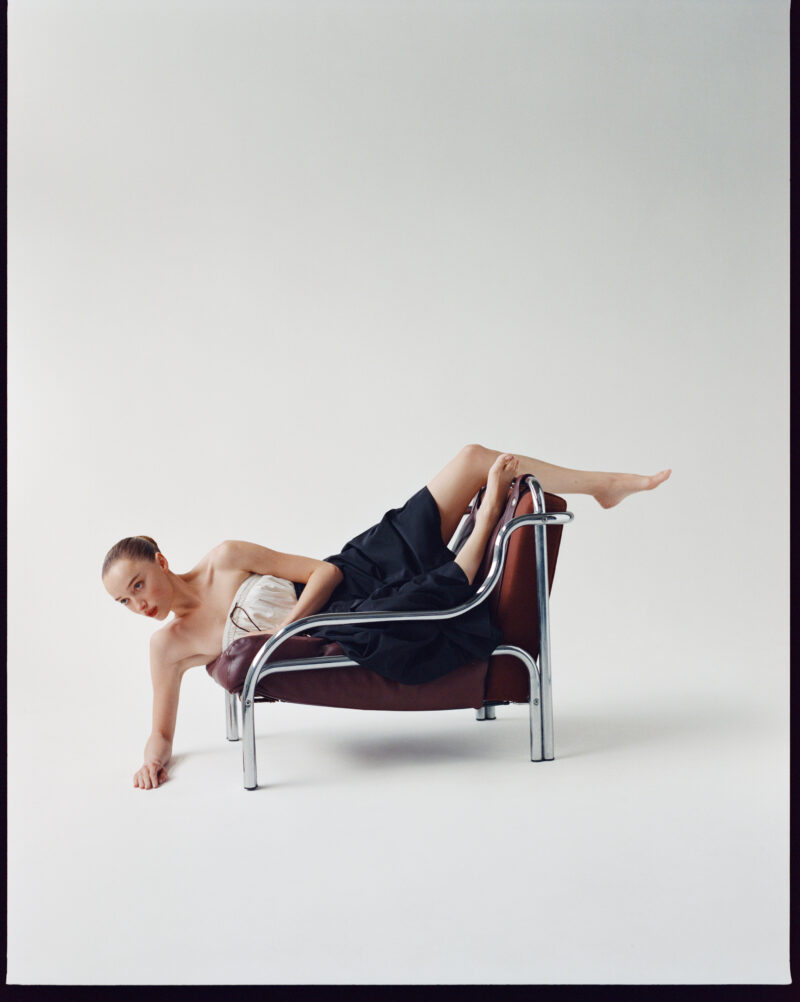
Photographer: Josefina Bietti
Dynevor has already lived several careers in the span of one. Born in Greater Manchester and educated at Cheadle Hulme School, she began acting as a young teen in the BBC drama Waterloo Road before ascending to global recognition as Daphne in Netflix’s Bridgerton. The role made her a household name and secured her a BAFTA Rising Star nomination, yet she has resisted the lure of typecasting.
In recent years, Dynevor has moved with purpose into film, balancing independent dramas such as The Colour Room and Fair Play with high-profile projects that include Inheritance and the forthcoming thrillers, Anniversary and Shiver. With further roles opposite Jake Gyllenhaal in Remain and Joseph Gordon-Levitt in Pendulum, Dynevor appears intent on rewriting the script for how a young British actor can shape a transatlantic career.
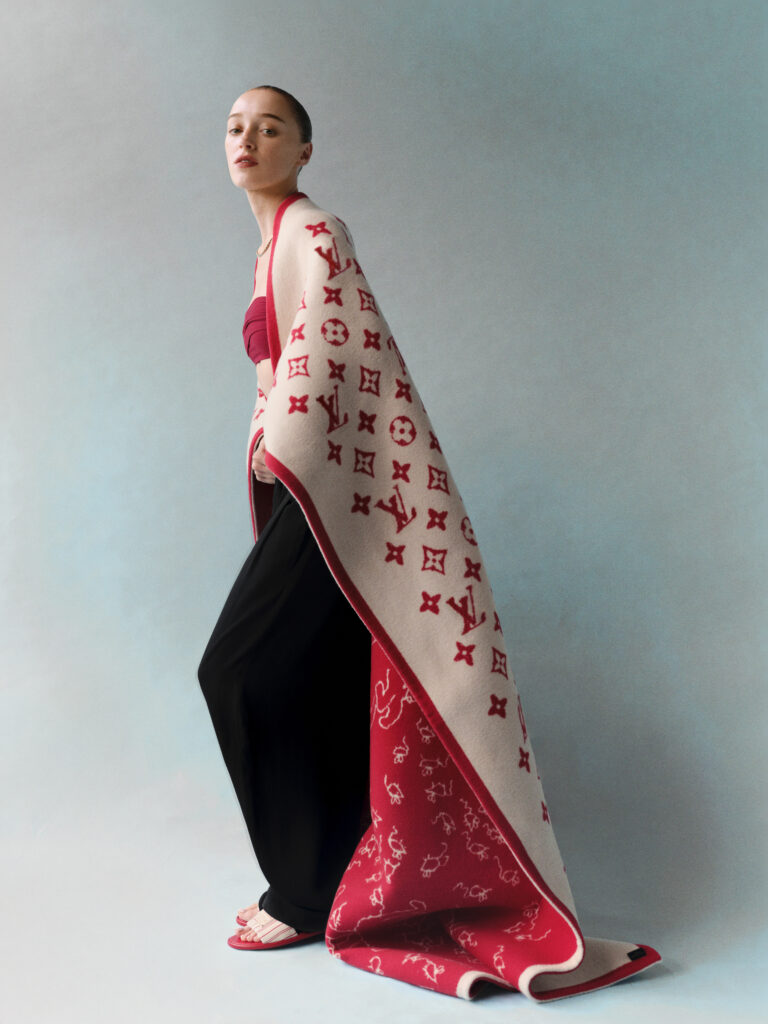
Photographer: Josefina Bietti
That instinct for reinvention is reflected in Anniversary, a tense psychological thriller directed by Jan Komasa and due out in cinemas in October. Dynevor plays Liz, a former student of Diane Lane’s Ellen Taylor, who re-enters the Taylor household through her relationship with their son, Josh, played by Dylan O’Brien. She joins the family as they mark Ellen’s 25th wedding anniversary, a celebration that begins in warmth but soon reveals deep fissures.
It emerges that during her time as Ellen’s student, Liz wrote provocative essays that challenged the prevailing order, ideas dismissed at the time as youthful posturing. Yet those early writings became the seed for a manifesto she later titled The Change. The book ignited a movement calling for “people-first” governance and pushed the nation into political upheaval. Within the intimate setting of the Taylor home, Liz’s presence takes on an uneasy gravity, embodying the fault line between intellectual provocation and the lived consequences of ideology.
“The script was coming off an old [US] presidency, so it was a different time [circa 2022]. Now, the film is being released three years after we shot it, and again, it’s a completely different time,” explains Dynevor.
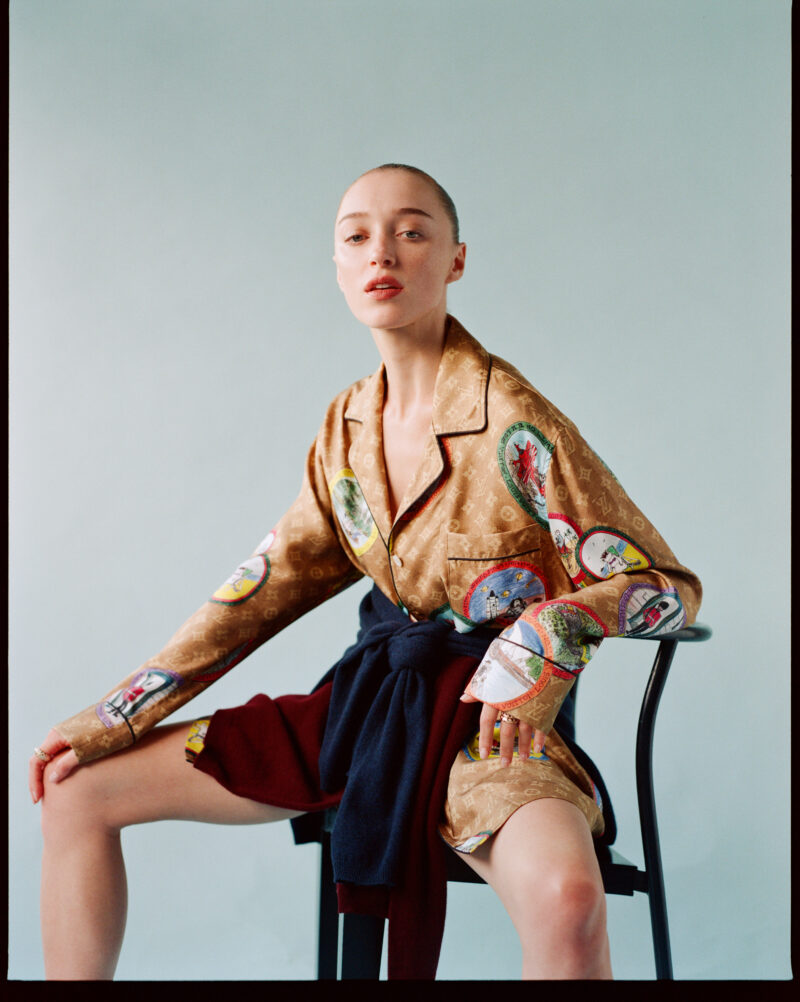
Photographer: Josefina Bietti
“What’s funny is that the film feels just as relevant now as it did back then. In fact, I think this is the perfect moment for it to be released into the world. Three years ago, the script felt extreme, almost dystopian. Now, when you watch it, it doesn’t feel that shocking. It feels like something that could be just around the corner.”
What was her way into Liz’s universe, though? How do you find space for a character that is the catalyst for the fall of society? ”Writing something like a manifesto is such a fascinating thing to do,” she replies earnestly. “Unlike many leaders in power now, I think there was a real intelligence behind it. It wasn’t out of greed or a need for power that Liz wrote this. It came from a place of wanting to help the world and of believing this would make a difference. Her manifesto came from a very honest place.”
Someone like Liz could realistically infiltrate modern-day society, Dynevor believes. “Liz is definitely an extreme example, but I think she’s a fascinating role because of what we’re talking about. Hers might be an extreme view, but it doesn’t involve violence. Well, maybe not violence, but it certainly involves control – extreme control. I think that reflects what we’re seeing today in many ways.”
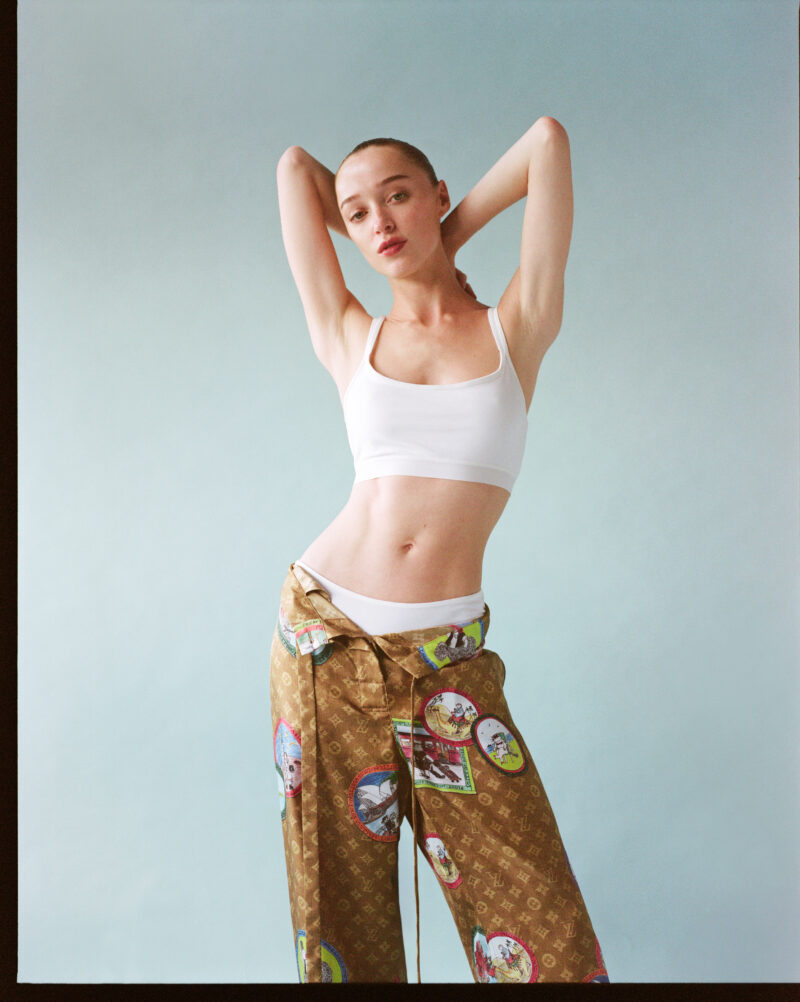
Photographer: Josefina Bietti
But the political infiltration into the family dynamic is where things get really interesting. “That’s a big part of her flaw, really. She’s so much on the outside that she can’t properly enter into the dynamics of the family. She’s always the outsider, and I think that becomes her Achilles heel in the end.”
And what about her relationship with Josh [Dylan O’Brien’s character]? “What was interesting to me was the way Dylan’s character […] becomes a power-hungry thing, something Liz herself never expected or wanted. When her voice is taken by men, it becomes something else altogether, something she is not even part of.”
She continues, “We talked about this a lot, and you see it in the film when you meet Josh. He’s very much a target, a victim, because he so desperately wants love from his mother and isn’t getting it. Liz sees that in him. She sees someone she can mould, and that’s the real reason she chooses him. She knows who his mother is, of course, but she also sees in him something that mirrors how she feels about Diane’s character – Diane’s lack of recognition and respect. It’s like, she didn’t see or respect Josh, and she hasn’t respected Liz, so they [Liz and Josh] can work together.
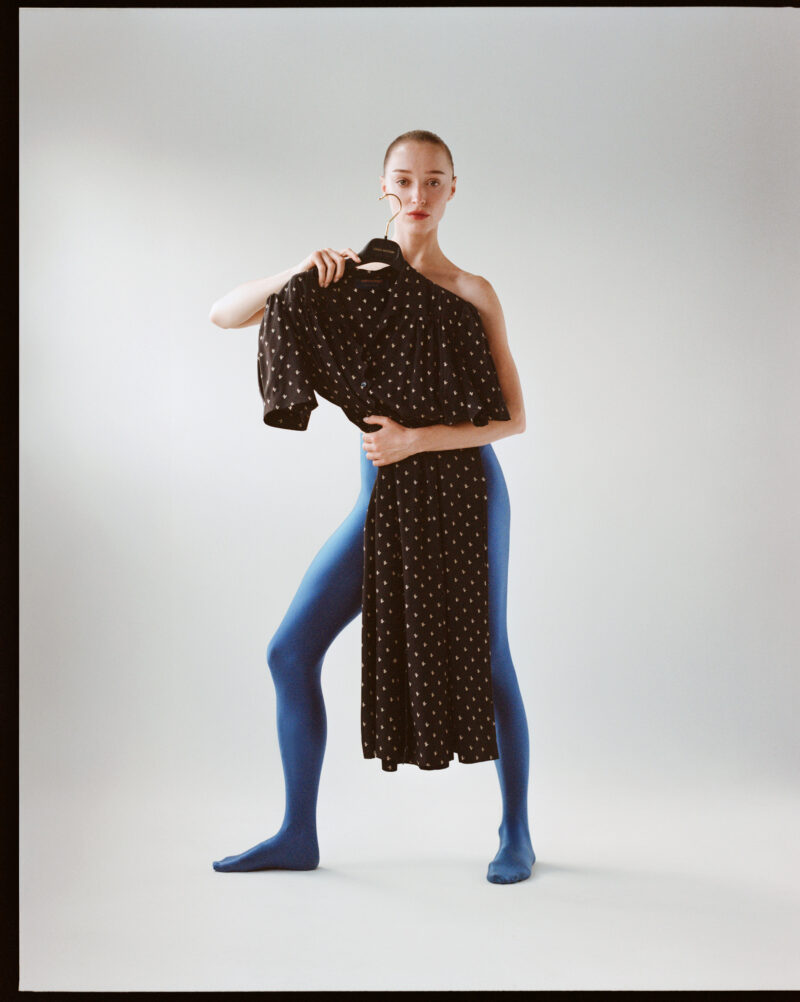
Photographer: Josefina Bietti
“By the end of the movie, this dynamic becomes very toxic and terrifying because Josh has so little going for him. He’s trying to be a writer, but he’s not particularly good. He’s not a strong speaker, nor does he have a compelling personality. Liz sees someone she can mould, and by the end, he’s falling back on her manifesto, using it to justify control, domination and even violence, because he has nothing else to rely on,” Dynevor explains.
It’s fascinating how a concept created by a woman can become something entirely different once it falls into the hands of men, she muses, adding that women in leadership don’t generally come from a violent headspace.
“I think empathy is so undervalued now,” laments Dynevor. “For some reason, there seems to be this idea that being empathetic is a weakness. Liz is intriguing because I do think she lacks empathy, and yet, at the moment, that almost comes across as a strength. I don’t understand why, because empathy is so important.”
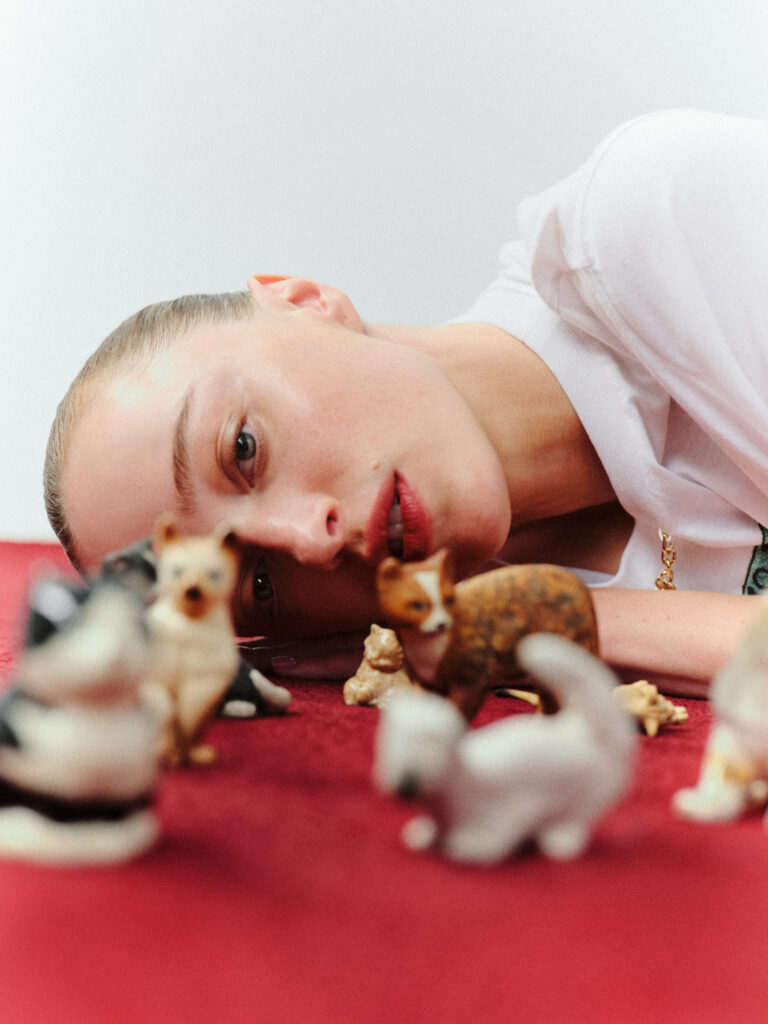
Photographer: Josefina Bietti
She adds, “To be a leader of anything – whether it’s running a company, directing a film, being a prime minister or president – you have to have empathy. No one should be in power without it. Yet for many years, empathy has been seen as a weakness, and I think that’s one of the reasons women are still not in positions of power as much as they should be.
“Everyone deserves empathy, everyone deserves a home, and everyone deserves to live in peace. We shouldn’t be picking and choosing who deserves that. That’s the flaw of society right now – putting certain people above others. It’s just not right,” she concludes, driving her point home.
Dynevor echoes the struggles that we have as a society: “What I love is that this film isn’t taking a political stance, and that’s the beauty of it. It’s saying: let’s be very careful, let’s tread carefully, let’s not be enemies, let’s stay together.”
Anniversary is more than a movie; it’s a state of mind. And the takeaway? “Lack of love makes you power hungry.”
by Adina Ilie
Anniversary is available to watch in US theatres from October
Photographer: Josefina Bietti
Art Director and stylist: Esperanza De La Fuente
Hair: Dayaruci using OLAPLEX
Makeup: Gina Kane using VINTNER’S DAUGHTER for skincare and LOUIS VUITTON La Beauté for beauty
Set Designer: Thomas Conant
Props and furniture: Brother Archival
Lighting assistant: Arturo Sylar
Styling assistant Max Ketterer
Talent: Phoebe Dynevor
All clothing, shoes and accessories worn throughout LOUIS VUITTON Travels with Grace Coddington