
THROUGHOUT history, the most effective musical moments have not always been the grandest in scale or scope. At times, performances that lean too heavily on routine or convention risk losing both emotional depth and expressive urgency. In Milan, however, the atmosphere permeating the city’s cultural scene has found fertile ground, unfurling narratives that stretch beyond convention and deliver a powerful succession of invigorating performances.
Verdi’s Requiem, performed by the Milan Symphony Orchestra, returned to its home in Largo Mahler to confront this sacred symphonic work under the baton of Music Director Emmanuel Tjeknavorian, marking the first time he has conducted the ensemble in this extraordinary score. The performance also celebrated the twenty-fifth anniversary of the orchestra’s engagement with Verdi’s masterpiece, renewing a profound connection to the composer and to the musical history of Milan itself.
“Verdi’s Requiem is a drama of the soul: sacred, vulnerable, deeply human,” Tjeknavorian reflected, noting how each page resonates with anguish, wonder, and a yearning for peace. “Performing this work with an orchestra, choir, and soloists of such calibre means touching something that transcends us, even if only for a moment.”
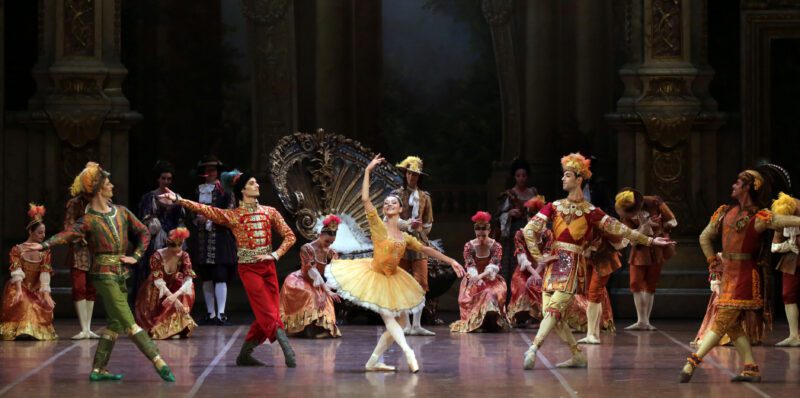
2019 Manni con Del Freo Agostino Cazzato Starace. Photograph: Brescia e Amisano ©Teatro alla Scala
Another triumphant return came with Daniel Barenboim – one of the greatest living musicians – who stepped back onto the stage of La Scala last month to inaugurate the first symphonic programme of the new season. Barenboim served as the theatre’s music director from 2011 to 2014, a role that cemented a long-standing relationship of artistic synergy and yielded interpretations of some of the most significant works in the symphonic canon.
His return was devoted to a composer particularly close to him: alongside Beethoven’s Symphony No. 5, Barenboim conducted the Violin Concerto in D major, Op. 61, accompanying Georgian violinist Lisa Batiashvili, named Musical America’s Instrumentalist of the Year in 2015 and celebrated for her virtuosity and profound sensitivity. Composed in 1806 during an exceptionally productive period between Beethoven’s Fifth and Sixth Symphonies, the concerto remains one of the most influential works in the violin repertoire, admired for its lyrical string writing, evocative virtuoso passages, and expansive, soaring architecture.
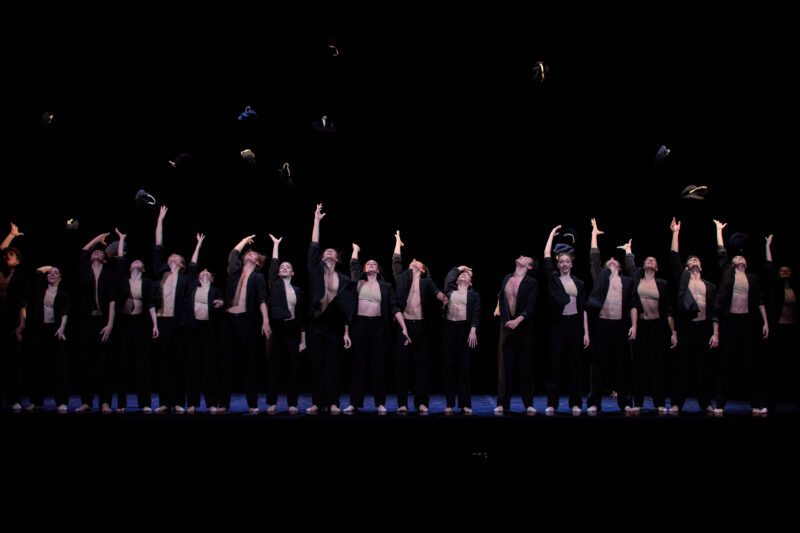
Rossini cards
La Scala’s Ballet Academy, under the direction of Frédéric Olivieri, presented an evening at Pavia’s Teatro Fraschini that offered students the opportunity to engage with a wide range of demanding and stylistically diverse choreography. The programme ranged from the classical refinement of Marius Petipa’s Paquita divertissement to Mauro Bigonzetti’s Rossini Cards and Shahar Binyamini’s Bolero X.
Particularly noteworthy was the stripped-back theatricality paired with performances that oscillated between poised elegance and the occasional, revealing imperfection: an honest reflection of dancers in formation, guided by the artistic director’s vision. The choreography demanded technical sophistication, encompassing complex chassés, lifts, and arabesques en relevé.
Maria Vittoria Bandini’s delicate dancing stood out: her control and line possess a winsome softness and elegance, and her leading roles radiated warmth and grace. Jorge Sanz and Michele Forghieri also delivered powerful, expressive performances marked by sumptuous movement—no small achievement, considering they are grade-eight students. Bigonzetti’s Rossini Cards pulsed with triumphant rhythms and vibrant tempi, embracing theatricality through graphic gestures and playful pacing. This season, there appears to be a clear affection for drama across the dance repertoire.
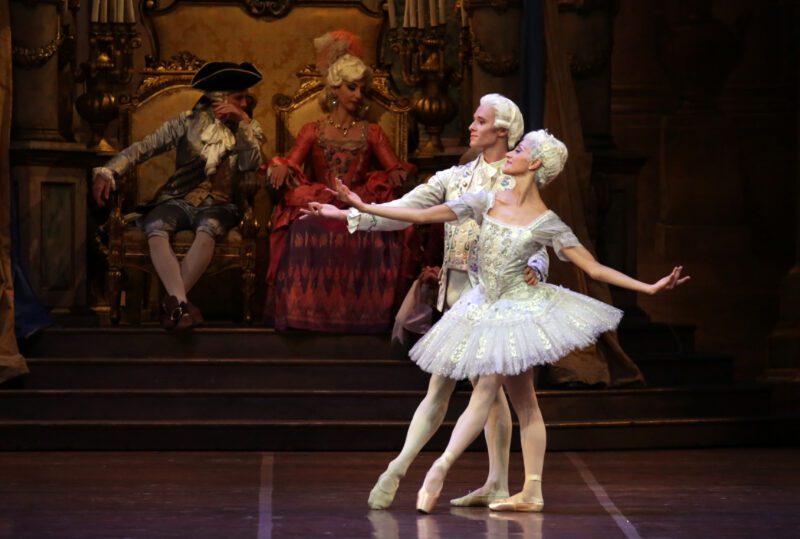
2019 Nicoletta Manni e Timofej Andrijashenko. Photograph: Brescia e Amisano ©Teatro alla
That sense of joy extended to The Nutcracker, performed by students of La Scala’s Academy: a timeless classic that captures the glistening pleasures of Christmas. Through its twinkling, youthful score, it transports audiences to an idealised childhood that perhaps never existed, yet remains a source of quiet longing. Clara’s world is prosperous, hermetic, and safe; even as the characters journey into the fantastical realms conjured by Drosselmeyer, they never truly leave the cinnamon-scented, clock-ticking security of home. Everything encountered feels like a transfiguration of the familiar into the magical, glowing with fresh energy and winter warmth.
That glow deepens into sumptuous splendour with Sleeping Beauty, which opens La Scala’s new ballet season as one of the cornerstones of the classical repertoire. The coming months mark an especially busy period for the company: immediately following these performances, the Corps de Ballet will travel to Beijing, returning with two productions twenty years after La Scala’s first tour of China and seven years after its most recent visit to the Chinese capital.
At the end of January, the fifth edition of the Gala Fracci will take place, coinciding with the 90th anniversary of the birth of the great Italian artist and the fifth anniversary of her death. It was at La Scala that Rudolf Nureyev entrusted the debut of his Bella in 1966; sixty years after that premiere, and six years after its last staging, the ballet returns in the production created for La Scala in 1993 by Oscar-winning designer Franca Squarciapino, resplendent in its Versailles-inspired settings and lavish costumes.
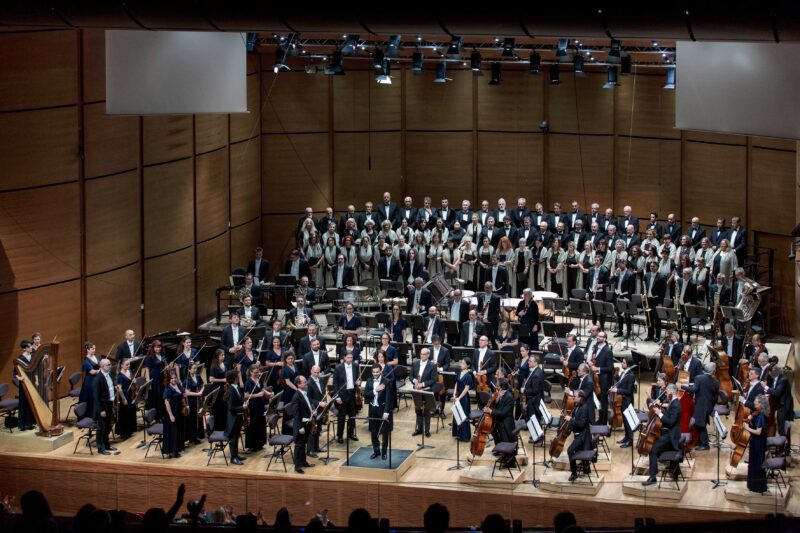
Tjeknavorian dirige Orchestra e Coro Sinfonici di Milano in Borodin-Prokof. Photograph: Angelica Concari
The opening performance on Thursday 18 December is dedicated to the late designer and entrepreneur Giorgio Armani, whose long and prolific collaboration with the theatre reflects a shared commitment to excellence and international vision. “It’s a great honour to be here, and I’m a bit emotional,” said Anoushka Borghesi, Global Communication Director at Giorgio Armani, at an early-December press conference. “I was lucky to work at his side for 15 years, and I think I’ve been to La Scala at least a dozen times with him.”
Christophe Rousset—one of the leading figures in historically informed performance—conducted the Monteverdi Choir and the English Baroque Soloists in a landmark presentation of Georg Friedrich Händel’s Messiah, performed in its entirety at La Scala for the first time. (The theatre’s chronology notes a performance conducted by Hans Weisbach on 22 October 1944 at the Teatro Lirico, where activities were relocated after La Scala suffered bomb damage.)
Composed in 1741, Messiah emerged from Händel’s collaboration with the erudite librettist Charles Jennens, who assembled the text exclusively from biblical sources, notably the Book of Isaiah, the Psalms, and passages from the Gospels and Epistles. Its structure alternates recitatives, da capo arias, and monumental choral movements, where the rhetorical force of the work is most powerfully concentrated.
La Scala’s traditional Christmas Concert will be conducted by Lorenzo Viotti, presenting an all-French programme that pairs the orchestral suite from Francis Poulenc’s Les Animaux modèles with Charles Gounod’s Messe solennelle de Sainte-Cécile for soloists, choir, orchestra, and obbligato organ. The soloists include Krassimira Stoyanova (soprano), Julien Behr (tenor), and Markus Eiche (bass).
Poulenc’s suite—first performed in 1942 and inspired by Paul Éluard’s 1920 poetry collection Les Animaux et leurs hommes, les hommes et leurs animaux—draws on themes from Jean de La Fontaine’s fables, personifying animals through scenes that range from ironic to deeply moving, set against the backdrop of an 18th-century Burgundian village. This vivid symphonic work is counterbalanced by Gounod’s Messe solennelle de Sainte-Cécile, first performed in 1855, in which the composer distances himself from theatrical models of liturgical music and instead invokes ancient Gregorian chant—the Mass opening with the three-note motif Crux fidelis, rooted in medieval hymnody.
by Chidozie Obasi