
MILAN, ITALY — After centuries of artistry that remains alive and kicking – hurricanes of leaping and tightly honed technique shaped by world-renowned creative trailblazers – you might think it exhausting to be immersed in productions that radiate joy, light, and dramatic depth.
Yet Milan’s famed La Scala returns with the third production of its new ballet season. Fresh from a pulsating cycle of Wagner’s Ring, a poignant gala in memory of Carla Fracci, and bracing symphonic concerts, the theatre now presents the eagerly awaited triptych by McGregor, Maillot, and Naharin.
Premiering from March 18 to 28, 2026 (with an additional charity performance on March 31 in aid of the Niguarda Hospital Foundation), the programme is rich in new elements that continue to shape the theatre’s corps de ballet. Wayne McGregor returns following his previous collaboration with Frédéric Olivieri during his earlier tenure as artistic director. This partnership is renewed with one of McGregor’s most iconic works, Chroma, making its Italian stage debut twenty years after its creation.
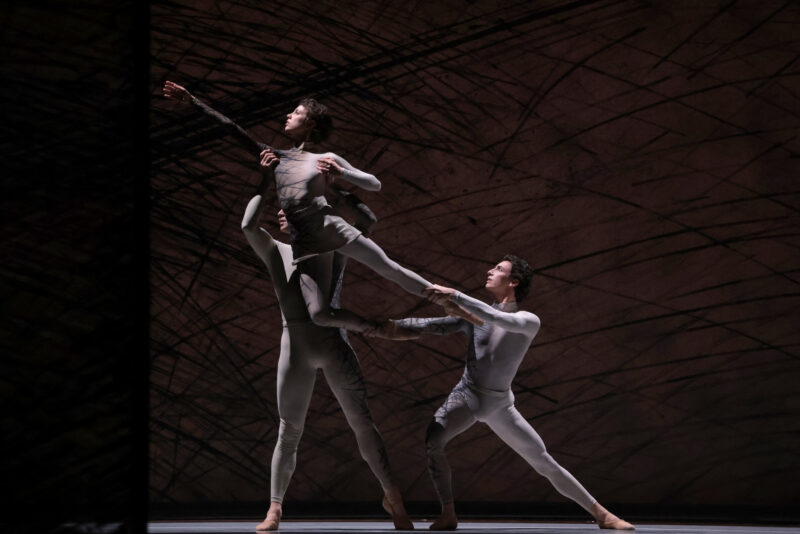
Dov’è la luna (2026) | Photograph: Brescia e Amisano
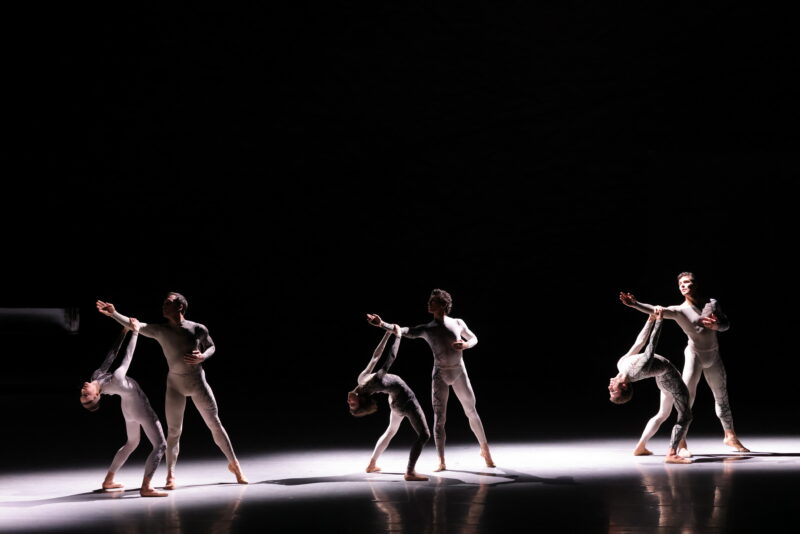
Dov’è la luna (2026) | Photograph: Brescia e Amino
The name of Jean-Christophe Maillot appears in La Scala’s ballet programme for the first time, bringing his distinctive artistic vision with Dov’è la luna, presented in its Italian premiere and featuring étoile Roberto Bolle in the opening performances. The triptych concludes with Minus 16, a striking example of Ohad Naharin’s originality and innovative movement language.
Appearing at La Scala for the first time, it challenges dancers to push their limits while breaking down the barriers between artist and audience, creating an intense and joyful experience for both. Through the stylistic originality of three of the greatest choreographers of our time, the essence of dance is celebrated—stripped of excess—alongside the versatility of La Scala Ballet’s artists, from étoiles to principal dancers, soloists, and the new generation, as they encounter, some for the first time, three acclaimed and influential contemporary choreographers.

Wayne McGregor’s Chroma, Teatro alla Scala (Nicoletta Manni, Timofej Andrijashenko), Milan. Photograph: ©Brescia e Amino (2026)
Chroma marks the return of Sir Wayne McGregor to La Scala, where he has been acclaimed since 2006, when he directed and choreographed Purcell’s opera Dido and Aeneas; in 2019, with the UK premiere of Woolf Works; and in 2022, with a diptych pairing AfteRite with LORE, created specifically for the company. Originally created for The Royal Ballet in 2006 and winner of the following year’s Olivier Award for Best New Dance Production, Chroma explores the expressive power of the human body and its capacity to convey profound emotion and thought.
The work, which contributed to McGregor’s appointment as resident choreographer of The Royal Ballet, has since entered the repertoire of leading companies worldwide. Its soundtrack—combining Joby Talbot’s original score with arrangements of songs by The White Stripes—intertwines with the essential, minimalist designs of architect John Pawson.
Jean-Christophe Maillot, at the helm of Les Ballets de Monte-Carlo for forty years—a milestone celebrated this year—brings Dov’è la luna, an intimate work created in 1994, to La Scala. For seven dancers, it explores shadow and light in search of the bodies concealed within them. This monochromatic piece, rich in chiaroscuro, challenges and expands the vocabulary of classical ballet, pushing it to its limits.
Ohad Naharin, one of the most influential figures in contemporary dance, has developed a unique movement language over a career spanning more than forty years and is acclaimed worldwide. He is currently resident choreographer and former artistic director (1990–2019) of the Batsheva Dance Company, founded in 1963 by Baroness de Rothschild with artistic guidance from Martha Graham, who later invited Naharin to join her company in New York, where he made his choreographic debut.
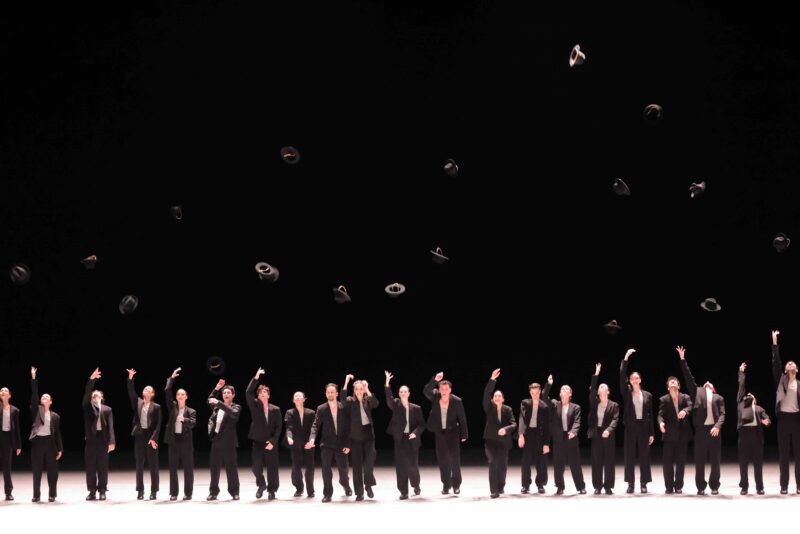
MINUS 16. Photograph: Brescia e Amisano (2026)
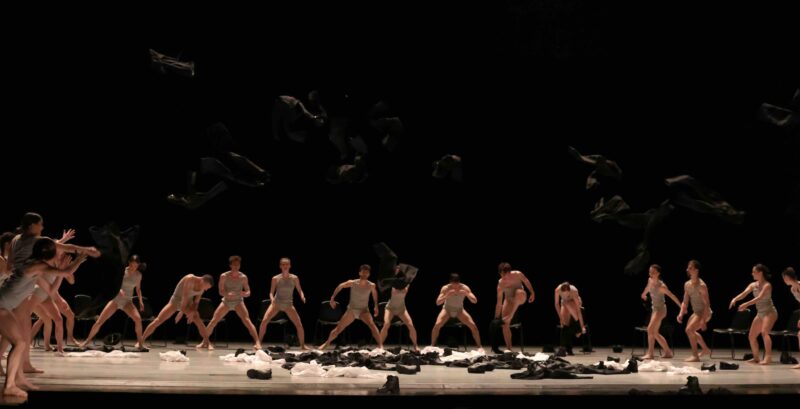
MINUS 16. Photograph: Brescia e Amisano (2026)
Minus 16, which premiered with Nederlands Dans Theatre 2 in 1999, draws on excerpts from Naharin’s earlier works, including Mabul (1992), Anaphaza (1993), and Zachacha (1998). A cast of twenty-three dancers performs choreography that shifts between delicate, everyday gestures and explosive physicality, set to an eclectic soundtrack ranging from Dean Martin to mambo, techno, and traditional music.
It also features Naharin’s celebrated composition “Echad Mi Yodea” (“Who knows one?”), In which dancers follow a repetitive rhythm while reciting thirteen verses in unison. With its unpredictability and sense of play, Minus 16 brings a distinctive and ever-evolving energy to La Scala’s repertoire.
by Chidozie Obasi