
MILAN, ITALY — As economic and social shifts accelerate, the creative world provides relief for industry members and enthusiasts. Milan Design Week (Salone del Mobile) invigorated Milan, Italy’s fashion hub, as creative houses blended historical traditions such as classical Italian design techniques with new, innovative concepts from emerging designers.
As global instability and political tensions persist, designers re-examine ideas of physical space and structure in their works. Creations include large-scale installations that aim to comfort visitors and more abstract objects offering unique interpretations of form. GLASS highlights the standout designs from the 2026 edition.
MARNI
Famed Milanese bakery Cucchi and Marni joined forces with Marni during Design Week, transforming Cucchi’s space to create a strong dialogue between the two brands—identities deeply rooted in the city of Milan. The partnership aimed to build a coherent and recognisable union: on one side, the history of the pasticceria; on the other, Marni’s daring elegance, embodied by the new creative direction of Meryll Rogge.
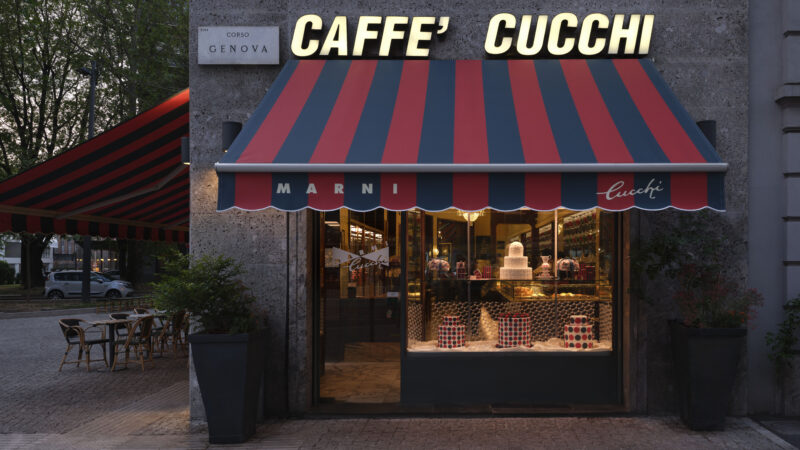
Cucchi x Marni
From this encounter emerged a shared visual vocabulary imagined by RedDuo: red and green alternate and overlap in retro-inspired polka dots and striped patterns, evoking the memory of the space while reflecting the brand’s sophisticated irony. This fusion of identities culminates in the logo, conceived as a green and red bow tie: an emblem uniting the two worlds.
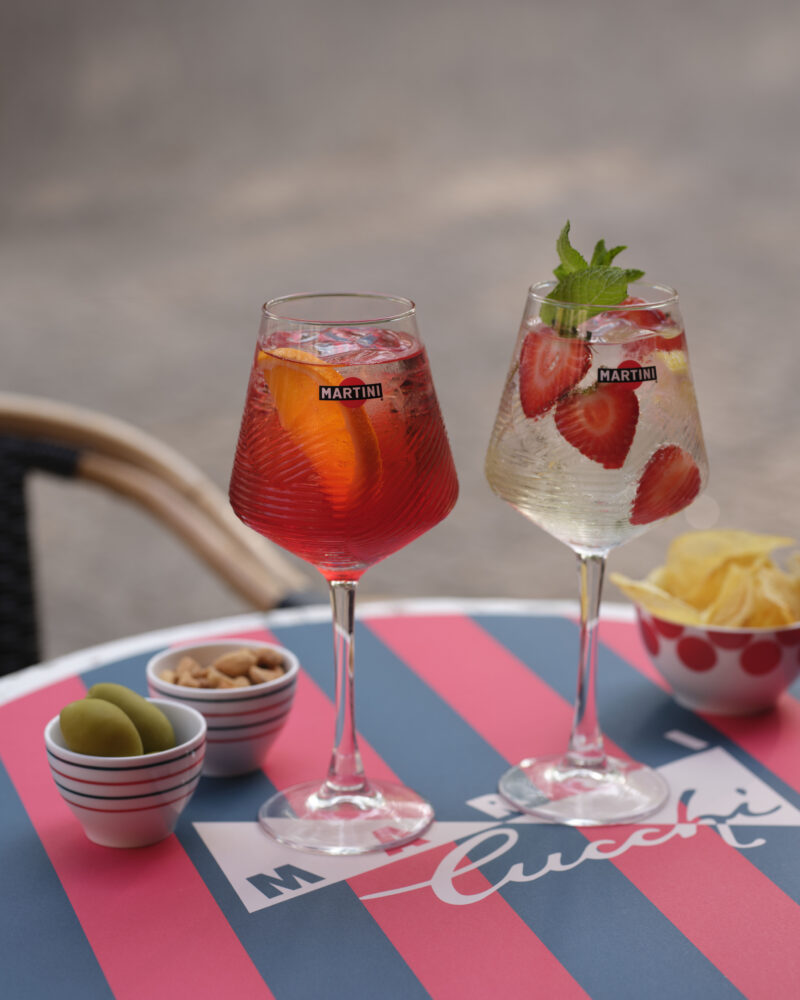
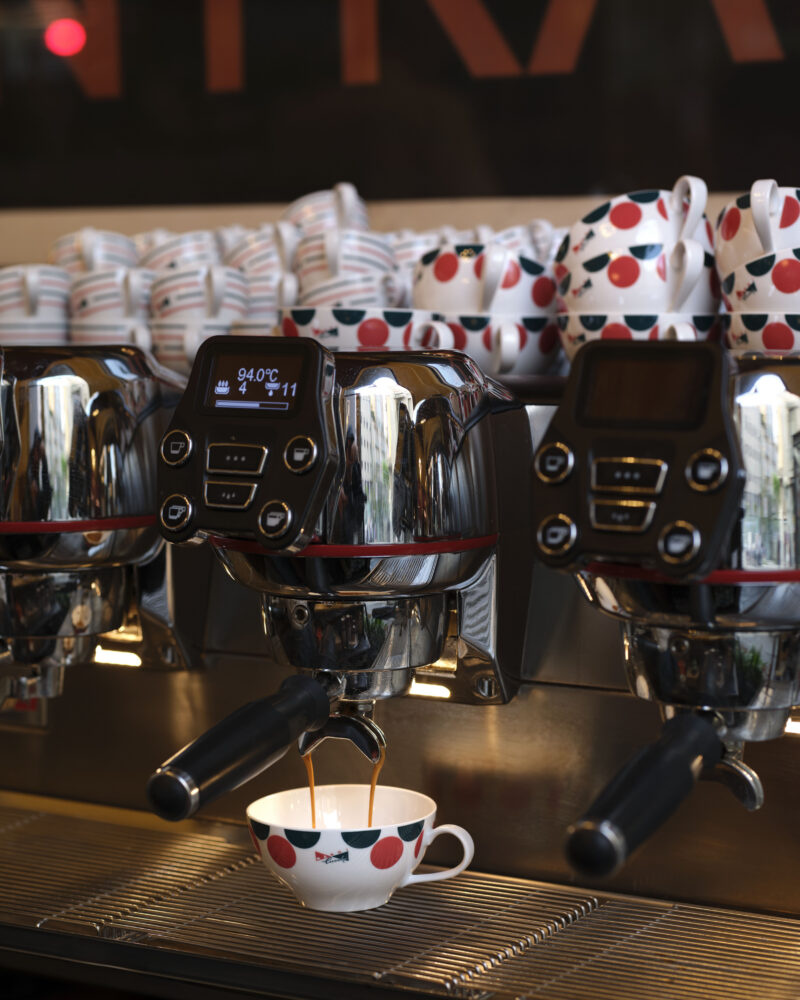
Cucchi x Marni
JIL SANDER
Reference Library was the exhibition conceived by Apartamento in collaboration with Jil Sander. It brought together sixty books from around the world, selected by a wide range of contributors: writers, designers, artists, architects, filmmakers, thinkers, and makers.
The installation, designed by Milanese architecture practice studioutte, took place at the brand’s showroom in the centre of Milan. Chrome lecterns stood in rows, each illuminated by a warm reading light, with reflections echoed by a mirrored wall. It was a space designed for close looking, for moving from one title to the next with nowhere else to be.
Upon registration, with sixty slots available per hour, each visitor entered the library and was given a pair of white gloves – a small ritual that altered how one handled objects, encouraging care and attention. While the books remained, the gloves were for visitors to keep: a subtle relic of time well spent immersed in the arts.

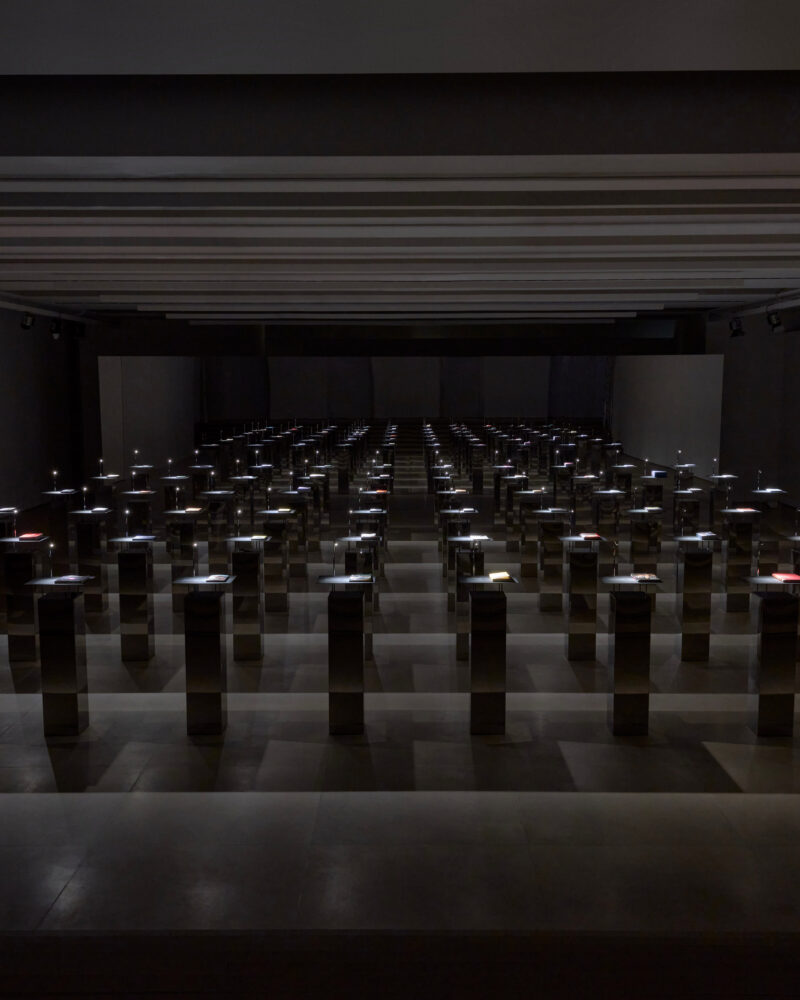
Jil Sander x Apartamento
FENDI
At Fendi, Maria Grazia Chiuri explored timeless classics during Design Week, as Milan’s Palazzo Fendi presented one of the house’s greatest icons. Nearly thirty years after its debut, the Baguette Re-Edition sees Chiuri move beyond simply revisiting the bag; she reimagines it, shedding new light on its form.
To relaunch the bag today, while multiplying its variations, is to suggest that every woman can be what she wants. There are no fixed models; instead, Chiuri invites women to invent their own. Fashion here is not just a market, but a message: an evolving idea rather than a static object of desire. Personality does not triumph over beauty; personality is beauty. And beauty itself has many facets: sparkling, severe, rigorous, flamboyant, chaotic, orderly, exaggerated, and unapologetic.
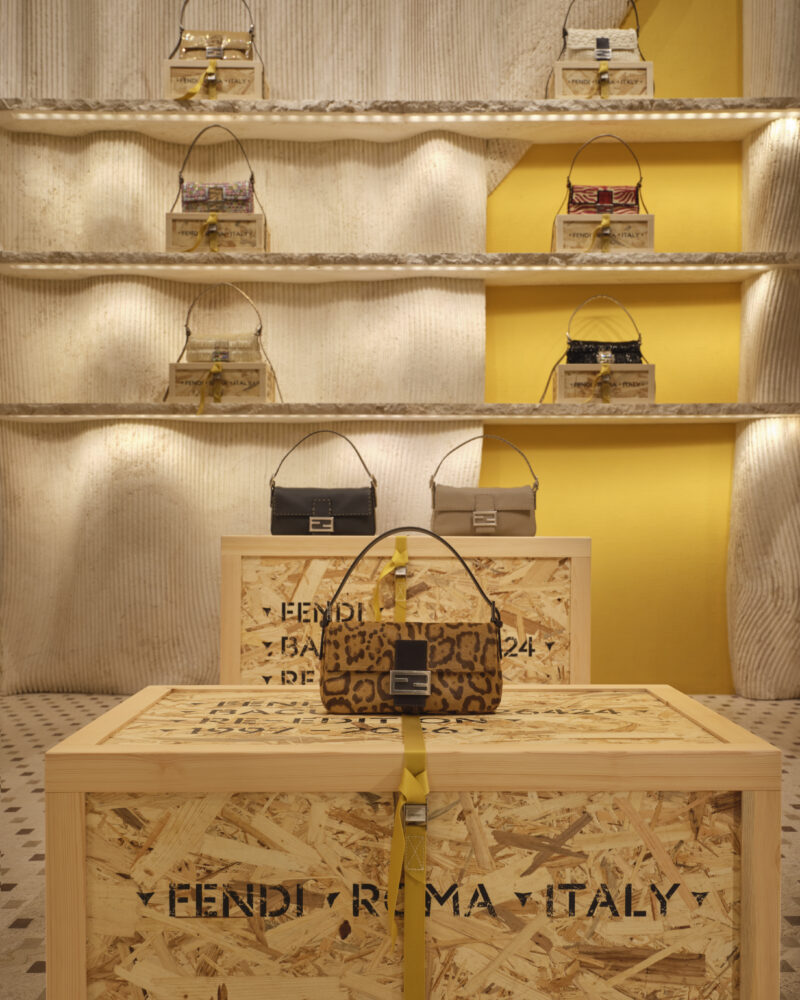

Fendi at Design Week


Fendi at Design Week
GUCCI
To what extent can creativity’s boundaries be pushed? For Gucci, the search for creative expression is a given. Titled Gucci Memoria, the immersive exhibition curated by Demna at Milan’s Chiostri di San Simpliciano unfolded as a continuous narrative tracing the House’s 105-year history while remaining anchored in its Florentine origins.
Across the cloisters, installations ranged from tapestries to a botanical environment inspired by the Flora motif, alongside interactive elements such as custom-built vending machines. Together, they formed a layered scenography where mediums entered into dialogue.
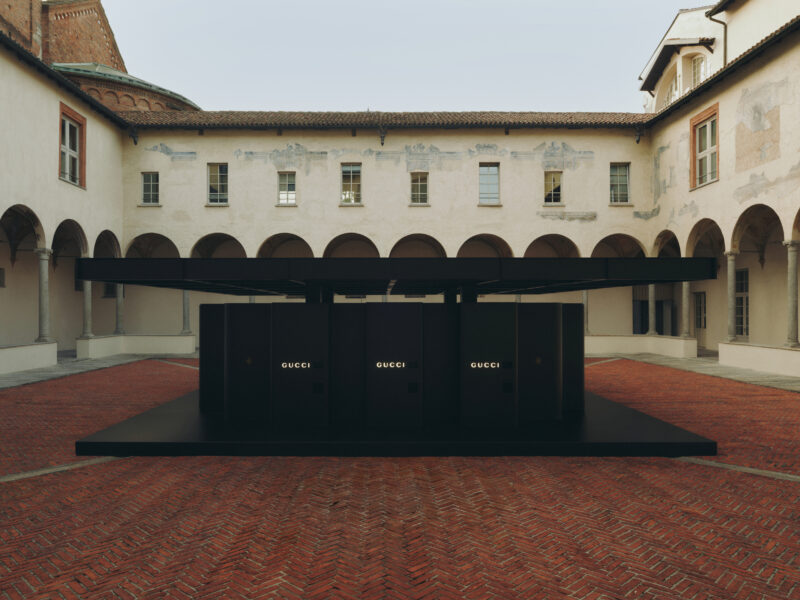
Gucci Memoria

Gucci Memoria
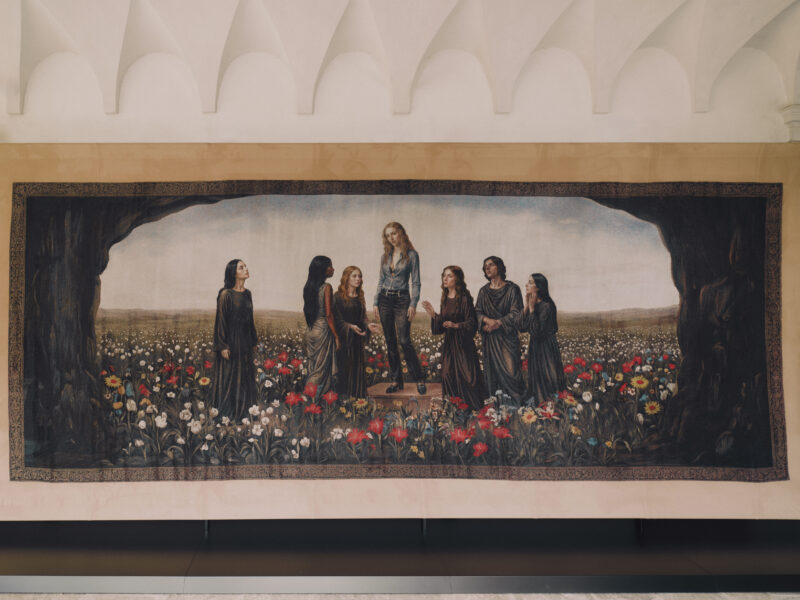
Gucci Memoria
At its core were twelve tapestries conceived as a visual chronicle of the House: from Guccio Gucci’s formative years at London’s Savoy Hotel to the founding of the Florentine workshop and its evolution into a global symbol of luxury. The narrative culminates in the present, with the final works framing the House’s direction under Demna, bringing the story full circle through craft, experimentation, and collective authorship.
BOTTEGA VENETA
Bottega Veneta collaborated with Korean artist Kwangho Lee during this year’s Design Week, presenting a site-specific light installation in its Via Sant’Andrea store alongside citywide activations.
Titled Lightful, the installation combined Lee’s signature suspended woven forms with new light sculptures crafted from Bottega Veneta leather fettucce (strips). In bespoke shades of black and green selected by Creative Director Louise Trotter, each piece took on a unique, organic shape reflecting the possibilities of Lee’s process.
As woven elements interacted with light and shadow, Lightful expanded the artist’s ongoing exploration of materiality through illumination. It marks the brand’s third collaboration with Lee under Trotter’s direction.

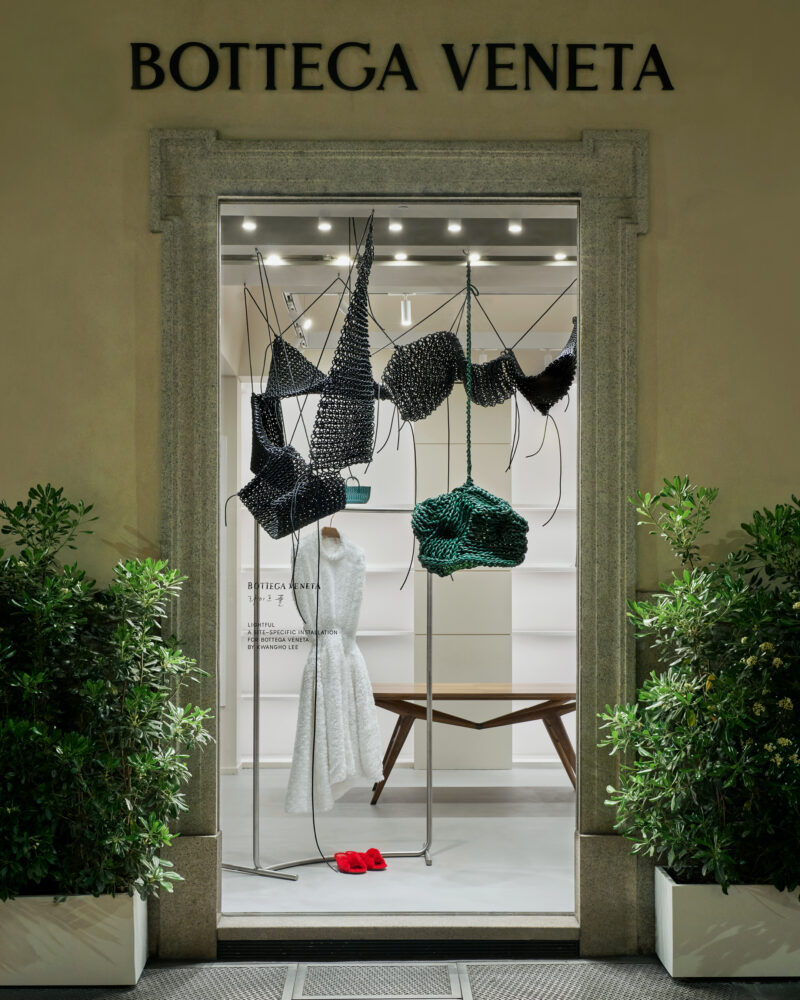
Bottega Veneta x Kwangho Lee

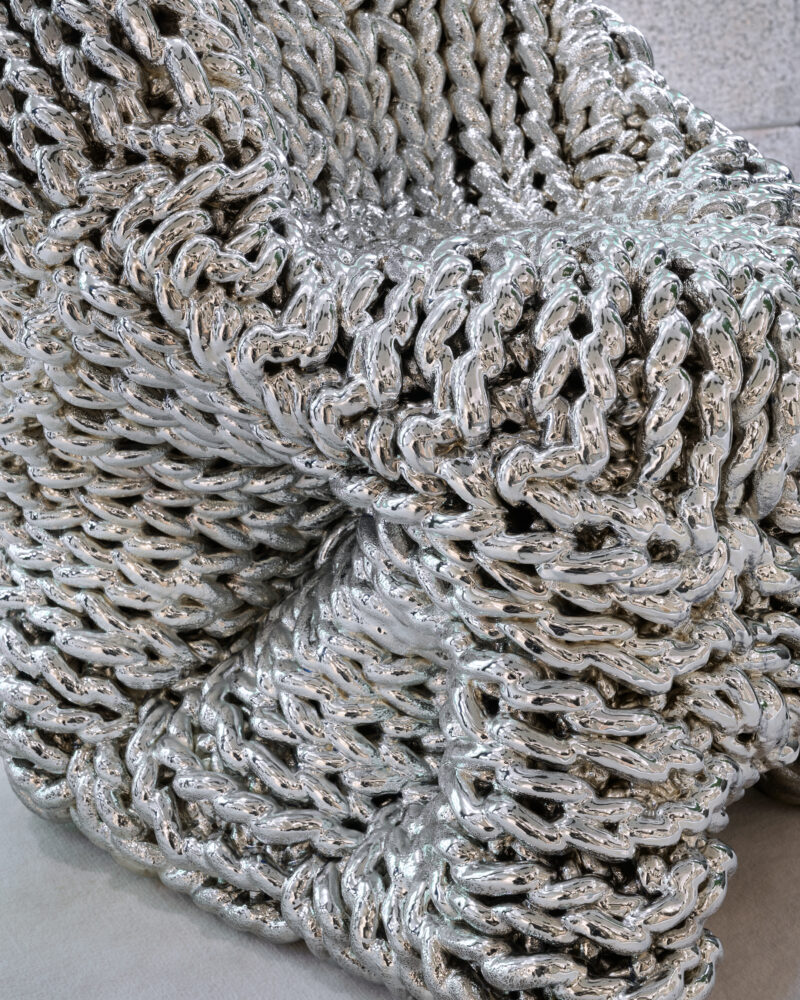
Bottega Veneta x Kwangho Lee
LOUIS VUITTON
Louis Vuitton presented its new Objets Nomades collection alongside its iconic trunks at Palazzo Serbelloni. The historic interiors provided a sumptuous setting, guiding visitors through a journey from Art Deco to the present day.
In the Giangaleazzo room, guests were transported back in time, inspired by interior designer Pierre Legrain. The House paid tribute to this leading Art Deco figure through new pieces and archival objects—from signed illustrations to early trunks and travel accessories, displayed within a 1920s train setting that echoed its heritage in trunk-making.


Louis Vuitton Objets Nomades
At its Via Montenapoleone store, Louis Vuitton also unveiled the Malle Courrier Lozine Maison de Famille, a trunk crafted entirely from stained glass, inspired by the Art Nouveau motifs of the family home in Asnières-sur-Seine.

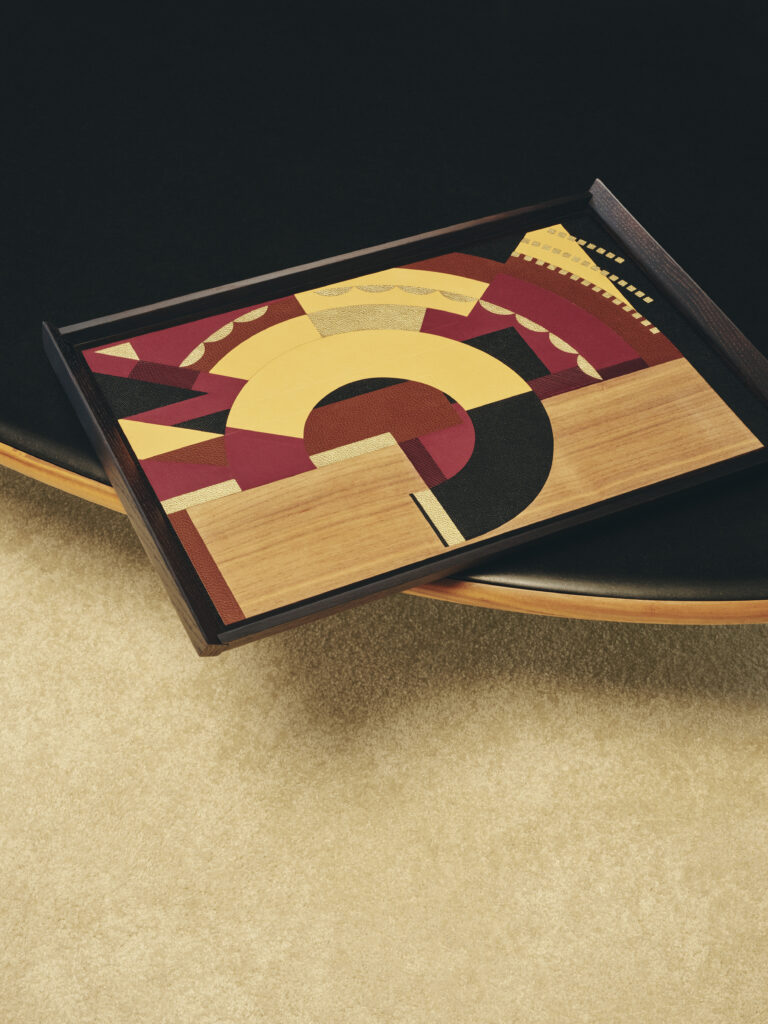
Louis Vuitton Objets Nomades
TOD’S
Tod’s presented a special project celebrating the masters of 20th-century Italian design, honouring the country’s creative and artisanal excellence. At its centre was the Gommino: reinterpreted through the aesthetic codes of four iconic works.
Inspired by designs from Joe Colombo, Gaetano Pesce, Michele De Lucchi, and Achille & Pier Giacomo Castiglioni, the project resulted in four collectable interpretations of the Gommino. The initiative also featured live demonstrations by Tod’s artisans, offering insight into the craftsmanship behind the iconic shoe.

Tod’s at Design Week
BOSS
In a first for the iconic Togo, a limited-edition fireside chair and footstool reimagined the design through the lens of BOSS tailoring. Combining two tones, textures, and design languages, the piece introduced a distinctive mix of leather and soft textile upholstery, finished with contrast stitching inspired by suiting.
Handmade by Ligne Roset’s specialist artisans, the design retains Togo’s signature pleating while offering a contemporary interpretation that balances structure, craftsmanship, and comfort.
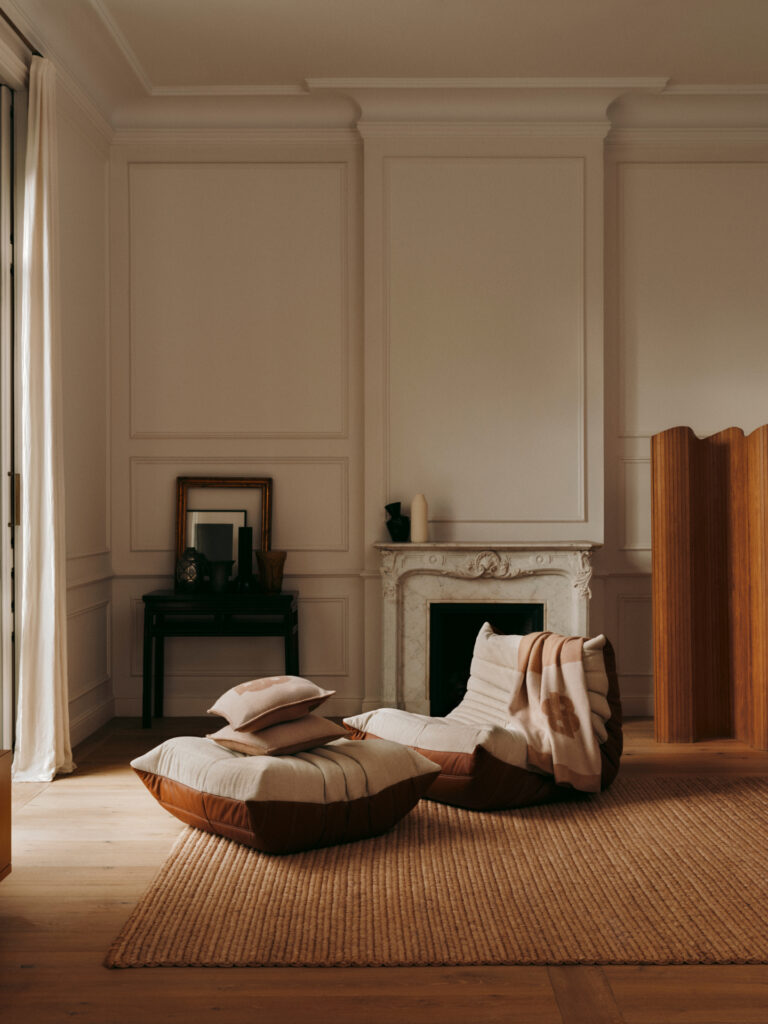

BOSS at Design Week
HERMÈS
Hermès presented an installation composed of wooden and plaster cubes, constructed through subtraction to evoke a conceptual, almost imagined space. The collection unfolded as a coherent ensemble of objects, from handwoven cashmere throws to hammered metal pieces in the Palladion line, where light itself became material through craftsmanship.
Within this context, the House collaborated for the first time with British designers Edward Barber and Jay Osgerby, whose work bridges functionality and formal exploration.

ISSEY MIYAKE
Issey Miyake’s Milan store hosted The Paper Log: Shell and Core, an experimental project by Satoshi Kondo in collaboration with Ensamble Studio.
The installation explored the reuse of compressed rolls of pleated paper – byproducts of the brand’s signature garment-making process – transforming them into objects and furniture prototypes. Named for their resemblance to tree trunks, these “paper logs” evoke the passage of time through their layered, ring-like structure.

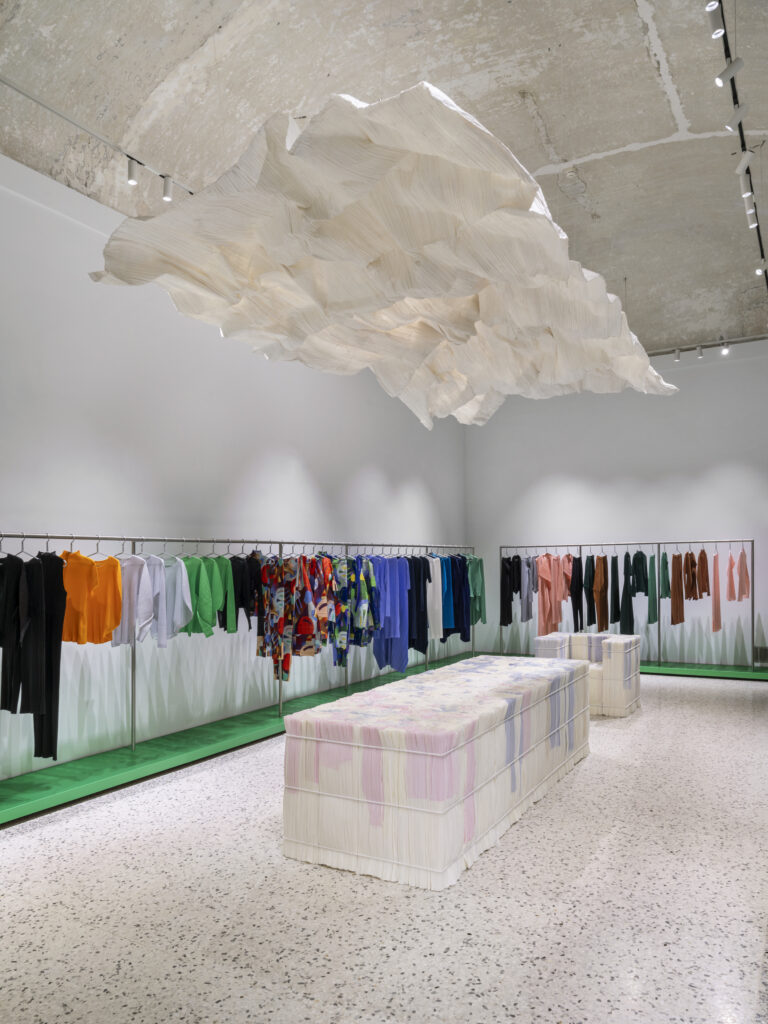
Issey Miyake x Satoshi Kondo
BUCCELLATI
Near Buccellati’s headquarters, Balich Wonder Studio created Aquae Mirabiles, a temporary installation resembling a water theatre. Inside, an underwater world unfolded, an imagined Atlantis where history, myth, and fantasy intertwined.
Through a series of immersive environments enhanced by watercolour drawings from Luke Edward Hall, the installation traced the story of Italian caviar and the journey of the sturgeon, blending narrative and sensory experience.


Buccellati x Balich Wonder Studio
MCM
MCM celebrated its 50th anniversary with Disco on Mars, an interplanetary installation created with Atelier Biagetti. Transforming the Rotonda del Pellegrini into a three-level, video game–inspired spaceship, the exhibition explored themes of time, space, and future heritage.
Blending architecture, sound, and design, the project embodied the brand’s long-standing narrative, “From Munich to Mars.”

MCM Disco on Mars

MCM Disco on Mars
DIOR
Dior unveiled its new Corolle lamps by Noé Duchaufour-Lawrance, paying tribute to the New Look silhouette introduced in 1947. Presented at Palazzo Landriani, the installation evoked the gardens of Christian Dior’s childhood home in Granville.
The scenography, enriched by Thai artists Korakot Aromdee and Vasana Saima, created a dialogue between heritage and innovation, highlighting the House’s multidisciplinary craftsmanship.
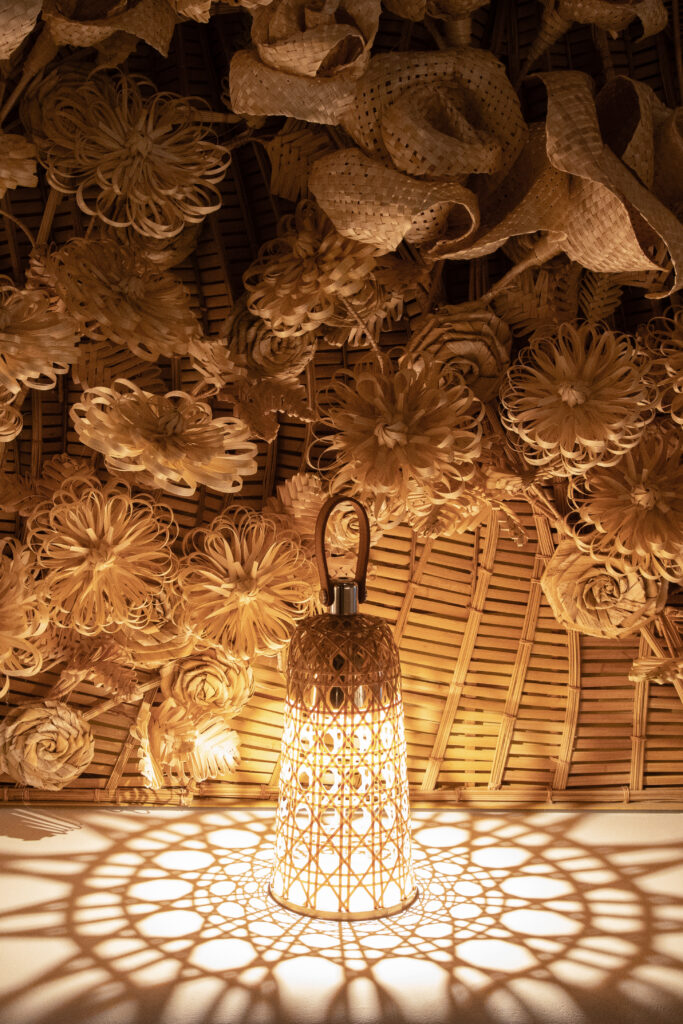

Dior x Noé Duchaufour-Lawrance
AGNONA
A luminous façade of small bricks marked Agnona’s return to Milan’s fashion district, signalling a renewed dialogue between heritage and modernity. Inside, a carefully balanced environment of colour, material, and form showcased the brand’s refined minimalist aesthetic.
Garments stood out against Botticino terrazzo walls, forming a cohesive visual narrative rooted in craftsmanship and subtle references to the brand’s history.

AGNONA Store
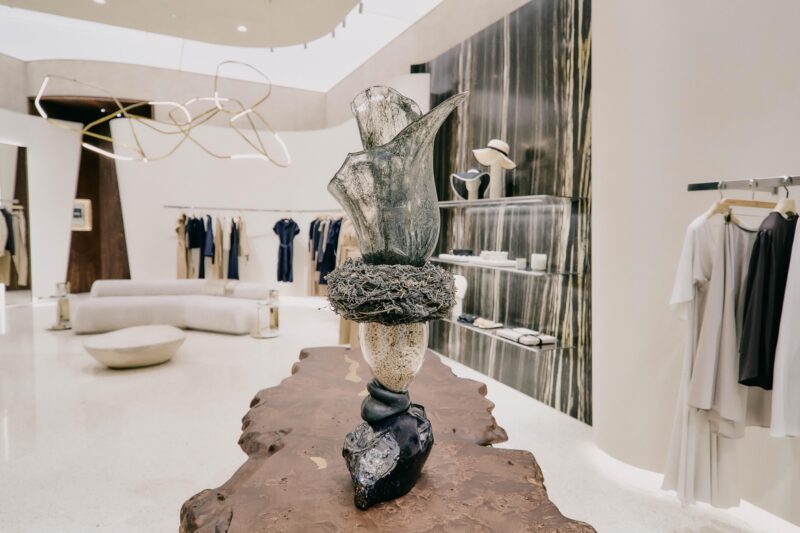
AGNONA Store
BVLGARI
In the gardens of the Bulgari Hotel Milano, a refined “pizza and bubbles” concept debuted, combining high-end dining with Italian conviviality. Designed with Bonacina furnishings, the space blended indoor and outdoor seating with custom details, including a rattan-upholstered bar.
The project continues Bulgari’s collaboration with chef Pier Daniele Seu, extending a vision of elevated hospitality.

ART DE VIVRE RUGS x HUMBERTO CAMPANA
Art de Vivre unveiled the Floralis collection with Estúdio Campana, rooted in Humberto Campana’s illustration practice. Inspired by cellular structures, the designs translate organic forms into woven textiles, preserving irregularities while introducing variations in texture and volume.
The muted palette enhances a sense of quiet contemplation, positioning each piece as a living, evolving form.
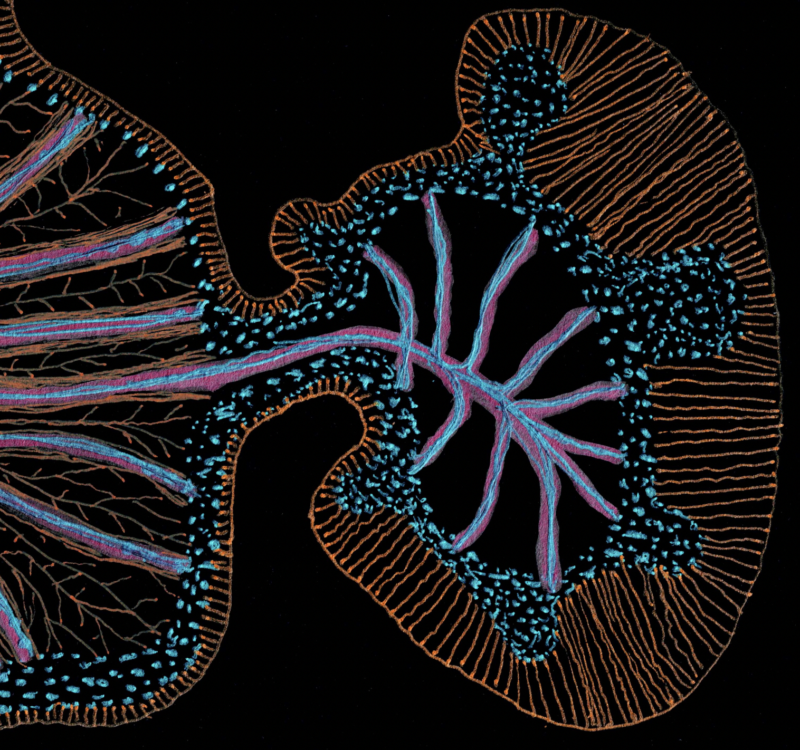
Art de Vivre x Estúdio Campana
PRADA
Prada Frames returned with In Sight, curated by Formafantasma, exploring the image as a cultural and political construct. Hosted at Santa Maria delle Grazie, the symposium examined how representation shapes contemporary reality.
Talks took place in the Renaissance sacristy, surrounded by historic inlaid cabinets, creating a dialogue between past and present modes of knowledge.

Prada Frames 2026
BALENCIAGA
At its Via Montenapoleone flagship, Balenciaga presented Artean, an installation marking Pierpaolo Piccioli’s first project for the House. Featuring works by Basque artist Eduardo Chillida, the exhibition explored the idea of “in between”: a space connecting concepts, forms, and histories.
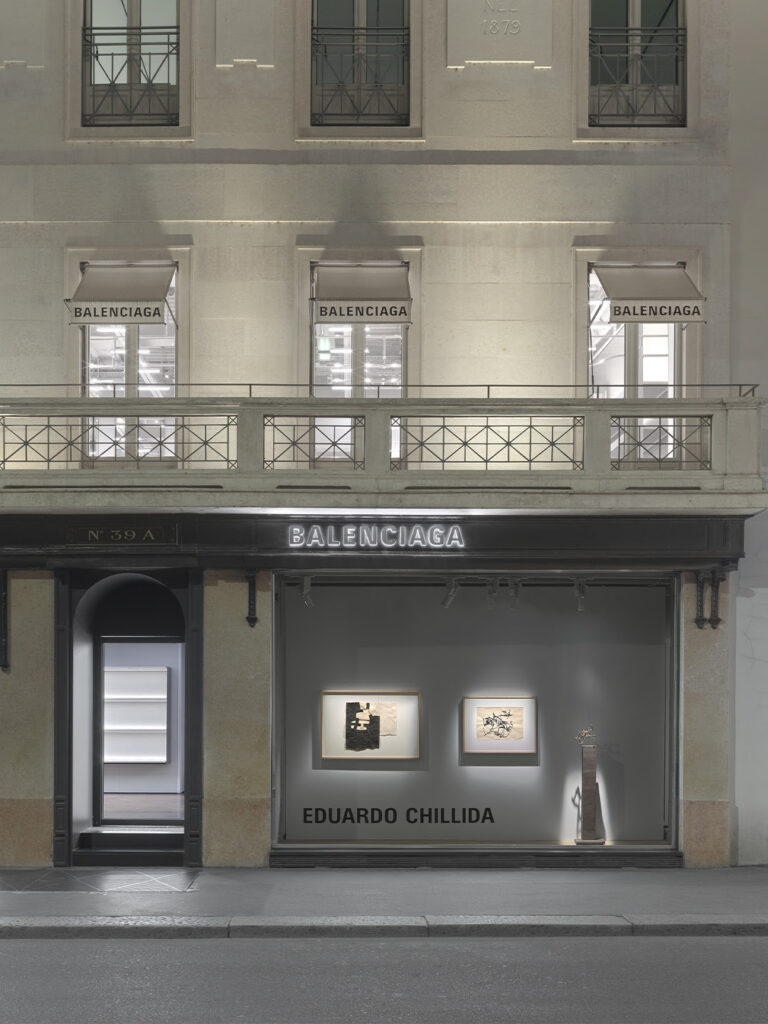
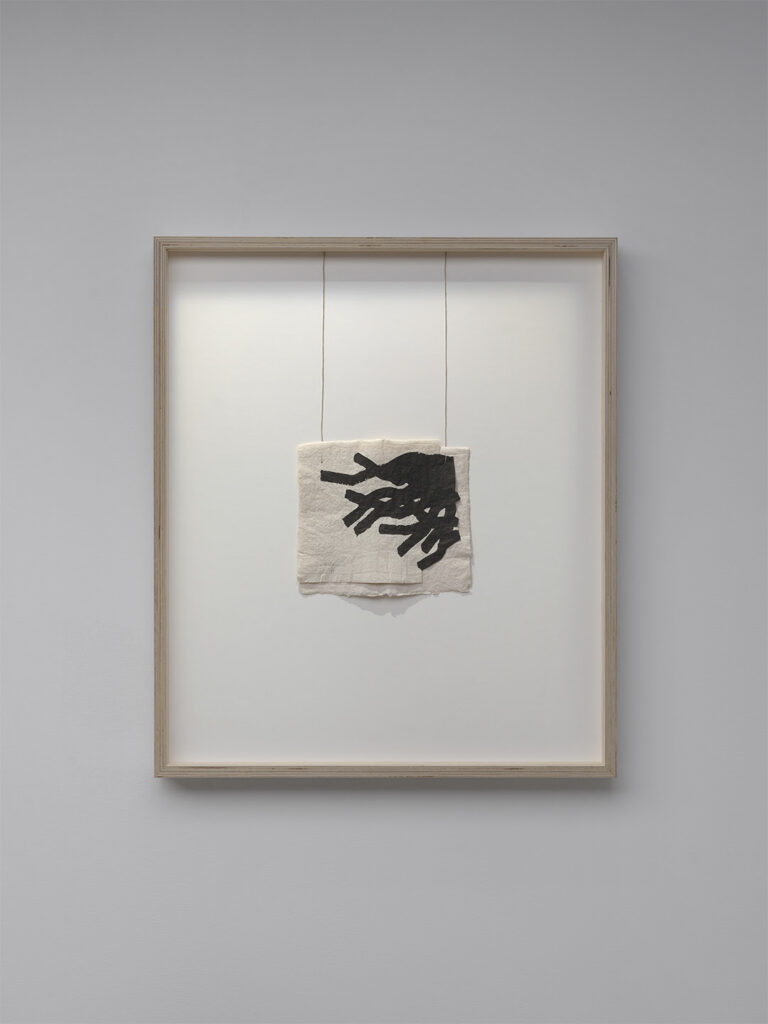
Balenciaga Artean
RIMOWA & LEHNI
RIMOWA and Lehni introduced two aluminium furniture pieces designed to store Cabin-sized suitcases: the Bench and Drawer. Presented within a dedicated visitor centre in Milan, the collaboration merges German engineering with Swiss precision.
Handmade in Zurich, the designs reflect a shared commitment to durability, functionality, and timeless aesthetics, reimagining travel objects within the home.


Rimowa x Lehni
by Chidozie Obasi