
DIOR MEN’s Autumn/ Winter 2026 collection arrived with the quiet confidence of a designer settling into a powerful new role – and one who is gently testing how far he can bend it. In his second outing for the house, Jonathan Anderson delivered a collection that felt intellectually rich and emotionally nuanced.
However, if there was a question lingering in the room, it wasn’t about craft or ambition, but about identity: at times, this felt more like JW Anderson than Dior.


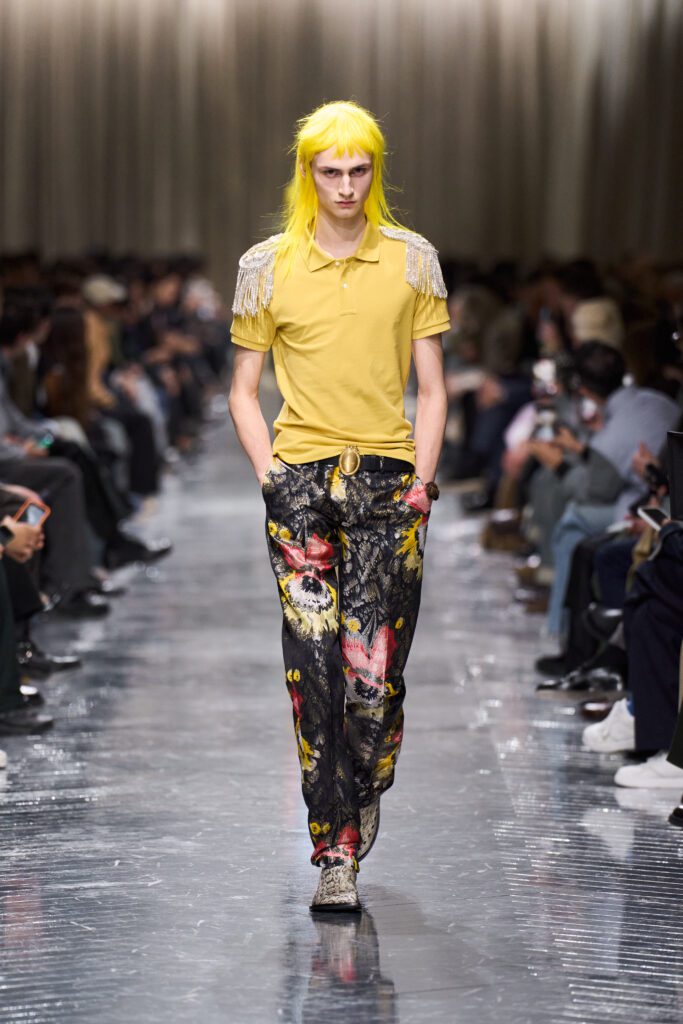

The collection unfolded as a conversation between structure and eccentricity. Dior’s tailoring codes – long coats, sharp jackets, waistcoats – were present, but rarely left alone. Proportions were nudged off-centre: jackets cropped just so, trousers elongated or unexpectedly slim, layers stacked with a deliberate awkwardness that felt studied rather than accidental. This was tailoring viewed through Anderson’s familiar lens of distortion and play, where elegance is made interesting by tension.
Historical references ran quietly beneath the surface. There were echoes of early 20th-century modernism, bringing forward bohemian aristocracy where men dressed with cultivated nonchalance rather than sturdy rules. Lavallière-style shirts, textured knits, ornate waistcoats, and fringe details suggested a wardrobe built around personality rather than uniformity.
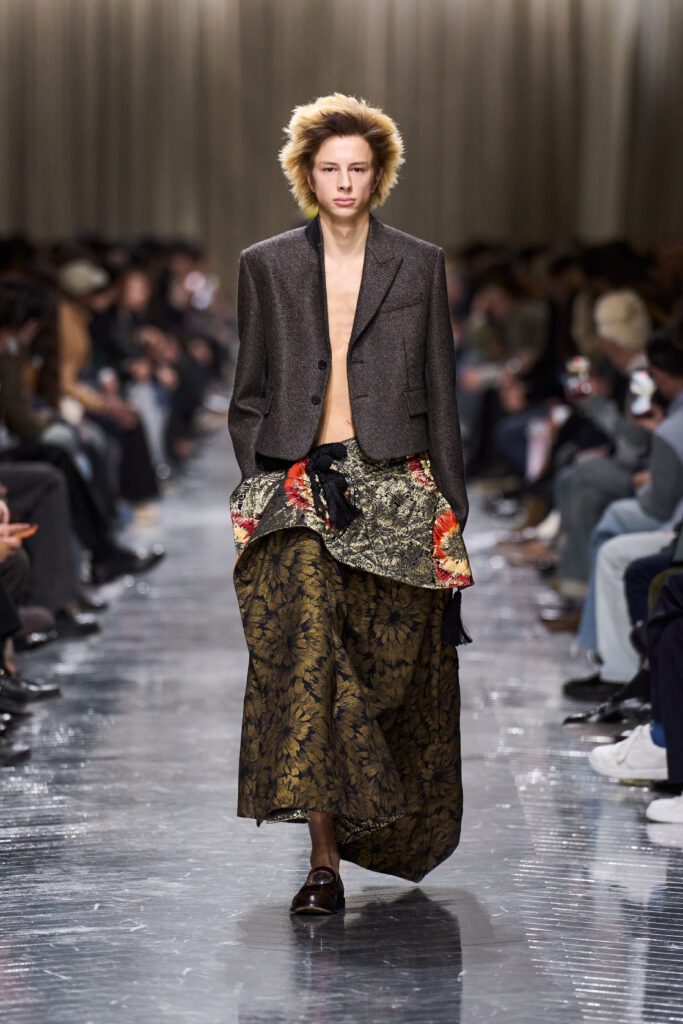
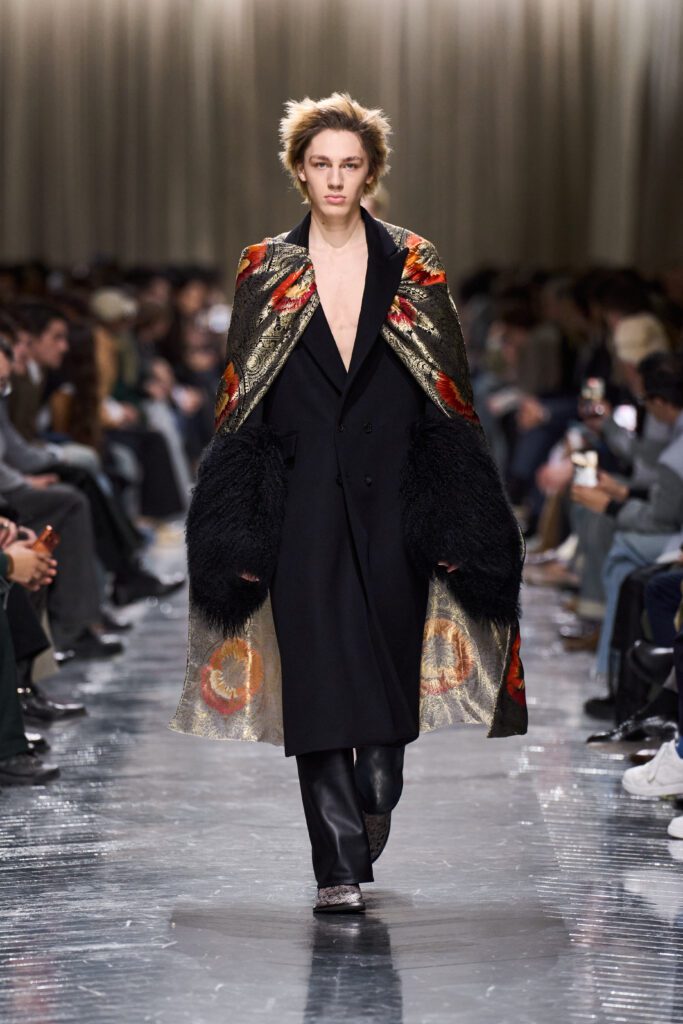
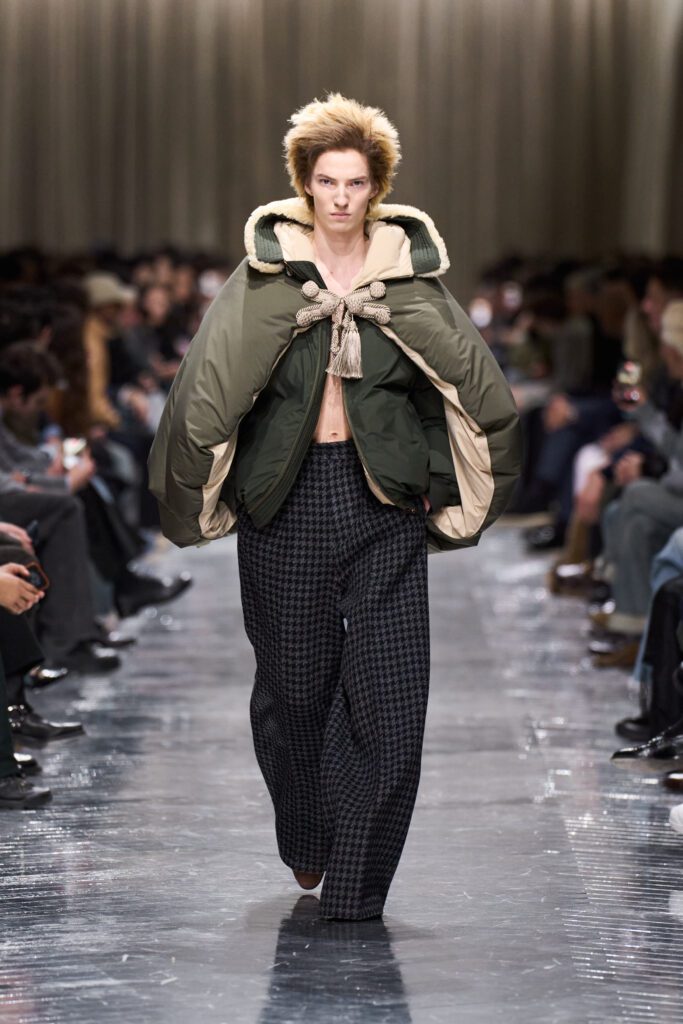
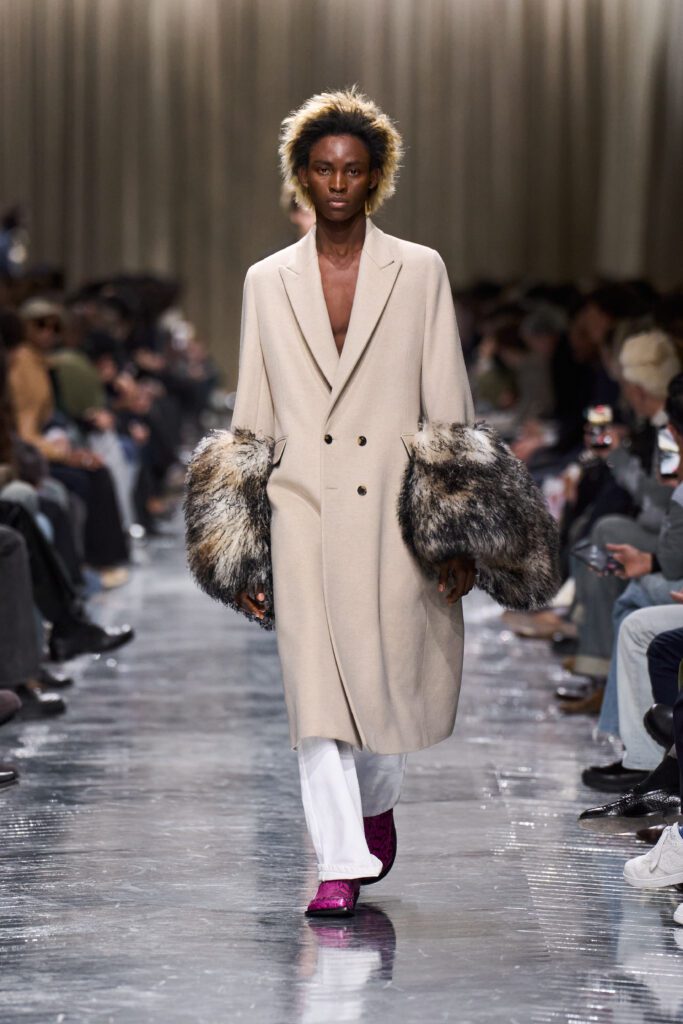
Masculine and feminine codes blurred naturally, but it’s the fabrics that did much of the storytelling. Donegal tweeds, velvets, jacquards, and rich wools brought depth and tactility, grounding the collection in craft and heritage even as silhouettes drifted into Anderson’s more idiosyncratic territory. The colour palette stretched from deep greens, browns, to blues and reds, crafting an autumnal mood.
Accessories provided a point of clarity. The Dior Roadie boot emerged as a quiet anchor, blending function and refinement with real conviction. Bags and shoes felt purposeful, less decorative than directional, suggesting that the creative director was thinking carefully about how men move through the world.
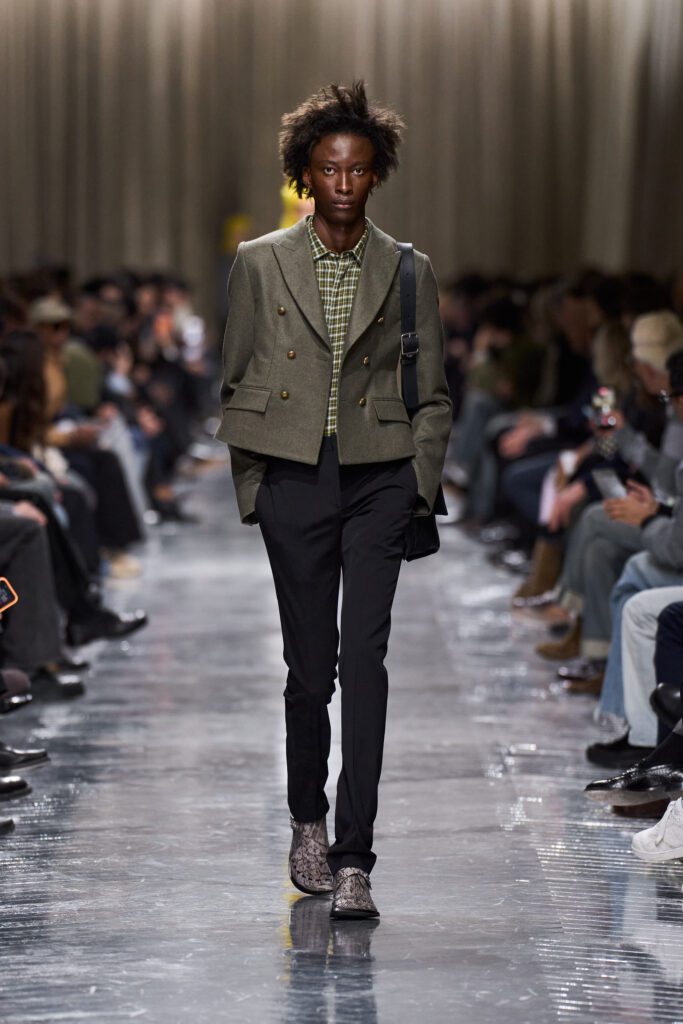
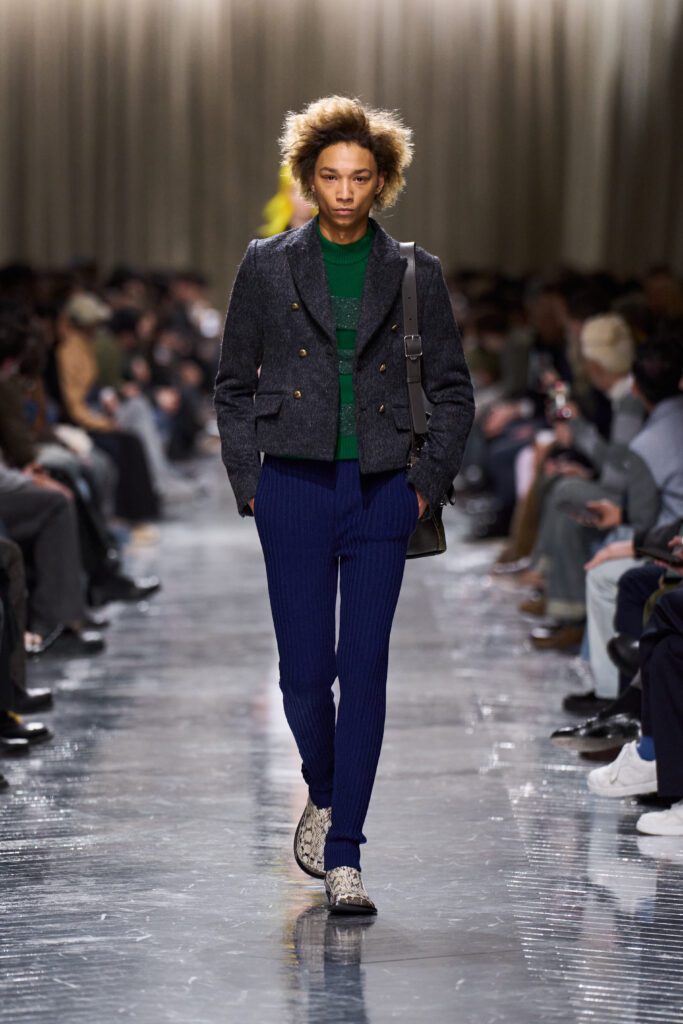
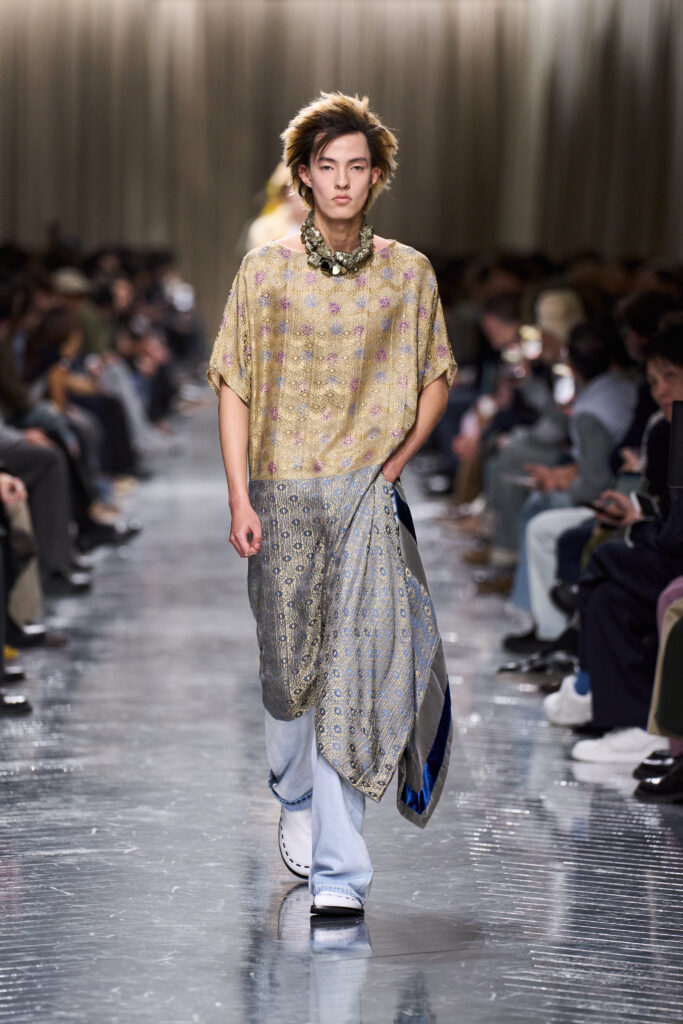
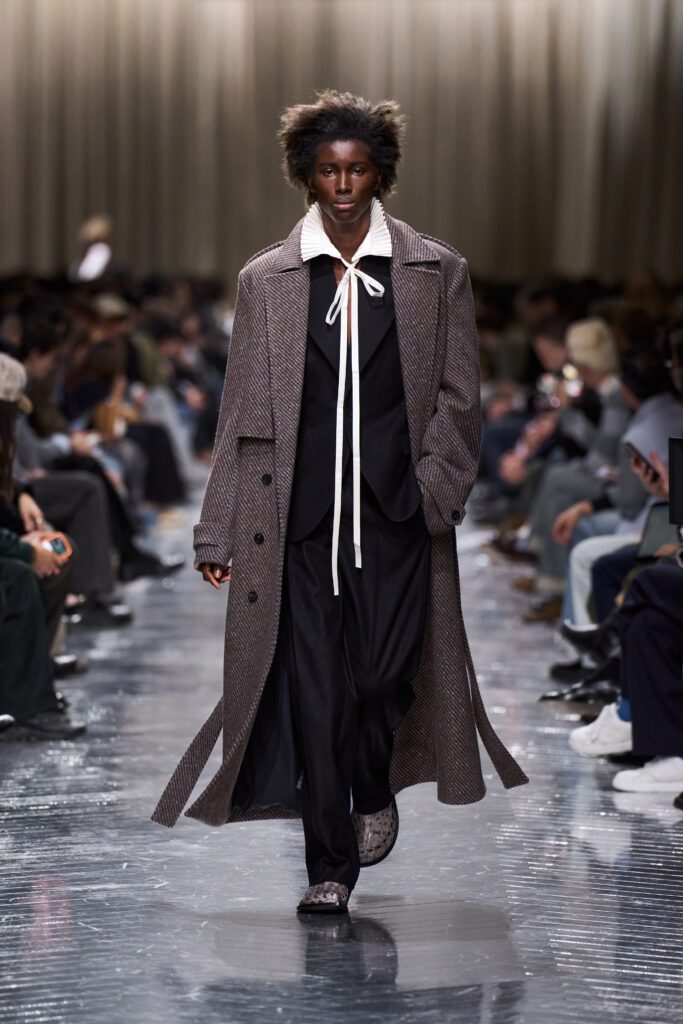

Still, the collection’s strongest voice was Anderson’s own. The wit, the deliberate oddness, the gentle resistance to polish often spoke louder than Dior’s historic clarity and restraint, feeling even more of a leap away from the aesthetic we have come to know from his debut.
What’s certain is that AW26 was thoughtful and deeply authored. It didn’t shout Dior; it questioned it. And in doing so, it offered a menswear vision that felt intelligent and, maybe most importantly, intriguing.
by Imogen Clark