
QUIETLY waiting for you within the dense, sun-washed fabric of Cartagena’s walled city, Amarla Boutique Hotel feels like a private residence you’ve somehow inherited for a few days.
It withdraws behind a heavy wooden door, that upon swinging open feels like you’ve walked into a 400-year-old, well-kept secret. The outside noises becomes distant, and the fiery energy of Cartagena is replaced with that familiar feeling of coming home after a long, hot day.
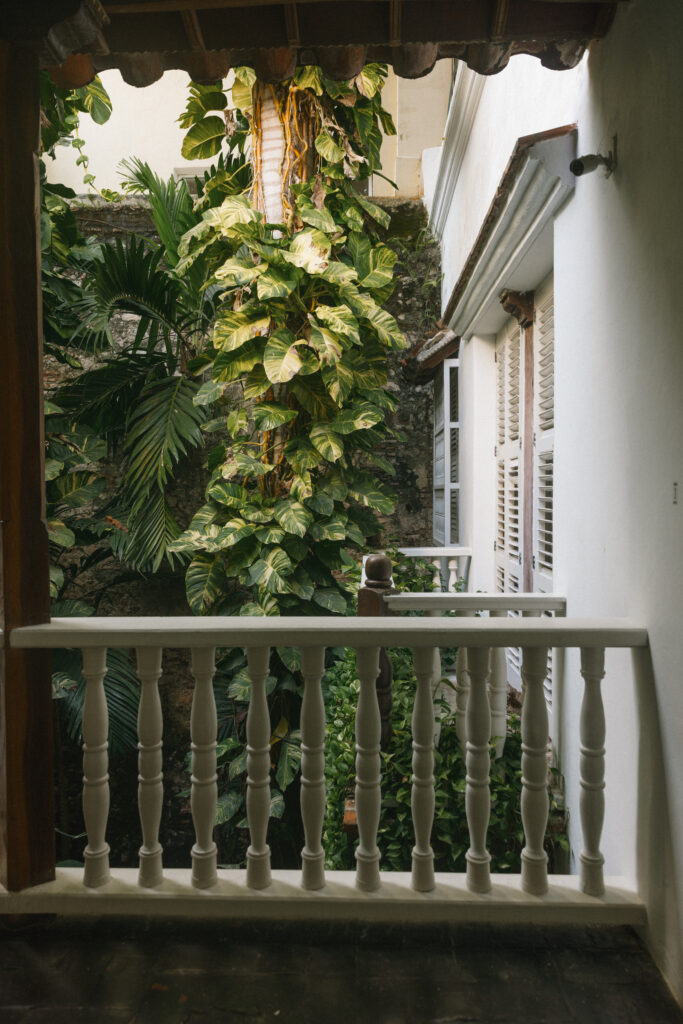
Amarla Cartagena’s interior courtyard with tropical foliage growing throughout. All images courtesy of Amarla Boutique Hotel Cartagena
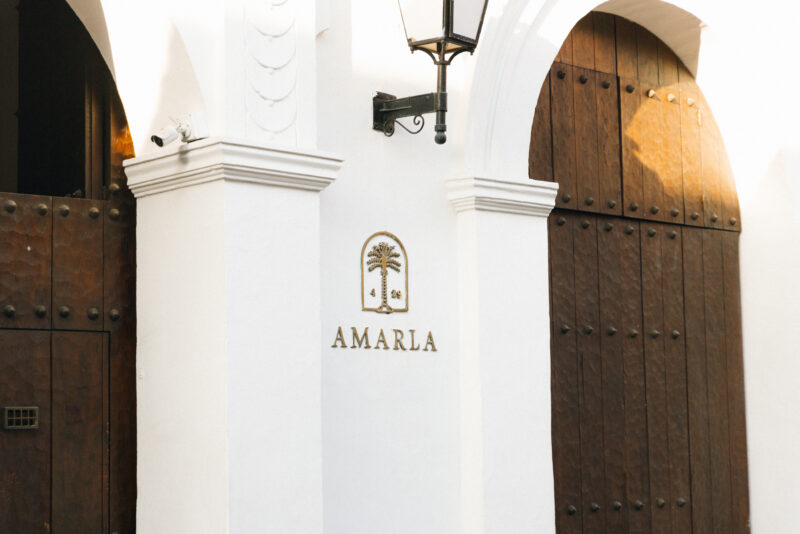
The entrance at Amarla Cartagena
Amarla’s Colonial bones remain intact—thick masonry walls, high ceilings, a central courtyard; everything in this 16th Century house has been handled with a kind of disciplined restraint.
And because there are only seven rooms, you begin to move through the property as if it were your own. A terrace becomes your terrace. A shaded corner by the courtyard becomes your afternoon coffee spot. The rooftop pool—with gorgeous views above the city’s terracotta horizon and right into a Baroque cathedral dome—feels less like a shared amenity and more like a private experience.
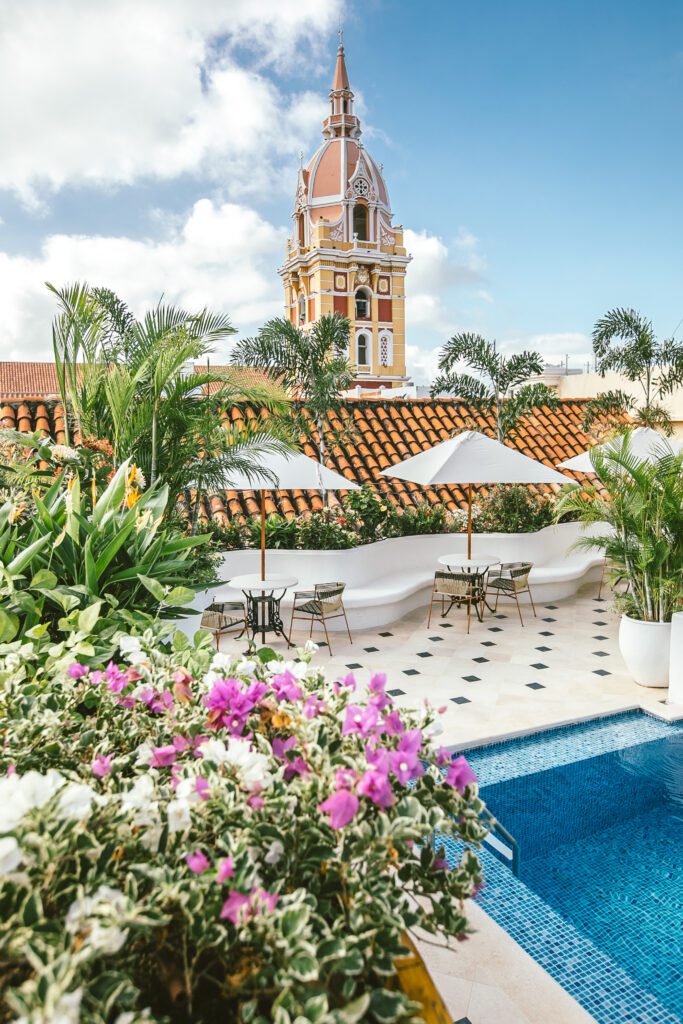
The rooftop pool overlooking the historic city
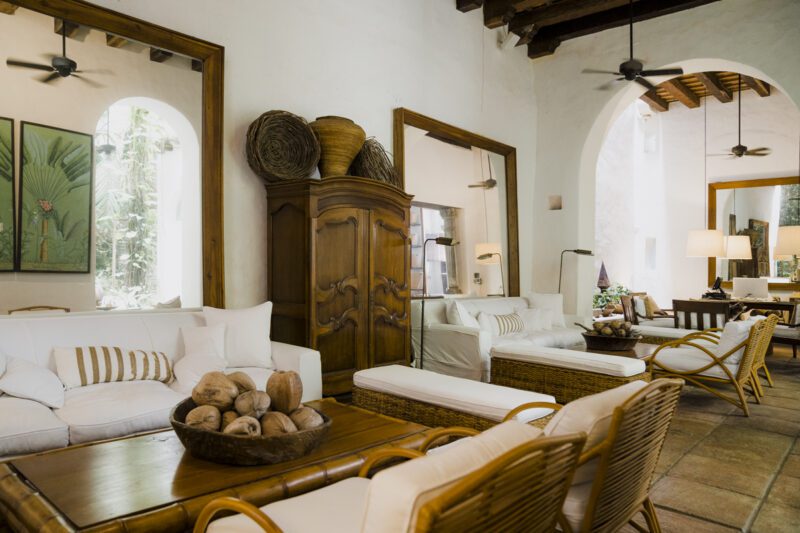
Sitting areas around the ground floor’s courtyard
It’s this spatial intimacy that defines Amarla. The architecture creates pockets—places to disappear into, corners that guide you, and thresholds that slow down your pace. You rarely encounter other guests, and when you do, it feels incidental, almost surprising. The house is always just on the verge of being entirely yours.
This illusion extends seamlessly into the service. With so few rooms, attention becomes naturally bespoke. There is no performance or choreography of hospitality—just an intuitive presence. Your rhythms are learned quickly, almost imperceptibly. A drink appears when it should, a space is prepared before you ask, leaving you to feel less like a guest and more like the sole inhabitant of a carefully tended home.
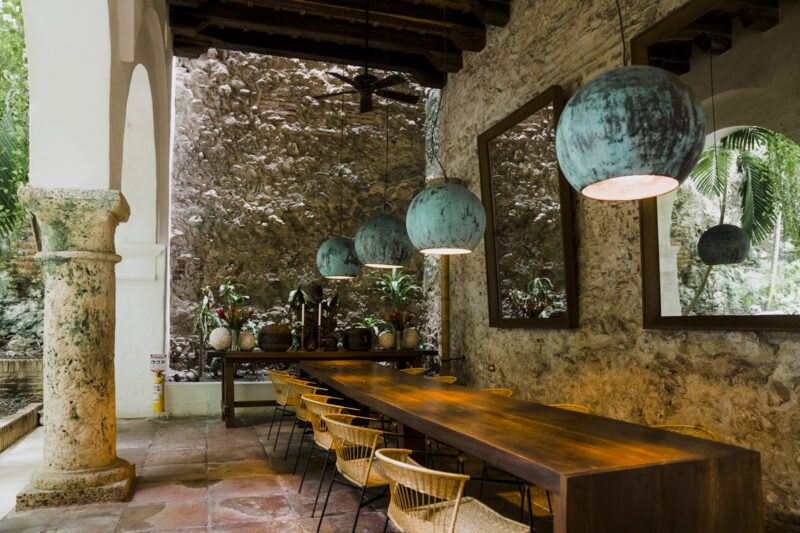
Dining spaces around the courtyard
There is also a deeper temporal layer at play, distinguishing this property from its sister in Casco Viejo. While Amarla’s Panama counterpart inhabits a building just over a century old—allowing for a more visible insertion of contemporary design—Cartagena tells a different story. This Spanish Colonial structure carries its weight with pride and quiet authority, and so the expectations of contemporary travel blend with Amarla’s history.
Interventions are deliberate, almost deferential. Modern comforts are present—air conditioning to temper the Caribbean heat, ensuite bathrooms, a rooftop pool that feels both necessary and indulgent—but they are woven into the architecture rather than imposed upon it. You sense an effort not to overwrite, but to protect. To maintain the building’s memory while allowing it to function in the present. The experience becomes something rare; it’s not a stylised version of the past, but a proximity to it. You are not looking at history—you are, in a quiet way, stepping into it.
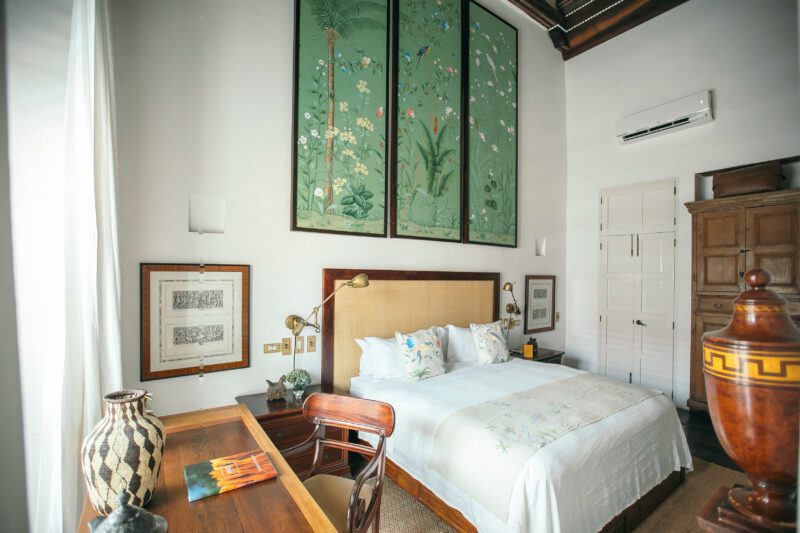
One of the seven bedrooms, decorated with antique furniture, high ceilings, and artwork
Inside the rooms, the language remains consistent. Materials do the talking: white walls, curated artwork, timber beams, soft linens, stone underfoot. Nothing is excessive, yet everything feels considered. There is an understanding here that luxury does not equate to accumulation, but to the careful calibration of comfort.

Tucked within history, with palm trees piercing its courtyard, Amarla Cartagena embraces its colonial heritage
Beyond Amarla’s walls lies a completely different tempo. The streets of the walled city pull you in immediately, with color, music, dancing, heat. You wander without direction, guided more by instinct than plan. An ice cream shop appears just when the sun becomes unbearable. A small boutique catches your eye—local Colombian designers, textiles, objects you suddenly feel compelled to bring home. Jewelry glints in a shaded storefront. A cool cocktail bar offers respite just when you need it. You pass an art gallery on your way to dinner, step inside, lose track of time. The city feeds you constantly, in every sense.
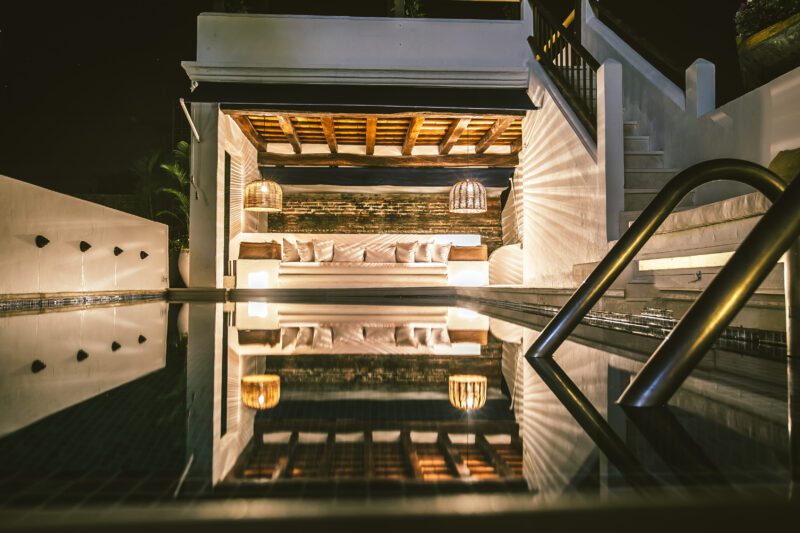
Rooftop at night
But what makes Amarla so compelling is not just what it offers inside, but how it frames everything outside. You begin to understand the stay as a rhythm: out into the city, back into the house. Heat, then coolness. Noise, then stillness. Exploration, then retreat.Even the food within Amarla participates in this balance—thoughtful, refined, quietly delicious.
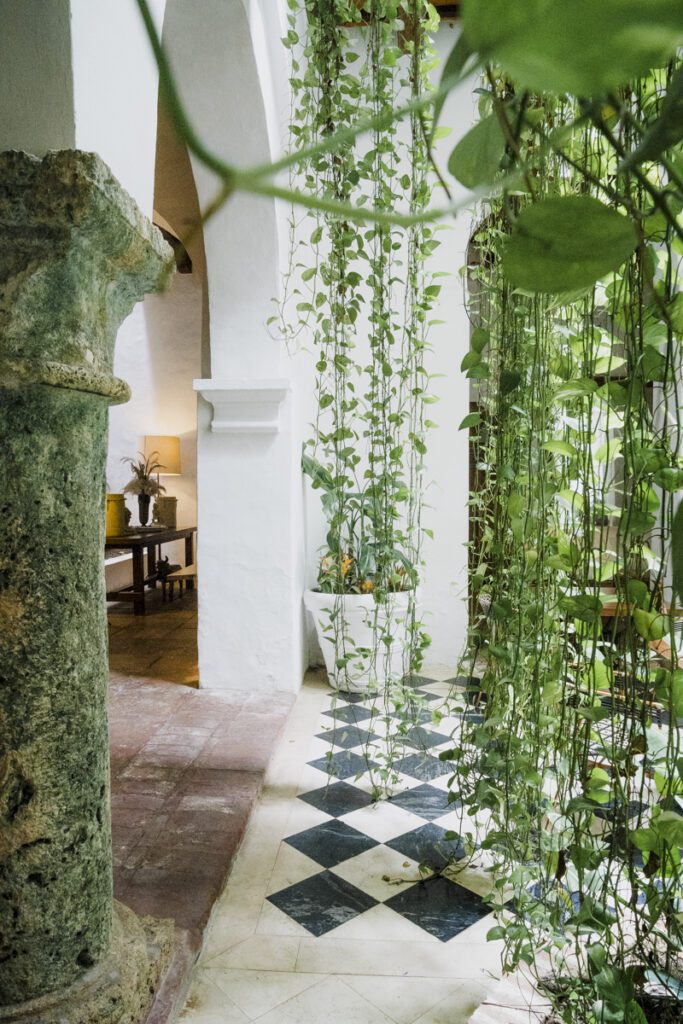
Nature and architecture blending in the tropics
In the end, when signing the guestbook, you realise that what lingers is not a single space or moment, but the sense that you were, for a brief period, living inside a carefully preserved silence, one that made everything else feel sharper, more vivid, more alive. That the architecture did not try to impress you, but instead created the conditions for you to notice it, offering you the rare opportunity to disappear into history—and, somehow, to have it feel entirely your own.
by Regner Ramos
Visit the hotel website or book your stay here.