
As the forward march of inclusion continues apace in the Northern region, ITS (Trieste’s leading talent contest for upcoming designers) brings light to the world’s bleak climate.
TRIESTE, ITALY — It’s a painful time to tell stories about the arts. In fashion, designers are lucky if they can establish their “thing” early on — maybe it’s a signature detail, or an item they become particularly known for (no mean feat in a sea of socio-economic downturns, cultural calamities and a recession that shows no hints of stopping).
However, Trieste’s creative hub stands out for its hope and optimism. This is thanks to ITS, a talent incubator that brings attention to rising designers in the region each year. The program, led and founded by Barbara Franchin, continues to thrive through her vision, business approach, and commitment to nurturing young talent. Two decades after its inception, Franchin’s leadership keeps ITS’s mission alive.
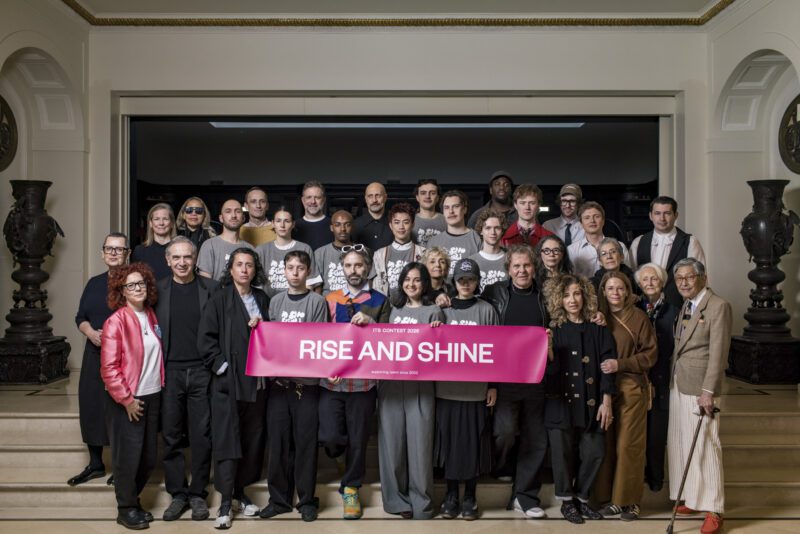
Contest Winners and Jury 2026. Photograph: G.Koren Fondazione ITS
“What comes out of each season is a willingness to share what we cultivate inside our homes and offices, and how we manage to expand it when everyone arrives,” Barbara Franchin, founder and project leader of ITS, told GLASS after the presser. “Optimism is a relative one, a balanced and intelligent kind that doesn’t make quantum leaps, because they don’t exist right now,” she adds.
“But optimism means that together we live through difficult moments like what we’re going through. We have a house, a roof, food and a purpose; we rise with a purpose. There are many people who don’t have any of this; I put myself in the shoes of those who live under bombs, and I feel guilty, but if we don’t continue to believe in this theme, everything fades.”
Franchin believes everyone should be ready to help those in need, in order to challenge the system’s power structures and negativity. “In this way, we’re optimistic because we’ve seen positive changes here,” she says. ITS aims to show that collaboration is more valuable than competition. “Competition is an old concept, and we are tired of it,” Franchin says, expressing her hopes for the future. “I want something achievable, and in the coming years, my goal is to secure the project’s future,” she adds. “I need to make sure this organization can support itself independently; this is essential for its continuation.”
A thought-provoking visual research within the world of red carpet dressing and fashion communication also took place in this edition, telegraphing audiences the many ways through which humans embody and interpret fashion as a tool of transformation, momentum and communication. Titled Exposure and curated by stylist Tom Eerebout, it retraces the creative process in reverse—from the red carpet back to the dressing room—where body and form become a universal language. Tools and gestures become two pivotal elements of the exhibit, highlighting the preparation steps, the technicalities and the finished image of a built look.
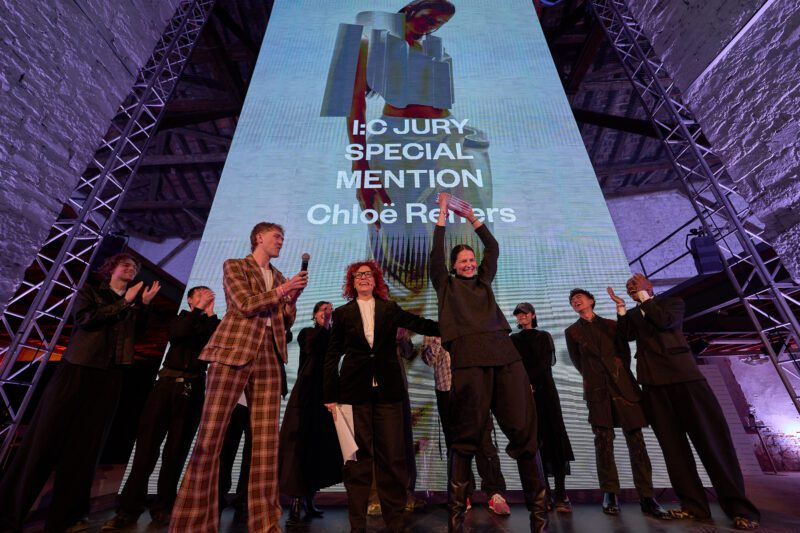
I:C Jury Special Mention for Chloë Reners: Photograph: G. Aiello
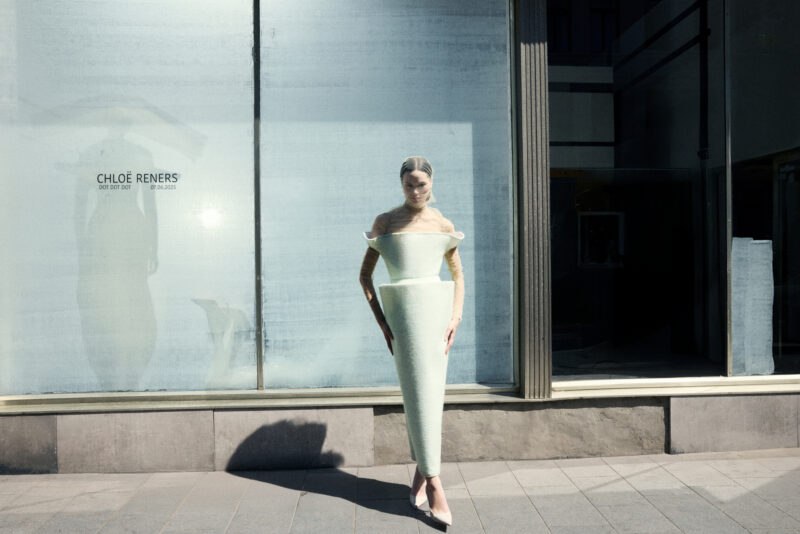
While luxury houses around the globe are mining the archives and traditional design ideals, ITS’s finalists are rooted in the present tense, with experimentation in plain sight. For Belgian-born, Paris-hailed designer Chloë Reners, recipient of this year’s Jury Special Mention award, the ITS experience began during her master’s studies, when she applied for the contest. “For me, it was a way to be surrounded by talented people, but I saw it as an opportunity to get a chance to really come close to insiders from the industry,” she tells GLASS.
“After school we got put in a company and only talked to profiles within its core ranks, but never with people from certain departments of the industry, something which is also quite important for us the moment we want to elevate our career,” she adds. “That’s why I really wanted to attend the contest,” she says. Renners’ design quality follows a sculptural sense of shape and sharp details, with a gently volumised undertone to them.
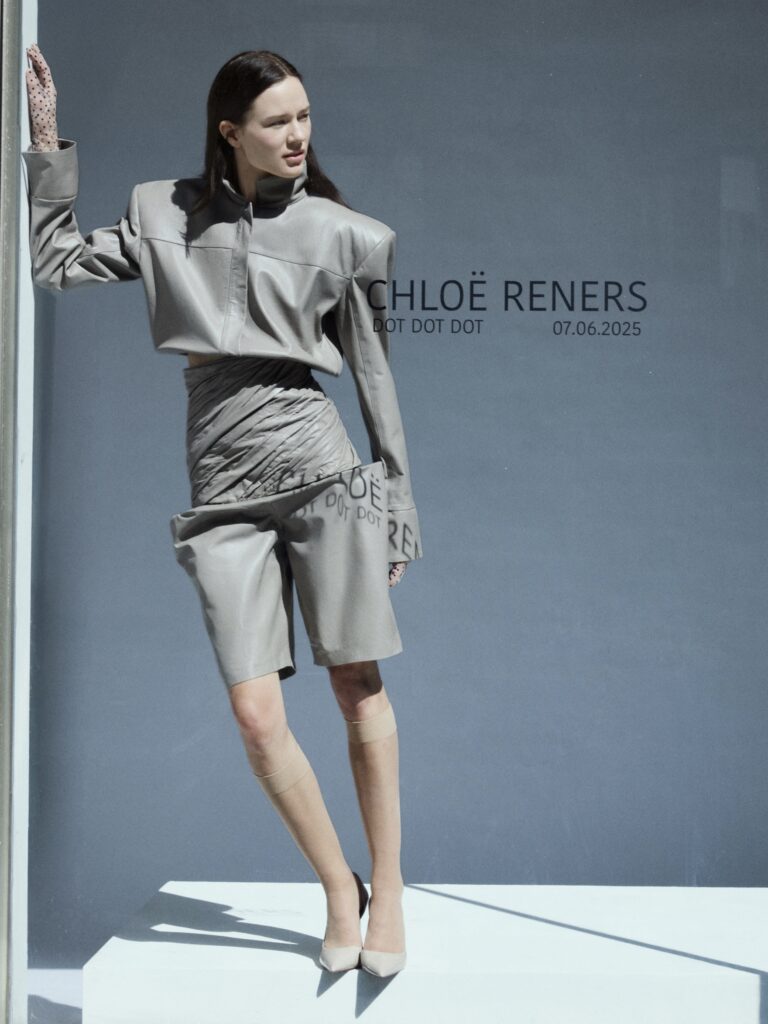
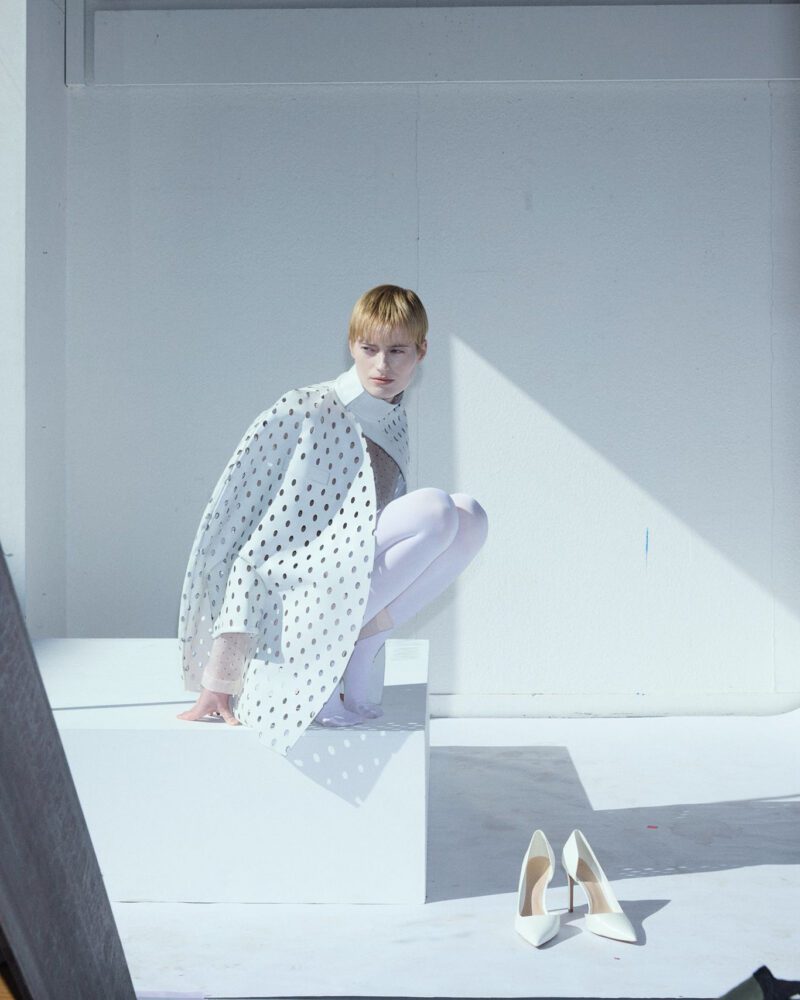
Chloë Reners
“What I deem is my strongest skill is the fact I design quite minimal pieces, so everything has to be perfect like shapes and construction-wise,” she argues. “Every line needs to be really perfect on the model, and I think I became quite skilled in this after four years at the Academy, because we got drilled there!” She exclaimed.
Chloë Reners
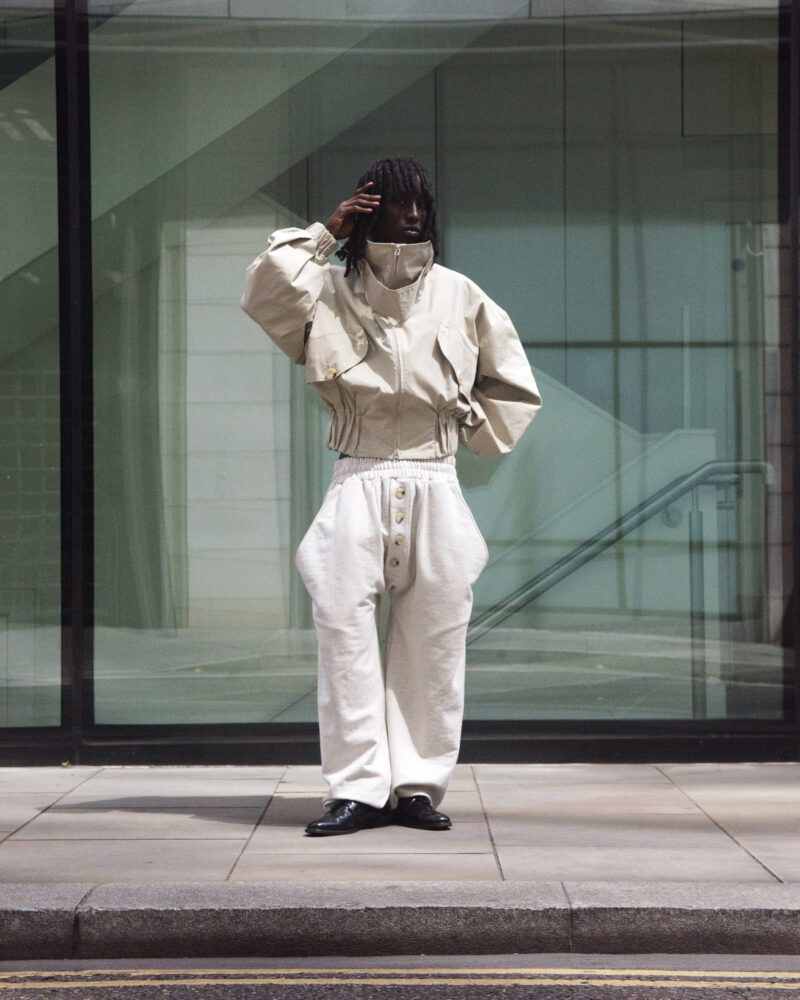
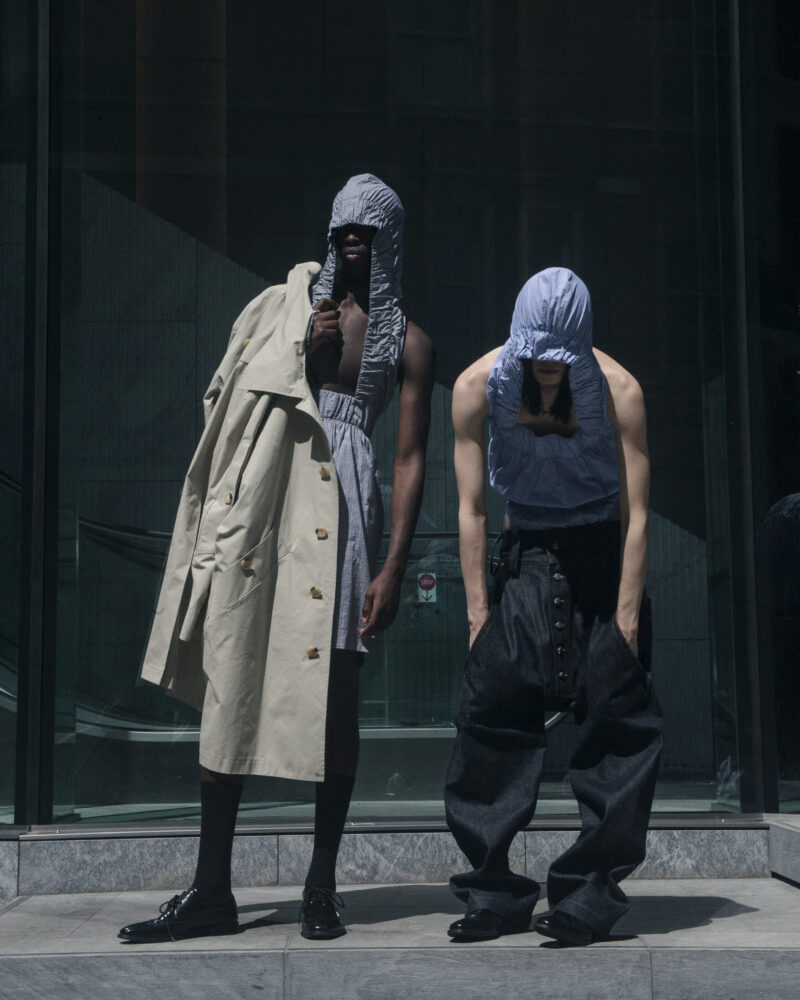
On the other hand, Central Saint Martins graduate William Palmer unleashed outfits that reference lad culture in order to obtain maximum wearability and a loose, function-led feel. “I love reworking them with super bold detailing and bold silhouettes,” Palmer reflects backstage after his presentation.
“I’m very playful, so my work is to strike the balance between severity and a tongue-in-cheek vernacular.” After stints in Paris— working under Dover Street Market and more—attending the contest was a no-brainer. “I just got tipped off by other peers that it was a really good opportunity,” he confesses. “And then I obviously looked into it, and it has been totally that.”
William Palmer
But there’s more to the story. Designer Tidjane Tall had a path in the creative realm that kicked off quite unexpectedly. “I didn’t start in fashion directly,” he tells me, the moment we begin to settle into our conversation. The designer began in the accounting field, which he pursued for two years, and then worked in a company which didn’t feel aligned with his values.
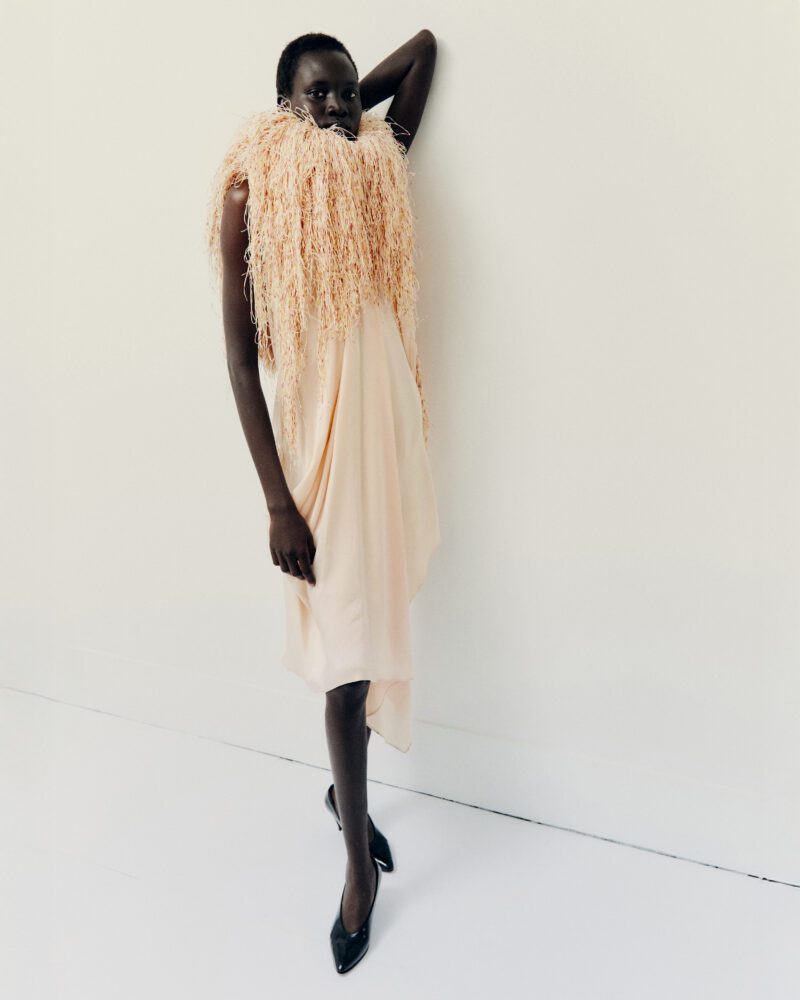
Tidjane Tall
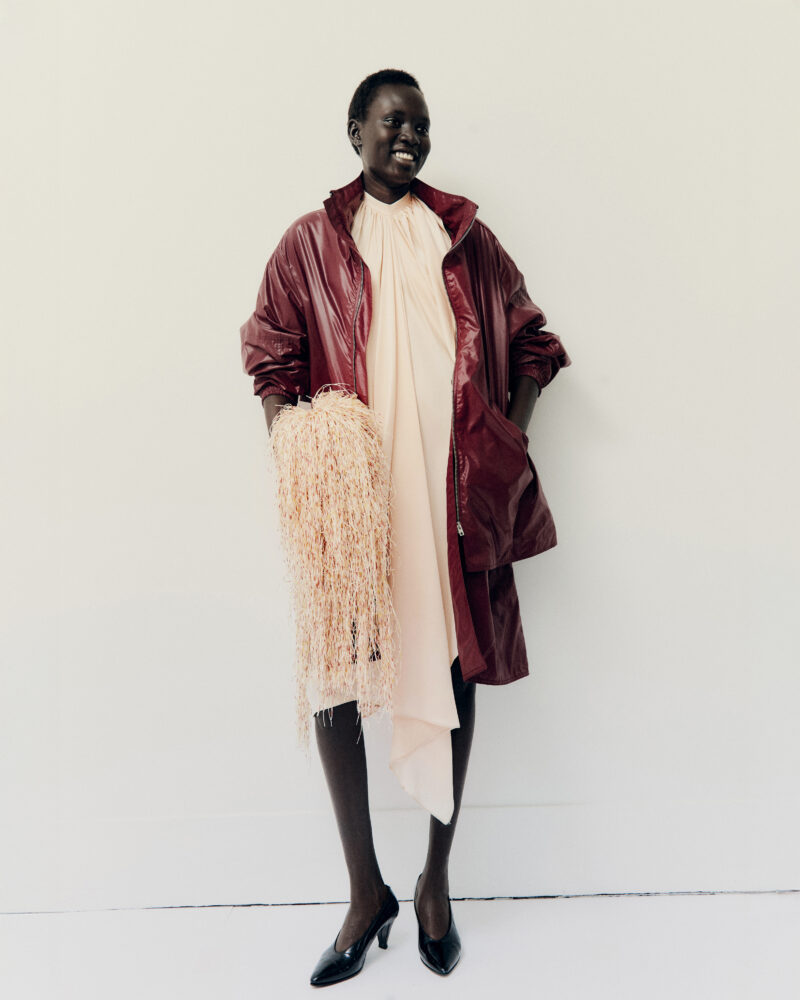
“I got almost depressed while I was there, near enough to burn out,” he confesses. “I really wanted to make a shift in my life and focus on fashion, starting from the beginning; so I decided to go back to school for it,” he says, while going through key looks from his collection. “I undertook a Bachelor’s at IFM, and in my graduate collection I really wanted to search for my identity and my universe, questioning what elegance really means for me,” he says.
As a society that often views elegance in a one-dimensional way, and in most cases, a Eurocentric one, the designer’s longing was based on rethinking what elegance means today. “In my opinion, elegance is rooted in heritage, posture and reality, and I really wanted to take as an inspiration the cabaret of my grandfather, where I think it was a place of liberation, of expression. It was post-colonial, and at the time, there were a lot of shows,” he says.

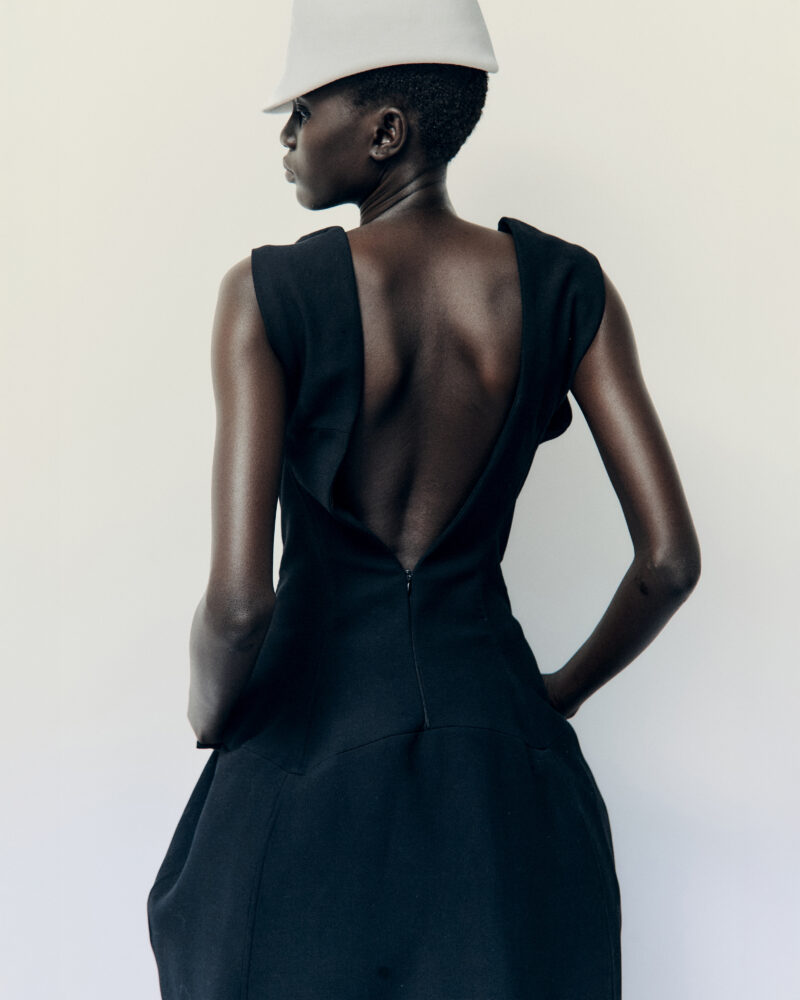
Tidjane Tall
Tall was eager to showcase a thoughtful vocabulary in this outing, fashioning a sculptural wardrobe. “I always think about clothes in motion, always walking,” he adds. In most of Tall’s references, one can view people walking somewhere. “That’s really something that really resonated with me.”
On the resonance of ITS, he speaks with unguarded honesty. “I applied as I saw one person from my class doing the context last year and I was really intrigued,” he says. “I was really intrigued and I really wanted to do the experience because I think it’s one of the only contexts that allows emerging designers to have a complete experience for this amount of time, in another country, and with valuable workshops that blend practical experimentation and theoretical approaches in equal measure.”
This edition, what felt even newer was a sense of escapism, lightness and a shift in perspective—making clothes that not only serve the purpose of making a wearer feel good, but with deeper purposes that stretch far beyond conventions. Above all, hope. “I hope that this spirit will always remain and that next year, which will be the 25th, we’ll all meet,” Franchin concludes. “I hope that next year there will be a reunion, and that all finalists from past editions look each other in the eyes while feeling that they belong to the same family.” Cheers to that.
by Chidozie Obasi