
From immersive musical spectacles and contemporary dramas to sharp historical reimaginings, London’s stages are offering some of their strongest productions in recent years. Here are six performances worth securing tickets for this week before they close.
CABARET
KitKat Club
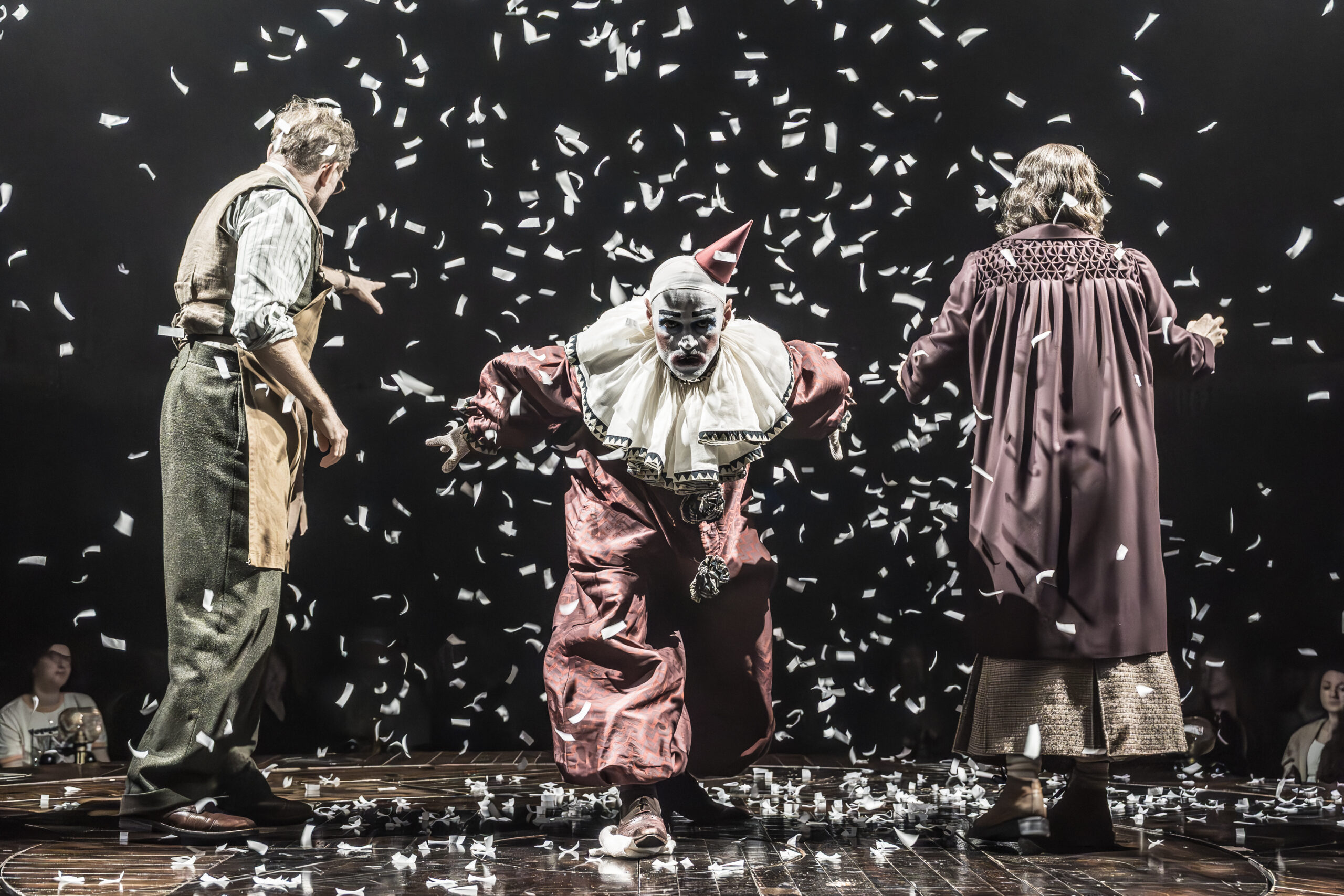
The only stage production I have returned to time and again in London is, and always will be, Cabaret. I included it in my last theatre roundup and, unsurprisingly, it appears here once more. If you have yet to experience it, Cabaret begins long before the curtain rises. The Playhouse Theatre has been transformed into the Kit Kat Club, an immersive world inspired by Berlin’s legendary nightlife scene. Descending darkened staircases lined with portraits of former Emcees and Sally Bowles performers, guests are welcomed with schnapps before entering a maze of live music, intimate performances and candlelit corners. The pre-show experience alone feels worthy of the ticket price.
By the time the audience takes their seats, it is already clear why this production has become one of London theatre’s defining successes. Since opening in 2021, the revival has welcomed an impressive roster of stars in its leading roles while collecting a record-breaking seven Olivier Awards. Yet despite its accolades, the production never feels complacent. With new casts regularly stepping into the iconic roles of Sally Bowles and the Emcee, it continues to evolve while retaining the electricity that made it a phenomenon.
Based on Christopher Isherwood’s Goodbye to Berlin, the story unfolds in 1929–30 Berlin during the final days of the Weimar Republic and the rise of Nazism. It is an unsettling narrative, one that examines political complacency, social change and the dangers of extremism. What makes Cabaret so powerful is the way these themes are delivered through dazzling spectacle. Music, choreography and costume create an intoxicating sense of glamour, even as darkness steadily approaches.
Featuring some of musical theatre’s most celebrated songs including Willkommen, Mein Herr, Maybe This Time, Money and Cabaret, the production remains as emotionally affecting as it is visually spectacular.
Each time I have visited, I have brought someone seeing it for the first time, and watching their reaction has become part of the joy. Few productions reward repeat viewings in quite the same way. Four years after opening, Cabaret remains one of London’s most sought-after tickets.
Tickets can be bought here.
MASS
DONMAR WAREHOUSE
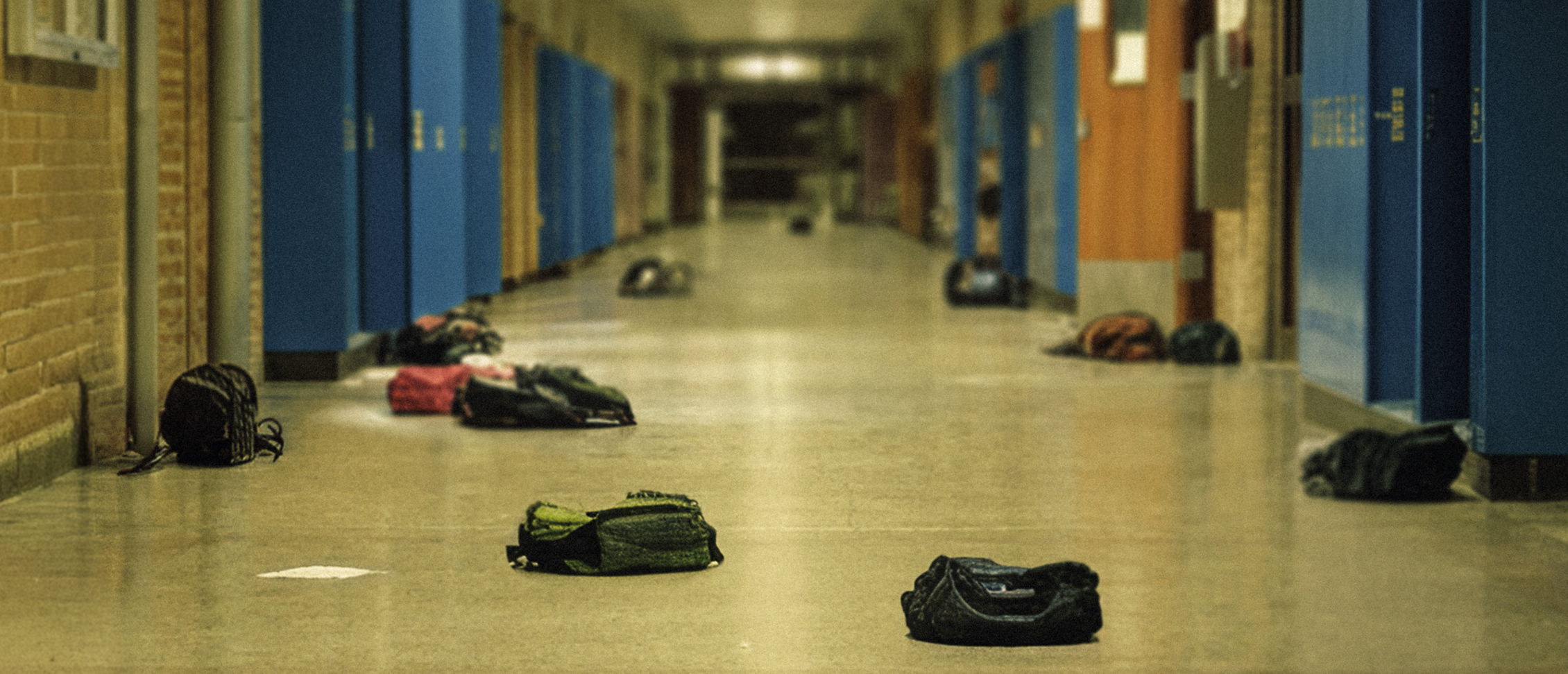
Before taking your seat at the Donmar Warehouse, very little is given away about the production of Mass. The promotional image is strikingly sparse: abandoned rucksacks scattered across what appears to be a school hall floor. There is a quiet sense of crisis to it, an unsettling suggestion that something terrible has occurred.
Adapted by Fran Kranz from his acclaimed 2021 film and directed by Carrie Cracknell, Mass centres on a meeting no parent should ever have to endure. Gail (Lyndsey Marshal) and Jay (Adeel Akhtar) are the parents of Evan, one of ten children killed in a school shooting. Richard (Paul Hilton) and Linda (Monica Dolan) are the parents of Hayden, the teenage gunman who later took his own life.
The premise is deceptively simple. Four people sit around a table and talk. Yet over the course of one hour and forty minutes, Mass becomes one of the most emotionally devastating pieces of theatre currently on the London stage.
The production is anchored by four extraordinary performances, each navigating grief, guilt and anger with restraint. Rather than seeking easy resolutions, Kranz’s script allows uncomfortable questions to linger. Can forgiveness exist alongside unimaginable loss? Is understanding the same as absolution? What does accountability look like when everyone involved has already suffered?
Anna Yates’s set design subtly heightens the tension. Two office-like levels stretch across the stage, creating a sense of scale within the intimate auditorium. At its centre sits a simple table and four chairs, where the entirety of the drama unfolds. As emotions intensify, the table slowly rotates, bringing each perspective into focus and reminding the audience that no single narrative can contain the truth of what happened.
What makes Mass so affecting is its refusal to sensationalise. There are no flashbacks, dramatic revelations or theatrical tricks. Instead, the production places its faith entirely in language, performance and the devastating complexity of human emotion.
The result is a deeply compassionate piece of theatre that asks difficult questions without pretending to have definitive answers. When the curtain fell, the standing ovation felt inevitable. Mass is thoughtful, harrowing and profoundly moving.
Until 6 June. Tickets can be bought here.
LES LIAISONS DANGEREUSES
THE LYTTELTON THEATRE
My introduction to Dangerous Liaisons came courtesy of my mother, who one evening asked whether I had ever seen Stephen Frears’s celebrated 1988 film starring Glenn Close, John Malkovich and Michelle Pfeiffer. I had not. By the end of the evening, I was completely enthralled. So, when the National Theatre announced its latest stage production, taking my mother along felt like it was meant to be.
Originally adapted for the stage before becoming an acclaimed film, Les Liaisons Dangereuses has always been a story perfectly suited to theatre. Directed by Marianne Elliott and based on Christopher Hampton’s celebrated adaptation of Pierre Choderlos de Laclos’s novel, this production embraces the intrigue, manipulation and theatricality that have made the story endure for more than two centuries.
Set among the salons of pre-Revolutionary France, the play follows the calculating Marquise de Merteuil (Lesley Manville) and the notorious Vicomte de Valmont (Aidan Turner) as they engage in a ruthless game of seduction and revenge. Their schemes draw in the virtuous Madame de Tourvel (Monica Barbaro) and the young Cécile de Volanges (Hannah van der Westhuysen), with devastating consequences.
At the centre of the production is Manville, who delivers a masterclass in control and charisma. Cool-headed and razor-sharp, her Merteuil dominates every scene without ever appearing to exert effort. Turner provides an equally compelling counterpart, balancing charm and cruelty with ease.
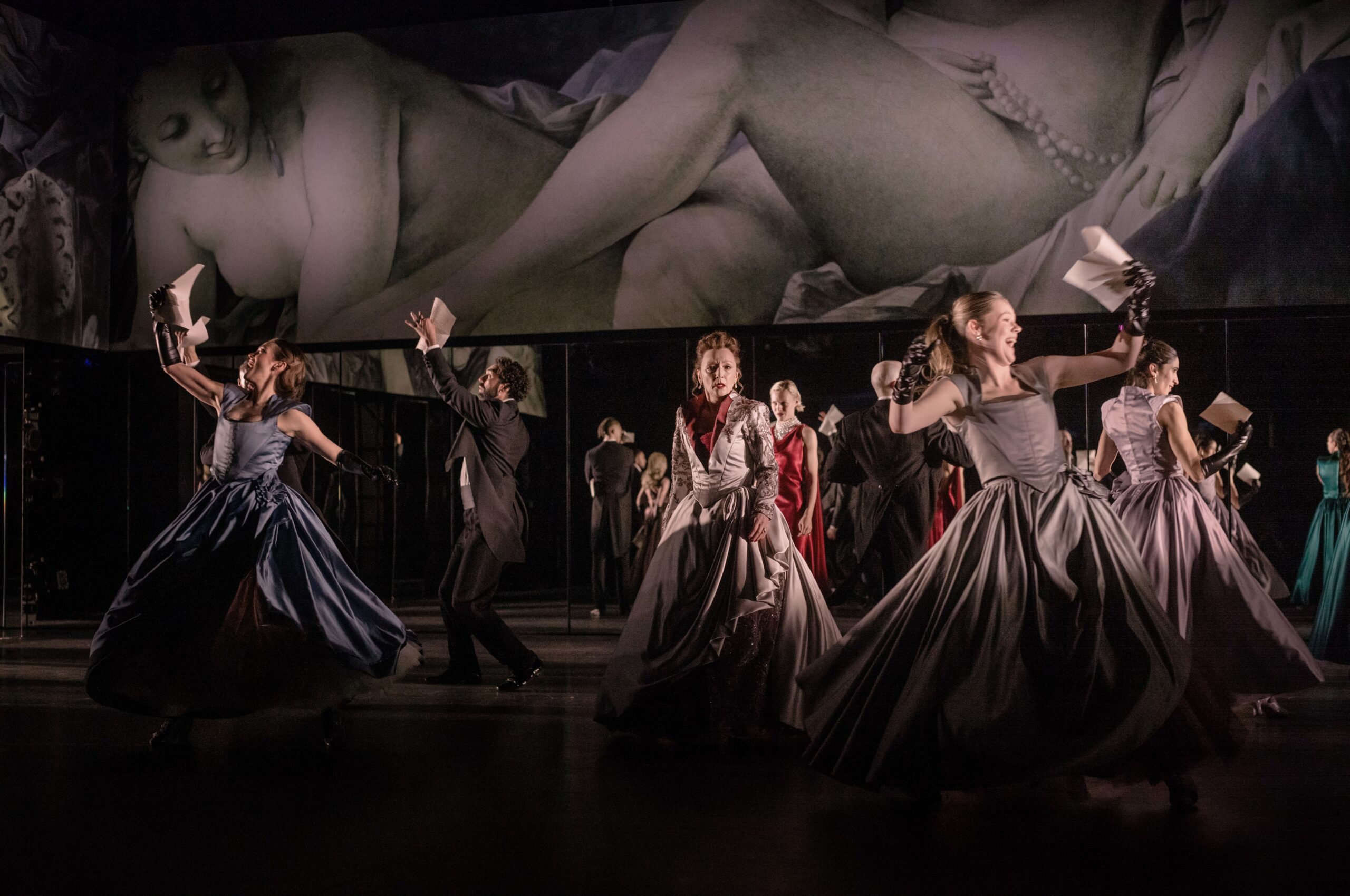
The production’s visual world is equally impressive. Rosanna Vize’s elegant set design uses mirrors and shifting walls to create an atmosphere of both decadence and entrapment, while the choreographed movement of the ensemble gives the impression of a society engaged in an elaborate dance of power.
Despite its period setting, Les Liaisons Dangereuses feels remarkably contemporary. Beneath the powdered wigs and lavish costumes lies a story about ambition, reputation and the destructive consequences of treating relationships as games to be won. This production is beautifully staged and anchored by exceptional performances.
Until 6 June. Tickets can be bought here.
KRAPP’S LAST TAPE
The Royal Court
Samuel Beckett’s Krapp’s Last Tape premiered at the Royal Court Theatre in 1958. Nearly 70 years later, it returns to the venue where it first debuted, this time starring Gary Oldman as part of the theatre’s anniversary celebrations.
In the same vein, opening each performance is Godot’s To-Do List, a new Beckett-inspired short play by Jerwood New Playwright Leo Simpe-Asante. Winner of the inaugural Royal Court Young Playwrights Award, the curtain-raiser sits in stark contrast to Krapp’s Last Tape‘s slow, contemplative world, yet serves as a reminder of Beckett’s enduring influence on contemporary theatre. Few writers have been able to strip language back to its very bones in quite the same way, capturing the uncertainty, humour and absurdity of everyday existence.
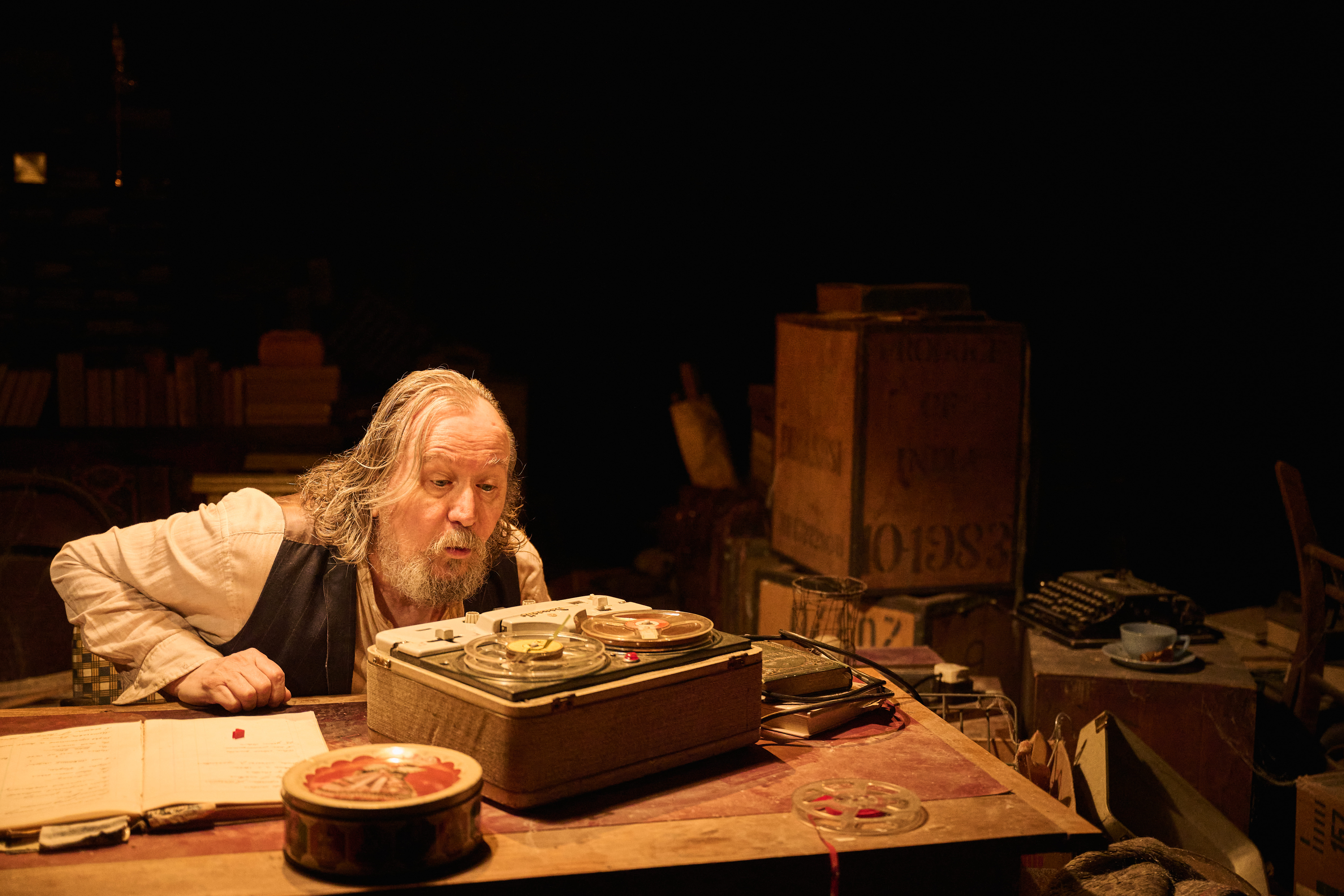
Krapp’s Last Tape epitomises that approach. We meet Krapp on his 69th birthday, drunk and surrounded by the remnants of his past, listening back to recordings made by his younger self. Through the tapes emerge literary ambitions, old regrets and memories of a love affair that continues to haunt him. Adding another layer of poignancy, the production features the same tape recorder previously used by Michael Gambon and John Hurt during their own celebrated performances as Krapp.
We are sitting amongst a large audience, but it feels incredibly intimate. Oldman frequently catches the eyes of audience members, drawing them into the performance and creating a connection that feels surprisingly personal. Produced, directed by and starring Oldman, the production challenges conventional expectations of theatre. There is no dramatic crescendo, little dialogue and no neat resolution.
As the final recording comes to an end, one line lingers in the air: “Perhaps my best years are gone. When there was a chance of happiness. But I wouldn’t want them back.”
The lights rise. Krapp remains motionless as the blank tape continues to play.
Until 30 May. Tickets can be bought here.
INTER ALIA
Wyndham’s Theatre
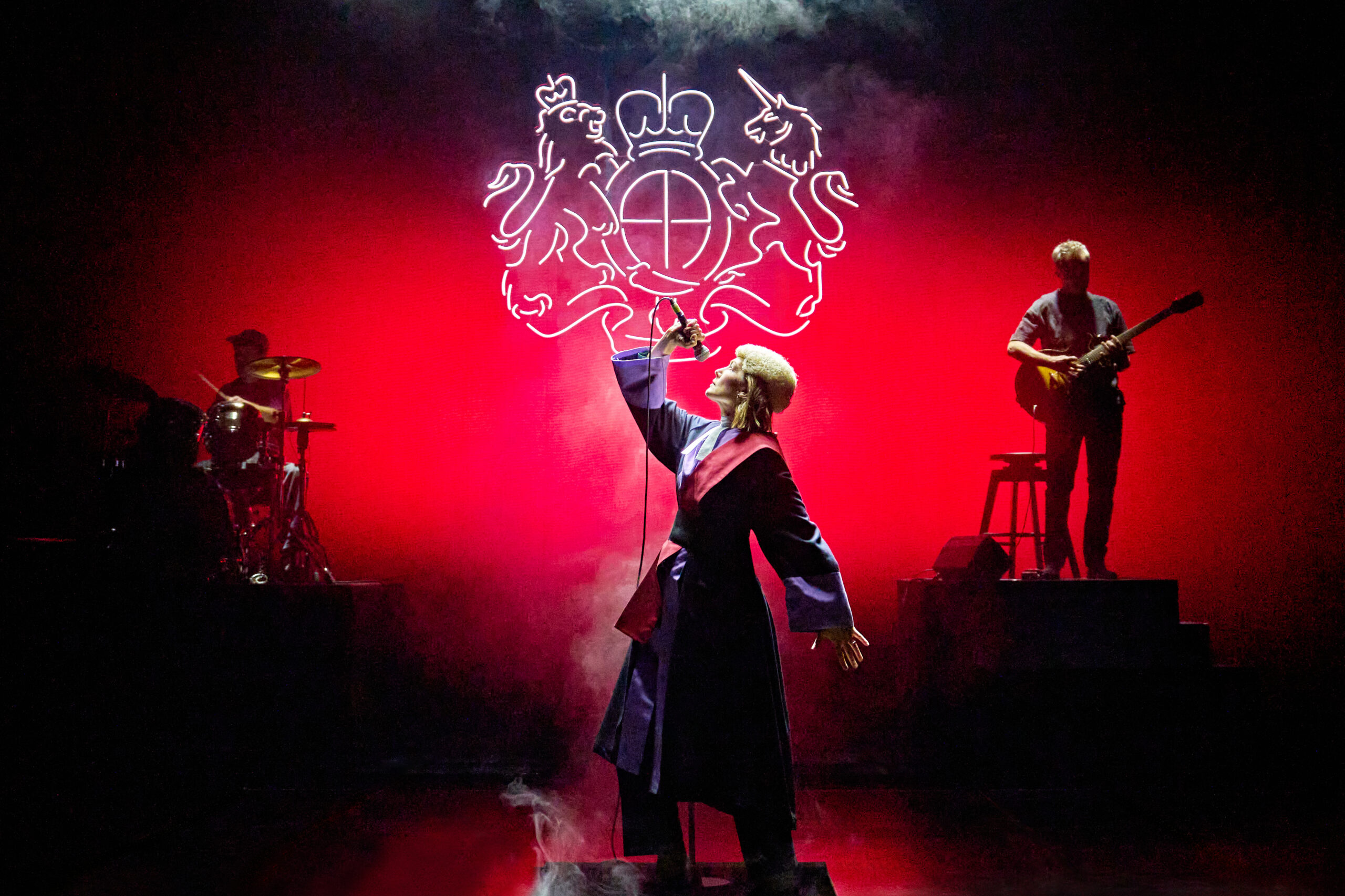
A performance so invigorating that I have recommended it to everyone I’ve had the chance to, from my postman to my therapist, and one that called for a post-show nightcap to unpack the incredible nuances and performances my partner and I had just witnessed.
The production reunites Olivier Award-winning writer Suzie Miller and BAFTA-winning director Justin Martin, the creative force behind Prima Facie. Following its acclaimed premiere at the National Theatre’s Lyttelton Theatre, Inter Alia transfers to Wyndham’s Theatre for a strictly limited run, led by a commanding performance from Rosamund Pike.
The play follows Jessica, a woman whose life exists inter alia (‘among other things’) – juggling a demanding career alongside her roles as a wife, mother, confidante, feminist and friend. Pike is captivating as Parks, rarely leaving the stage unless to retrieve a prop, costume or memory from the wardrobe that forms part of the set. It is a clever device, used to transport us through different moments in Jessica’s life, from her years as a young mother to her position on the bench.
Fast-paced and engaging, the play expertly captures the inner workings of a modern woman navigating endless competing demands. Miller’s writing is relentless in the best possible way; conversations overlap, thoughts race ahead and scenes move with such momentum that taking a breath feels secondary. We are not simply watching Jessica’s life unfold. We are inside her head.
When an unthinkable event rocks her family, the structures she has worked so hard to build begin to unravel. What follows is a thought-provoking exploration of morality, justice and parenthood that refuses to offer easy answers.
Pike is unflinchingly brilliant throughout, constantly moving, speaking, judging, singing or reflecting as she traverses scenes with remarkable energy. Nick Pinchbeck’s musical direction, which incorporates live instruments on stage, further heightens the production’s sense of urgency and theatricality.
I felt genuinely sad when the performance came to an end. As the audience erupted into applause and Pike appeared visibly moved, there was a palpable sense that everyone in the room knew they had witnessed something special.
Until 20 June. Tickets can be bought here.
1536
The Ambassador Theatre
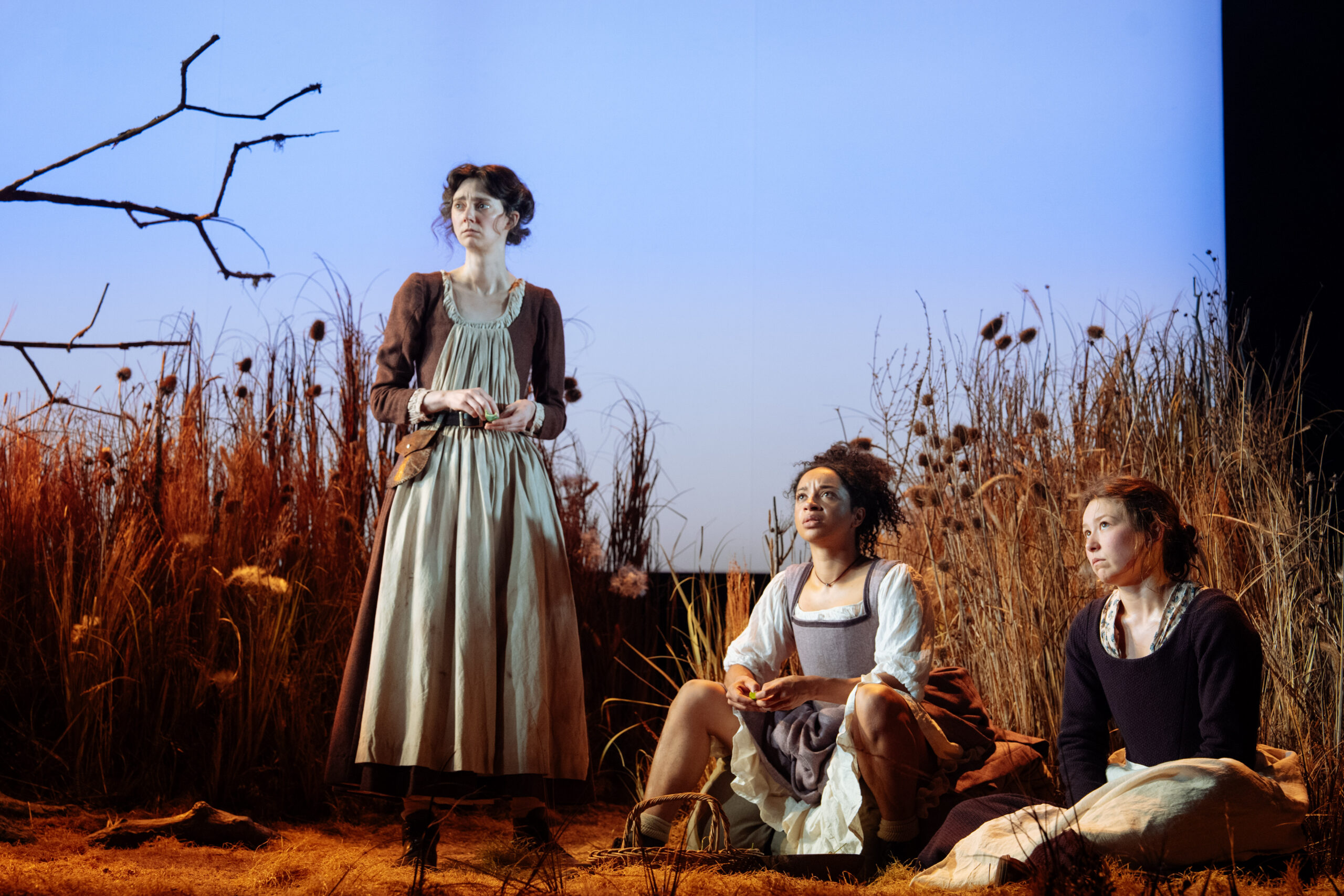
“History is told by the victors. And, for most of history, men have been victorious,” the programme note for Ava Pickett’s 1536 reads, a remarkable debut play that reclaims the voices of women living through one of the most turbulent periods in English history. Taking its title from the year Anne Boleyn was executed on the orders of Henry VIII, the production shifts focus away from the royal court and towards the women whose stories have largely been lost to time.
Directed by Lyndsey Turner, the play follows three childhood friends – Jane (Liv Hill), Anna (Siena Kelly) and Mariella (Tanya Reynolds) – who gather in their familiar meeting place in a field in Essex, hungry for the latest gossip arriving from London. As rumours surrounding Anne Boleyn begin to spread, the political upheaval unfolding at court starts to reverberate through their own lives, exposing the precarious realities of womanhood in Tudor England.
The production’s simplicity is one of its greatest strengths. Set around a solitary tree in a hay field, the staging provides a sense of permanence amid growing uncertainty, allowing the focus to remain firmly on the relationships between the three women. Pickett’s writing is sharp, funny and deeply humane, bringing warmth and immediacy to figures history has largely forgotten.
What makes 1536 so compelling is its ability to feel both historical and startlingly contemporary. Through friendship, ambition and survival, Pickett explores how women navigate a society designed to limit their autonomy. At one point, Mariella quietly wonders, “I don’t know if it will always be like this.” Though spoken within the context of the 16th century, the line lands with surprising resonance.
With no interval, the production maintains a brisk pace throughout, lifted by energetic dialogue and direction. It is little surprise that 1536 earned Pickett both the Critics’ Circle Theatre Award and The Stage Debut Award for Most Promising Playwright.
Until 1 August. Tickets can be bought here.
by Lily Rimmer